Kirjojen hintavertailu. Mukana 11 342 296 kirjaa ja 12 kauppaa.

Kirjahaku

Etsi kirjoja tekijän nimen, kirjan nimen tai ISBN:n perusteella.

10 kirjaa tekijältä Sumana Roy

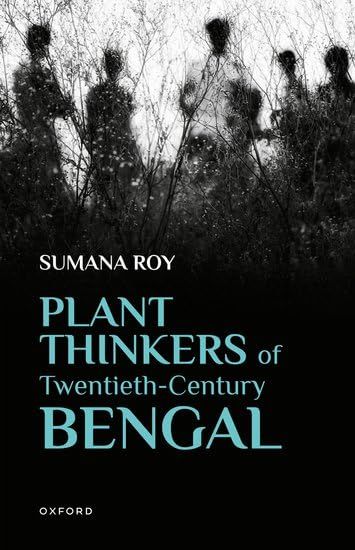
Plant Thinkers of Twentieth-Century Bengal

Plant Thinkers of Twentieth-Century Bengal

Sumana Roy

Oxford University Press
2025
sidottu
This book delves into the unconventional perspectives of writers and artists from Twentieth Century Bengal, exploring their roles as 'plant thinkers.' By examining the works of figures such as Rabindranath Tagore, Bibhutibhushan Bandyopadhyay, Jibanananda Das, Shakti Chattopadhyay, Satyajit Ray, and others, the narrative delves into how their stories, songs, art, and films, deeply influenced Bengali life and thought. Embracing themes of forest and garden, grass and root, weeds and magical plants, these thinkers, including Jagadish Chandra Bose with his scientific experiments, derived their worldviews, poetics, and politics from the intricate world of plants. The work not only explores Bose's scientific research and philosophy but also delves into religious rituals that fostered a profound connection with the natural world. Through a nuanced examination of the affective relationship between individuals and the plant world, the narrative uncovers a subterranean invocation of plant philosophy in both actions and words. Moreover, it highlights the political possibilities beyond the confines of the nation state that emanated from such profound thinking. As the book unfolds, it weaves a rich tapestry of living practices and artistic expressions rooted in plant philosophy. By contemplating the sap and flow of these influences, it prompts readers to reflect on what contemporary consciousness can glean from these thinkers.
How I Became a Tree

How I Became a Tree

Sumana Roy

Yale University Press
2021
sidottu
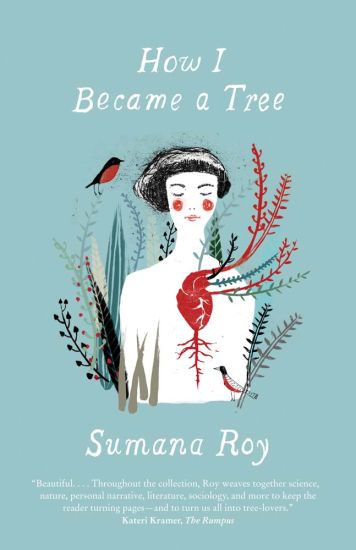
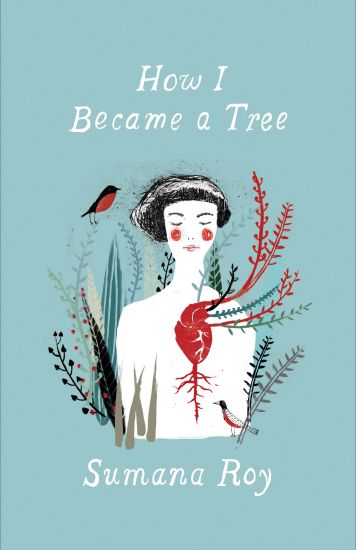
An exquisite, lovingly crafted meditation on plants, trees, and our place in the natural world, in the tradition of Robin Wall Kimmerer’s Braiding Sweetgrass and Annie Dillard’s Pilgrim at Tinker Creek “Sumana Roy has written—grown—a radiant and wondrous book.”—Robert Macfarlane, author of The Old Ways: A Journey on Foot “Beautiful. . . . Roy weaves together science, nature, personal narrative, literature, sociology, and more to keep the reader turning pages—and to turn us all into tree-lovers.”—Kateri Kramer, The Rumpus “I was tired of speed. I wanted to live to tree time.” So writes Sumana Roy at the start of How I Became a Tree, her captivating, adventurous, and self-reflective vision of what it means to be human in the natural world. Drawn to trees’ wisdom, their nonviolent way of being, their ability to cope with loneliness and pain, Roy movingly explores the lessons that writers, painters, photographers, scientists, and spiritual figures have gleaned through their engagement with trees—from Rabindranath Tagore to Tomas Tranströmer, Ovid to Octavio Paz, William Shakespeare to Margaret Atwood. Her stunning meditations on forests, plant life, time, self, and the exhaustion of being human evoke the spacious, relaxed rhythms of the trees themselves. Hailed upon its original publication in India as “a love song to plants and trees” and “an ode to all that is unnoticed, ill, neglected, and yet resilient,” How I Became a Tree blends literary history, theology, philosophy, botany, and more, and ultimately prompts readers to slow down and to imagine a reenchanted world in which humans live more like trees.
Provincials

Provincials

Sumana Roy

YALE UNIVERSITY PRESS
2024
sidottu
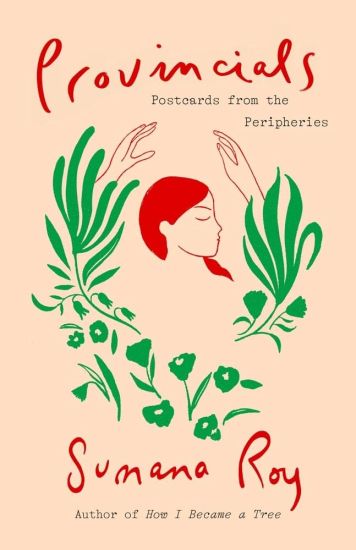
From the acclaimed author of How I Became a Tree, an enchanting and joyous exploration of life and creativity at the geographical edges of the modern world “A striking mix of memoir and literary analysis. . . . Wise and whimsical.”—Tunku Varadarajan, Wall Street Journal Who is a provincial? In this subversive book, Sumana Roy assembles a striking cast of writers, artists, filmmakers, cricketers, tourist guides, English teachers, lovers and letter writers, private tutors and secret-keepers whose lives and work provide varied answers to that question. Combining memoir with the literary, sensory, and emotional history of an ignored people, she challenges the metropolitan’s dominance to reclaim the joyous dignity of provincial life, its tics and taunts, enthusiasms and tragicomedies. In a wide-ranging series of “postcards” from the peripheries of India, Europe, America, and the Middle East, Roy brings us deep into the imaginative world of those who have carried their provinciality like a birthmark. Ranging from Rabindranath Tagore to William Shakespeare, John Clare to the Bhakti poets, T. S. Eliot to J. M. Coetzee, V. S. Naipaul to the Brontës, and Kishore Kumar to Annie Ernaux, she celebrates the provincials’ humor and hilarity, playfulness and irony, belatedness and instinct for carefree accidents and freedom. Her unprecedented account of provincial life offers an alternative portrait of our modern world.
How I Became a Tree

How I Became a Tree

Sumana Roy

YALE UNIVERSITY PRESS
2022
pokkari
An exquisite, lovingly crafted meditation on plants, trees, and our place in the natural world, in the tradition of Robin Wall Kimmerer’s Braiding Sweetgrass and Annie Dillard’s Pilgrim at Tinker Creek “Sumana Roy has written—grown—a radiant and wondrous book.”—Robert Macfarlane, author of The Old Ways: A Journey on Foot “Beautiful. . . . Roy weaves together science, nature, personal narrative, literature, sociology, and more to keep the reader turning pages—and to turn us all into tree-lovers.”—Kateri Kramer, The Rumpus “I was tired of speed. I wanted to live to tree time.” So writes Sumana Roy at the start of How I Became a Tree, her captivating, adventurous, and self-reflective vision of what it means to be human in the natural world. Drawn to trees’ wisdom, their nonviolent way of being, their ability to cope with loneliness and pain, Roy movingly explores the lessons that writers, painters, photographers, scientists, and spiritual figures have gleaned through their engagement with trees—from Rabindranath Tagore to Tomas Tranströmer, Ovid to Octavio Paz, William Shakespeare to Margaret Atwood. Her stunning meditations on forests, plant life, time, self, and the exhaustion of being human evoke the spacious, relaxed rhythms of the trees themselves. Hailed upon its original publication in India as “a love song to plants and trees” and “an ode to all that is unnoticed, ill, neglected, and yet resilient,” How I Became a Tree blends literary history, theology, philosophy, botany, and more, and ultimately prompts readers to slow down and to imagine a reenchanted world in which humans live more like trees.
Provincials

Provincials

Sumana Roy

YALE UNIVERSITY PRESS
2025
pokkari
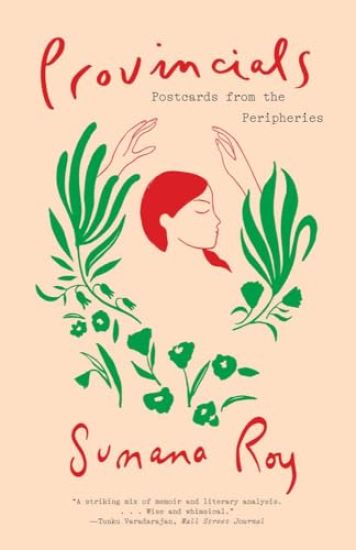
From the acclaimed author of How I Became a Tree, an enchanting and joyous exploration of life and creativity at the geographical edges of the modern world “A striking mix of memoir and literary analysis. . . . Wise and whimsical.”—Tunku Varadarajan, Wall Street Journal Who is a provincial? In this subversive book, Sumana Roy assembles a striking cast of writers, artists, filmmakers, cricketers, tourist guides, English teachers, lovers and letter writers, private tutors and secret-keepers whose lives and work provide varied answers to that question. Combining memoir with the literary, sensory, and emotional history of an ignored people, she challenges the metropolitan’s dominance to reclaim the joyous dignity of provincial life, its tics and taunts, enthusiasms and tragicomedies. In a wide-ranging series of “postcards” from the peripheries of India, Europe, America, and the Middle East, Roy brings us deep into the imaginative world of those who have carried their provinciality like a birthmark. Ranging from Rabindranath Tagore to William Shakespeare, John Clare to the Bhakti poets, T. S. Eliot to J. M. Coetzee, V. S. Naipaul to the Brontës, and Kishore Kumar to Annie Ernaux, she celebrates the provincials’ humor and hilarity, playfulness and irony, belatedness and instinct for carefree accidents and freedom. Her unprecedented account of provincial life offers an alternative portrait of our modern world.
V.I.P.

V.I.P.

Sumana Roy

Shearsman Books
2022
nidottu
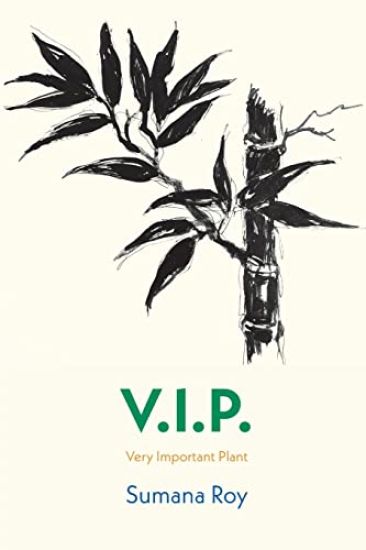
Even as she was searching for people who had wanted to live like a tree, a quest recorded in her book How I Became a Tree, Sumana Roy was simultaneously writing poems to imagine the opposite: How might it feel for plants to live social lives as humans? In V.I.P, 'plant' replaces 'person' to become Very Important Plant. In this new cosmology, leaves and fruits and roots are seen as perhaps they have never been before - whether flowers can be repaired or trees have insurance policies; the invisible scaffolding of water in onion and the jackfruit as the Buddha's head, the papaya as Trojan horse and the 'war-veteran fine fuzz' of peaches, the 'shape of ceremony' of apples and the cosmopolitanism of the forest; how we want affection to be boneless and why the taste of light might be bitter; or whether God might be a vegetable...
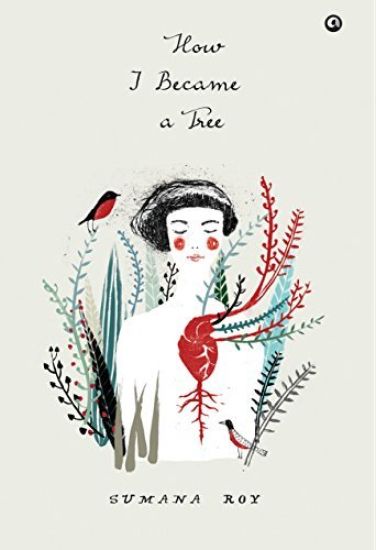
How I Became a Tree

How I Became a Tree

Sumana Roy

Aleph Book Company
2017
sidottu
In this remarkable and often unsettling book, Sumana Roy gives us a new vision of what it means to be human in the natural world. Increasingly disturbed by the violence, hate, insincerity, greed and selfishness of her kind, the author is drawn to the idea of becoming a tree. 'I was tired of speed', she writes, 'I wanted to live to tree time.' Besides wanting to emulate the spacious, relaxed rhythm of trees, she is drawn to their non-violent ways of being, how they tread lightly upon the earth, their ability to cope with loneliness and pain, the unselfishness with which they give freely of themselves and much more. She gives us new readings of the works of writers, painters, photographers and poets (Rabindranath Tagore and D. H. Lawrence among them) to show how trees and plants have always fascinated us. She studies the work of remarkable scientists like Jagadish Chandra Bose and key spiritual figures like the Buddha to gain even deeper insights into the world of trees. She writes of those who have wondered what it would be like to have sex with a tree, looks into why people marry trees, explores the death and rebirth of trees and tells us why a tree was thought by forest-dwellers to be equal to ten sons. Mixing memoir, literary history, nature studies, spiritual philosophies and botanical research, How I Became a Tree is a book that will prompt readers to think of themselves and the natural world that they are an intrinsic part of, in fresh ways. It is that rarest of things - A truly original work of art.