Kirjojen hintavertailu. Mukana 11 244 527 kirjaa ja 12 kauppaa.

Kirjahaku

Etsi kirjoja tekijän nimen, kirjan nimen tai ISBN:n perusteella.

17 kirjaa tekijältä Sumit Ganguly

India's Foreign Policy

India's Foreign Policy

Sumit Ganguly

OUP India
2011
nidottu
This book provides a fairly comprehensive account of the evolution of India's foreign policy from 1947 to the present day. It is organized primarily in the form of India's relations with its neighbours and with key states in the global order. All the chapters in this volume utilize the level of analysis approach, a well-established conceptual scheme in the study of international politics in organizing the substantive cases. They provide crisp and lucid accounts of its developments in various parts of the world. The book is significant because there are no other viable edited volumes on the evolution of Indian foreign policy. Each chapter follows a common conceptual framework using the level of analysis approach. This framework looks at the evolution of India's foreign policy from the standpoints of systemic, national, and decision-making perspectives. In the introductory chapter, the editor carefully spells out the intellectual antecedents of the level of analysis framework in straightforward, lucid, and discursive prose, and applies to the substantive chapters in the volume.
Indian Foreign Policy (Revised Edition)
Updated and revised, this short introduction has become a go-to source for its clarity and succinct account of the evolution of Indian foreign policy over seven decades of India's decolonization. It explains how the three approaches to the study of international politics-decision-making, national/domestic, and systemic/global-have helped in formulating and implementing India's foreign policies. The five chapters cover the ideational period, starting immediately after Independence and ending with the Sino-Indian border war of 1962; the period between 1962 and the end of the Cold War; India's greater acceptance of the importance of material capabilities following the end of the Cold War; current trends and debates in Indian foreign policy, including analysis on Narendra Modi's regime; and bookending the introduction by discussing challenges and the possible way ahead.
Conflict Unending

Conflict Unending

Sumit Ganguly

Columbia University Press
2002
sidottu
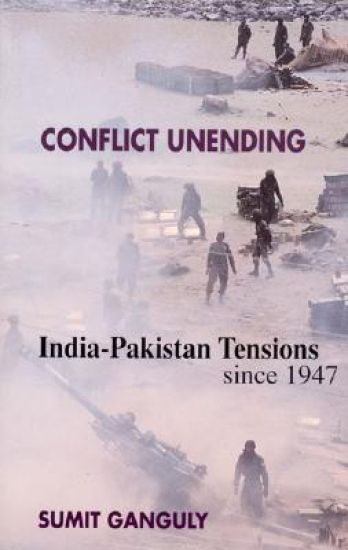
The escalating tensions between India and Pakistan have received renewed attention of late. Since their genesis in 1947, the nations of India and Pakistan have been locked in a seemingly endless spiral of hostility over the disputed territory of Kashmir. Ganguly asserts that the two nations remain mired in conflict due to inherent features of their nationalist agendas. Indian nationalist leadership chose to hold on to this Muslim-majority state to prove that minorities could thrive in a plural, secular polity. Pakistani nationalists argued with equal force that they could not part with Kashmir as part of the homeland created for the Muslims of South Asia. Ganguly authoritatively analyzes why hostility persists even after the dissipation of the pristine ideological visions of the two states and discusses their dual path to overt acquisition of nuclear weapons, as well as the current prospects for war and peace in the region.
Conflict Unending

Conflict Unending

Sumit Ganguly

Columbia University Press
2002
pokkari
The escalating tensions between India and Pakistan have received renewed attention of late. Since their genesis in 1947, the nations of India and Pakistan have been locked in a seemingly endless spiral of hostility over the disputed territory of Kashmir. Ganguly asserts that the two nations remain mired in conflict due to inherent features of their nationalist agendas. Indian nationalist leadership chose to hold on to this Muslim-majority state to prove that minorities could thrive in a plural, secular polity. Pakistani nationalists argued with equal force that they could not part with Kashmir as part of the homeland created for the Muslims of South Asia. Ganguly authoritatively analyzes why hostility persists even after the dissipation of the pristine ideological visions of the two states and discusses their dual path to overt acquisition of nuclear weapons, as well as the current prospects for war and peace in the region.
The Snowden Reader

The Snowden Reader

Sumit Ganguly

Indiana University Press
2015
sidottu
When Edward Snowden began leaking NSA documents in June 2013, his actions sparked impassioned debates about electronic surveillance, national security, and privacy in the digital age. The Snowden Reader looks at Snowden's disclosures and their aftermath. Critical analyses by experts discuss the historical, political, legal, and ethical issues raised by the disclosures. Over forty key documents related to the case are included, with introductory notes explaining their significance: documents leaked by Snowden; responses from the NSA, the Obama administration, and Congress; statements by foreign leaders, their governments, and international organizations; judicial rulings; findings of review committees; and Snowden's own statements. This book provides a valuable introduction and overview for anyone who wants to go beyond the headlines to understand this historic episode.
The Snowden Reader

The Snowden Reader

Sumit Ganguly

Indiana University Press
2015
pokkari
When Edward Snowden began leaking NSA documents in June 2013, his actions sparked impassioned debates about electronic surveillance, national security, and privacy in the digital age. The Snowden Reader looks at Snowden's disclosures and their aftermath. Critical analyses by experts discuss the historical, political, legal, and ethical issues raised by the disclosures. Over forty key documents related to the case are included, with introductory notes explaining their significance: documents leaked by Snowden; responses from the NSA, the Obama administration, and Congress; statements by foreign leaders, their governments, and international organizations; judicial rulings; findings of review committees; and Snowden's own statements. This book provides a valuable introduction and overview for anyone who wants to go beyond the headlines to understand this historic episode.
Mending Fences

Mending Fences

Sumit Ganguly

TAYLOR FRANCIS LTD
2021
sidottu
Exploring the long history of conflict in South Asia, this book assesses the role of confidence- and security-building measures (CSBMs) in reducing tension. Using a comparative framework, the contributors draw lessons for South Asia from the experiences of the states in Cold War Europe and in the Middle East. Despite the significant historical, political and geographic differences among regions, the contributors illustrate how the implementation of CSBM's elsewhere has important implications for limiting interstate conflict in South Asia.
Mending Fences

Mending Fences

Sumit Ganguly

TAYLOR FRANCIS LTD
2023
nidottu
Exploring the long history of conflict in South Asia, this book assesses the role of confidence- and security-building measures (CSBMs) in reducing tension. Using a comparative framework, the contributors draw lessons for South Asia from the experiences of the states in Cold War Europe and in the Middle East. Despite the significant historical, political and geographic differences among regions, the contributors illustrate how the implementation of CSBM's elsewhere has important implications for limiting interstate conflict in South Asia.
The Origins Of War In South Asia

The Origins Of War In South Asia

Sumit Ganguly

Routledge
2019
sidottu
In examining the forces that made the Indo-Pakistani relationship prone to conflict, Dr. Ganguly focusses first on the nature of the British colonial disengagement policy, a hasty and ill-conceived procedure that served to exacerbate the ideological differences between India's major political parties, the Congress and the Muslim League. Their competing views–the Congress espoused a secular polity while the League drew its inspiration from Islamic tenets–formed the basis of the two polities that emerged from the collapse of the British Indian empire. Disputes also arose over the uncertain status of Kashmir. With the lapse of the British doctrine of paramountcy (recognition of the British as the sovereign power in India), the so-called princely states had to join either India or Pakistan on the basis of geographic location and demographic composition. Kashmir posed a problem because of its location and because it had a Hindu monarch ruling a Muslim majority population. This peculiar status made it the center of a Pakistani irredentist claim. This claim was rejected by India, iintent upon demonstrating that all minorities could thrive under the aegis of secular government. Once set in motion by the interplay of domestic, regional, and systematic factors, these three forces--disengagement, ideological differences, and the conflict over Kashmir--brought the subcontinent to war in 1947-1948, 1965, and 1971. Dr. Ganguly provides a comprehensive and comparative analysis of these three Indo-Pakistani conflicts as well as an assessment of both the impact of the Soviet invasion of Afghanistan on the security of South Asia and the changes in the perceptions of that security.
The Origins Of War In South Asia

The Origins Of War In South Asia

Sumit Ganguly

Routledge
2020
nidottu
In examining the forces that made the Indo-Pakistani relationship prone to conflict, Dr. Ganguly focusses first on the nature of the British colonial disengagement policy, a hasty and ill-conceived procedure that served to exacerbate the ideological differences between India's major political parties, the Congress and the Muslim League. Their competing views–the Congress espoused a secular polity while the League drew its inspiration from Islamic tenets–formed the basis of the two polities that emerged from the collapse of the British Indian empire. Disputes also arose over the uncertain status of Kashmir. With the lapse of the British doctrine of paramountcy (recognition of the British as the sovereign power in India), the so-called princely states had to join either India or Pakistan on the basis of geographic location and demographic composition. Kashmir posed a problem because of its location and because it had a Hindu monarch ruling a Muslim majority population. This peculiar status made it the center of a Pakistani irredentist claim. This claim was rejected by India, iintent upon demonstrating that all minorities could thrive under the aegis of secular government. Once set in motion by the interplay of domestic, regional, and systematic factors, these three forces--disengagement, ideological differences, and the conflict over Kashmir--brought the subcontinent to war in 1947-1948, 1965, and 1971. Dr. Ganguly provides a comprehensive and comparative analysis of these three Indo-Pakistani conflicts as well as an assessment of both the impact of the Soviet invasion of Afghanistan on the security of South Asia and the changes in the perceptions of that security.
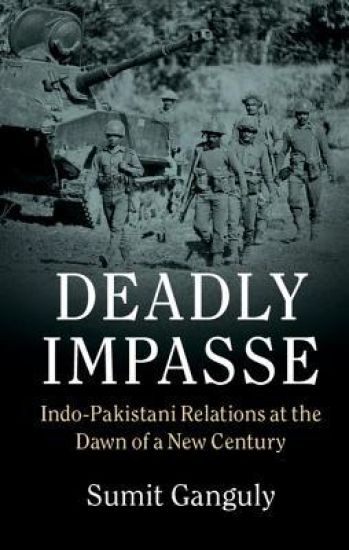
Deadly Impasse

Deadly Impasse

Sumit Ganguly

Cambridge University Press
2016
pokkari
What ails the Indo-Pakistani relationship? Rivalry between the two states has persisted since the partition of the British Indian Empire in 1947, and despite negotiations, four wars and multiple crises, India and Pakistan remain locked in a long-standing dispute. Evaluating relations from 1999 through to 2009, Sumit Ganguly seeks to understand this troubled relationship and why efforts at peace-making and conflict resolution, which have included unilateral Indian concessions, have not been more fruitful. Charting key sources of tension throughout the decade, including the origins and outcomes of the Kargil War in 1999, developments in the Indian-controlled portion of the state of Kashmir, the attack on the Indian parliament in December 2001 and the onset of the 2001–2 crisis, Deadly Impasse sets out to discover whether the roots of this hostile relationship stem from security dilemmas or reflect the dynamics between a status quo power and a predatory state.
Deadly Impasse

Deadly Impasse

Sumit Ganguly

Cambridge University Press
2016
sidottu
What ails the Indo-Pakistani relationship? Rivalry between the two states has persisted since the partition of the British Indian Empire in 1947, and despite negotiations, four wars and multiple crises, India and Pakistan remain locked in a long-standing dispute. Evaluating relations from 1999 through to 2009, Sumit Ganguly seeks to understand this troubled relationship and why efforts at peace-making and conflict resolution, which have included unilateral Indian concessions, have not been more fruitful. Charting key sources of tension throughout the decade, including the origins and outcomes of the Kargil War in 1999, developments in the Indian-controlled portion of the state of Kashmir, the attack on the Indian parliament in December 2001 and the onset of the 2001–2 crisis, Deadly Impasse sets out to discover whether the roots of this hostile relationship stem from security dilemmas or reflect the dynamics between a status quo power and a predatory state.
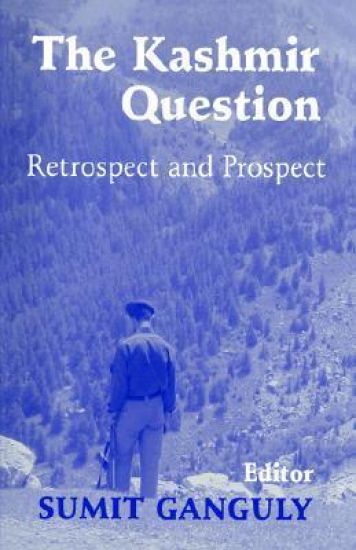
The Kashmir Question

The Kashmir Question

Sumit Ganguly

Routledge
2003
nidottu
India, which had been created as a civic polity, initially sought to hold on to this Muslim-majority state to demonstrate its secular credentials. Pakistan, in turn, had laid claim to Kashmir because it had been created as the homeland for the Muslims of South Asia. After the break-up of Pakistan in 1971 the Pakistani irredentist claim to Kashmir lost substantial ground. If Pakistan could not cohere on the basis of religion alone it had few moral claims on its co-religionists in Kashmir. Similarly, in the 1980s, as the practice of Indian secularism was eroded, India's claim to Kashmir on the grounds of secularism largely came apart. Today their respective claims to Kashmir are mostly on the basis of statecraft. This title provides a comprehensive assessment of a number of different facets of the on-going dispute over Kashmir between India and Pakistan. Among other matters, it examines the respective endgames of both states, the evolution of American policy toward the dispute, the dangers of nuclear esculation in the region and the state of the insurgency in the Indian-controlled portion of the disputed state.
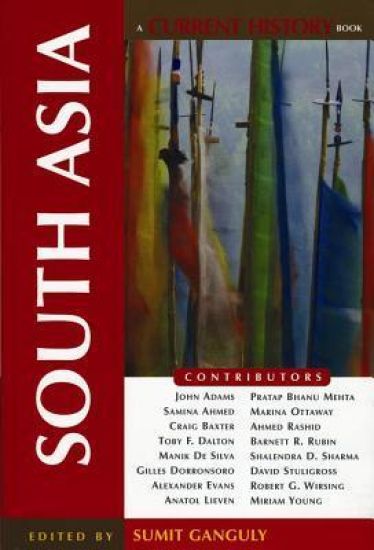
South Asia

South Asia

Sumit Ganguly

New York University Press
2006
sidottu
In recent years the world's focus on South Asia has increased dramatically. With the events of 9/11, the detonation of atomic weapons by both India and Pakistan, the discovery of an illicit nuclear proliferation network based in Islamabad, regime change in an unstable Afghanistan, and the rise of India as an economic power, global interest in the region has reached perhaps an all-time high. Leading experts analyze the key strategic, political, and economic issues touching on South Asia and its role in the world in the essays that make up this inaugural volume in the Current History Books Series. Focusing on modern South Asia, including India, Pakistan, Afghanistan, Bangladesh, and Sri Lanka, this authoritative volume provides an overview of the events and trends that have rocked this increasingly volatile region over the past decade. Edited and with an introduction by Sumit Ganguly, a leading expert on the region, this volume provides a critical introduction to South Asia. South Asia also contains current maps as well as a "Recent Chronology of Events" that provides a decade's worth of information on the region, organized by year and by country. This timely and comprehensive collection of essays provides a definitive account of modern South Asia.
South Asia

South Asia

Sumit Ganguly

New York University Press
2006
pokkari
In recent years the world's focus on South Asia has increased dramatically. With the events of 9/11, the detonation of atomic weapons by both India and Pakistan, the discovery of an illicit nuclear proliferation network based in Islamabad, regime change in an unstable Afghanistan, and the rise of India as an economic power, global interest in the region has reached perhaps an all-time high. Leading experts analyze the key strategic, political, and economic issues touching on South Asia and its role in the world in the essays that make up this inaugural volume in the Current History Books Series. Focusing on modern South Asia, including India, Pakistan, Afghanistan, Bangladesh, and Sri Lanka, this authoritative volume provides an overview of the events and trends that have rocked this increasingly volatile region over the past decade. Edited and with an introduction by Sumit Ganguly, a leading expert on the region, this volume provides a critical introduction to South Asia. South Asia also contains current maps as well as a "Recent Chronology of Events" that provides a decade's worth of information on the region, organized by year and by country. This timely and comprehensive collection of essays provides a definitive account of modern South Asia.
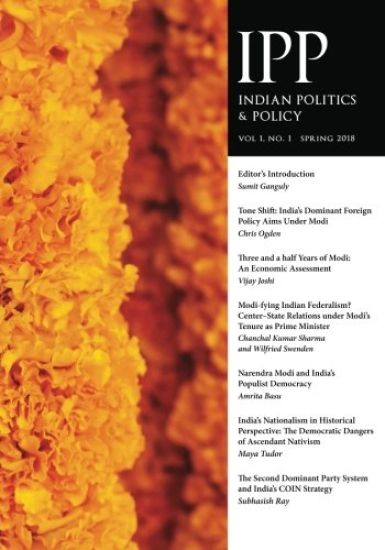
Indian Politics & Policy: Vol. 1, No. 1, Spring 2018
Indian Politics & Policy (IPP) aims to be the primary journal for studying contemporary Indian politics. We will consider submissions that analyze all aspects of Indian policies and political processes. We invite original work that demonstrates theoretical rigor, sound empirical research and policy relevance. We also welcome review articles, proposals for special issues and research forums on contemporary topics. Submissions should be sent to [email protected]. After an initial screening, the editors will send manuscripts to independent, experts in the field for double-blind reviews. Only manuscripts that are considered ready for publication will be sent for review. Indian Politics & Policy seeks to publish original research. Contributors should not submit significant portions of previously published work. In case of any question of overlap, the authors should send a copy of the earlier work to the editors to make a determination.
Indian Politics & Policy: Vol. 1, No. 2, Fall 2018
Indian Politics and Policy aims to be the primary journal for studying contemporary Indian politics. We will consider submissions that analyze all aspects of Indian policies and political processes. We invite original work that demonstrates theoretical rigor, sound empirical research and policy relevance. We also welcome review articles, proposals for special issues and research forums on contemporary topics. Table of Contents: Editor's Introduction Sumit Ganguly doi: 10.18278/inpp.1.2.1 India's Ways of (Non-) War: Explaining New Delhi's Forbearance in the Face of Pakistani Provocations Devin T. Hagerty doi: 10.18278/inpp.1.2.2 Foreign Assistance in India's Foreign Policy: Political and Economic Determinants Eswaran Sridharan and Aashik Jain doi: 10.18278/inpp.1.2.3 Parameters of Successful Wastewater Reuse in Urban India, Kelly D. Alley, Nutan Maurya, and Sukanya Das doi: 10.18278/inpp.1.2.4 India's Search for Economic Prosperity and Global Power, Kanta Murali doi: 10.18278/inpp.1.2.5