Kirjojen hintavertailu. Mukana 11 342 296 kirjaa ja 12 kauppaa.

Kirjahaku

Etsi kirjoja tekijän nimen, kirjan nimen tai ISBN:n perusteella.

5 kirjaa tekijältä Sung Chull Kim

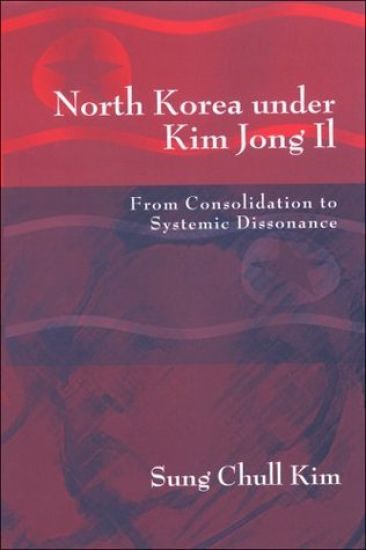
North Korea under Kim Jong Il

North Korea under Kim Jong Il

Sung Chull Kim

State University of New York Press
2006
sidottu
Examines internal changes in North Korea under the expanding rule of Kim Jong Il.North Korea has long been a country of mystique, both provoking two nuclear crises and receiving aid from the international community and South Korea in more recent times. North Korea under Kim Jong Il examines how internal changes in North Korea since the early 1970s have structured that nation's apparently provocative nuclear diplomacy and recent economic reform measures. To understand these changes, author Sung Chull Kim uncovers relatively unknown internal aspects of the country under Kim Jong Il's leadership. His account, based on a thorough examination of primary sources, traces the origins, consolidation, and dissonance of North Korea's systemic identity. He reveals how official and unofficial developments in the domains of North Korea's politics, ideology, economics, and intellectual-cultural affairs have brought about system-wide duality, particularly between socialist principles embedded in the official ideology and economic institutions.
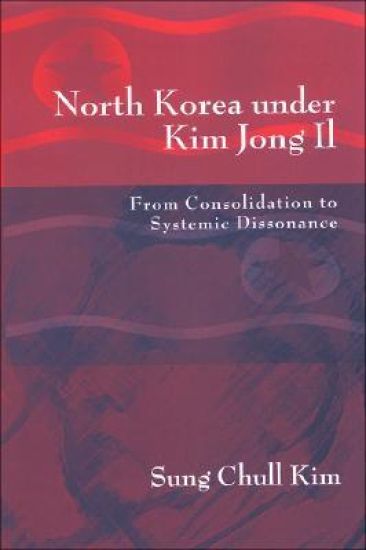
North Korea under Kim Jong Il

North Korea under Kim Jong Il

Sung Chull Kim

State University of New York Press
2007
pokkari
Examines internal changes in North Korea under the expanding rule of Kim Jong Il.North Korea has long been a country of mystique, both provoking two nuclear crises and receiving aid from the international community and South Korea in more recent times. North Korea under Kim Jong Il examines how internal changes in North Korea since the early 1970s have structured that nation's apparently provocative nuclear diplomacy and recent economic reform measures. To understand these changes, author Sung Chull Kim uncovers relatively unknown internal aspects of the country under Kim Jong Il's leadership. His account, based on a thorough examination of primary sources, traces the origins, consolidation, and dissonance of North Korea's systemic identity. He reveals how official and unofficial developments in the domains of North Korea's politics, ideology, economics, and intellectual-cultural affairs have brought about system-wide duality, particularly between socialist principles embedded in the official ideology and economic institutions.
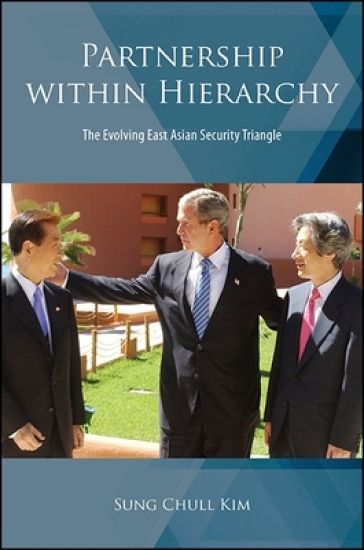
Partnership within Hierarchy

Partnership within Hierarchy

Sung Chull Kim

State University of New York Press
2018
pokkari
Examines intra-alliance politics between the United States, Japan, and South Korea.In an age of increasingly complex security situations around the world, it is essential that students and practitioners understand alliances and minilateral security mechanisms. Partnership within Hierarchy examines, in depth, the troubled evolution of the US–Japan–South Korea security triangle from the Cold War period to the present time. Referencing a voluminous amount of declassified documents in three different languages, Sung Chull Kim, through six case studies, delves into the common questions arising in different historical periods, such as who should pay costs, what to commit, and why. Burden sharing and commitment, Kim shows, emerged as the main subject of competing expectations and disagreements arising between the capable middle power Japan and the weak power South Korea. Kim details how the dominant power, the United States, has controlled the red lines and intervened in the disputes, the result of which is in most instances a balancing effect for the triangle. In this vein, he persuasively accounts for why historical disputes between Japan and South Korea, which submerged during the Cold War, reverberate today when asymmetry between the two is substantially balanced.
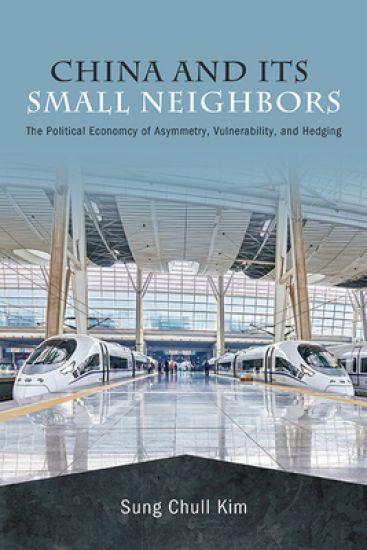
China and Its Small Neighbors

China and Its Small Neighbors

Sung Chull Kim

STATE UNIVERSITY OF NEW YORK PRESS
2023
sidottu
Analyzes the nature, processes, and political consequences of the asymmetrical relationships between China and its six small neighbors in Asia.In China and Its Small Neighbors, Sung Chull Kim examines the political implications of the economic asymmetry between China and its small neighbors, part of wider changes in international relations brought about by the rise of China. While being critical of the current trend that focuses on the China-U.S. rivalry alone, Kim argues that a microanalysis of China's advances toward its neighbors is a guide to understanding the trajectory of China's expanding influence and transitions in world politics more broadly. Economic asymmetry-as seen in trade concentration, non-transparency, and reliance on bilateral aid-has made China's small neighbors vulnerable on the political front, thus generating potential threats to their sovereignty and independence. Because China has the upper hand in the bilateral relationships, these weak states practice dual-core hedging as a strategy for survival. They hedge on China for expected economic benefits and at the same time hedge against their powerful neighbor to mitigate the risks involved in that hedging-on. Each small state's mode of hedging depends on its degree of vulnerability and its availability of policy instruments such as multilateral institutions and bilateral partnerships with extra-regional powers.
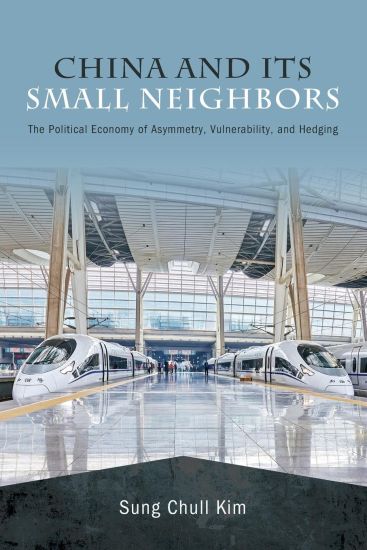
China and Its Small Neighbors

China and Its Small Neighbors

Sung Chull Kim

STATE UNIVERSITY OF NEW YORK PRESS
2023
pokkari
Analyzes the nature, processes, and political consequences of the asymmetrical relationships between China and its six small neighbors in Asia.In China and Its Small Neighbors, Sung Chull Kim examines the political implications of the economic asymmetry between China and its small neighbors, part of wider changes in international relations brought about by the rise of China. While being critical of the current trend that focuses on the China-U.S. rivalry alone, Kim argues that a microanalysis of China's advances toward its neighbors is a guide to understanding the trajectory of China's expanding influence and transitions in world politics more broadly. Economic asymmetry-as seen in trade concentration, non-transparency, and reliance on bilateral aid-has made China's small neighbors vulnerable on the political front, thus generating potential threats to their sovereignty and independence. Because China has the upper hand in the bilateral relationships, these weak states practice dual-core hedging as a strategy for survival. They hedge on China for expected economic benefits and at the same time hedge against their powerful neighbor to mitigate the risks involved in that hedging-on. Each small state's mode of hedging depends on its degree of vulnerability and its availability of policy instruments such as multilateral institutions and bilateral partnerships with extra-regional powers.