

Kirjahaku
Etsi kirjoja tekijän nimen, kirjan nimen tai ISBN:n perusteella.
5 kirjaa tekijältä Surinder Deol
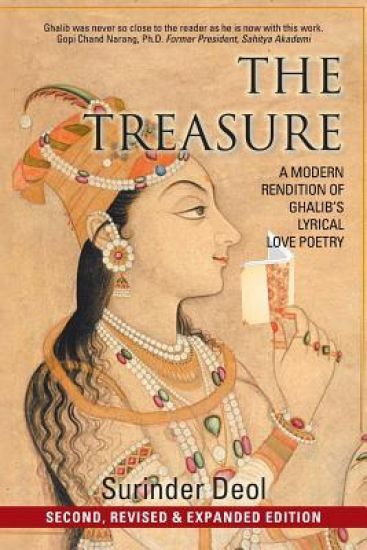
Mirza Ghalib, Indias most loved poet, lived at a time of great political and cultural transformation when the established order, the mighty Mughal Empire, was falling apart around midnineteenth century and the new regime spearheaded by the East India Company was not yet fully in place. There are multiple lenses that can be used to look at Ghalibs work. At the surface, he is a romantic poet par excellence. But if we dig deeper, Ghalib is much more than a romantic poet. He expressed ideas that came from conflicting philosophical traditions, namely the concept of shunyata (nonexistence) that is a core belief in Buddhist philosophy and the concept of Maya that is at the center of Vedantic philosophy. This book contains lyrical free verse English translation of 235 ghazals contained in Ghalibs Urdu Divan, popularly known as Divan-e Ghalib. One reason that makes the second revised and expanded edition of the book unique and extremely valuable is the addition of original Urdu text in an easy-to-read Romanized format. According to distinguished literary critic and leading Ghalib scholar Professor Gopi Chand Narang, Ghalib was never so close to the reader as he is now with this work. Surinder has succeeded in his creative transformation of Mirzas ghazals into poetic English where others have failed.

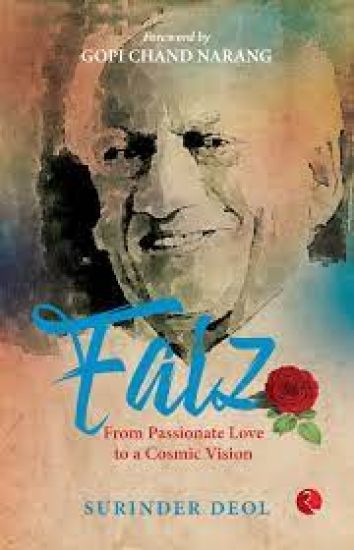
Mujhse pehli si mohabbat meri mahbuub n maang ('My dearest, don't ask for the love we once had) This line from Faiz's first poetry collection deeply touched the public consciousness, and it signalled the arrival of a new kind of poet who not only wrote about agonies of love but at the same time confronted the issues of daily struggles, including poverty, hunger, injustice and the oppressive colonial regime. He fused his lyrical compositions with the grammar of revolution and resistance that was needed while not giving up on alluring descriptions of the beloved's tresses and ruby lips. There was the beloved, he said, but there was also the struggle of attaining freedom, and these two things were not separate. He brought these two themes together, and they became one. Jahaan par ham tum khare hain dono sahar ka raushan ufq yahien hai ('The place where both of us are standing is dawn's bright horizon') As a secular humanist, Faiz was not willing to accept the idea that people should be separated based on their religious identities. All human beings yearn, he emphasized, for peace and harmony. National boundaries can separate people, but they cannot divide the emotional affinity they have for one another. To understand the importance of this cosmic vision, one had to look at the earth from the sky and see the planet as the home for all its inhabitants. This book traces the evolution of the poet's work from its early days to the time of its full fruition. A poet's life is not different from the words that he writes and that is why in this book, poetry and biography are meshed in presenting a rich portrait of an exceptional poet.