Kirjojen hintavertailu. Mukana 11 244 527 kirjaa ja 12 kauppaa.

Kirjahaku

Etsi kirjoja tekijän nimen, kirjan nimen tai ISBN:n perusteella.

12 kirjaa tekijältä Susan Doran

From Tudor to Stuart

From Tudor to Stuart

Susan Doran

Oxford University Press
2024
sidottu
From Tudor to Stuart: The Regime Change from Elizabeth I to James I tells the story of the troubled accession of England's first Scottish king and the transition from the age of the Tudors to the age of the Stuarts at the dawn of the seventeenth century. From Tudor to Stuart: The Regime Change from Elizabeth I to James I tells the story of the dramatic accession and first decade of the reign of James I and the transition from the Elizabethan to the Jacobean era, using a huge range of sources, from state papers and letters to drama, masques, poetry, and a host of material objects. The Virgin Queen was a hard act to follow for a Scottish newcomer who faced a host of problems in his first years as king: not only the ghost of his predecessor and her legacy but also unrest in Ireland, serious questions about his legitimacy on the English throne, and even plots to remove him (most famously the Gunpowder Plot of 1605). Contrary to traditional assumptions, James's accession was by no means a smooth one. The really important question about James's reign, of course, is the extent of change that occurred in national political life and royal policies. Sue Doran also examines how far the establishment of a new Stuart dynasty resulted in fresh personnel at the centre of power, and the alterations in monarchical institutions and shifts in political culture and governmental policies that occurred. Here the book offers a fresh look at James and his wife Anna, suggesting a new interpretation of their characters and qualities. But the Jacobean era was not just about James and his wife, and Regime Change includes a host of historical figures, many of whom will be familiar to readers: whether Walter Raleigh, Robert Cecil, or the Scots who filled James's inner court. The inside story of the Jacobean court also brings to life the wider politics and national events of the early seventeenth century, including the Gunpowder Plot, the establishment of Jamestown in Virginia, the Plantations in Ulster, the growing royal struggle with parliament, and the doomed attempt to bring about union with Scotland.
Elizabeth I and Her Circle

Elizabeth I and Her Circle

Susan Doran

Oxford University Press
2015
sidottu
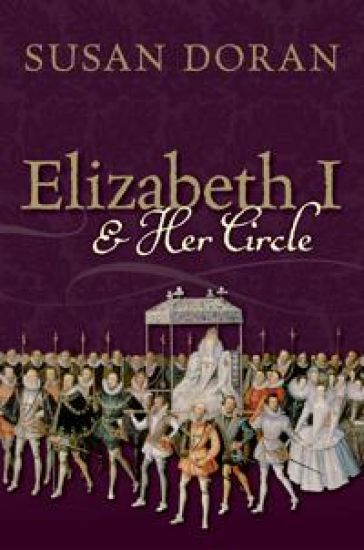
This is the story of Elizabeth I's inner circle and the crucial human relationships which lay at the heart of her personal and political life. Using a wide range of original sources - including private letters, portraits, verse, drama, and state papers - Susan Doran provides a vivid and often dramatic account of political life in Elizabethan England and the queen at its centre, offering a deeper insight into Elizabeth's emotional and political conduct - and challenging many of the popular myths that have grown up around her. It is a story replete with fascinating questions. What was the true nature of Elizabeth's relationship with her father, Henry VIII, especially after his execution of her mother? How close was she to her half-brother Edward VI - and were relations with her half-sister Mary really as poisonous as is popularly assumed? And what of her relationship with her Stewart cousins, most famously with Mary Queen of Scots, executed on Elizabeth's orders in 1587, but also with Mary's son James VI of Scotland, later to succeed Elizabeth as her chosen successor? Elizabeth's relations with her family were crucial, but just as crucial were her relations with her courtiers and her councillors. Here again, the story raises a host of fascinating questions. Was the queen really sexually jealous of her maids of honour? Did physically attractive male favourties dominate her court? What does her long and intimate relationship with the Earl of Leicester reveal about her character, personality, and attitude to marriage? What can the fall of Essex tell us about Elizabeth's political management in the final years of her reign? And what was the true nature of her personal and political relationship with influential and long-serving councillors such as the Cecils and Sir Francis Walsingham? And how did courtiers and councillors deal with their demanding royal mistress?
England and Europe in the Sixteenth Century
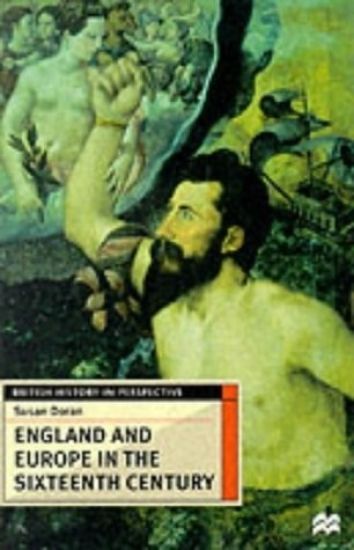
This book provides a thematic survey of English foreign policy in the sixteenth century, focusing on the influence of the concept of honour, security concerns, religious ideology and commercial interests on the making of policy. It draws attention to aspects of continuity with the late-medieval past but argues, too, that the European Reformation brought new challenges which forced a rethinking of policy. Far from treating the sixteenth century as the period when England began its rise as a Great Power, the author emphasises the structural weaknesses of the English armed forces and demonstrates that dangers and insecurities did more to mould foreign policy than the energy and confidence of the Tudor rulers.
Elizabeth I and Religion 1558-1603
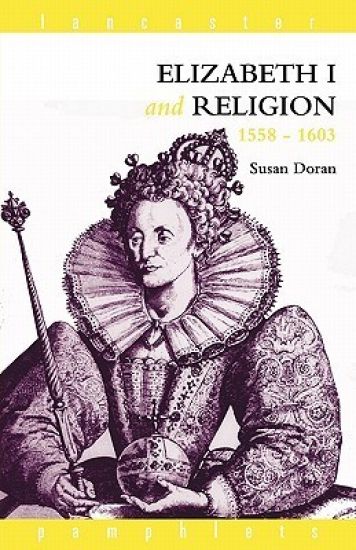
Susan Doran describes and analyses the process of the Elizabethan Reformation, placing it in an English and a European context. She examines the religious views and policies of the Queen, the making of the 1559 settlement and the resulting reforms. The changing beliefs of the English people are discussed, and the author charts the fortunes of both Puritanism and Catholicism. Finally she looks at the strengths and weaknesses of Elizabeth I as royal governor, and of the Church of England as a whole.
Monarchy and Matrimony

Monarchy and Matrimony

Susan Doran

Routledge
1995
sidottu
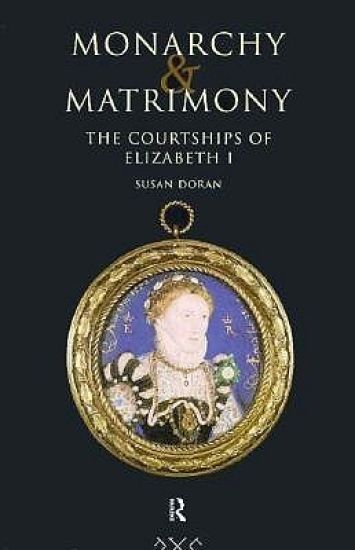
Monarchy and Matrimony is the first comprehensive study of Elizabeth I's courtships. Susan Doran argues that the cult of the `Virgin Queen' was invented by her ministers, and that Elizabeth was forced into celibacy by political necessity. Doran's detailed examination of the different suits is based on extensive archival research across Europe. Rather than focusing on Elizabeth's personality and image, she views the question within a wider political and religious context. She shows how the question of Elizabeth's marriage was divisive for England, affecting both political life and international relations, and provoking popular propaganda in the form of plays, poetry and paintings.
Elizabeth I and Foreign Policy, 1558-1603
At her accession in 1558 Elizabeth I inherited a troublesome legacy with a long history of wars against France and Scotland. This international situation was becoming a huge financial burden on the English crown and economy.Elizabeth I and Foreign Policy describes and assesses England's foreign policy during the second half of the sixteenth century. It includes coverage of Elizabeth's relations with foreign powers, the effect of Reformation on foreign affairs, Elizabeth's successs as a stateswoman and the war with Spain.
Monarchy and Matrimony

Monarchy and Matrimony

Susan Doran

Routledge
2015
nidottu
Monarchy and Matrimony is the first comprehensive study of Elizabeth I's courtships. Susan Doran argues that the cult of the `Virgin Queen' was invented by her ministers, and that Elizabeth was forced into celibacy by political necessity. Doran's detailed examination of the different suits is based on extensive archival research across Europe. Rather than focusing on Elizabeth's personality and image, she views the question within a wider political and religious context. She shows how the question of Elizabeth's marriage was divisive for England, affecting both political life and international relations, and provoking popular propaganda in the form of plays, poetry and paintings.
Elizabeth I and Religion 1558-1603
Susan Doran describes and analyses the process of the Elizabethan Reformation, placing it in an English and a European context. She examines the religious views and policies of the Queen, the making of the 1559 settlement and the resulting reforms. The changing beliefs of the English people are discussed, and the author charts the fortunes of both Puritanism and Catholicism. Finally she looks at the strengths and weaknesses of Elizabeth I as royal governor, and of the Church of England as a whole.
Elizabeth I and Foreign Policy, 1558-1603
At her accession in 1558 Elizabeth I inherited a troublesome legacy with a long history of wars against France and Scotland. This international situation was becoming a huge financial burden on the English crown and economy.Elizabeth I and Foreign Policy describes and assesses England's foreign policy during the second half of the sixteenth century. It includes coverage of Elizabeth's relations with foreign powers, the effect of Reformation on foreign affairs, Elizabeth's successs as a stateswoman and the war with Spain.
England and Europe 1485-1603

England and Europe 1485-1603

Susan Doran

Routledge
2015
sidottu
This Seminar Study introduces students to England's foreign policy during the reigns of the Tudor monarchs. In this succinct introduction the author addresses the key questions facing students - for example, to what extent did monarch or minister make policy. Each reign is analysed in turn providing a narrative and explanation of the major events and policy decisions throughout the Tudor period.
The Image of Elizabeth I in Early Modern Spain

The Image of Elizabeth I in Early Modern Spain

Susan Doran

University of Nebraska Press
2019
sidottu
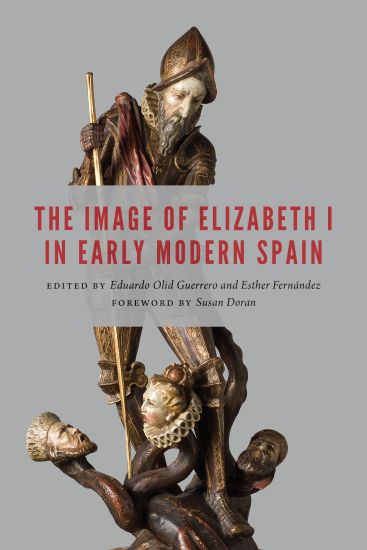
Queen Elizabeth I was an iconic figure in England during her reign, with many contemporary English portraits and literary works extolling her virtue and political acumen. In Spain, however, her image was markedly different. While few Spanish fictional or historical writings focus primarily on Elizabeth, numerous works either allude to her or incorporate her as a character.The Image of Elizabeth I in Early Modern Spain explores the fictionalized, historical, and visual representations of Elizabeth I and their impact on the Spanish collective imagination. Drawing on works by Miguel de Cervantes, Lope de Vega, Pedro de Ribadeneira, Luis de Góngora, Cristóbal de Virués, Antonio Coello, and Calderón de la Barca, among others, the contributors to this volume limn contradictory assessments of Elizabeth’s physical appearance, private life, personality, and reign. In doing so they articulate the various and sometimes conflicting ways in which the Tudor monarch became both the primary figure in English propaganda efforts against Spain and a central part of the Spanish political agenda. This edited volume revives and questions the image of Elizabeth I in early modern Spain as a means of exploring how the queen’s persona, as mediated by its Spanish reception, has shaped the ways in which we understand Anglo-Spanish relations during a critical era for both kingdoms.