Kirjojen hintavertailu. Mukana 11 244 527 kirjaa ja 12 kauppaa.

Kirjahaku

Etsi kirjoja tekijän nimen, kirjan nimen tai ISBN:n perusteella.

16 kirjaa tekijältä Susan Howe

The Nonconformist's Memorial

The Nonconformist's Memorial

Susan Howe

New Directions Publishing Corporation
2017
nidottu
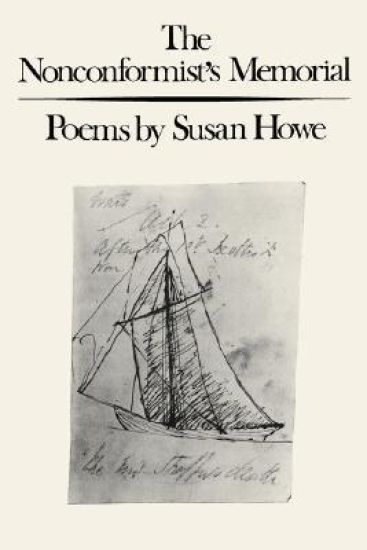
The Nonconformist's Memorial is a gathering of four long sequences that underscores Susan Howe's reputation as one of the leading experimentalists writing today. How is a poet of language in history whose work resonates back through Melville, Dickinson, and Shelley to the seventeenth-century Metaphysicals and Puritans (the nonconformism of the title), and forward again to T. S. Eliot and the abstract expressionists. The sequences fall into two sections, "Turning" and "Conversion," in half-ironic nonconforming counterpart to Eliot's Four Quartets. Her collaging and mirror-imaging of words are concretions of verbal static, visual meditations on what can and cannot be said. For Howe, "Melville's Marginalia" is the essential poem in the collection, an approach to an elusive and allusive mind through Melville's own reading and the notations in his library books. This, says Howe, is "Language a wood for thought."
Frame Structures

Frame Structures

Susan Howe

New Directions Publishing Corporation
2017
nidottu
Gathered here are versions of Hinge Picture (1974), Chanting at the Crystal Sea (1975), Cabbage Gardens (1979), and Secret History of the Dividing Line (1978) that differ in some respects from their original small-press editions. In a long preface, "Frame Structures," written especially for this volume, Howe suggests the autobiographical, familial, literary, and historical motifs that suffuse these early works. Taken together, the preface and poems reflect her rediscovered sense of her own beginnings as a poet, her movement from the visual arts into the iconography of the written word. Susan Howe is a professor of English at the State University of New York—Buffalo. Most of her later poetry has been collected in The Nonconformist's Memorial (New Directions, 1993), The Europe of Trusts: Selected Poems (Sun & Moon Press, 1990), and Singularities (Wesleyan University Press, 1990). She is also the author of two landmark books of postmodernist criticism, The Birth-mark: unsettling the wilderness in American literary history (Wesleyan University Press, 1993) and My Emily Dickinson (North Atlantic Books, 1985).
Pierce-Arrow

Pierce-Arrow

Susan Howe

New Directions Publishing Corporation
2003
nidottu
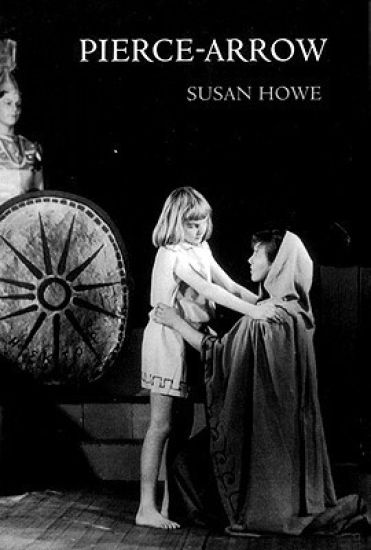
Pierce-Arrow, Susan Howe’s newest book of poems, takes as its point of departure the figure of Charles S. Peirce, the allusive nineteenth-century philosopher-scientist and founder of pragmatism, a man always on the periphery of the academic and social establishment yet intimately conjoined with them by birth and upbringing. Through Peirce and his wife Juliette, a lady of shadowy antecedents, Howe creates an intriguing nexus that explores the darker, melancholy sides of the fin-de-siecle Anglo-American intelligentsia. George Meredith and his wife Mary Ellen, Swinburne and his companion Theodore Watts-Dunton, are among those who also find a place in the three long poem-sequences that comprise the book. Howe’s historical linkings, resonant with the sorrows of love and loss and the tragedies of war, create a compelling canvas of associations. “It’s the blanks and gaps,” she says, “that to me actually represent what poetry is—the connections between seemingly unconnected things—as if there is a place and might be a map to thought, when we know there is not.”
The Europe of Trusts: Poetry

The Europe of Trusts: Poetry

Susan Howe

New Directions Publishing Corporation
2017
nidottu
The Europe of Trusts contains three brilliant, long-unavailable books which Susan Howe first published in the early 1980s: The Liberties, Pythagorean Silence, and Defenestration of Prague. These are the landmark books––following her volumes from the previous decade (Hinge Picture, Chanting at the Crystal Sea, Cabbage Gardens, and Secret History of the Dividing Line)––which established Howe as “one of America’s foremost experimental writers” (Publishers Weekly). “Her work,” as Geoffrey O’Brien put it, “is a voyage of reconnaissance in language, a sounding out of ancient hiding places, and it is a voyage full of risk. ’Words are the only clues we have,’ she has said. ‘What if they fail us?’”
The Midnight

The Midnight

Susan Howe

New Directions Publishing Corporation
2003
nidottu
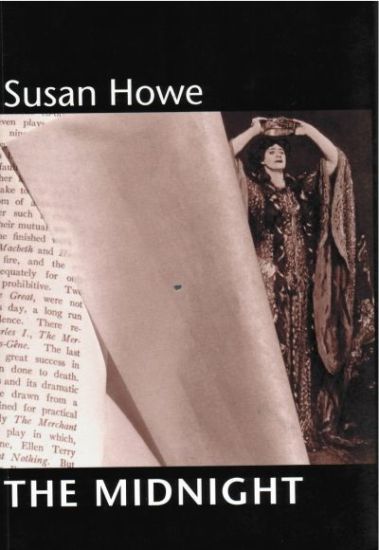
In The Midnight's amply illustrated five sections, three of poetry and two of prose, we find—swirling around the poet's mother—ghosts, family photographs, whispers, interjections, bed hangings, unfinished lace, the fly-leaves of old books, The Master of Ballantrae, the Yeats brothers, Emily Dickinson, Lewis Carroll, Lady Macbeth, Thomas Sheridan, Michael Drayton, Frederick Law Olmsted: a restless brood confronting, absorbing, and refracting history and language. With shades of wit, insomnia, and terror, The Midnight becomes a kind of dialogue in which the prose and poetry sections seem to be dreaming fitfully of each other.
My Emily Dickinson

My Emily Dickinson

Susan Howe

New Directions Publishing Corporation
2017
nidottu
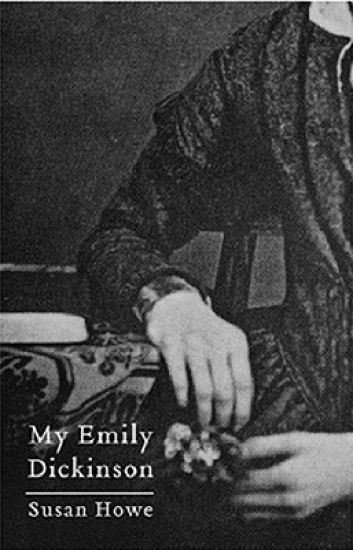
For Wallace Stevens, "Poetry is the scholar's art." Susan Howe—taking the poet-scholar-critics Charles Olson, H.D., and William Carlos Williams (among others) as her guides—embodies that art in her 1985 My Emily Dickinson (winner of the Before Columbus Foundation Book Award). Howe shows ways in which earlier scholarship had shortened Dickinson's intellectual reach by ignoring the use to which she put her wide reading. Giving close attention to the well-known poem, "My Life had stood—a Loaded Gun," Howe tracks Dickens, Browning, Emily Brontë, Shakespeare, and Spenser, as well as local Connecticut River Valley histories, Puritan sermons, captivity narratives, and the popular culture of the day. "Dickinson's life was language and a lexicon her landscape. Forcing, abbreviating, pushing, padding, subtracting, riddling, interrogating, re-writing, she pulled text from text...."
Souls of the Labadie Tract

Souls of the Labadie Tract

Susan Howe

New Directions Publishing Corporation
2007
nidottu
Souls of the Labadie Tract finds Susan Howe exploring (or unsettling) one of her favorite domains, the psychic past of America, with Jonathan Edwards and Wallace Stevens as her presiding tutelary geniuses. Three long poems interspersed with prose pieces, Souls of the Labadie Tract takes as its starting point the Labadists, a Utopian Quietest sect that moved from the Netherlands to Cecil County, Maryland, in 1684. The community dissolved in 1722. In Souls, Howe is lured by archives and libraries, with their ghosts, cranks, manuscripts and scraps of material. One thread winding through Souls is silken: from the epigraphs of Edwards ("the silkworm is a remarkable type of Christ...") and of Stevens ("the poet makes silk dresses out of worms") to the mulberry tree (food of the silkworms) and the fragment of a wedding dress that ends the book. Souls of the Labadie Tract presents Howe with her signature hybrids of poetry and prose, of evocation and refraction: There it is there it is—you want the great wicked city Oh I wouldn't I wouldn't It's not only that you're not It's what wills and will not.
That This

That This

Susan Howe

New Directions Publishing Corporation
2011
nidottu
"What treasures of knowledge we cluster around." That This is a collection in three pieces. "Disappearance Approach," an essay about Howe's husband's sudden death—"land of darkness or darkness itself you shadow mouth"—begins the book with paintings by Poussin, an autopsy, Sarah Edwards and her sister-in-law Hannah, phantoms, and elusive remnants. "Frolic Architecture," the second section—inspired by visits to the vast 18th-century Jonathan Edwards archives at the Beinecke and accompanied by six photograms by James Welling—presents hauntingly lovely, oblique type-collages of Hannah Edwards Wetmore's diary entries that Howe (with scissors, "invisible" Scotch Tape, and a Canon copier) has twisted, flattened, and snipped into inscapes of force. The final section, "That This," delivers beautiful short squares of verse that might look at home in a hymnal, with their orderly appearance packing startling power: That this book is a history of a shadow that is a shadow of Me mystically one in another another another to subserve.
Sorting Facts, or Nineteen Ways of Looking at Marker

Sorting Facts, or Nineteen Ways of Looking at Marker

Susan Howe

New Directions Publishing Corporation
2013
nidottu
Part of our revived "Poetry Pamphlet Series", Sorting Facts is Susan Howe’s masterful meditation on the filmmaker Chris Marker, whose film stills are interspersed throughout. An excerpt: Sorting word-facts I only know an apparition. Scribble grammar has no neighbor. In the name of reason I need to record something because I am a survivor in this ocean.
The Quarry

The Quarry

Susan Howe

New Directions Publishing Corporation
2016
nidottu
A powerful selection of Susan Howe's previously uncollected essays, The Quarry moves backward chronologically, from her brand-new "Vagrancy in the Park" (about Wallace Stevens) through such essential texts as "The Disappearance Approach," "Personal Narrative," "Sorting Facts," "Frame Structures," and "Where Should the Commander Be," and ending with her seminal early criticism, "The End of Art." The essays of The Quarry map the intellectual territory of one of America's most important and vital avant-garde poets.
The Birth-mark

The Birth-mark

Susan Howe

New Directions Publishing Corporation
2017
nidottu
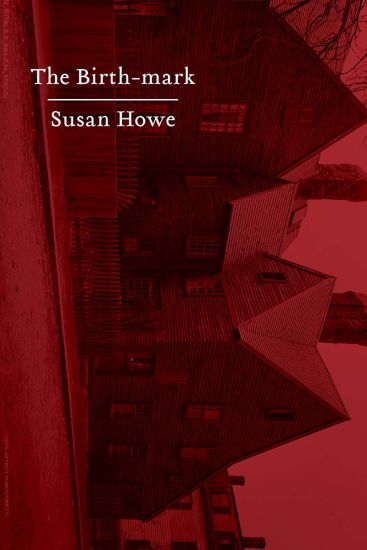
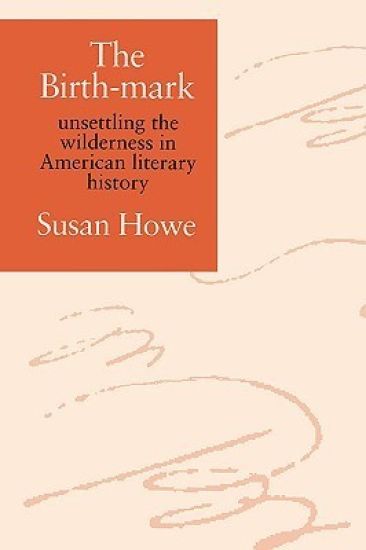
In this classic, groundbreaking exploration of early American literature, Susan Howe reads our intellectual inheritance as a series of civil wars, where each text is a wilderness in which a strange lawless author confronts interpreters and editors eager for settlement. Howe approaches Anne Hutchinson, Mary Rowlandson, Cotton Mather, Hawthorne, Emerson, Melville and Emily Dickinson as a fellow writer—her insights, fierce and original, are rooted in her seminal textural scholarship in examination of their editorial histories of landmark works. In the process, Howe uproots settled institutionalized roles of men and women as well as of poetry and prose—and of poetry and prose. The Birth-mark, first published in 1993, now joins the New Directions canon of a dozen Susan Howe titles.
Debths

Debths

Susan Howe

New Directions Publishing Corporation
2017
nidottu
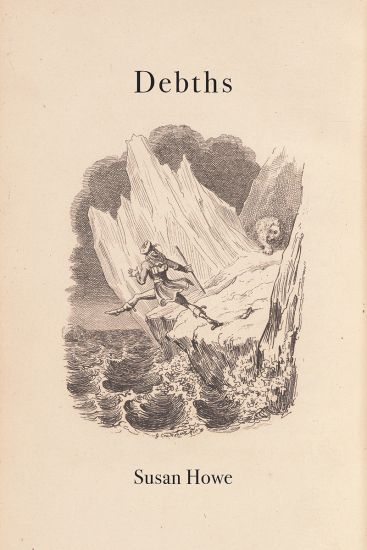
A collection in five parts, Susan Howe’s electrifying new book opens with a preface by the poet that lays out some of Debths’ inspirations: the art of Paul Thek, the Isabella Stewart Gardner collection, and early American writings; and in it she also addresses memory’s threads and galaxies, “the rule of remoteness,” and “the luminous story surrounding all things noumenal.” Following the preface are four sections of poetry: “Titian Air Vent,” “Tom Tit Tot” (her newest collage poems), “Periscope,” and “Debths.” As always with Howe, Debths brings “a not-being-in-the-no.”
Concordance

Concordance

Susan Howe

New Directions Publishing Corporation
2020
nidottu
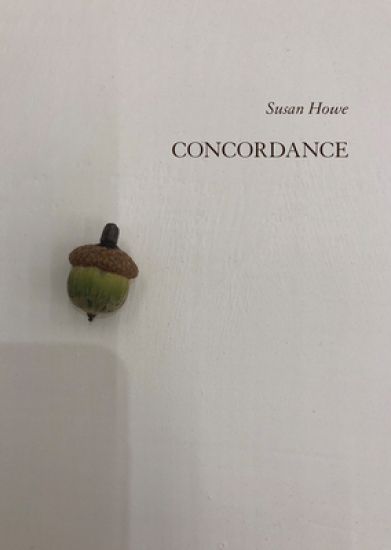
“Only artworks are capable of transmitting chthonic echo-signals,” Susan Howe has said. In Concordance, she has created a fresh body of work transmitting vital signals from a variety of archives. “Since,” a semi-autobiographical prose-poem, opens the collection: concerned with first and last things, meditating on the particular and peculiar affinities between law and poetry, it ranges from the Permian time of Pangea through Rembrandt and Dickinson to the dire present. “Concordance,” a collage poem originally published as a Grenfell Press limited edition, springs from slivers of poetry and marginalia, cut from old concordances and facsimile editions of Milton, Swift, Herbert, Browning, Dickinson, Coleridge, and Yeats, as well as from various field guides to birds, rocks, and trees: the collages’ “rotating prisms” form the heart of the book. The final poem, “Space Permitting,” is collaged from drafts and notes Thoreau sent to Emerson and Margaret Fuller's friends and family in Concord while on a mission to recover her remains from the shipwreck on Fire Island. The fierce ethic of salvage in these three very different pieces expresses the vitalism in words, sounds, syllables, the telepathic spirit of all things singing into air.
Spontaneous Particulars

Spontaneous Particulars

Susan Howe

New Directions Publishing Corporation
2020
nidottu
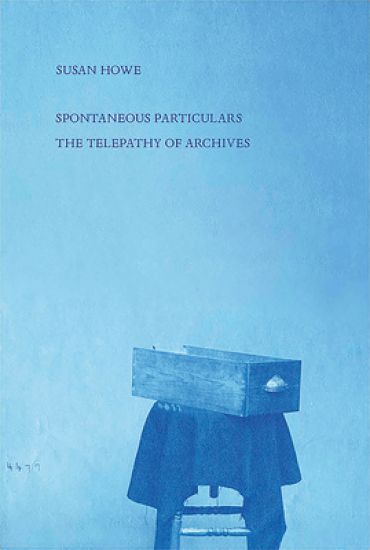
Great American writers—William Carlos Williams, Jonathan Edwards, Emily Dickinson, Noah Webster, Hart Crane, Wallace Stevens, Henry James—all in the physicality of their archival manuscripts (reproduced in beautiful facsimiles here)—are the presiding spirits of Spontaneous Particulars: Telepathy of Archives. Also woven into Susan Howe’s long essay are beautiful photographs of embroideries and textiles from anonymous craftspeople. All the archived materials are links, discoveries, chance encounters, the visual and acoustic shocks of rooting around amid physical archives. These are the telepathies the bibliomaniacal poet relishes. Rummaging in the archives she finds “a deposit of a future yet to come, gathered and guarded...a literal and mythical sense of life hereafter—you permit yourself liberties—in the first place—happiness.” Digital scholarship may offer much for scholars, but Susan Howe loves the materiality of research in real archives and Spontaneous Particulars “is a collaged swan song to the old ways.”
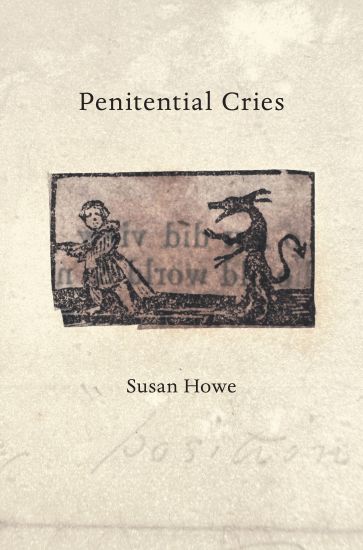
Penitential Cries

Penitential Cries

Susan Howe

NEW DIRECTIONS PUBLISHING CORPORATION
2025
nidottu
What labor to live forever. Speak of the elect what can you do in all this world so much life in the little of it. In four parts, Susan Howe's new book opens with the arresting long prose poem "Penitential Cries," followed by a group of word-collages "Sterling Park in the Dark," "The Deserted Shelf," and finally a brief sparrow poem. Speaking of her new work written in "the evening of life," Howe quotes Thomas Wyatt: My galley, charg d with forgetfulness, / thorough sharp seas in winter nights doth pass. She says: "I love those two lines. Between trespass and penitence. In the wilderness of the Book Stack Tower inquiry is trespass. Now at eighty-seven," the poet adds, regarding Penitential Cries, "I want to express my pilgrim's progress between rocks and paper places. The clock is ticking. It's getting late. Supper is on the table. Our father lies full fifty fathoms five. A storm is coming."
The Birth-mark

The Birth-mark

Susan Howe

Wesleyan University Press
1993
nidottu
Susan Howe approaches early American literature as pet and critic, blending scholarship with passionate commitment and unique view of her subject. The Birth-mark traces the collusive relationships among tradition, the constitution of critical editions, literary history and criticism, the institutionalized roles of poetry and prose, and the status of gender. Through an examination of the texts and editorial histories of Thomas Shepard's conversion narratives, the captivity narrative of Mary Rowlandson, and the poetry of Emily Dickinson, Howe reads our intellectual inheritance as a series of civil wars, where each text is a wilderness in which a strange and lawless author confronts interpreters and editors eager for settlement. In a concluding interview, Howe comments on her approach and recounts some the crucial biographical events that sparked her interest in early American literature.