Kirjojen hintavertailu. Mukana 12 083 983 kirjaa ja 12 kauppaa.

Kirjahaku

Etsi kirjoja tekijän nimen, kirjan nimen tai ISBN:n perusteella.

3 kirjaa tekijältä Susan J. Matt

Homesickness

Homesickness

Susan J. Matt

Oxford University Press Inc
2011
sidottu
Homesickness today is dismissed as a sign of immaturity, what children feel at summer camp, but in the nineteenth century it was recognized as a powerful emotion. When gold miners in California heard the tune "Home, Sweet Home," they sobbed. When Civil War soldiers became homesick, army doctors sent them home, lest they die. Such images don't fit with our national mythology, which celebrates the restless individualism of colonists, explorers, pioneers, soldiers, and immigrants who supposedly left home and never looked back. Using letters, diaries, memoirs, medical records, and psychological studies, this wide-ranging book uncovers the profound pain felt by Americans on the move from the country's founding until the present day. Susan Matt shows how colonists in Jamestown longed for and often returned to England, African Americans during the Great Migration yearned for their Southern homes, and immigrants nursed memories of Sicily and Guadalajara and, even after years in America, frequently traveled home. These iconic representatives of the undaunted, forward-looking American spirit were often homesick, hesitant, and reluctant voyagers. National ideology and modern psychology obscure this truth, portraying movement as easy, but in fact Americans had to learn how to leave home, learn to be individualists. Even today, in a global society that prizes movement and that condemns homesickness as a childish emotion, universities counsel young adults and their families on how to manage the transition away from home, suburbanites pine for their old neighborhoods, and companies take seriously the emotional toll borne by relocated executives and road warriors. In the age of helicopter parents and boomerang kids, and the new social networks that sustain connections across the miles, Americans continue to assert the significance of home ties. By highlighting how Americans reacted to moving farther and farther from their roots, Homesickness: An American History revises long-held assumptions about home, mobility, and our national identity.
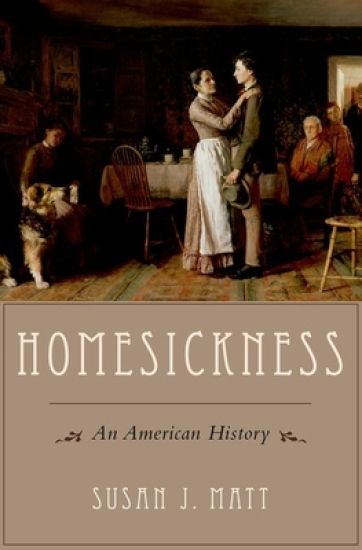
Homesickness

Homesickness

Susan J. Matt

Oxford University Press Inc
2014
nidottu
Homesickness today is dismissed as a sign of immaturity, what children feel at summer camp, but in the nineteenth century it was recognized as a powerful emotion. When gold miners in California heard the tune "Home, Sweet Home," they sobbed. When Civil War soldiers became homesick, army doctors sent them home, lest they die. Such images don't fit with our national mythology, which celebrates the restless individualism of colonists, explorers, pioneers, soldiers, and immigrants who supposedly left home and never looked back. Using letters, diaries, memoirs, medical records, and psychological studies, this wide-ranging book uncovers the profound pain felt by Americans on the move from the country's founding until the present day. Susan Matt shows how colonists in Jamestown longed for and often returned to England, African Americans during the Great Migration yearned for their Southern homes, and immigrants nursed memories of Sicily and Guadalajara and, even after years in America, frequently traveled home. These iconic symbols of the undaunted, forward-looking American spirit were often homesick, hesitant, and reluctant voyagers. National ideology and modern psychology obscure this truth, portraying movement as easy, but in fact Americans had to learn how to leave home, learn to be individualists. Even today, in a global society that prizes movement and that condemns homesickness as a childish emotion, colleges counsel young adults and their families on how to manage the transition away from home, suburbanites pine for their old neighborhoods, and companies take seriously the emotional toll borne by relocated executives and road warriors. In the age of helicopter parents and boomerang kids, and the new social networks that sustain connections across the miles, Americans continue to assert the significance of home ties. By highlighting how Americans reacted to moving farther and farther from their roots, Homesickness: An American History revises long-held assumptions about home, mobility, and our national identity.

Keeping Up with the Joneses

Keeping Up with the Joneses

Susan J. Matt

University of Pennsylvania Press
2002
sidottu
A century ago many Americans condemned envy as a destructive emotion and a sin. Today few Americans expect criticism when they express envy, and some commentators maintain that the emotion drives the economy. This shift in attitude is Susan Matt's central concern. Keeping up with the Joneses: Envy in American Consumer Society, 1890-1930 examines a key transition in the meaning of envy for the American middle class. Although people certainly have experienced envy throughout history, the expansion of the consumer economy at the turn of the twentieth century dramatically reshaped the social role of the emotion. Matt looks at how different groups within the middle class-men in white-collar jobs, bourgeois women, farm families, and children-responded to the transformation in social and cultural life. Keeping Up with the Joneses traces how attitudes about envy changed as department stores, mail-order catalogs, magazines, movies, and advertising became more prevalent, and the mass production of imitation luxury goods offered middle- and working-class individuals the opportunity to emulate upper-class life. Between 1890 and 1910 moralists sought to tame envy and emulation in order to uphold a moral economy and preserve social order. They criticized the liberal-capitalist preoccupation with personal striving and advancement and praised the virtue of contentment. They admonished the bourgeoisie to be satisfied with their circumstances and cease yearning for their neighbors' possessions. After 1910 more secular commentators gained ground, repudiating the doctrine of contentment and rejecting the notion that there were divinely ordained limits on what each class should possess. They encouraged everyone to pursue the objects of desire. Envy was no longer a sin, but a valuable economic stimulant. The expansion of consumer economy fostered such institutions as department stores and advertising firms, but it also depended on a transformation in attitudes and emotional codes. Matt explores the ways gender, geography, and age shaped this transformation. Bridging the history of emotions and the history of consumerism, she uncovers the connection between changing social norms and the growth of the consumer economy.