Kirjojen hintavertailu. Mukana 11 717 486 kirjaa ja 12 kauppaa.

Kirjahaku

Etsi kirjoja tekijän nimen, kirjan nimen tai ISBN:n perusteella.

5 kirjaa tekijältä Susan L. Smith

Japanese American Midwives

Japanese American Midwives

Susan L. Smith

University of Illinois Press
2005
nidottu
In the late nineteenth century, Japan's modernizing quest for empire transformed midwifery into a new woman's profession. With the rise of Japanese immigration to the United States, Japanese midwives (sanba) served as cultural brokers as well as birth attendants for Issei women. They actively participated in the creation of Japanese American community and culture as preservers of Japanese birthing customs and agents of cultural change. Japanese American Midwives reveals the dynamic relationship between this welfare state and the history of women and health. Susan L. Smith blends midwives' individual stories with astute analysis to demonstrate the impossibility of clearly separating domestic policy from foreign policy, public health from racial politics, medical care from women's caregiving, and the history of women and health from national and international politics. By setting the history of Japanese American midwives in this larger context, Smith reveals little-known ethnic, racial, and regional aspects of women's history and the history of medicine.
Sick and Tired of Being Sick and Tired

Sick and Tired of Being Sick and Tired

Susan L. Smith

University of Pennsylvania Press
1995
pokkari
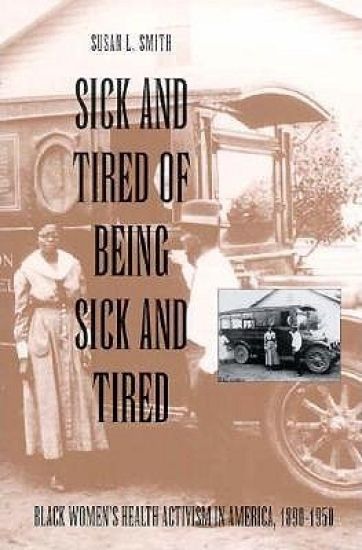
Sick and Tired of Being Sick and Tired moves beyond the depiction of African Americans as mere recipients of aid or as victims of neglect and highlights the ways black health activists created public health programs and influenced public policy at every opportunity. Smith also sheds new light on the infamous Tuskegee syphilis experiment by situating it within the context of black public health activity, reminding us that public health work had oppressive as well as progressive consequences.
The Power of Women

The Power of Women

Susan L. Smith

University of Pennsylvania Press
1995
sidottu
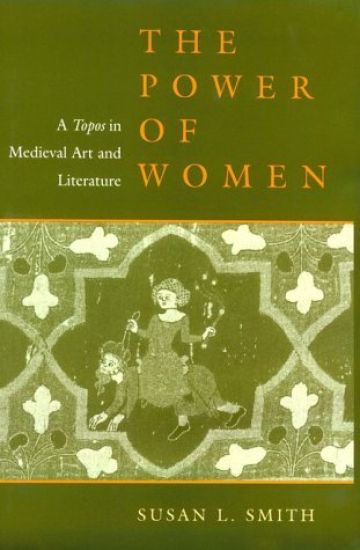
Eve tempting Adam with the apple, Delilah shearing Samson's hair, Phyllis riding the philosopher Aristotle like a horse-from the patristic period through the sixteenth century, examples of disorderly women such as these from the Bible, antiquity, and romance were cited to prove beyond any doubt that women exercise a power that no man, however superior his moral and physical qualities, can resist. An example of Latin topica, loci, or loci communes central to ancient rhetoric and medieval literature, the Power of Women topos illustrated how a woman could dominate, humiliate, and even destroy the man who loved her too well. Two or more infamous female figures were brought together to exemplify a cluster of interrelated themes: the wiles of women, the power of love, and the trials of marriage. Susan L. Smith's comprehensive study of the Power of Women topos in written texts and in art emphasizes the critical phase of its development from the late twelfth to the end of the fourteenth century. During this period , she argues, traditional employment of the topos exclusively to condemn women and justify male authority underwent a dramatic shift as new voices (some of them female voices) appropriated the Power of Women to contest and relativize the misogynistic views it had been created to promote. The Power of Women analyzes the topos's shifting operations in the context of ancient and medieval theories of rhetoric, particularly with respect to the practice of exemplification, which presuppose the possibility of conflicting judgments on disputed topics. Smith further supports her argument by reference to a wide range of recent theoretical writings by Mikhail Bakhtin and others.
Toxic Exposures

Toxic Exposures

Susan L. Smith

Rutgers University Press
2017
sidottu
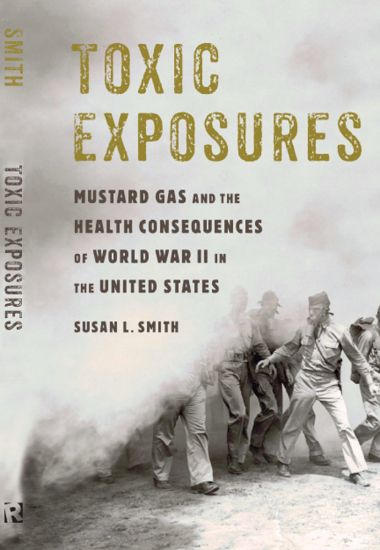
Mustard gas is typically associated with the horrors of World War I battlefields and trenches, where chemical weapons were responsible for tens of thousands of deaths. Few realize, however, that mustard gas had a resurgence during the Second World War, when its uses and effects were widespread and insidious. Toxic Exposures tells the shocking story of how the United States and its allies intentionally subjected thousands of their own servicemen to poison gas as part of their preparation for chemical warfare. In addition, it reveals the racialized dimension of these mustard gas experiments, as scientists tested whether the effects of toxic exposure might vary between Asian, Hispanic, black, and white Americans. Drawing from once-classified American and Canadian government records, military reports, scientists’ papers, and veterans’ testimony, historian Susan L. Smith explores not only the human cost of this research, but also the environmental degradation caused by ocean dumping of unwanted mustard gas. As she assesses the poisonous legacy of these chemical warfare experiments, Smith also considers their surprising impact on the origins of chemotherapy as cancer treatment and the development of veterans’ rights movements. Toxic Exposures thus traces the scars left when the interests of national security and scientific curiosity battled with medical ethics and human rights.
Toxic Exposures

Toxic Exposures

Susan L. Smith

Rutgers University Press
2019
pokkari
Mustard gas is typically associated with the horrors of World War I battlefields and trenches, where chemical weapons were responsible for tens of thousands of deaths. Few realize, however, that mustard gas had a resurgence during the Second World War, when its uses and effects were widespread and insidious. Toxic Exposures tells the shocking story of how the United States and its allies intentionally subjected thousands of their own servicemen to poison gas as part of their preparation for chemical warfare. In addition, it reveals the racialized dimension of these mustard gas experiments, as scientists tested whether the effects of toxic exposure might vary between Asian, Hispanic, black, and white Americans. Drawing from once-classified American and Canadian government records, military reports, scientists’ papers, and veterans’ testimony, historian Susan L. Smith explores not only the human cost of this research, but also the environmental degradation caused by ocean dumping of unwanted mustard gas. As she assesses the poisonous legacy of these chemical warfare experiments, Smith also considers their surprising impact on the origins of chemotherapy as cancer treatment and the development of veterans’ rights movements. Toxic Exposures thus traces the scars left when the interests of national security and scientific curiosity battled with medical ethics and human rights.