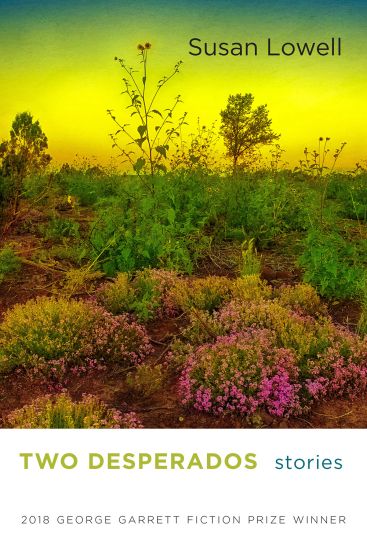
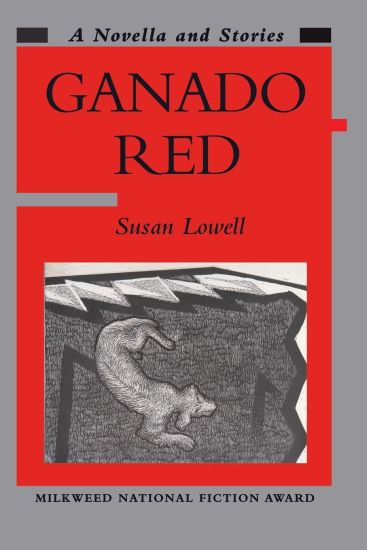
From KIRKUS REVIEWS: Lowell collects a novella and eight short stories, primarily set in various eras of the American Southwest. In "The Kill," a Montanan's choice of college is on the other side of the country, in Princeton, New Jersey, but he doesn't stray far from his roots; he even keeps a hunting rifle under his bed, and his ways seem to fascinate his English professor. However, for the most part, a theme of shared experience threads through Lowell's book. In "Lavinia Peace," wife and mother Lynn has spent her life in the Western United States, unlike her single, free-spirited sister, Catherine. But the two share, via photos and letters, memories of their great-grandmother and her great love, George. Similarly, the titular novella follows myriad characters through decades in Arizona and New Mexico, all connected by a rug that Adjiba Yazzie first weaves in 1920. It changes hands and homes several times until the 1980s, and its discernible blood-red color signifies a unity among people who otherwise have no blood relation. The author's lyrical prose has a surreal quality; in "White Canyon," for example, a young girl in the 1950s suffers a fall, and the scene abruptly transitions to 1980, when she's living in Dallas with her husband and child. As an adult, she has headaches and seems to lose time, which may stem from radiation exposure when she was younger. But in all of Lowell's tales, her prose ignites the senses, such as in the description of a woman weeping over a stove and hearing "tears dropping upon the hot metal with faint hisses." Adjiba is described as enjoying working outside "under the broad blue sky" with the cottonwood trees' "fresh light green against the cinnamon sand." Scholes' simple but distinctive black-and-white sketches preface each story as well as each of the novella's five chapters. Incisive, profound, and colorful tales.Here, a striking first collection--eight stories and a novella--from Lowell, winner of the first Milkweed Editions National Fiction Prize. Lowell writes mostly about the American Southwest and shows more interest in terrain--both psychic and geographic--than plot. Tenses shift, time speeds up and slows down, and Lowell's characters often Fall down existential rabbit-holes of memory, fear, or angst. These stories have an almost dreamlike movement but, grounded as they are in precise and poetic detail, they remain convincingly real. The narrator of ""White Canyon"" shares her nostalgic memories of childhood in a Utah uranium-mining camp: along with more innocuous scenes, there's the chattering of Geiger counters during a fallout storm. Then the story jumps to the present, with the narrator's hospitalization and discovery of a brain tumor. All of a sudden, her memories are not merely nostalgic, but an attempt to make sense of experience and perception. Lowell is adept at presenting cross-sections of society: ""Los Mojados"" looks at the relationships between two generations of Anglo ranchers, Mexican cowboys, and illegal aliens; ""Wild Pigs"" charts the reactions of five different households to the javelinas that appear in a one-time desert wilderness now developed for condos, highways and Pizza Huts; the novella ""Ganado Red,"" in five storylike chapters, follows a Navajo rug from the hands of the woman who weaves it in 1920. through the hands of the various people who buy it up until 1981. An impressive debut--and a splendid start for the Milkweed Editions contest.