Best known for her work documenting the political upheaval in Central America during the 1970s and 80s, American photographer Susan Meiselas has been at the forefront of ethical debates around documentary photography for most of her career. Through close engagement with subjects such as war and exploitation, she has interrogated her own relationship to what she’s photographing, the circulation and dissemination of these images, and the pivotal questions around social and cultural representation and memory. Her influential contribution to the way audiences approach and engage with photography is as vital and resonant today as it was 40 years ago. This new addition to the Photofile series also includes short texts by Meiselas herself accompanying each work in the volume.
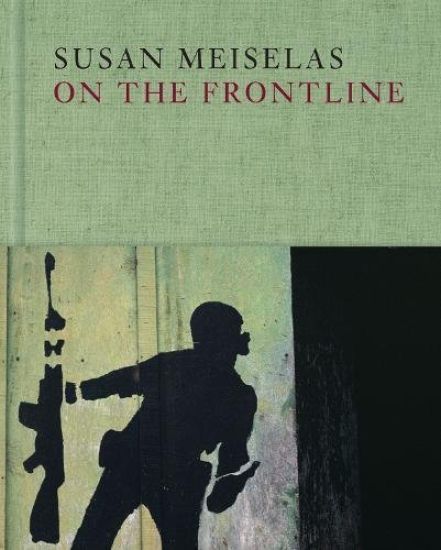
This landmark book offers a synthesis of celebrated Magnum photographer Susan Meiselas’s views on her work and the role of the documentary photographer. Through text drawn largely from exclusive interviews with editor Mark Holborn, she offers a remarkable commentary on her career, from early work with carnival strippers, through groundbreaking reportage on Nicaragua and El Salvador, to projects encompassing subjects as varied as the Dani tribe of Indonesia, the Kurds of Northern Iraq and victims of domestic violence in California. Central to Meiselas’s work are themes of collaboration, return and exchange. With over 110 photographs – some classics, others rarely published – this book demonstrates how the frontline on which Meiselas has worked involves a bearing of witness and a gathering of evidence. As Meiselas has stated: ‘To continue on is to be curious – to be compelled to confront, to examine, to expose, to engage, and not know where you will end up or how the journey will change you. The frontline is always a choice.’
This exhaustive monograph of Susan Meiselas will be released in occasion of the retrospective that will take place at Tàpies Foundation in Barcelone, Jeu de Paume in Paris and SFMOMA in San Francisco. Mediations is published by Damiani/Jeu de Paume/Fondation Tàpies. This exhibition and monograph propose a selection of works from the 1970s to today which reveal the particular approach of Susan Meiselas toward to the underlying reasons for making photographs, how the image concerns it’s subject as much as the photographer and the role that these images can have at different levels in society and particularly in photojournalism. She questions the relationship between the image and the subject in such a way as to include the people portrayed in the image in the process of the making. There is nothing systematic in her approach: each work expresses in a very strong manner that context is vital to the understanding of photography. Therefore her work is specific to the persons portrayed, to the notion of community to which they belong and to the locality of the geographic and political territories that the artist addresses. The way of the showing the work is equally a part of the thought process. How does the spectator behold the artwork? It is often comprised of many parts, made in different media: each “layer” is used to document a level of meaning. For Meiselas one should be able to grasp why the image was taken. Both the subject of the image and the context in which the images are shown are taken into account in the elaboration of each project.
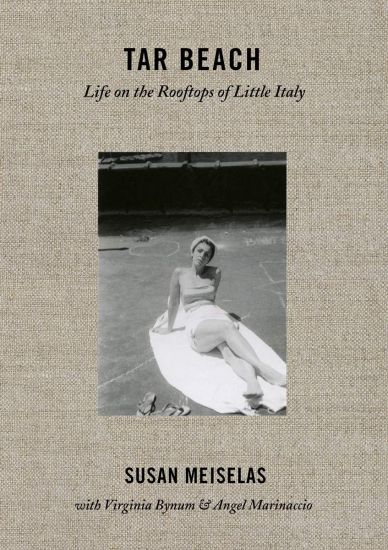
Tar Beach. On the Rooftops of Little Italy brings together photographs and memories of life in and around the rooftops of Little Italy, New York. These are pictures that were made, kept and gathered by various families who handed them down from 1940 to the early 1970's. Reflections from the community offer perspectives of multiple generations, as Angel Marinaccio says: “If you had an accomplishment— communion, confirmation, wedding, graduation or birthday, you’d dress up in your best outfit and go to the rooftop to take pictures and celebrate with your family.” We see the images they shared and saved. The introduction to Tar Beach is written by renown filmmaker Martin Scorsese who grew up on the streets portrayed in this collection. He writes: “The roof was our escape hatch and it was our sanctuary. The endless crowds, the filth and the grime, the constant noise, the chaos, the claustrophobia, the non-stop motion of everything… you would walk up that flight of stairs, open the door, and you were above it all. You could breathe. You could dream. You could be.” Photographer Susan Meiselas, along with two of her neighbours, Angel Marinaccio and Virginia Dell’Orio, collected and curated these vernacular photographs to convey the feeling of this special place and time in the daily lives of Italian immigrants as they made their way to becoming part of American culture. The book is designed by Yolanda Cuomo.
A revolutionary history of photography from a stellar team of writers and thinkers that challenges all existing narratives by focusing on the complex collaborations between photographer and subject. This groundbreaking and multifaceted history explores photography through the lens of collaboration, and in so doing challenges the dominant narratives around photographic history and authorship. Led by five of photography’s great thinkers and practitioners, it breaks apart the ‘single creator’ tradition by bringing to light tangible traces of collaboration – the various relationships, exchanges and interactions which occur between all participants in the event of photography. Over 115 photography projects are surveyed in eight thematic chapters, and presented non-hierarchically alongside quotes, testimonies and concise texts by guest contributors. These networks of texts and images provide perspective on a vast array of photographic themes, from Araki’s provocative portraits of women to archival files from the Spanish Civil War. With more than 550 photographs and over 100 text contributors, Collaboration is an inspiration for teaching and an open invitation to scholars, activists, photographers and others to practice always with and alongside others, and to participate actively in this engagement and enquiry.
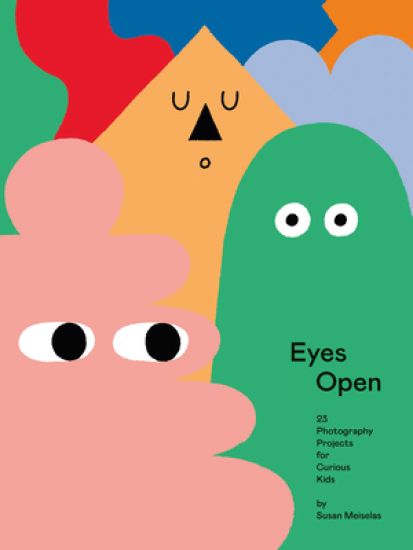
Compiled by Magnum photojournalist Susan Meiselas, Eyes Open is a sourcebook of photography ideas for kids—to engage with the world through the camera. Twenty-three enticing projects help inspire a process of discovery and new ways of telling stories and animating ideas. Eyes Open features photographs by young people from around the globe, as well as work by professional artists that demonstrates how a simple idea can be expanded. Playful and meaningful, this book is for young would-be photographers and those interested in expressing themselves creatively.
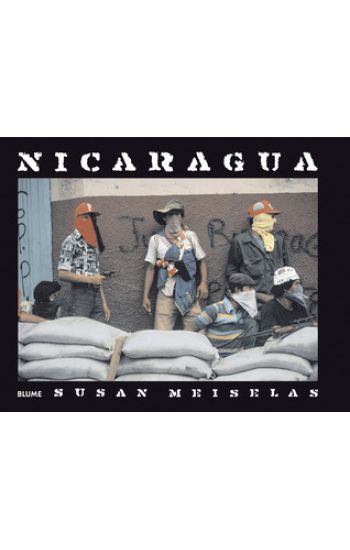
A classic of photojournalism, Nicaragua presents an extraordinary narrative of a country gripped by turbulence and uncertainty and traces the evolution of the popular resistance that led to an insurrection and would culminate with the triumph of the Sandinista revolution in 1979. The photographs are a cautionary tale about the barbarities of the modern civil war and delve into the repressive political struggle in Latin America. The book includes Pictures from a Revolution, a DVD in which Meiselas returns to the places she photographed and interviews some of her subjects about the realities of post-revolution Nicaragua. Un cl sico del fotoperiodismo, Nicaragua presenta una narrativa extraordinaria de un pa s en turbulencia y traza la evoluci n de la resistencia popular que dio lugar a la insurrecci n y que culmin con el triunfo de la revoluci n sandinista en 1979. Las fotograf as son un relato admonitorio sobre las barbaridades de una guerra civil moderna y hurgan en la lucha pol tica represiva de Am rica Latina. El libro incluye Im genes de una revoluci n, un DVD donde Meiselas regresa a los escenarios que fotografi y entrevista a algunas personas sobre la realidad de la Nicaragua posrevolucionaria.
A new, revolutionary history of photography from a stellar team of writers and thinkers that challenges all existing narratives by focusing on the complex collaborations between photographer and subject. Collaboration presents a groundbreaking and multifaceted history of photography which explores photography through the lens of collaboration, challenging the dominant narratives around photographic history and authorship. In a vast, collaborative effort led by five of the great thinkers and practitioners in photography that includes more than 550 photographs and over 80 text contributors, this book breaks apart photography’s ‘single creator’ tradition by bringing to light tangible traces of collaboration – the various relationships, exchanges and interactions which occur between all participants in the event of photography. This book will provide the keys to understanding and decoding the complex politics of seeing. The conditions of collaboration in photography are explored through over 100 photography projects, divided into eight thematic chapters. The photographs from each project are presented non-hierarchically alongside quotes, testimonies, and short texts by guest contributors. These networks of texts and images provide perspective on a vast array of photographic themes, from Araki’s provocative portraits of women to archival files from the Spanish Civil War. Collaboration is not an ultimate account of what photography is, does, or means. Rather, the book is an inspiration for teaching and an open invitation to scholars, activists, photographers and others to practice always with and alongside others and participate actively in this engagement and enquiry.
In 2012, the Eastman Kodak Company declared bankruptcy. That same year, a group of ten photographers from Magnum Photos—Jim Goldberg, Bruce Gilden, Susan Meiselas, Martin Parr, Paolo Pellegrin, Alessandra Sanguinetti, Alec Soth, Larry Towell, Alex Webb, and Donovan Wylie, plus Chien-Chi Chang, who documented the process in audio and video—established a temporary base of operations in Rochester, New York, former home to the once-dominant manufacturer of photographic film. Their goal: to create both a documentary archive of that city’s culture and landscape, and a photo-based experience engaging its residents; and to investigate a community of picture-makers comprised not only of Eastman Kodak, but also the Visual Studies Workshop, George Eastman House, Rochester Institute of Technology, and the citizens of Rochester. Over the course of almost three weeks, photographers, students, faculty, and residents worked together to create a visual record of the city and its people at a time of significant transition. Nathan Lyons, founding director of the Visual Studies Workshop, describes the result as “not only a major documentary project, but a celebration of photography within the city that had for years been a center of imaging technologies.” Upon arrival in Rochester, Martin Parr gave each photographer the task of assembling one hundred photographs to form the basis of an archive. Rochester 585/716 presents all one thousand images, together with commentary by poets Cornelius Eady and Marie Howe, art historian and photo theorist Laura Wexler, and photographer and educator Nathan Lyons. Five sets of the images were printed as a portfolio, each of which now resides in major private and public collections. Two artist proof sets were also created, one of which will be dispersed via the one thousand copies of this publication. Each individual copy contains a single loose print, selected at random from this additional set.
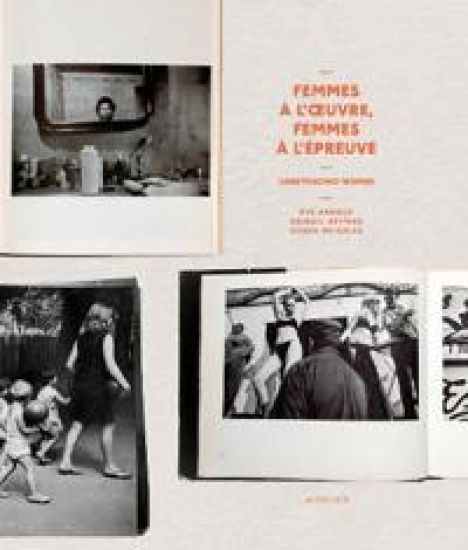
In the mid-1970s in the United States as feminism gained huge momentum, three American photographers Eve Arnold, Abigail Heyman and Susan Meiselas published books of a new kind. Combining testimonies and images, they offer very original documentaries of women at work, their daily routines and their private lives. The trio brought their own style and experimented with the book format while showing women in a new light through photography. Their work sidestepped clichés to create alternative representations.This catalogue reveals their unusual approach to their works. The first, Growing Up Female by Abigail Heyman, published in 1974, is a kind of feminist personal diary. The photographer casts a lucid eye at her own life and questions the imprisonment of women in stereotype roles. The second, The Unretouched Woman, published by Eve Arnold in 1976, shows unknown women and celebrities in unexpected moments of their daily lives. The photos were deliberately not retouched or staged and, through them, the photographer offers a heteroclite and nuanced vision of women far from the glamour of glossy magazines. The third, Carnival Strippers, published in the same year by Susan Meiselas, is the fruit of three years of investigation into fairground striptease sideshows in the north-east of the United States. Through the performers’ long testimonies, the book gives a voice to its silent subjects, depicting their work, their dreams and their ambitions.The images provide an original perspective of female bodies, revealing their invisible make-up artistry and the staging involved behind their public appearances. In doing so it reveals a surprising, previously unseen glimpse into their sometimes prosaic, sometimes harsh private lives. It also reveals the social conventions and norms defining the status of women in society, within couples or within the domestic space to reveal working women, striving for independence and freedom.