Kirjojen hintavertailu. Mukana 11 627 363 kirjaa ja 12 kauppaa.

Kirjahaku

Etsi kirjoja tekijän nimen, kirjan nimen tai ISBN:n perusteella.

5 kirjaa tekijältä Susan Ostrov Weisser

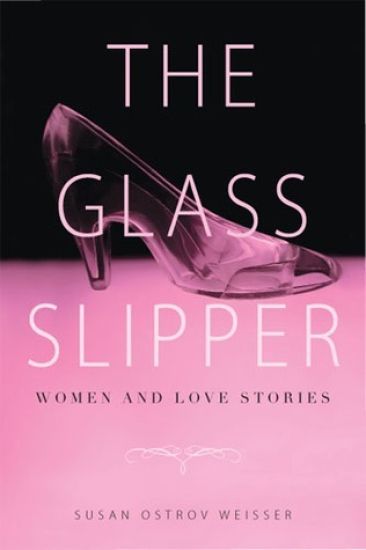
The Glass Slipper

The Glass Slipper

Susan Ostrov Weisser

Rutgers University Press
2013
nidottu
Why is the story of romance in books, magazines, and films still aimed at women rather than at men? Even after decades of feminism, traditional ideas and messages about romantic love still hold sway and, in our “postfeminist” age, are more popular than ever. Increasingly, we have become a culture of romance: stories of all kinds shape the terms of love. Women, in particular, love a love story.The Glass Slipper is about the persistence of a familiar Anglo-American love story into the digital age. Comparing influential classics to their current counterparts, Susan Ostrov Weisser relates in highly amusing prose how these stories are shaped and defined by and for women, the main consumers of romantic texts. Following a trajectory that begins with Jane Austen and concludes with Internet dating sites, Weisser shows the many ways in which nineteenth-century views of women’s nature and the Victorian idea of romance have survived the feminist critique of the 1970s and continue in new and more ambiguous forms in today’s media, with profound implications for women.More than a book about romance in fiction and media, The Glass Slipper illustrates how traditional stories about women’s sexuality, femininity, and romantic love have survived as seemingly protective elements in a more modern, feminist, sexually open society, confusing the picture for women themselves. Weisser compares diverse narratives—historical and contemporary from high literature and “low” genres—discussing novels by Jane Austen and Charlotte Brontë, Victorian women’s magazines, and D. H. Lawrence’s Lady Chatterley’s Lover; Disney movies; popular Harlequin romance novels; masochistic love in films; pornography and its relationship to romance; and reality TV and Internet ads as romantic stories. Ultimately, Weisser shows that the narrative versions of the Glass Slipper should be taken as seriously as the Glass Ceiling as we see how these representations of romantic love are meant to inform women’s beliefs and goals. In this book, Weisser’s goal is not to shatter the Glass Slipper, but to see through it.
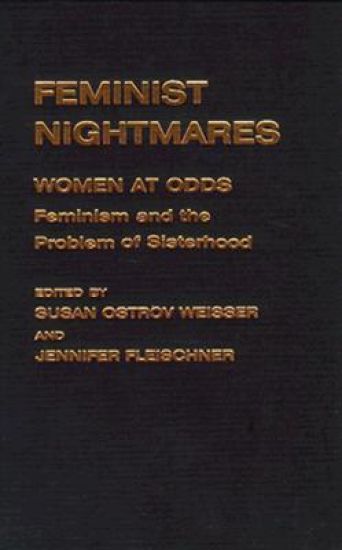
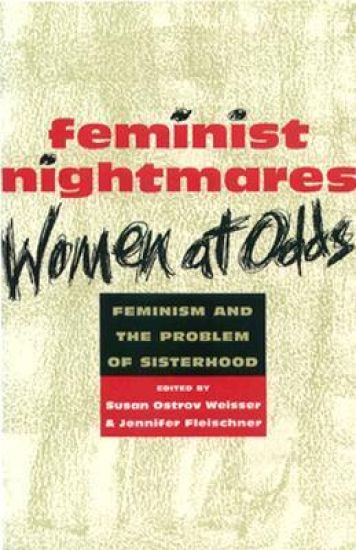
Feminist Nightmares: Women at Odds

Feminist Nightmares: Women at Odds

Susan Ostrov Weisser

New York University Press
1994
sidottu
Though all women are women, no woman is only a woman, wrote Elizabeth Spelman in The Inessential Woman. Gone are the days when feminism translated simply into the advocacy of equality for women. Women's interests are not always aligned; race, class, and sexuality complicate the equation. In recent years, feminist ideologies have become increasingly diverse. Today, one feminist's most ardent political opponent may well be another feminist. As feminism grows increasingly diverse, the time has come to ask a painful and frequently avoided question: what does it mean for women to oppress women? This pathbreaking, provocative anthology addresses this troublesome dilemma from various feminist perspectives, offering an interdisciplinary collection of writings that widens our understanding of oppression to take into account women who are at odds. The book examines the social, political, and psychological ramifications of this phenomenon, as evidenced in a range of texts, from women's antislavery writing to women's anti-abortion writing, from mother-daughter incest stories to maternal surrogacy narratives, from the Bible to the popular romance nove, from Jane Austen to Alice Walker. The value of the volume is perhaps best summed up by an early response to the idea?This is a book that should never be written; feminists should concentrate on how men oppress women. Ironically, it is precisely because the subject triggers such responses, the authors argue, that a volume such as Feminist Nightmares has become a necessity.
Feminist Nightmares: Women at Odds

Feminist Nightmares: Women at Odds

Susan Ostrov Weisser

New York University Press
1994
pokkari
Though all women are women, no woman is only a woman, wrote Elizabeth Spelman in The Inessential Woman. Gone are the days when feminism translated simply into the advocacy of equality for women. Women's interests are not always aligned; race, class, and sexuality complicate the equation. In recent years, feminist ideologies have become increasingly diverse. Today, one feminist's most ardent political opponent may well be another feminist. As feminism grows increasingly diverse, the time has come to ask a painful and frequently avoided question: what does it mean for women to oppress women? This pathbreaking, provocative anthology addresses this troublesome dilemma from various feminist perspectives, offering an interdisciplinary collection of writings that widens our understanding of oppression to take into account women who are at odds. The book examines the social, political, and psychological ramifications of this phenomenon, as evidenced in a range of texts, from women's antislavery writing to women's anti-abortion writing, from mother-daughter incest stories to maternal surrogacy narratives, from the Bible to the popular romance nove, from Jane Austen to Alice Walker. The value of the volume is perhaps best summed up by an early response to the idea?This is a book that should never be written; feminists should concentrate on how men oppress women. Ironically, it is precisely because the subject triggers such responses, the authors argue, that a volume such as Feminist Nightmares has become a necessity.
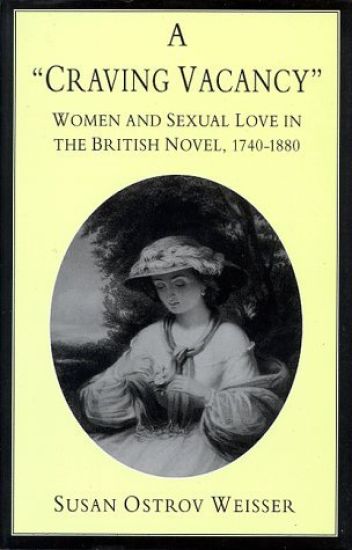
A "Craving Vacancy"

A "Craving Vacancy"

Susan Ostrov Weisser

New York University Press
1997
sidottu
What is the problem of sexual love? Neither inclusive of all aspects of sexuality nor fully synonomous with the idealized mythos of romantic love, sexual love as desire is marked by the highly charged intersection of sexuality and romantic love; it is a space where gender is imagined and enacted. In A Craving Vacancy, Susan Ostrov Weisser examines sexuality in the context of changing ideas of romantic love and feminity in Victorian Britain. Focusing her analysis on the works of Samuel Richardson, George Eliot, and Emily and Charlotte Bronte, Weisser reveals the complex relationship between conceptions of romantic passion and ideologies of sexuality. She illuminates the Victorian period as a time when these conceptions were shifting according to changing ideas of gender. With close attention to textual details, she introduces the concept of Moral Femininity, placing it in useful opposition to the competing Victorian ideal of the Lady.By forging a direct link between sexuality and romantic love ideology in the 19th century, and by highlighting the way in which the literary preoccupation with these subjects arises from anxieties about the construction of gender, A Craving Vacancy breaks important new ground.
A "Craving Vacany"

A "Craving Vacany"

Susan Ostrov Weisser

New York University Press
1997
pokkari
What is the problem of sexual love? Neither inclusive of all aspects of sexuality nor fully synonomous with the idealized mythos of romantic love, sexual love as desire is marked by the highly charged intersection of sexuality and romantic love; it is a space where gender is imagined and enacted. In A Craving Vacancy, Susan Ostrov Weisser examines sexuality in the context of changing ideas of romantic love and feminity in Victorian Britain. Focusing her analysis on the works of Samuel Richardson, George Eliot, and Emily and Charlotte Bronte, Weisser reveals the complex relationship between conceptions of romantic passion and ideologies of sexuality. She illuminates the Victorian period as a time when these conceptions were shifting according to changing ideas of gender. With close attention to textual details, she introduces the concept of Moral Femininity, placing it in useful opposition to the competing Victorian ideal of the Lady.By forging a direct link between sexuality and romantic love ideology in the 19th century, and by highlighting the way in which the literary preoccupation with these subjects arises from anxieties about the construction of gender, A Craving Vacancy breaks important new ground.