Kirjahaku
Etsi kirjoja tekijän nimen, kirjan nimen tai ISBN:n perusteella.
9 kirjaa tekijältä Susanna Partsch
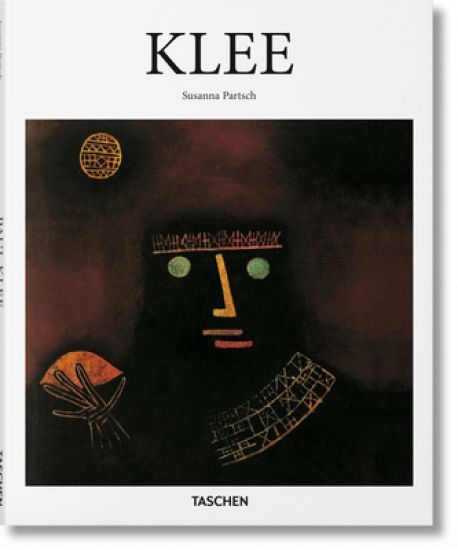
With meticulous theories and many thousands of paintings, drawings, and watercolors, Paul Klee (1879–1940) is considered one of the most cerebral and prolific leaders of 20th-century European art. Though typically small in scale, his works are remarkable for their sophisticated thought and meticulous nuances of line, color, and tonality. Klee’s stylistic formation was shaped by early affiliation with the German expressionist group Der Blaue Reiter and, in particular, by a 1914 trip to Tunisia which transformed his use of color. After the war, he taught at the esteemed Bauhaus school, where his lectures, like his emerging practice, emphasized the symbolic potential of shade, line, and geometry. Klee was also inspired by Cubism, poetry, music, literature, language, and the simplistic power of children’s art. Famed for his simple stick figures, he often combined the appearance of untutored naïveté with rigorous composition and intellectual significance. This book provides a selection of key Klee works to introduce his style and influence. From sun-drenched landscapes to enigmatic wordplay, discover a world at once simplistic, symbolic, and dazzlingly colorful.
With meticulous theories and many thousands of paintings, drawings, and watercolors, Paul Klee (1879–1940) is considered one of the most cerebral and prolific leaders of 20th-century European art. Though typically small in scale, his works are remarkable for their sophisticated thought and meticulous nuances of line, color, and tonality. Klee’s stylistic formation was shaped by early affiliation with the German expressionist group Der Blaue Reiter and, in particular, by a 1914 trip to Tunisia which transformed his use of color. After the war, he taught at the esteemed Bauhaus school, where his lectures, like his emerging practice, emphasized the symbolic potential of shade, line, and geometry. Klee was also inspired by Cubism, poetry, music, literature, language, and the simplistic power of children’s art. Famed for his simple stick figures, he often combined the appearance of untutored naïveté with rigorous composition and intellectual significance. This book provides a selection of key Klee works to introduce his style and influence. From sun-drenched landscapes to enigmatic wordplay, discover a world at once simplistic, symbolic, and dazzlingly colorful.
With meticulous theories and many thousands of paintings, drawings, and watercolors, Paul Klee (1879–1940) is considered one of the most cerebral and prolific leaders of 20th-century European art. Though typically small in scale, his works are remarkable for their sophisticated thought and meticulous nuances of line, color, and tonality. Klee’s stylistic formation was shaped by early affiliation with the German expressionist group Der Blaue Reiter and, in particular, by a 1914 trip to Tunisia which transformed his use of color. After the war, he taught at the esteemed Bauhaus school, where his lectures, like his emerging practice, emphasized the symbolic potential of shade, line, and geometry. Klee was also inspired by Cubism, poetry, music, literature, language, and the simplistic power of children’s art. Famed for his simple stick figures, he often combined the appearance of untutored naïveté with rigorous composition and intellectual significance. This book provides a selection of key Klee works to introduce his style and influence. From sun-drenched landscapes to enigmatic wordplay, discover a world at once simplistic, symbolic, and dazzlingly colorful.

Printmaker, landscape painter, and cofounder of Der Blaue Reiter (“The Blue Rider”), Franz Marc (1880–1916) left an exceptional legacy in German Expressionism. His work absorbed influences including Paul Gauguin, van Gogh, Picasso, Henri Matisse, and Robert Delaunay to galvanize a new vocabulary of form and color.Especially keen on depictions of animals, Marc’s work began emphasizing cubist, semiabstracted shapes; frenetic, whirling compositions; and in his paintings, a new vocabulary of color. Marc located spiritual values in different shades. Blue was spirituality and masculinity. Yellow depicted femininity and joy. Red hues correlated to anger and violence.It was with his friend and peer Wassily Kandinsky that Marc founded Der Blaue Reiter, a loose band of artists connected by a shared interest in woodcuts and prints, the symbolic values of color, and spontaneous approaches to painting. The group was short-lived, dissolving with the onset of the First World War—which would also claim Marc’s life in 1916—but it set an Expressionist standard that would flourish for decades.In this new edition in TASCHEN’s popular Basic Art series, we meet this pivotal figure of German art and explore his short but hugely accomplished career, which at once defined an era and set an enduring point of Expressionist reference.About the seriesBorn back in 1985, the Basic Art Series has evolved into the best-selling art book collection ever published. Each book in TASCHEN’s Basic Art series features:a detailed chronological summary of the life and oeuvre of the artist, covering his or her cultural and historical importancea concise biographyapproximately 100 illustrations with explanatory captions