Kirjojen hintavertailu. Mukana 12 083 983 kirjaa ja 12 kauppaa.

Kirjahaku

Etsi kirjoja tekijän nimen, kirjan nimen tai ISBN:n perusteella.

7 kirjaa tekijältä Suzanne Bost

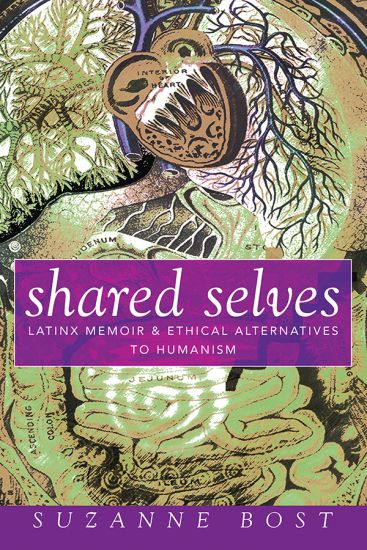
Shared Selves

Shared Selves

Suzanne Bost

University of Illinois Press
2019
sidottu
Memoir typically places selfhood at the center. Interestingly, the genre's recent surge in popularity coincides with breakthroughs in scholarship focused on selfhood in a new way: as an always renewing, always emerging entity. Suzanne Bost draws on feminist and posthumanist ideas to explore how three contemporary memoirists decenter the self. Latinx writers John Rechy, Aurora Levins Morales, and Gloria E. Anzaldúa work in places where personal history intertwines with communities, environments, animals, plants, and spirits. This dedication to interconnectedness resonates with ideas in posthumanist theory while calling on indigenous worldviews. As Bost argues, our view of life itself expands if we look at how such frameworks interact with queer theory, disability studies, ecological thinking, and other fields. These webs of relation in turn mediate experience, agency, and lift itself.A transformative application of posthumanist ideas to Latinx, feminist, and literary studies, Shared Selves shows how memoir can encourage readers to think more broadly and deeply about what counts as human life.
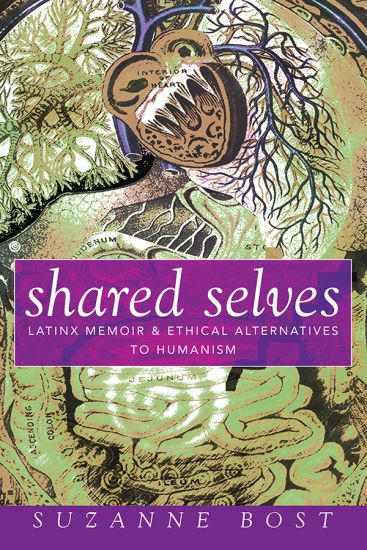
Shared Selves

Shared Selves

Suzanne Bost

University of Illinois Press
2019
nidottu
Memoir typically places selfhood at the center. Interestingly, the genre's recent surge in popularity coincides with breakthroughs in scholarship focused on selfhood in a new way: as an always renewing, always emerging entity. Suzanne Bost draws on feminist and posthumanist ideas to explore how three contemporary memoirists decenter the self. Latinx writers John Rechy, Aurora Levins Morales, and Gloria E. Anzaldúa work in places where personal history intertwines with communities, environments, animals, plants, and spirits. This dedication to interconnectedness resonates with ideas in posthumanist theory while calling on indigenous worldviews. As Bost argues, our view of life itself expands if we look at how such frameworks interact with queer theory, disability studies, ecological thinking, and other fields. These webs of relation in turn mediate experience, agency, and lift itself.A transformative application of posthumanist ideas to Latinx, feminist, and literary studies, Shared Selves shows how memoir can encourage readers to think more broadly and deeply about what counts as human life.
Mulattas and Mestizas

Mulattas and Mestizas

Suzanne Bost

University of Georgia Press
2005
pokkari
In this broadly conceived exploration of how people represent identity in the Americas, Suzanne Bost argues that mixture has been central to the definition of race in the United States, Mexico, and the Caribbean since the nineteenth century. Her study is particularly relevant in an era that promotes mixed-race musicians, actors, sports heroes, and supermodels as icons of a "new" America. Bost challenges the popular media's notion that a new millennium has ushered in a radical transformation of American ethnicity; in fact, this paradigm of the "changing" face of America extends throughout American history.Working from literary and historical accounts of mulattas, mestizas, and creoles, Bost analyzes a tradition, dating from the nineteenth century, of theorizing identity in terms of racial and sexual mixture. By examining racial politics in Mexico and the United States; racially mixed female characters in Anglo-American, African American, and Latina narratives; and ideas of mixture in the Caribbean, she ultimately reveals how the fascination with mixture often corresponds to racial segregation, sciences of purity, and white supremacy. The racism at the foundation of many nineteenth-century writings encourages Bost to examine more closely the subtexts of contemporary writings on the "browning" of America.Original and ambitious in scope, Mulattas and Mestizas measures contemporary representations of mixed-race identity in the United States against the history of mixed-race identity in the Americas. It warns us to be cautious of the current, millennial celebration of mixture in popular culture and identity studies, which may, contrary to all appearances, mask persistent racism and nostalgia for purity.
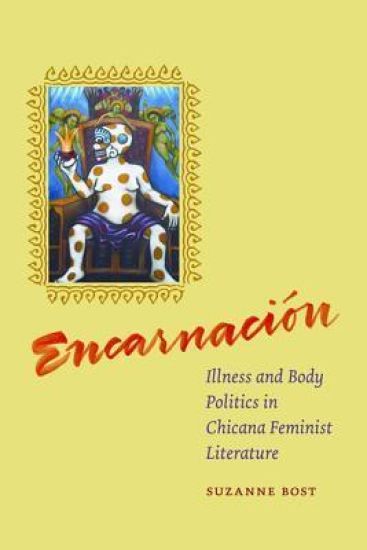
Encarnacion

Encarnacion

Suzanne Bost

Fordham University Press
2009
sidottu
Encarnación takes a new look at identity. Following the contemporary movement away from the fixed categories of identity politics toward a more fluid conception of the intersections between identities and communities, this book analyzes the ways in which literature and philosophy draw boundaries around identity. The works of Gloria Anzaldúa, Cherríe Moraga, and Ana Castillo, in particular, enable us to examine how identities shift and intersect with others through processes of "incarnation." Since the 1980s, critics have come to equate these writers with Chicana feminist identity politics. This critical trend, however, has been unable to account for these writers' increasing emphasis on bodies that are sick, disabled, permeable, and, oftentimes, mystical. Encarnación thus turns our attention to aspects of these writers' work that are usually ignored—Anzaldúa's autobiographical writings about diabetes, Moraga's narrative about her premature baby's medical treatments, and Castillo's figure of a polio-afflicted flamenco dancer—to explore the political and cultural dimensions of illness. Concerned equally with the medical-surgical interventions available in our postmodern age and with the ways of understanding bodies in the Native American and Catholic traditions these writers invoke, Encarnación develops a model for identity that expands beyond the boundaries of individual bodies. The book argues that this model has greater utility for feminism than identity politics because it values human variability, sensation, and openness to others. The methodology of the study is as permeable as the bodies and identities it analyzes. The book brings together discourses as disparate as Mesoamerican anthropology, art history, feminist spirituality, feminist biology, phenomenology, postmodern theory, disability studies, and autobiographical narrative in order to expand our thinking beyond what disciplinary boundaries allow.
Encarnacion

Encarnacion

Suzanne Bost

Fordham University Press
2009
pokkari
Encarnación takes a new look at identity. Following the contemporary movement away from the fixed categories of identity politics toward a more fluid conception of the intersections between identities and communities, this book analyzes the ways in which literature and philosophy draw boundaries around identity. The works of Gloria Anzaldúa, Cherríe Moraga, and Ana Castillo, in particular, enable us to examine how identities shift and intersect with others through processes of "incarnation." Since the 1980s, critics have come to equate these writers with Chicana feminist identity politics. This critical trend, however, has been unable to account for these writers' increasing emphasis on bodies that are sick, disabled, permeable, and, oftentimes, mystical. Encarnación thus turns our attention to aspects of these writers' work that are usually ignored—Anzaldúa's autobiographical writings about diabetes, Moraga's narrative about her premature baby's medical treatments, and Castillo's figure of a polio-afflicted flamenco dancer—to explore the political and cultural dimensions of illness. Concerned equally with the medical-surgical interventions available in our postmodern age and with the ways of understanding bodies in the Native American and Catholic traditions these writers invoke, Encarnación develops a model for identity that expands beyond the boundaries of individual bodies. The book argues that this model has greater utility for feminism than identity politics because it values human variability, sensation, and openness to others. The methodology of the study is as permeable as the bodies and identities it analyzes. The book brings together discourses as disparate as Mesoamerican anthropology, art history, feminist spirituality, feminist biology, phenomenology, postmodern theory, disability studies, and autobiographical narrative in order to expand our thinking beyond what disciplinary boundaries allow.
Quiet Methodologies

Quiet Methodologies

Suzanne Bost

UNIVERSITY OF MINNESOTA PRESS
2025
sidottu
Reimagining humanities scholarship with humility and inclusive attention How might foregrounding the writings of colonized peoples transform the ways we work in the humanities? In an era dominated by loud political rhetoric, Suzanne Bost advocates for quieter modes of scholarship: intellectual humility rather than ego, collaboration and conversation rather than singular argumentation, continual reflection and revision rather than defensiveness, and a willingness to believe in different ways of being and knowing rather than adhering to academic norms. With Quiet Methodologies, she demonstrates practical decolonial scholarship and proposes alternative approaches for fostering meaningful engagement. Turning to feminist, queer, and decolonial writings from Gloria Anzaldúa, Alexis Pauline Gumbs, Audre Lorde, and many others, Bost reflects on what we do when we work with literature, culture, and ideas. She weaves together multiple voices, methods of writing, and culturally diverse epistemologies and uses creative devices such as collage, her own original poetry, revision, lists, images, and conversation to disengage academic thought and writing from colonial theories and archives that have passed as neutral. Eschewing conventional monograph formats, her work embraces a reciprocal and heterogeneous learning process with profound ethical implications. Part of a movement of reimagining research and education through care, Quiet Methodologies is a powerful exploration of the possibilities of criticism during crises. It encourages readers to be visionary and pragmatic, challenging current conditions and offering alternative ideas for the future of the humanities. Retail e-book files for this title are screen-reader friendly with images accompanied by short alt text and/or extended descriptions.
Quiet Methodologies

Quiet Methodologies

Suzanne Bost

UNIVERSITY OF MINNESOTA PRESS
2025
nidottu
Reimagining humanities scholarship with humility and inclusive attention How might foregrounding the writings of colonized peoples transform the ways we work in the humanities? In an era dominated by loud political rhetoric, Suzanne Bost advocates for quieter modes of scholarship: intellectual humility rather than ego, collaboration and conversation rather than singular argumentation, continual reflection and revision rather than defensiveness, and a willingness to believe in different ways of being and knowing rather than adhering to academic norms. With Quiet Methodologies, she demonstrates practical decolonial scholarship and proposes alternative approaches for fostering meaningful engagement. Turning to feminist, queer, and decolonial writings from Gloria Anzaldúa, Alexis Pauline Gumbs, Audre Lorde, and many others, Bost reflects on what we do when we work with literature, culture, and ideas. She weaves together multiple voices, methods of writing, and culturally diverse epistemologies and uses creative devices such as collage, her own original poetry, revision, lists, images, and conversation to disengage academic thought and writing from colonial theories and archives that have passed as neutral. Eschewing conventional monograph formats, her work embraces a reciprocal and heterogeneous learning process with profound ethical implications. Part of a movement of reimagining research and education through care, Quiet Methodologies is a powerful exploration of the possibilities of criticism during crises. It encourages readers to be visionary and pragmatic, challenging current conditions and offering alternative ideas for the future of the humanities. Retail e-book files for this title are screen-reader friendly with images accompanied by short alt text and/or extended descriptions.