Kirjojen hintavertailu. Mukana 11 699 587 kirjaa ja 12 kauppaa.

Kirjahaku

Etsi kirjoja tekijän nimen, kirjan nimen tai ISBN:n perusteella.

6 kirjaa tekijältä Sybil Oldfield

The Black Book

The Black Book

Sybil Oldfield

Profile Books Ltd
2020
sidottu
'Thoroughly researched and fascinating' Observer 'Wondrous ... a formidable piece of scholarship' Bookanista In 1939, the Gestapo created a list of names: the Britons whose removal would be the Nazis' first priority in the event of a successful invasion. Who were they? What had they done to provoke Germany? For the first time, the historian Sybil Oldfield uncovers their stories and reveals why the Nazis feared their influence. Those on the hitlist - more than half of them naturalised refugees - were many of Britain's most gifted and humane inhabitants. Among their numbers we find the writers E. M. Forster and Virginia Woolf, humanitarians and religious leaders, scientists and artists, the social reformers Margery Fry and Eleanor Rathbone MP, the artists Jacob Epstein and Oscar Kokoschka. By examining these targets of Nazi hatred, Oldfield not only sheds light on the Gestapo worldview; she also movingly reveals a network of truly exemplary Britons: mavericks, moral visionaries and unsung heroes.

The Black Book

The Black Book

Sybil Oldfield

Profile Books Ltd
2022
pokkari
'Oldfield's thoroughly researched and fascinating historical biography explores the lives of many of the 2,600 citizens who attracted Hitler's ire, ranging from high-profile entertainers and writers to those naturalised refugees who doggedly resisted the Nazis from afar' - Observer In 1939, the Gestapo created a list of names: the Britons whose removal would be the Nazis' priority in the event of a successful invasion. Who were they? What had they done to provoke Germany? For the first time, the historian Sybil Oldfield uncovers their stories and reveals why the Nazis feared their influence. Those on the hitlist - many of them naturalised refugees - were some of Britain's most gifted and humane inhabitants. They included writers, humanitarians, religious leaders, scientists, artists, and social reformers. By examining these targets of Nazi hatred, Oldfield not only sheds light on the Gestapo worldview but also movingly reveals a network of truly exemplary Britons: mavericks, moral visionaries and unsung heroes.
Jeanie, an 'Army of One'

Jeanie, an 'Army of One'

Sybil Oldfield

LIVERPOOL UNIVERSITY PRESS
2007
nidottu
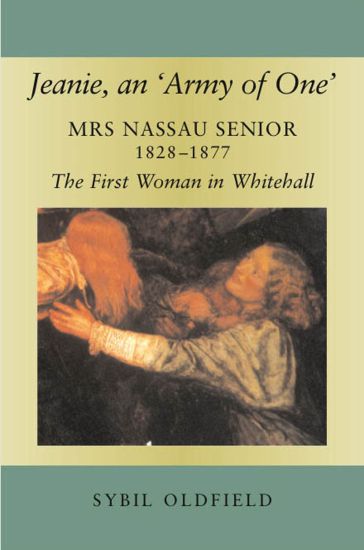
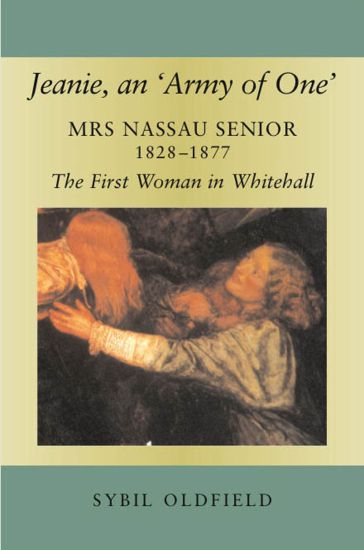
This first full biography of Mrs. Nassau Senior, 1822-1877, tells how an extraordinary woman escaped from the constraints of Victorian domesticity to become the first woman in Whitehall and one of Britain's great social reformers. An ardent Christian Socialist radical, like her brother Thomas Hughes (author of Tom Brown's Schooldays), Jeanie Senior pioneered social work with Octavia Hill, co-founded the British Red Cross in the Franco-Prussian war and battled as 'Government Inspector' on behalf of exploited Workhouse girls. She was ferociously attacked for advocating the fostering of all pauper orphans rather than their incarceration and for indicting Workhouse 'Barrack' schools for producing prostitution fodder. Her fight to defend her findings against male hostility politicised her and she became an icon for the late 19th century women's movement. Jeanie Senior was also a significant figure in the worlds of art, music and literature, even being, it is argued here, the vital inspiration for her friend George Eliot in creating Dorothea, heroine of Middlemarch. Her life was a great 'human story' as she struggled in the teeth of multiple bereavement, an unhappy marriage and cancer in order to rescue others more desperate and vulnerable still. Florence Nightingale told her she had been 'a noble Army of one' and later grieved that her 'premature death was a national and irreparable loss'.
Thinking Against the Current

Thinking Against the Current

Sybil Oldfield

LIVERPOOL UNIVERSITY PRESS
2013
sidottu
This collection of literary/historical essays, written 1970-2010, covers political subjects as diverse as 17th Century Quaker persecution history, the social impact of Malthus, the self-emancipation of English women, Eleanor Rathbone on the human rights of girls and German women's resistance to Hitler. The more literary subjects include the social thinking of the English Romantics, Dickens' Great Expectations, Simone Weil's great essays attacking militarism and Virginia Woolf's opposition to the State -- as well as contemporary American women poets on the problem of war. But despite all its diversity, this collection has one unifying theme -- the necessity for resistance, for thinking against the current', as Virginia Woolf wrote in Thoughts on Peace in an Air-raid'. The torch of resistance to oppression and militarism is shown to have been continuously handed on through the generations from the seventeenth century to our own day by men and women who had the courage, at whatever personal cost, to 'fight with the mind'. This book of passionate, lively essays is not merely a treasure trove for biographical researchers; it is also strengthening medicine, introducing us to unfamiliar forebears who can help us in our current struggle for a better world. As Simone Weil said: "We can find something better than ourselves in the past".
Thinking Against the Current

Thinking Against the Current

Sybil Oldfield

Sussex Academic Press
2014
nidottu
This collection of literary/historical essays, written 1970-2010, covers political subjects as diverse as 17th Century Quaker persecution history, the social impact of Malthus, the self-emancipation of English women, Eleanor Rathbone on the human rights of girls and German women's resistance to Hitler. The more literary subjects include the social thinking of the English Romantics, Dickens' Great Expectations, Simone Weil's great essays attacking militarism and Virginia Woolf's opposition to the State -- as well as contemporary American women poets on the problem of war. But despite all its diversity, this collection has one unifying theme -- the necessity for resistance, for thinking against the current', as Virginia Woolf wrote in Thoughts on Peace in an Air-raid'. The torch of resistance to oppression and militarism is shown to have been continuously handed on through the generations from the seventeenth century to our own day by men and women who had the courage, at whatever personal cost, to 'fight with the mind'. This book of passionate, lively essays is not merely a treasure trove for biographical researchers; it is also strengthening medicine, introducing us to unfamiliar forebears who can help us in our current struggle for a better world. As Simone Weil said: "We can find something better than ourselves in the past".
Jeanie, an 'Army of One'

Jeanie, an 'Army of One'

Sybil Oldfield

Sussex Academic Press
2007
sidottu
This first full biography of Mrs. Nassau Senior, 1822-1877, tells how an extraordinary woman escaped from the constraints of Victorian domesticity to become the first woman in Whitehall and one of Britain's great social reformers. An ardent Christian Socialist radical, like her brother Thomas Hughes (author of Tom Brown's Schooldays), Jeanie Senior pioneered social work with Octavia Hill, co-founded the British Red Cross in the Franco-Prussian war and battled as 'Government Inspector' on behalf of exploited Workhouse girls. She was ferociously attacked for advocating the fostering of all pauper orphans rather than their incarceration and for indicting Workhouse 'Barrack' schools for producing prostitution fodder. Her fight to defend her findings against male hostility politicised her and she became an icon for the late 19th century women's movement. Jeanie Senior was also a significant figure in the worlds of art, music and literature, even being, it is argued here, the vital inspiration for her friend George Eliot in creating Dorothea, heroine of Middlemarch. Her life was a great 'human story' as she struggled in the teeth of multiple bereavement, an unhappy marriage and cancer in order to rescue others more desperate and vulnerable still. Florence Nightingale told her she had been 'a noble Army of one' and later grieved that her 'premature death was a national and irreparable loss'.