Kirjojen hintavertailu. Mukana 11 717 486 kirjaa ja 12 kauppaa.

Kirjahaku

Etsi kirjoja tekijän nimen, kirjan nimen tai ISBN:n perusteella.

4 kirjaa tekijältä Sybil Sharpe

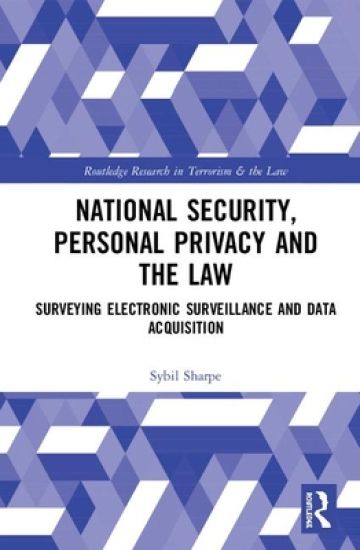
National Security, Personal Privacy and the Law
There have been significant changes in public attitudes towards surveillance in the last few years as a consequence of the Snowden disclosures and the Cambridge Analytica scandal. This book re-evaluates competing arguments between national security and personal privacy. The increased assimilation between the investigatory powers of the intelligence services and the police and revelations of unauthorised surveillance have resulted in increased demands for transparency in information gathering and for greater control of personal data. Recent legal reforms have attempted to limit the risks to freedom of association and expression associated with electronic surveillance. This book looks at the background to recent reforms and explains how courts and the legislature are attempting to effect a balance between security and personal liberty within a social contract. It asks what drives public concern when other aspects seem to be less contentious. In view of our apparent willingness to post on social media and engage in online commerce, it considers if we are truly consenting to a loss of privacy and how this reconciles with concerns about state surveillance.
National Security, Personal Privacy and the Law
There have been significant changes in public attitudes towards surveillance in the last few years as a consequence of the Snowden disclosures and the Cambridge Analytica scandal. This book re-evaluates competing arguments between national security and personal privacy. The increased assimilation between the investigatory powers of the intelligence services and the police and revelations of unauthorised surveillance have resulted in increased demands for transparency in information gathering and for greater control of personal data. Recent legal reforms have attempted to limit the risks to freedom of association and expression associated with electronic surveillance. This book looks at the background to recent reforms and explains how courts and the legislature are attempting to effect a balance between security and personal liberty within a social contract. It asks what drives public concern when other aspects seem to be less contentious. In view of our apparent willingness to post on social media and engage in online commerce, it considers if we are truly consenting to a loss of privacy and how this reconciles with concerns about state surveillance.

Search and Surveillance

Search and Surveillance

Sybil Sharpe

Routledge
2019
nidottu
This title was first published in 2000: The development of 'search and surveillance' powers are amongst the most controversial issues to confront modern policing and studies of criminal law and criminal justice. This book is the first to challenge the orthodox concept of 'search' in the context of police investigation. Drawing upon extensive international case studies, it provides a fundamental new 'definition' of the highly charged debate surrounding the powers of law enforcers to gather evidence and information for use in criminal proceedings. The book also evaluates the compatibility of these powers of investigation with constitutional and human rights, set in the context of the changing objectives of investigators. Its balance of practical evaluation and in-depth analysis will make it a key text for academics and practitioners alike.
Search and Surveillance

Search and Surveillance

Sybil Sharpe

Routledge
2017
sidottu
This title was first published in 2000: The development of 'search and surveillance' powers are amongst the most controversial issues to confront modern policing and studies of criminal law and criminal justice. This book is the first to challenge the orthodox concept of 'search' in the context of police investigation. Drawing upon extensive international case studies, it provides a fundamental new 'definition' of the highly charged debate surrounding the powers of law enforcers to gather evidence and information for use in criminal proceedings. The book also evaluates the compatibility of these powers of investigation with constitutional and human rights, set in the context of the changing objectives of investigators. Its balance of practical evaluation and in-depth analysis will make it a key text for academics and practitioners alike.