Kirjojen hintavertailu. Mukana 11 699 587 kirjaa ja 12 kauppaa.

Kirjahaku

Etsi kirjoja tekijän nimen, kirjan nimen tai ISBN:n perusteella.

3 kirjaa tekijältä Sylvia Davey

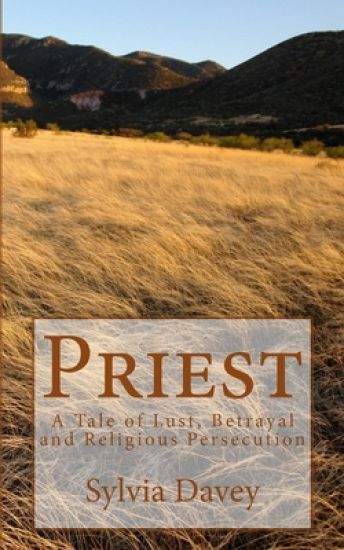
Priest

Priest

Sylvia Davey

Createspace Independent Publishing Platform
2017
nidottu
Pierre Clergue is the priest in the title. He's an authentic character: he was the priest in the medieval village of Montaillou in the French Pyrenees in the fourteenth century. However, he has very little of the priest about him. He's more like a mafia man. He doesn't do anything physically nasty himself, you understand, apart from chase women. He can pretend to be pious and a good catholic. But he has henchmen, who will cut out tongues and even commit murder on his behalf when someone gets in his way. He and his brother Bernard, the bailiff, rule the village, pocketing money from the villagers' tithes and appropriating their property when the Inquisition arrests them for heresy. For nearly everyone in the village is a heretic, a Cathar, a follower of the religious sect which flourished throughout southern France in medieval times. But eventually, the fingers of the church point at Clergue himself. Who has betrayed him? One of his many women perhaps or a bitter villager? And will he be able to use his skills as a manipulator of people, a charmer of important officials, to wriggle out of the Inquisition's grasp? Most of the novel's characters are also authentic, as is the action.The characters' lives, what they said, what they did, were recorded for ever in Latin in the documents of the Inquisitional Court which interrogated them. The Bishop of the court in Pamiers, Jacques Fournier, took the records with him to the Vatican when he later became Pope Benedict XIIth. Even more intriguing is the fact that the current mayor of Montaillou is Jean Clergue and there are many more Clergues in the village cemetery. Our priest's church is there too. A largely true story of ordinary people. A refreshing change from Kings, Queens and other toffs.
Beatrice

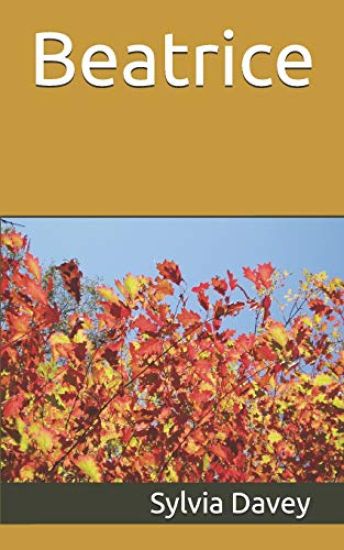
Beatrice

Sylvia Davey

Createspace Independent Publishing Platform
2018
nidottu
Consigned in a cold, arranged marriage to Berenger de Roquefort, the lord of the remote medieval village of Montaillou in the French Pyrenees, we follow Beatrice as she struggles with life, a life in which women are scarcely valued, except to produce an heir. She is raped and subjected to the prolonged and abusive propositioning of Father Clergue, the village priest. She loses her husband, her sons, her home. And meanwhile the Inquisition is extending its claws across the surrounding countryside and imprisoning and burning people at the slightest whiff of heresy. This is the time of the heretic Cathars and Beatrice comes originally from a Cathar family. Another marriage gives her some happiness, or rather 'contentment', which she says is not the same thing. It is only when she has become confident enough to choose her own lover, that she finds true happiness. But it doesn't last long. She and her new partner are taken and imprisoned along with some of her former villagers. She is accused of heresy, witchcraft and scandalous behaviour. They are all interrogated by the Inquisitional Judge, BIshop Jacques Fournier. Their statements are recorded in Latin and removed to the Vatican when Fournier later became Pope Benedict X11 in 1334. These records now provide a unique source for historians today as well as the 'stuff' of this novel. Read to find out about Beatrice's life and if she survives her imprisonment. She was a woman, alive 700 years ago, who tried to stand against the standards of her time.
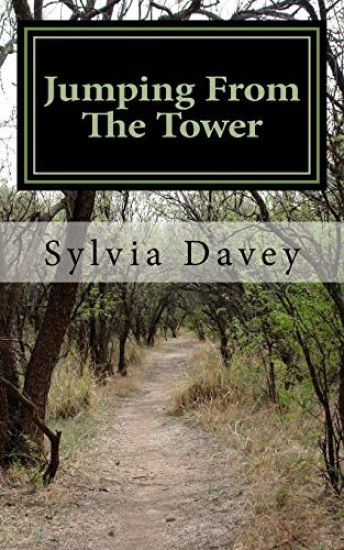
Jumping From The Tower

Jumping From The Tower

Sylvia Davey

Createspace Independent Publishing Platform
2018
nidottu
Two young men grow up in medieval France in the high Pyrenees: Arnaud, a quiet lad, who lives with his Catholic father after his Cathar mother has thrown them both out of the family home, and Cathar Guillaume, a cocky loudmouth, who kills a man in a brawl and has to go on the run. Arnaud becomes an itinerant cobbler and Guillaume somehow finds himself a Bonhomme, one of the Cathar holy men. The Cathars were a heretical sect who flourished throughout southern France in the thirteenth and fourteenth centuries. They were persecuted by the French Inquisition and their Bonhommes assured of certain burning at the stake if caught. Life was difficult for all Cathars and the dangers very real, especially for their holy men. Arnaud is bitter because the eventual burning of his mother means he loses his family, his mother's house and all her wealth. Is he looking for revenge? Guillaume does not have the qualities of a holy man. He is greedy, scheming and even manipulates his best friend to cover up the fact that his mistress is pregnant. Bonhommes were not supposed to be sexual beings, but Guillaume is almost everything Bonhommes were not supposed to be. He is desperate to remain at the centre of the little Cathar community which has established itself around him in Catalonia, where many Cathars went into exile to escape the Officers of the Inquisition. When the two men eventually discover one another in Catalonia, a friendship of sorts develops between them. Guillaume is initially wary, but slowly begins to trust Arnaud. Arnaud is at first friendly but as he begins to understand the sort of man Guillaume is, and the money to be made from betrayal, a dilemma sets in. A spectacular 'sting' is set up. Read to find out how Guillaume is drawn from the safety of his life in Catalonia into the hands of Jacques Fournier, the Bishop Inquisitor of Pamiers. These are more authentic characters from Bishop Fournier's Inquisition Register, which he took to the Vatican when he became Pope Benedict X11 in 1334.