Kirjojen hintavertailu. Mukana 11 627 067 kirjaa ja 12 kauppaa.

Kirjahaku

Etsi kirjoja tekijän nimen, kirjan nimen tai ISBN:n perusteella.

8 kirjaa tekijältä T. G. Otte

Statesman of Europe

Statesman of Europe

T. G. Otte

PENGUIN BOOKS LTD
2023
pokkari
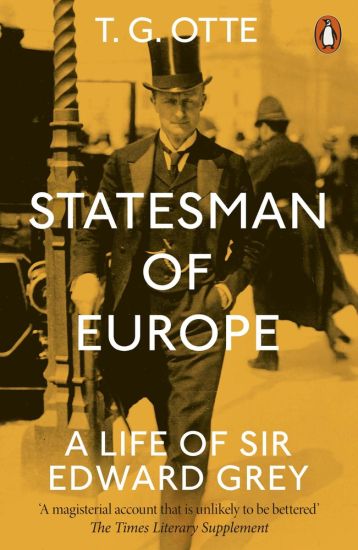
'The lamps are going out all over Europe. We shall not see them lit again in our life-time.' The words of Sir Edward Grey, looking out from the windows of the Foreign Office at the end of August 1914, are amongst the most famous in European history, and encapsulate the impending end of the nineteenth-century world.The man who spoke them was Britain's longest-ever serving Foreign Secretary (in a single span of office) and one of the great figures of late Victorian and Edwardian Britain. Statesman of Europe describes the three decades before the First World War through the prism of his biography, which is based almost entirely on archival sources and presents a detailed account of the main domestic and international events, and of the main personalities of the era. In particular, it presents a fresh understanding of the approach to war in the years and months before its outbreak, and Grey's role in the unfolding of events.Yet Grey's life was not all public affairs, momentous as those were. He disliked being in London, much preferring country life at Fallodon, his family estate in Northumberland, and displayed none of the ambition of his contemporaries (or successors). He attended assiduously to his duties as director of the Great North Eastern Railway, one of the transformative enterprises in industry and communications of the period, and wanted to spend as much time as he could fishing. Apart from his memoirs, the only book he wrote was called The Charm of Birds. This hinterland gave quality to his judgements, and made his character attractive to his contemporaries.This important book is the definitive biography of one of the pivotal figures in European diplomacy, and a magnificent portrait of an age.
Leuthen

Leuthen

T. G. Otte

Oxford University Press
2024
sidottu
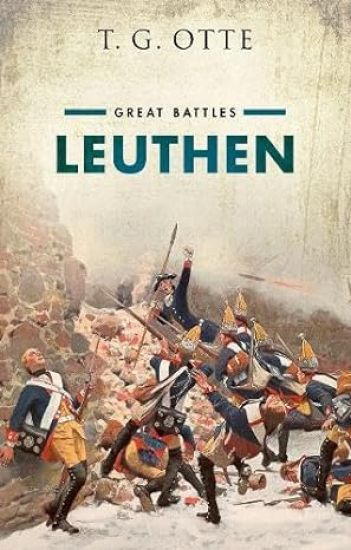
Leuthen (1757) is one of the best-known battles of the Seven Years' War, the most consequential conflict in continental Europe between the Thirty Years' War and the wars of Revolutionary and then Napoleonic France. It was a victory against the odds, over a vastly superior Austrian enemy who held the initiative in the war. Leuthen confirmed the reputation of Frederick II ('the Great') of Prussia as one of history's greatest military commanders. His victory rested on superior drill and firepower, intelligent use of the terrain, and his perfecting of the 'oblique battle order'. But faulty intelligence and flawed decision-making on the Austrian side were no less important, as T.G. Otte shows in this reappraisal of events. Leuthen was of profound significance for the war and for the future course of European history. Frederick's victory reversed the military dynamic of the current conflict. It kept Prussia in the war, preserved the existence of the Prussian state, and laid the foundations of its further rise with consequences beyond Frederick's own times. It also ensured Britain's final commitment to what was becoming a global conflict. The significance of Prussia's victory extended beyond the military sphere. The 'Leuthen myth', encapsulated in the evocative image of Frederick's exhausted grenadiers intoning the church hymn 'Now thank ye all our Lord', shaped political and historical disputes in nineteenth- and twentieth-century Germany. It also influenced the intellectual assumptions that underpinned Prusso-German war planning before the First World War. The 'Chorale of Leuthen' provided the accompanying chords of German cultural developments up to the collapse of the Third Reich in the burning ruins of Berlin. But even to the present day its echo can still be heard. As with other great battles, Leuthen is constantly reassessed and rewritten as an element of national culture and identity.
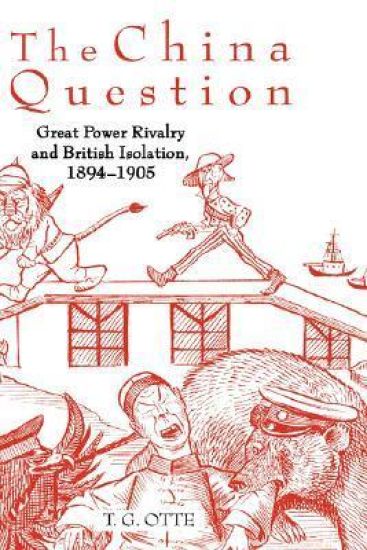
The China Question

The China Question

T. G. Otte

Oxford University Press
2007
sidottu
Between 1894 and 1905 the question of the Chinese Empire's future development, its survival even, was the most pressing overseas problem facing the Great Powers. The frantic 'scramble for Africa' and the often more intense drama of the 'Eastern Question' notwithstanding, it was the 'China Question' that had the most profound implications for the Powers. Since China's defeat in the 1894-5 war with Japan, the country's final disintegration was widely anticipated; and so was a wider Great Power conflict in the event of China's implosion. At times, that prospect seemed very real. The prospect of China's break-up and of large-scale international conflict in its wake altered the configuration among the Great Powers. Instability in the Far East had ramifications beyond the confines of the region; and, as this study shows, the events of 1894-5 initiated a wider transformation of international politics. No Power was more affected by these changes than Britain. The 'China Question', therefore, provides an ideal prism through which to view the problems of late nineteenth-century British world policy, and the policy of 'isolationism' in particular. This study breaks new ground by adopting a deliberately global approach in looking at British policy, emphasizing the connections between European and overseas developments, and by encompassing diplomatic, commercial, financial, and strategic factors as well as the politics of foreign policy.
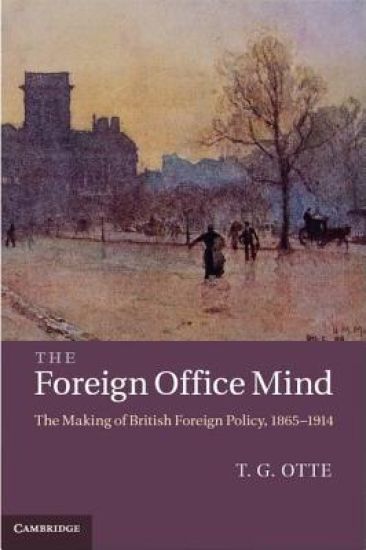
The Foreign Office Mind

The Foreign Office Mind

T. G. Otte

Cambridge University Press
2011
sidottu
With this pioneering approach to the study of international history, T. G. Otte reconstructs the underlying principles, élite perceptions and 'unspoken assumptions' that shaped British foreign policy between the death of Palmerston and the outbreak of the First World War. Grounded in a wide range of public and private archival sources, and drawing on sociological insights, The Foreign Office Mind presents a comprehensive analysis of the foreign service as a 'knowledge-based organization', rooted in the social and educational background of the diplomatic élite and the broader political, social and cultural fabric of Victorian and Edwardian Britain. The book charts how the collective mindset of successive generations of professional diplomats evolved, and reacted to and shaped changes in international relations during the second half of the nineteenth century, including the balance of power and arms races, the origins of appeasement and the causes of the First World War.
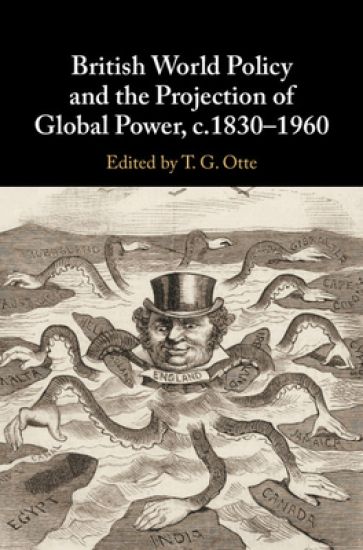
British World Policy and the Projection of Global Power, c.1830–1960
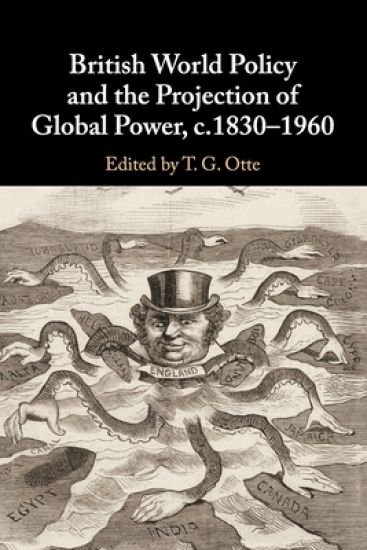
A fundamental truth about British power in the nineteenth century and beyond was that Britain was a global power. Her international position rested on her global economic, naval and political presence; and her foreign policy operated on a global scale. This volume throws into sharp relief the material elements of British power, but also its less tangible components, from Britain's global network of naval bases to the vast range of intersecting commercial, financial and intelligence relationships, which reinforced the country's political power. Leading historians reshape the scholarly debate surrounding the nature of British global power at a crucial period of transformation in international politics, and in so doing they deepen our understanding of the global nature of British power, the shifts in the international landscape from the high Victorian period to the 1960s, and the changing nature of the British state in this period.
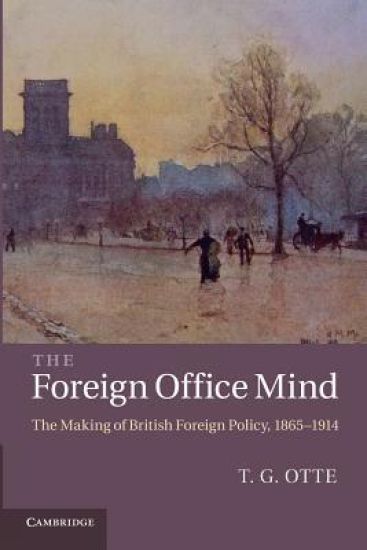
The Foreign Office Mind

The Foreign Office Mind

T. G. Otte

Cambridge University Press
2013
pokkari
With this pioneering approach to the study of international history, T. G. Otte reconstructs the underlying principles, élite perceptions and 'unspoken assumptions' that shaped British foreign policy between the death of Palmerston and the outbreak of the First World War. Grounded in a wide range of public and private archival sources, and drawing on sociological insights, The Foreign Office Mind presents a comprehensive analysis of the foreign service as a 'knowledge-based organization', rooted in the social and educational background of the diplomatic élite and the broader political, social and cultural fabric of Victorian and Edwardian Britain. The book charts how the collective mindset of successive generations of professional diplomats evolved, and reacted to and shaped changes in international relations during the second half of the nineteenth century, including the balance of power and arms races, the origins of appeasement and the causes of the First World War.
July Crisis

July Crisis

T. G. Otte

Cambridge University Press
2015
pokkari
This is a magisterial new account of Europe's tragic descent into a largely inadvertent war in the summer of 1914. Thomas Otte reveals why a century-old system of Great Power politics collapsed so disastrously in the weeks from the 'shot heard around the world' on June 28th to Germany's declaration of war on Russia on August 1st. He shows definitively that the key to understanding how and why Europe descended into world war is to be found in the near-collective failure of statecraft by the rulers of Europe and not in abstract concepts such as the 'balance of power' or the 'alliance system'. In this unprecedented panorama of Europe on the brink, from the ministerial palaces of Berlin and Vienna to Belgrade, London, Paris and St Petersburg, Thomas Otte reveals the hawks and doves whose decision-making led to a war that would define a century and which still reverberates today.
British World Policy and the Projection of Global Power, c.1830–1960
A fundamental truth about British power in the nineteenth century and beyond was that Britain was a global power. Her international position rested on her global economic, naval and political presence; and her foreign policy operated on a global scale. This volume throws into sharp relief the material elements of British power, but also its less tangible components, from Britain's global network of naval bases to the vast range of intersecting commercial, financial and intelligence relationships, which reinforced the country's political power. Leading historians reshape the scholarly debate surrounding the nature of British global power at a crucial period of transformation in international politics, and in so doing they deepen our understanding of the global nature of British power, the shifts in the international landscape from the high Victorian period to the 1960s, and the changing nature of the British state in this period.