Kirjojen hintavertailu. Mukana 11 342 296 kirjaa ja 12 kauppaa.

Kirjahaku

Etsi kirjoja tekijän nimen, kirjan nimen tai ISBN:n perusteella.

23 kirjaa tekijältä T. J. Pandian

Reproduction and Development in Annelida
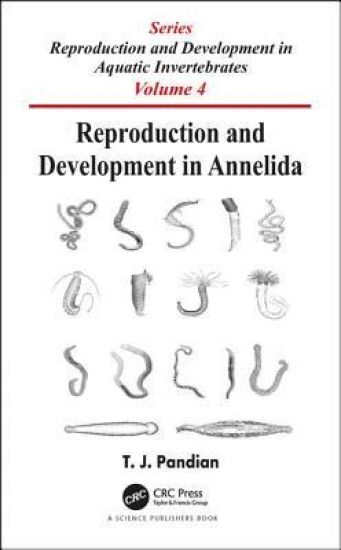
This book is a concise informative elucidation of all aspects of reproduction and development in annelids covering from arenicola to tubifex. Annelids flourish between 4,900 m depth to 2,000 m altitude; some of them occur in unusual habitats like hydrothermal vents and subterranean aquatic system (stigobionts). A few have no gut and acquire adequate nutrients through osmotrophism and/or engaging symbiotic microbes. In the absence of exoskeleton to escape predation, the 17,000 speciose annelids have explored bewildering modes of reproduction; not surprisingly, 42–47% of them are brooders. With 13,000 species, polychaetes are gonochores but some 207 species of them are hermaphrodites. Clitellates are all hermaphrodites; of them, 76 species are parthenogens, of which 56 are earthworms.Regenerative potency of annelids ranges from an organ to an entire worm from a single ‘seminal’ segment. The head, tail and both together can be regenerated 21, 42 and 20 times, respectively. However, the potency is limited to ~1% of polychaetes and Heterogamatic sex determination is reported to occur only in six polychaete species, although karyotype is known for 83 annelid species. In temperate polychaetes, a dozen neuroendocrines, arising mostly from the ‘brain’ regulates reproductive cycle. A complete chapter devoted to vermiculture, (i) recognizes the fast-growing candidate species, (ii) distinguishes 'layers' from 'brooders', (iii) indicates that the harvest of oligochaetes may reduce the input of nitrogenous fertilizer in the ricefield, and (iv) explores the scope for increasing wealth from waste.
Reproduction and Development in Platyhelminthes
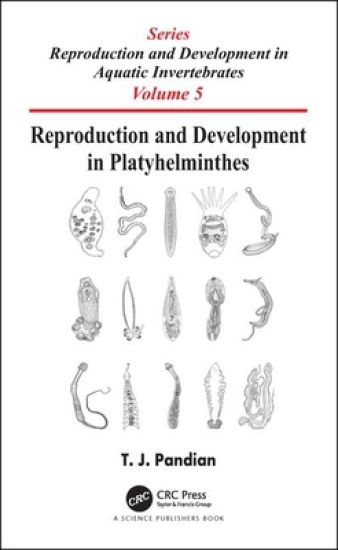
This book is a comprehensive elucidation on aspects of reproduction and development in platyhelminthes covering from acoelids to taeniids. With the unique presence of neoblasts, turbellarians serve as a model for studies on cancer and senescence. Of ~ 27,000 species, ~ 77% are parasites; they are harmful to man and his food basket from livestock and fish. The stress hormone, cortisol level is responsible for susceptibility and resistance of the host. In digeneans, the propagatory multiplication potency is retained by all the larval forms and in either direction in sporocyst. The higher clonal diversity, mixing and selection in Second Intermediate Host (SIH) may purge inbreeding depression suffered by the fluke on propagatory multiplication in First Intermediate Host (FIH). Of 12,012 digeneans, 88% may engage 33,014 potential SIH species. They have the choice to select one among the available/awaiting 3.5 host species. The motility of vertebrate host and euryxenic flexibility/scope for selection of SIH species has increased lineage diversification in digeneans. The life cycle of cestodes is divided into aquatic and terrestrial patterns. The former includes (i) oncosphere and (ii) coracidium types and the latter (iii) hexacanth-cysticercoid, (iv) hexacanth-tetrathyridium and (v) hexacanth-cysticercus types. The share for the oncosphere, coracidium and hexacanth types is 17.0, 29.5 and 46.5%, respectively. The staggering fecundity and adoption of the intermediate host in the herbivorous/insectivorous food chain have enriched Taenioidea as the most (2,264) speciose order. Sex specific genes Smed-dmd 1 and macbol have been identified, and neuropeptides and dipeptides are involved in sexualization. Trematodes are unable to parasitize elasmobranchs, as they cannot suck body fluid/blood containing a high level of urea. Relatively higher fecundity supplemented with propagatory multiplication, incorporation of SIH in 88% species, clonal selection in SIH, and euryxenic flexibility and the widest choice for selection of SIH have led to the highest lineage diversification to render digeneans as the most speciose order in Platyhelminthes.
Environmental Sex Differentiation in Fish
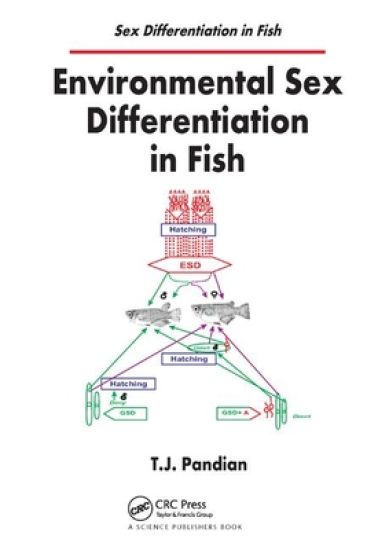
Fish constitute an important natural renewable resource and any reduction in their ability to propagate as a result of human interference may have significant socioeconomic consequences. The negative effect of human activity on sex differentiation and reproductive output in fish is so diverse that it has been difficult to encompass it in a single book. This book serves as the first attempt to do so.Unlike in mammals, the expression of a host of sex differentiation genes in fish is mostly controlled by environmental factors. Not surprisingly, environmental sex differentiation is ubiquitous in fish. Overexploitation by capture fisheries does not disrupt sex differentiation but crowding in aqua-farms does, by reducing accessibility to food supply.Some of the man-made chemicals routinely used worldwide mimic endogenous hormones. For example endosulfan, which is widely used in developing countries, disrupts endogenous hormones and feminizes fish. For the first time, this book views endocrine disruption from the point of labile early life and non-labile adult stages. It shows that sex can irreversibly be reversed, when exposed to endocrine disrupting chemicals (EDCs) during early labile stages but reversibly impairs reproductive output on exposure to EDCs during non-labile adult stage. A consequence of climate change, elevated temperature, and declining oxygen and pH levels is that it masculinises genetic female fish.Fish display a remarkable ability to postpone the labile period. Besides postponement, some primary and tertiary gonochores have two distinct labile periods amenable to temperature and hormonal manipulations. Hermaphrodites have retained the period until the end of the adult stage and are capable of sex change/reversal more than once in both male and female directions.
Reproduction and Development in Minor Phyla
The 26 recognized minor phyla comprise aberrant clades, as most of them terminate as blind offshoots. Untied from the discussion on their phylogenesis of minor phyla, this book is largely devoted, for the first time, to aspects of reproduction and development in minor phyletics. The minor phyla are not as speciose (1,795 species/phylum) as the major phyla (157,066 species/phylum) are. The accumulation of deleterious genes causes inbreeding depression among progenies arising from parthenogenesis, clonal multiplication and selfing hermaphrodites. The reason for the limited species diversity in minor phyla is traced to (i) eutelism in 65.7% of minor phyletics and (ii) existence of 21.6% clonals, (iii) 6.4% parthenogens and (iv) 1.2% selfing hermaphroditism. Gonochorism obligately requires motility to search for a mate. The combination of low motility and gonochorism from Placozoa to hemocoelomatic minor phyla has limited diversity to
Reproduction and Development in Minor Phyla

Reproduction and Development in Minor Phyla

T. J. Pandian

TAYLOR FRANCIS LTD
2023
nidottu
The 26 recognized minor phyla comprise aberrant clades, as most of them terminate as blind offshoots. Untied from the discussion on their phylogenesis of minor phyla, this book is largely devoted, for the first time, to aspects of reproduction and development in minor phyletics. The minor phyla are not as speciose (1,795 species/phylum) as the major phyla (157,066 species/phylum) are. The accumulation of deleterious genes causes inbreeding depression among progenies arising from parthenogenesis, clonal multiplication and selfing hermaphrodites. The reason for the limited species diversity in minor phyla is traced to (i) eutelism in 65.7% of minor phyletics and (ii) existence of 21.6% clonals, (iii) 6.4% parthenogens and (iv) 1.2% selfing hermaphroditism. Gonochorism obligately requires motility to search for a mate. The combination of low motility and gonochorism from Placozoa to hemocoelomatic minor phyla has limited diversity to
Reproduction and Development in Annelida
This book is a concise informative elucidation of all aspects of reproduction and development in annelids covering from arenicola to tubifex. Annelids flourish between 4,900 m depth to 2,000 m altitude; some of them occur in unusual habitats like hydrothermal vents and subterranean aquatic system (stigobionts). A few have no gut and acquire adequate nutrients through osmotrophism and/or engaging symbiotic microbes. In the absence of exoskeleton to escape predation, the 17,000 speciose annelids have explored bewildering modes of reproduction; not surprisingly, 42–47% of them are brooders. With 13,000 species, polychaetes are gonochores but some 207 species of them are hermaphrodites. Clitellates are all hermaphrodites; of them, 76 species are parthenogens, of which 56 are earthworms.Regenerative potency of annelids ranges from an organ to an entire worm from a single ‘seminal’ segment. The head, tail and both together can be regenerated 21, 42 and 20 times, respectively. However, the potency is limited to ~1% of polychaetes and Heterogamatic sex determination is reported to occur only in six polychaete species, although karyotype is known for 83 annelid species. In temperate polychaetes, a dozen neuroendocrines, arising mostly from the ‘brain’ regulates reproductive cycle. A complete chapter devoted to vermiculture, (i) recognizes the fast-growing candidate species, (ii) distinguishes 'layers' from 'brooders', (iii) indicates that the harvest of oligochaetes may reduce the input of nitrogenous fertilizer in the ricefield, and (iv) explores the scope for increasing wealth from waste.
Reproduction and Development in Echinodermata and Prochordata
Echinoderms and prochordates occupy a key position in vertebrate evolution. The genomes of sea urchin share 70% homology with humans. Researches on cell cycle in sea urchin and phagocytosis in asteroids have fetched Nobel Prizes. In this context, this book assumes immense importance. Echinoderms are unique, as their symmetry is bilateral in larvae but pentamerous radial in adults. The latter has eliminated the development of an anterior head and bilateral appendages. Further, the obligate need to face the substratum for locomotion and acquisition of food has eliminated their planktonic and nektonic existence. Egg size, a decisive factor in recruitment, increases with decreasing depths up to 2,000-5,000 m in lecithotrophic asteroids and ophiuroids but remains constant in their planktotrophics. Smaller ( 110 mm) asteroids generate planktotrophic eggs only. Publications on sex ratio of echinoderms indicate the genetic determination of sex at fertilization but those on hybridization, karyotype and ploidy induction do not provide evidence for heterogametism. But the herbivorous echinoids and larvacea with their gonads harboring both germ cells and Nutritive Phagocytes (NPs) have economized the transportation and hormonal costs on gonadal function. Despite the amazing potential just 2 and 3% of echinoderms undergo clonal reproduction and regeneration, respectively. Fission is triggered, when adequate reserve nutrients are accumulated. It is the most prevalent mode of clonal reproduction in holothuroids, asteroids and ophiuroids. However, budding is a more prevalent mode of clonal reproduction in colonial hemichordates and urochordates. In echinoderms, fission and budding eliminate each other. Similarly, autoregulation of early development eliminates clonal reproduction in echinoids and solitary urochordates. In pterobranchs, thaliaceans and ascidians, the repeated and rapid budding leads to colonial formation. Coloniality imposes reductions in species number and body size, generation time and life span, gonad number and fecundity as well as switching from gonochorism to simultaneous hermaphorditism and oviparity to ovoviviparity/viviparity.
Reproduction and Development in Mollusca
This book is perhaps the first attempt to comprehensively project the uniqueness of molluscs, covering almost all aspects of reproduction and development from aplacophorans to vampyromorphic cephalopods. Molluscs are unique for the presence of protective external shell, defensive inking, geographic distribution from the depth of 9,050 m to an altitude of 4,300 m, gamete diversity, the use of nurse eggs and embryos to accelerate the first few mitotic divisions in embryos, the natural occurrence of androgenics in a couple of bivalves, viable induced tetraploids, gigantism induced by elevated ploidy, the complementary role played by mitochondrial genome in sex determination by nuclear genes and the uptake and accumulation of steroid hormone from surrounding waters. In molluscs, sexuality comprises of gonochorism ( 24%), protandry (
Reproduction and Development in Crustacea
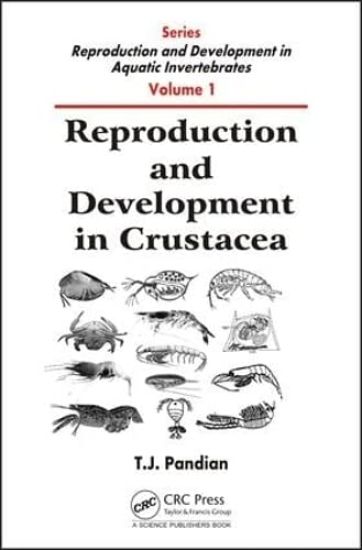
Dating back to the early Cambrian period, crustaceans had ample time to undertake endless experimentation with form and function. Today, no other group of plants or animals on the planet exhibit the range of morphological diversity seen among extant Crustacea. With more than 52,000 species, they are placed fourth in terms of overall species diversity. This book comprehensively elucidates the reproduction and development of all the taxonomic groups of Crustacea and bridges the gap between conventional zoologists and molecular biologists. Reproductive modes from the point of embryonic stem cells and primordial germ cells is discussed with a special section on cysts.
Reproduction and Development in Echinodermata and Prochordata
Echinoderms and prochordates occupy a key position in vertebrate evolution. The genomes of sea urchin share 70% homology with humans. Researches on cell cycle in sea urchin and phagocytosis in asteroids have fetched Nobel Prizes. In this context, this book assumes immense importance. Echinoderms are unique, as their symmetry is bilateral in larvae but pentamerous radial in adults. The latter has eliminated the development of an anterior head and bilateral appendages. Further, the obligate need to face the substratum for locomotion and acquisition of food has eliminated their planktonic and nektonic existence. Egg size, a decisive factor in recruitment, increases with decreasing depths up to 2,000-5,000 m in lecithotrophic asteroids and ophiuroids but remains constant in their planktotrophics. Smaller ( 110 mm) asteroids generate planktotrophic eggs only. Publications on sex ratio of echinoderms indicate the genetic determination of sex at fertilization but those on hybridization, karyotype and ploidy induction do not provide evidence for heterogametism. But the herbivorous echinoids and larvacea with their gonads harboring both germ cells and Nutritive Phagocytes (NPs) have economized the transportation and hormonal costs on gonadal function. Despite the amazing potential just 2 and 3% of echinoderms undergo clonal reproduction and regeneration, respectively. Fission is triggered, when adequate reserve nutrients are accumulated. It is the most prevalent mode of clonal reproduction in holothuroids, asteroids and ophiuroids. However, budding is a more prevalent mode of clonal reproduction in colonial hemichordates and urochordates. In echinoderms, fission and budding eliminate each other. Similarly, autoregulation of early development eliminates clonal reproduction in echinoids and solitary urochordates. In pterobranchs, thaliaceans and ascidians, the repeated and rapid budding leads to colonial formation. Coloniality imposes reductions in species number and body size, generation time and life span, gonad number and fecundity as well as switching from gonochorism to simultaneous hermaphorditism and oviparity to ovoviviparity/viviparity.
Evolution and Speciation in Animals

Evolution and Speciation in Animals

T. J. Pandian

Taylor Francis Ltd
2021
sidottu
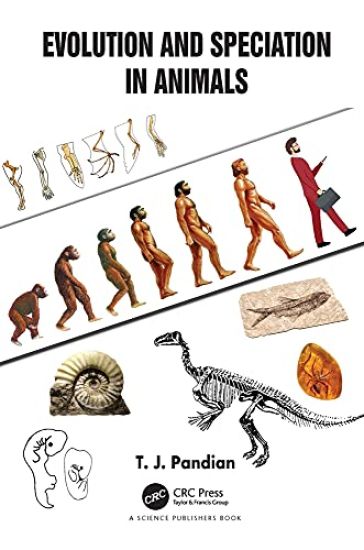
This book represents the first attempt to quantify environmental factors and life history traits that accelerate or decelerate species diversity in animals. About 15%, 8% and 77% of species are distributed in marine (70% of earth’s surface), freshwater (terra firma fosters more diversity. The harsh hadal, desert and elevated montane habitats restrict diversity to 0.5-4.2%. Costing more time and energy, osmotrophic and suspension modes of food acquisition limit diversity to Selfing hermaphrodites (0.9%), parthenogens (Incidence of heterogamety is four-times more in males than in females. Hence, evolution is more a male-driven process. Egg size is determined by environmental factors, but lecithality is genetically fixed. In poikilotherms, sex is also determined by gene(s), but differentiation by environmental factors. The extra-ovarian vitellogenesis (> 96%), spermatozoan (81%) rather than spermatophore mechanism of sperm transfer, promiscuity and polygamy over monogamy, iteroparity (99.6%) over semelparity and internal fertilization (84%) are preferred, as they accelerate diversity. Body size and egg size determine fecundity. Indirect life cycle (82%) and incorporation of feeding larval stages accelerate diversity. Brooding and viviparity (6.4%) decelerate it. Parasitism extends life span and liberates fecundity from eutelism.Evolution is an ongoing process, and speciation and extinction are its unavoidable by-products. The in-built conservation mechanism of reviving life after a sleeping duration has been reduced from a few million years in microbial spores to a few thousand years in plant seeds and a few hundred years in dormant eggs in animals. Hence, animal conservation requires priority. The existence of temperature-resistant/insensitive individuals, strains and species shall flourish during the ongoing global warming and earth shall continue with such burgeoning species, hopefully inclusive of man.
Evolution and Speciation in Animals

Evolution and Speciation in Animals

T. J. Pandian

TAYLOR FRANCIS LTD
2023
nidottu
This book represents the first attempt to quantify environmental factors and life history traits that accelerate or decelerate species diversity in animals. About 15%, 8% and 77% of species are distributed in marine (70% of earth’s surface), freshwater (terra firma fosters more diversity. The harsh hadal, desert and elevated montane habitats restrict diversity to 0.5-4.2%. Costing more time and energy, osmotrophic and suspension modes of food acquisition limit diversity to Selfing hermaphrodites (0.9%), parthenogens (Incidence of heterogamety is four-times more in males than in females. Hence, evolution is more a male-driven process. Egg size is determined by environmental factors, but lecithality is genetically fixed. In poikilotherms, sex is also determined by gene(s), but differentiation by environmental factors. The extra-ovarian vitellogenesis (> 96%), spermatozoan (81%) rather than spermatophore mechanism of sperm transfer, promiscuity and polygamy over monogamy, iteroparity (99.6%) over semelparity and internal fertilization (84%) are preferred, as they accelerate diversity. Body size and egg size determine fecundity. Indirect life cycle (82%) and incorporation of feeding larval stages accelerate diversity. Brooding and viviparity (6.4%) decelerate it. Parasitism extends life span and liberates fecundity from eutelism.Evolution is an ongoing process, and speciation and extinction are its unavoidable by-products. The in-built conservation mechanism of reviving life after a sleeping duration has been reduced from a few million years in microbial spores to a few thousand years in plant seeds and a few hundred years in dormant eggs in animals. Hence, animal conservation requires priority. The existence of temperature-resistant/insensitive individuals, strains and species shall flourish during the ongoing global warming and earth shall continue with such burgeoning species, hopefully inclusive of man.
Reproduction and Development in Platyhelminthes

Reproduction and Development in Platyhelminthes

T. J. Pandian

TAYLOR FRANCIS LTD
2021
nidottu
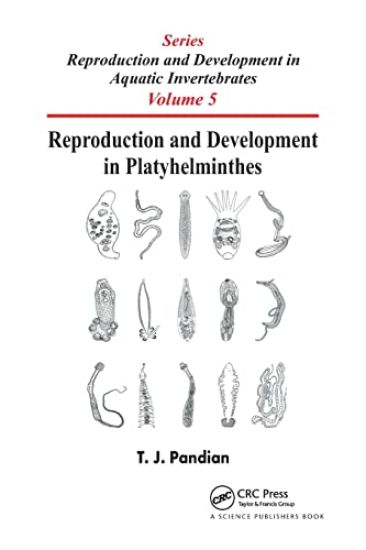
This book is a comprehensive elucidation on aspects of reproduction and development in platyhelminthes covering from acoelids to taeniids. With the unique presence of neoblasts, turbellarians serve as a model for studies on cancer and senescence. Of ~ 27,000 species, ~ 77% are parasites; they are harmful to man and his food basket from livestock and fish. The stress hormone, cortisol level is responsible for susceptibility and resistance of the host. In digeneans, the propagatory multiplication potency is retained by all the larval forms and in either direction in sporocyst. The higher clonal diversity, mixing and selection in Second Intermediate Host (SIH) may purge inbreeding depression suffered by the fluke on propagatory multiplication in First Intermediate Host (FIH). Of 12,012 digeneans, 88% may engage 33,014 potential SIH species. They have the choice to select one among the available/awaiting 3.5 host species. The motility of vertebrate host and euryxenic flexibility/scope for selection of SIH species has increased lineage diversification in digeneans. The life cycle of cestodes is divided into aquatic and terrestrial patterns. The former includes (i) oncosphere and (ii) coracidium types and the latter (iii) hexacanth-cysticercoid, (iv) hexacanth-tetrathyridium and (v) hexacanth-cysticercus types. The share for the oncosphere, coracidium and hexacanth types is 17.0, 29.5 and 46.5%, respectively. The staggering fecundity and adoption of the intermediate host in the herbivorous/insectivorous food chain have enriched Taenioidea as the most (2,264) speciose order. Sex specific genes Smed-dmd 1 and macbol have been identified, and neuropeptides and dipeptides are involved in sexualization. Trematodes are unable to parasitize elasmobranchs, as they cannot suck body fluid/blood containing a high level of urea. Relatively higher fecundity supplemented with propagatory multiplication, incorporation of SIH in 88% species, clonal selection in SIH, and euryxenic flexibility and the widest choice for selection of SIH have led to the highest lineage diversification to render digeneans as the most speciose order in Platyhelminthes.
Evolution and Speciation in Fungi and Eukaryotic Biodiversity
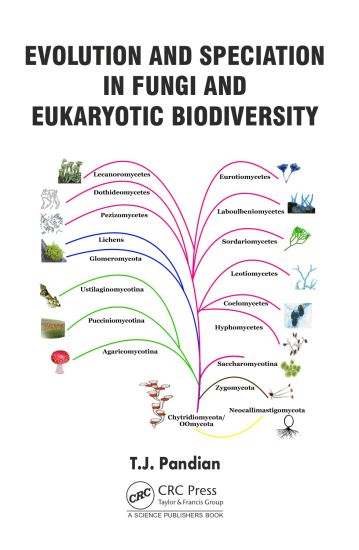
Being sessiles like autotrophic plants and heterotrophics as animals, fungi are fascinating eukaryotes. In them, the need for external digestion has demanded surface expansion and limited tissues to 20% loss of commercial crops. Despite their ecological and economic importance, no university offers a degree course in Mycology. For 2,056,907 eukaryotic species, this book elaborates the role played by environmental factors (i) spatial distribution, (ii) light-temperature, (iii) precipitation-liquid water and biological attributes, (iv) cellularity, (v) symmetry, (vi) clonality, (vii) sexuality, (viii) modality and (ix) motility that either accelerate or decelerate biodiversity. About 20 and 80% eukaryotes are aquatics and terrestrials. Decreasing light intensity and temperature reduce diversity from the equator toward the polar zones. Water availability also reduces the diversity from 5.4 - 65.5 species/km2 in tropical evergreen forests to 200 in mammals reduces clonality from 100 to 0%. Strategies developed by eukaryotes reduce selfing by
Evolution and Speciation in Fungi and Eukaryotic Biodiversity
Being sessiles like autotrophic plants and heterotrophics as animals, fungi are fascinating eukaryotes. In them, the need for external digestion has demanded surface expansion and limited tissues to 20% loss of commercial crops. Despite their ecological and economic importance, no university offers a degree course in Mycology. For 2,056,907 eukaryotic species, this book elaborates the role played by environmental factors (i) spatial distribution, (ii) light-temperature, (iii) precipitation-liquid water and biological attributes, (iv) cellularity, (v) symmetry, (vi) clonality, (vii) sexuality, (viii) modality and (ix) motility that either accelerate or decelerate biodiversity. About 20 and 80% eukaryotes are aquatics and terrestrials. Decreasing light intensity and temperature reduce diversity from the equator toward the polar zones. Water availability also reduces the diversity from 5.4 - 65.5 species/km2 in tropical evergreen forests to 200 in mammals reduces clonality from 100 to 0%. Strategies developed by eukaryotes reduce selfing by
Sex Determination in Fish

Sex Determination in Fish

T. J. Pandian

CRC Press
2017
nidottu
This book is the first to report that research in allogenics/xenogenics has conclusively shown that fishes have retained bisexual potency even after sexual maturity and spermiation. The XY genotype found in the unexpected female phenotypes sired by supermales (Y1Y2) and androgenic males (Y2Y2) points out the need to employ sex specific molecular markers to identify the true genotype of a juvenile, which matures either as a male or female, depending upon the sex of its pair (female or male) and thereby critically assessing the environmental role in sex determination. This book is meant to assist molecular biologists in the search of sex determining gene(s), fishery biologists endeavouring to develop techniques for profitable monosex aquaculture and ecologists interested in conservation of fishes and their genomes.
Reproduction and Development in Mollusca
This book is perhaps the first attempt to comprehensively project the uniqueness of molluscs, covering almost all aspects of reproduction and development from aplacophorans to vampyromorphic cephalopods. Molluscs are unique for the presence of protective external shell, defensive inking, geographic distribution from the depth of 9,050 m to an altitude of 4,300 m, gamete diversity, the use of nurse eggs and embryos to accelerate the first few mitotic divisions in embryos, the natural occurrence of androgenics in a couple of bivalves, viable induced tetraploids, gigantism induced by elevated ploidy, the complementary role played by mitochondrial genome in sex determination by nuclear genes and the uptake and accumulation of steroid hormone from surrounding waters. In molluscs, sexuality comprises of gonochorism ( 24%), protandry (
Endocrine Sex Differentiation in Fish

Endocrine Sex Differentiation in Fish

T. J. Pandian

CRC Press Inc
2013
sidottu
Of all vertebrates, fish exhibit unparalleled diversity of sexual plasticity and flexibility, ranging from gonochorism to unisexualism, and exceptional patterns of functional hermaphroditism. Fish farming and monosex aquaculture have led to reproductive dysfunction with males producing less milt, and females failing to ovulate and spawn. This book brings together relevant information on the role of the endocrine system on sexual differentiation in fish, and bridges the gap between molecular endocrinologists and fishery scientists.
Environmental Sex Differentiation in Fish

Environmental Sex Differentiation in Fish

T. J. Pandian

Apple Academic Press Inc.
2014
sidottu
Fish constitute an important natural renewable resource and any reduction in their ability to propagate as a result of human interference may have significant socioeconomic consequences. The negative effect of human activity on sex differentiation and reproductive output in fish is so diverse that it has been difficult to encompass it in a single book. This book serves as the first attempt to do so.Unlike in mammals, the expression of a host of sex differentiation genes in fish is mostly controlled by environmental factors. Not surprisingly, environmental sex differentiation is ubiquitous in fish. Overexploitation by capture fisheries does not disrupt sex differentiation but crowding in aqua-farms does, by reducing accessibility to food supply.Some of the man-made chemicals routinely used worldwide mimic endogenous hormones. For example endosulfan, which is widely used in developing countries, disrupts endogenous hormones and feminizes fish. For the first time, this book views endocrine disruption from the point of labile early life and non-labile adult stages. It shows that sex can irreversibly be reversed, when exposed to endocrine disrupting chemicals (EDCs) during early labile stages but reversibly impairs reproductive output on exposure to EDCs during non-labile adult stage. A consequence of climate change, elevated temperature, and declining oxygen and pH levels is that it masculinises genetic female fish.Fish display a remarkable ability to postpone the labile period. Besides postponement, some primary and tertiary gonochores have two distinct labile periods amenable to temperature and hormonal manipulations. Hermaphrodites have retained the period until the end of the adult stage and are capable of sex change/reversal more than once in both male and female directions.
Reproduction and Development in Crustacea

Reproduction and Development in Crustacea

T. J. Pandian

Productivity Press
2016
sidottu
Dating back to the early Cambrian period, crustaceans had ample time to undertake endless experimentation with form and function. Today, no other group of plants or animals on the planet exhibit the range of morphological diversity seen among extant Crustacea. With more than 52,000 species, they are placed fourth in terms of overall species diversity. This book comprehensively elucidates the reproduction and development of all the taxonomic groups of Crustacea and bridges the gap between conventional zoologists and molecular biologists. Reproductive modes from the point of embryonic stem cells and primordial germ cells is discussed with a special section on cysts.