Kirjojen hintavertailu. Mukana 12 390 323 kirjaa ja 12 kauppaa.

Kirjahaku

Etsi kirjoja tekijän nimen, kirjan nimen tai ISBN:n perusteella.

133 kirjaa tekijältä T. S. Eliot

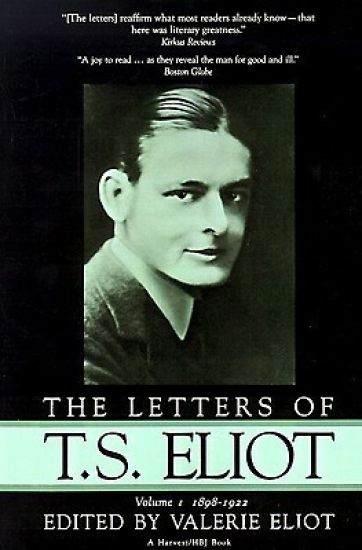
The Letters of T.S. Eliot: Volume 1, 1898-1922
T. S. Eliot, Nobel laureate and a great literary presence of the twentieth century, is renowned for his unique voice as poet, critic, and dramatist. This first volume of his long-awaited correspondence covers the period from his childhood in St. Louis, Missouri, until the end of 1922, by which time he had settled permanently in England, married, and published "The Love Song of J. Alfred Prufrock, " The Sacred Wood, and The Waste Land.Included her are all the significant extant letters Eliot wrote up to age 24 as well as many letters written to him by his family, friends, and contemporaries. There are insights into his struggle to earn a living, care for a wife who was frequently ill, edit a magazine, and become known as a critic and poet. And through the correspondence emerges a memorable view of the social and intellectual milieu before and after World War I.Valerie Eliot has written a detailed introduction, provided annotations and commentary, and selected numerous photographs of Eliot and his world, many of which have never been shown publicly. All these elements combine to create an exceptional portrait of Eliot in the early years of his personal and professional development -- the closest approximation readers will ever have to an autobiography of the poet.
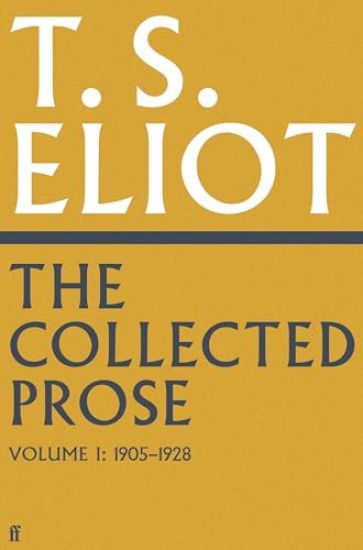
The Collected Prose of T.S. Eliot Volume 1
T. S. Eliot is regarded as the most important poet-critic of modern times, the twentieth century's 'Man of Letters' whose reputation was forged not only on the strength of his verse, but on the enduring influence of his critical writings. The Collected Prose presents those works that Eliot allowed to reach print in the order of their final revision or printing. Publishing across four volumes, the series aims to provide an authoritative and clean-text record of Eliot's approved texts and their revisions, beginning with his formative observations, written while he was at high school, and concluding in his final major opus, To Criticize the Critic, published in the months after his death.This first volume covers the years 1905-1928, a time of dramatic development for Eliot as both a poet and critic that saw the publication of Prufrock and Other Observations, The Waste Land and Journey of the Magi, and a gathering his seminal early essays under the title The Sacred Wood (1920). In his penetrating surveys of poetic form and the literary milieu of the day, he assesses the era's ageing giants, Yeats, Swinburne, Henry James, and hails the arrival of its new generation, Ezra Pound, James Joyce, Wyndham Lewis. The volume also traces Eliot's deepening search for a meaningful response to the trauma of the Great War, and an exploration of religion that led to his confirmation in the Church of England in 1927.
The Collected Prose of T.S. Eliot Volume 2
T. S. Eliot is regarded as the most important poet-critic of modern times, the twentieth century's 'Man of Letters' whose reputation was forged not only on the strength of his verse, but on the enduring influence of his critical writings. The Collected Prose presents those works that Eliot allowed to reach print in the order of their final revision or printing. Publishing across four volumes, the series aims to provide an authoritative and clean-text record of Eliot's approved texts and their revisions, beginning with his formative observations, written while he was at high school, and concluding in his final major opus, To Criticize the Critic, published in the months after his death.This second volume spans 1929-1934, a period in which Eliot's poetry was maturing into the reflective verse of Animula, Ash-Wednesday and Marina. It was also a moment that confirmed his critical reputation with the publication of Selected Essays (1932), reprinting and revising his most important essays on Tradition and the Individual Talent, Hamlet, Marvell and Dante, and culminating in the Harvard lectures that became The Use of Poetry and the Use of Criticism (1933).
The Collected Prose of T.S. Eliot Volume 3
T. S. Eliot is regarded as the most important poet-critic of modern times, the twentieth century's 'Man of Letters' whose reputation was forged not only on the strength of his verse, but on the enduring influence of his critical writings. The Collected Prose presents those works that Eliot allowed to reach print in the order of their final revision or printing. Publishing across four volumes, the series aims to provide an authoritative and clean-text record of Eliot's approved texts and their revisions, beginning with his formative observations, written while he was at high school, and concluding in his final major opus, To Criticize the Critic, published in the months after his death.This third volume collects Eliot's prose from 1935-1950, when his works The Idea of a Christian Society (1939) and The Music of Poetry (1942) would engage the seminal grounds of his Four Quartets, while his Notes Towards the Definition of Culture (1948) would appear at the moment he was awarded the Nobel Prize in Literature. It was a period of experimentation in form and genre, in which writings for the theatre were taking centre stage and he was composing for the first time for children, Old Possum's Book of Practical Cats.
The Collected Prose of T.S. Eliot Volume 4
T. S. Eliot is regarded as the most important poet-critic of modern times, the twentieth century's 'Man of Letters' whose reputation was forged not only on the strength of his verse, but on the enduring influence of his critical writings. The Collected Prose presents those works that Eliot allowed to reach print in the order of their final revision or printing. Publishing across four volumes, the series aims to provide an authoritative and clean-text record of Eliot's approved texts and their revisions, beginning with his formative observations, written while he was at high school, and concluding in his final major opus, To Criticize the Critic, published in the months after his death.This fourth and final volume from 1951-1966, covers a period of concluding productivity in Eliot's writing. Although his poetry was all but complete, his theatrical and critical work flourished through a decade that included such books as Poetry and Drama (1951), The Frontiers of Criticism (1956) and On Poetry and Poets (1957).
The Essential T.S. Eliot

The Essential T.S. Eliot

T. S. Eliot

Ecco Press
2020
sidottu
A selection of the most significant and enduring poems from one of the twentieth century's major writers, chosen and introduced by Vijay SeshadriT.S. Eliot was a towering figure in twentieth century literature, a renowned poet, playwright, and critic whose work--including "The Love Song of J. Alfred Prufrock" (1915), The Waste Land (1922), Four Quartets (1943), and Murder in the Cathedral (1935)--continues to be among the most-read and influential in the canon of American literature. The Essential T.S. Eliot collects Eliot's most lasting and important poetry in one career-spanning volume, now with an introduction from Vijay Seshadri, one of our foremost poets.
Poems of T.S. Eliot

Poems of T.S. Eliot

T. S. Eliot

Createspace Independent Publishing Platform
2016
nidottu
The poems included are: Gerontion, Burbank with a Baedeker: Bleistein with a Cigar-Sweeney Erect, A Cooking Egg, Le Directeur, M lange adult re de tout, Lune de Miel, The Hippopotamus, Dans le Restaurant, Whispers of Immortality, Mr. Eliot's Sunday Morning Service, Sweeney Among the Nightingales, The Love Song of J. Alfred Prufrock, Portrait of a Lady, Preludes, Rhapsody on a Windy Night, Morning at the Window, The Boston Evening Transcript, Aunt Helen, Cousin Nancy, Mr. Apollinax, Hysteria, Conversation Galante, La Figlia Che Piange
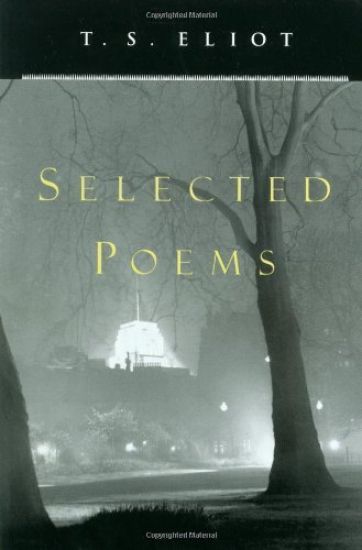
T. S. Eliot Selected Poems

T. S. Eliot Selected Poems

T. S. Eliot

Ecco Press
2025
nidottu
Chosen by Eliot himself, the poems in this volume represent the poet's most important work before Four Quartets. Included here is some of the most celebrated verse in modern literature--"The Love Song of J. Alfred Prufrock," "Gerontion," "The Waste Land," "The Hollow Men," and "Ash Wednesday"--as well as many other fine selections from Eliot's early work.
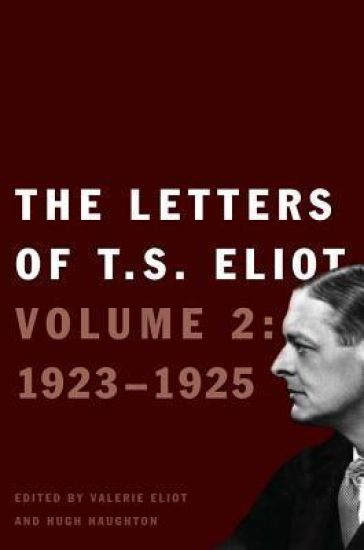
The Letters of T. S. Eliot: Volume 2: 1923-1925 Volume 2
In two highly anticipated volumes, the correspondence of the twentieth century's eminent man of letters, from youth to early manhood Volume One: 1898-1922 presents some 1,400 letters encompassing the years of Eliot's childhood in St. Louis, Missouri, through 1922, by which time the poet had settled in England, married his first wife, and published The Waste Land. Since the first publication of this volume in 1988, many new materials from British and American sources have come to light. More than two hundred of these newly discovered letters are now included, filling crucial gaps in the record and shedding new light on Eliot's activities in London during and after the First World War. Volume Two: 1923-1925 covers the early years of Eliot's editorship of The Criterion, publication of The Hollow Men, and his developing thought about poetry and poetics. The volume offers 1,400 letters, charting Eliot's journey toward conversion to the Anglican faith, as well as his transformation from banker to publisher and his appointment as director of the new publishing house Faber & Gwyer. The prolific and various correspondence of this volume testifies to Eliot's growing influence as cultural commentator and editor.
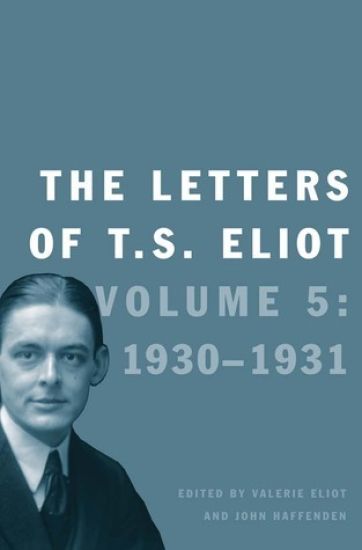
The Letters of T. S. Eliot: Volume 5: 1930-1931 Volume 5
The fifth volume of the correspondence of literary giant T. S. Eliot This fifth volume of the collected letters of poet, playwright, essayist, and literary critic Thomas Stearns Eliot covers the years 1930 through 1931. It was during this period that the acclaimed American-born writer earnestly embraced his newly avowed Anglo-Catholic faith, a decision that earned him the antagonism of friends like Virginia Woolf and Herbert Read. Also evidenced in these correspondences is Eliot's growing estrangement from his wife Vivien, with the writer's newfound dedication to the Anglican Church exacerbating the unhappiness of an already tormented union. Yet despite his personal trials, this period was one of great literary activity for Eliot. In 1930 he composed the poems Ash-Wednesday and Marina, and he published Coriolan and a translation of Saint-John Perse's Anabase the following year. As director at the British publishing house Faber & Faber and editor of The Criterion, he encouraged W. H. Auden, Stephen Spender, Louis MacNeice, and Ralph Hogdson, published James Joyce's Haveth Childers Everywhere, and turned down a book proposal from Eric Blair, better known by his pen name, George Orwell. Through Eliot's correspondences from this time the reader gets a full-bodied view of a great artist at a personal, professional, and spiritual crossroads.
The Poems of T. S. Eliot: Volume I: Collected and Uncollected Poems
The first volume of the first paperback edition of The Poems of T. S. Eliot This two-volume critical edition of T. S. Eliot's poems establishes a new text of the Collected Poems 1909-1962, rectifying accidental omissions and errors that have crept in during the century since Eliot's astonishing debut, "The Love Song of J. Alfred Prufrock." In addition to the masterpieces, The Poems of T. S. Eliot contains the poems of Eliot's youth, which were rediscovered only decades later; poems that circulated privately during his lifetime; and love poems from his final years, written for his wife, Valerie. Calling upon Eliot's critical writings as well as his drafts, letters, and other original materials, Christopher Ricks and Jim McCue have provided a commentary that illuminates the imaginative life of each poem. This first volume respects Eliot's decisions by opening with his Collected Poems 1909-1962 as he arranged and issued it shortly before his death. This is followed by poems uncollected but either written for or suitable for publication, and by a new reading text of the drafts of The Waste Land. The second volume opens with the two books of verse of other kinds that Eliot issued: Old Possum's Book of Practical Cats and Anabasis, his translation of St.-John Perse's Anabase. Each of these sections is accompanied by its own commentary. Finally, pertaining to the entire edition, there is a comprehensive textual history that contains not only variants from all known drafts and the many printings but also extended passages amounting to hundreds of lines of compelling verse.
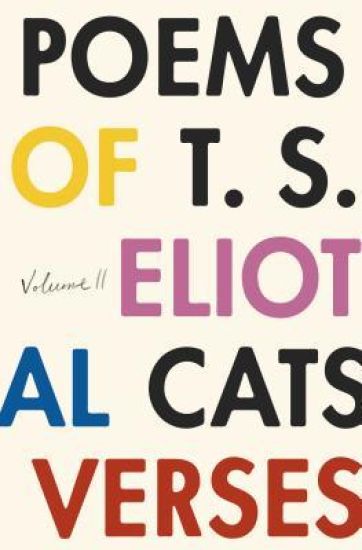
Poems of T. S. Eliot: Volume II

Poems of T. S. Eliot: Volume II

T. S. Eliot

Farrar, Straus and Giroux
2018
nidottu
The second volume of the first paperback edition of The Poems of T. S. Eliot This two-volume critical edition of T. S. Eliot's poems establishes a new text of the Collected Poems 1909-1962, rectifying accidental omissions and errors that have crept in during the century since Eliot's astonishing debut, "The Love Song of J. Alfred Prufrock." In addition to the masterpieces, The Poems of T. S. Eliot contains the poems of Eliot's youth, which were rediscovered only decades later; poems that circulated privately during his lifetime; and love poems from his final years, written for his wife, Valerie. Calling upon Eliot's critical writings as well as his drafts, letters, and other original materials, Christopher Ricks and Jim McCue have provided a commentary that illuminates the imaginative life of each poem. Following the collected and uncollected poems of the first volume, this second volume opens with the two books of verse of other kinds that Eliot issued: the children's verse of Old Possum's Book of Practical Cats, and Anabasis, his translation of St.-John Perse's Anabase. This volume then gathers the verses that Eliot contributed to the learnedly lighthearted exchanges of Noctes Binanian , and others that he wrote off-the-cuff or for intimate friends. Each of these sections is accompanied by its own commentary. Finally, pertaining to the entire edition, there is a comprehensive textual history that contains not only variants from all known drafts and the many printings but also extended passages amounting to hundreds of lines of compelling verse.
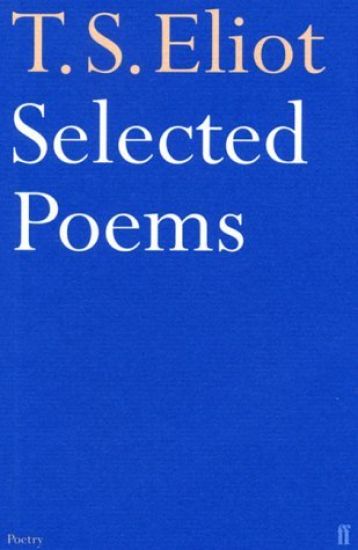
Selected Poems of T. S. Eliot

Selected Poems of T. S. Eliot

T. S. Eliot

Faber Faber
2002
nidottu
This selection, which was made by Eliot himself, is intended as an introduction to the main body of his poetry prior to Four Quartets, which is available separately in Faber Paperbacks. The selection includes the whole of The Waste Land.
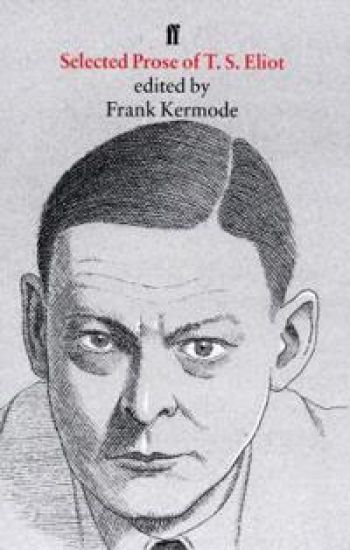
Selected Prose of T. S. Eliot

Selected Prose of T. S. Eliot

T. S. Eliot

Faber Faber
1975
pokkari
'Literary criticism is a distinctive activity of the civilised mind.' With Eliot's dictum in mind, Professor Kermode has selected from the whole range of his critical writings, some of them dating back to before 1918. There are essays of generalisation, appreciations of individual writers, and a section of his social and religious criticism. All the famous and most influential essays are drawn upon, with extracts from many others, and there is an important Introduction by Professor Kermode, with valuable notes.
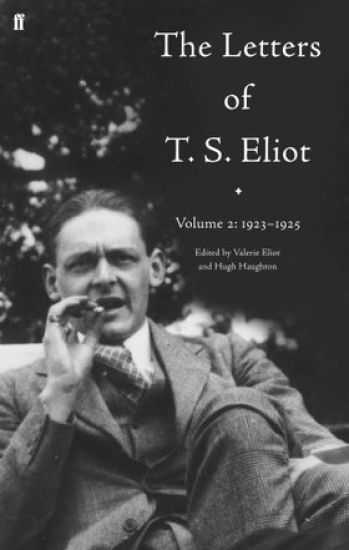
The Letters of T. S. Eliot Volume 2: 1923-1925
Volume Two covers the early years of his editorship of The Criterion (the periodical that Eliot launched with Lady Rothermere's backing in 1922), publication of The Hollow Men and the course of Eliot's thinking about poetry and poetics after The Waste Land. The correspondence charts Eliot's intellectual journey towards conversion to the Anglican faith in 1927, as well as his transformation from banker to publisher, ending with his appointment as a director of the new publishing house of Faber & Gwyer, in late 1925, and the appearance of Poems 1909-1925, Eliot's first publication with the house with which he would be associated for the rest of his life. It was partly because of Eliot's profoundly influential work as cultural commentator and editor that the correspondence is so prolific and so various, and Volume Two of the Letters fully demonstrates the emerging continuities between poet, essayist, editor and letter-writer.
The Complete Poems and Plays of T. S. Eliot
Poet, dramatist, critic and editor, T. S. Eliot was one of the defining figures of twentieth-century poetry. This edition of The Complete Poems and Plays, published for the first time in paperback, includes all of his verse and work for the stage, from Prufrock and Other Observations (1917) to Four Quartets (1943), and includes such literary landmarks as The Waste Land, Old Possum's Book of Practical Cats and Murder in the Cathedral.'Each year Eliot's presence reasserts itself at a deeper level, to an audience that is surprised to find itself more chastened, more astonished, more humble.' Ted Hughes
The Letters of T. S. Eliot  Volume 1: 1898-1922
Volume One of the Letters of T. S. Eliot, edited by Valerie Eliot in 1988, covered the period from Eliot's childhood in St Louis, Missouri, to the end of 1922, by which time he had settled in England, married and published The Waste Land. Since 1988, Valerie Eliot has continued to gather materials from collections, libraries and private sources in Britain and America, towards the preparation of subsequent volumes of the Letters edition. Among new letters to have come to light, a good many date from the years 1898-1922, which has necessitated a revised edition of Volume One, taking account of approximately two hundred newly discovered items of correspondence.The new letters fill crucial gaps in the record, notably enlarging our understanding of the genesis and publication of The Waste Land. Valuable, too, are letters from the earlier and less documented part of Eliot's life, which have been supplemented by additional correspondence from family members in America.
The Poems of T. S. Eliot Volume I

The Poems of T. S. Eliot Volume I

T. S. Eliot

Faber Faber
2015
sidottu
Times Literary Supplement Book of the YearPegasus Award for Poetry Criticism, Poetry Foundation, ChicagoRichard J. Finneran Award, Society for Textual ScholarshipBest Scholarly Edition Award, Modernist Studies AssociationThe Poems of T. S. Eliot is the authoritative edition of one of our greatest poets, scrupulously edited by Christopher Ricks and Jim McCue. It provides, for the first time, a fully scrutinized text of Eliot's poems, carefully restoring accidental omissions and removing textual errors that have crept in over the full century in which Eliot has been so frequently printed and reprinted. The edition also presents many poems from Eliot's youth which were published only decades later, as well as others that saw only private circulation in his lifetime, of which dozens are collected for the first time. To accompany Eliot's poems, Christopher Ricks and Jim McCue have provided a commentary that illuminates the creative activity that came to constitute each poem, calling upon drafts, correspondence and other original materials to provide a vivid account of the poet's working processes, his reading, his influences and his revisions. The first volume respects Eliot's decisions by opening with his Collected Poems 1909-1962 in the form in which he issued it, shortly before his death fifty years ago. There follow in this first volume the uncollected poems from his youth that he had chosen to publish, along with such other poems as could be considered suitable for publication. The second volume opens with the two books of poems of other kinds that he issued, Old Possum's Book of Practical Cats and his translation of Perse's Anabase, moving then to verses privately circulated as informal or improper or clubmanlike. Each of these sections is accompanied by its respective commentary, and then, pertaining to the entire edition, there is a comprehensive textual history recording variants both manuscript and published. The Poems of T. S. Eliot is a work of enlightening scholarship that will delight and inform all those who read Eliot for pleasure, as well as all those who read with pleasure and for study. Here are a new accuracy and an unparalleled insight into the marvels and landmarks from The Love Song of J. Alfred Prufrock and The Waste Land through to Four Quartets.
Selected Poems of T. S. Eliot

Selected Poems of T. S. Eliot

T. S. Eliot

Faber Faber
2009
sidottu
As a poet, editor and essayist, T. S. Eliot was one of the defining figures of twentieth century poetry. This selection, which was made by Eliot himself, includes many of his most celebrated works, including The Love Song of J. Alfred Prufrock and The Waste Land.Other volumes in this series: Auden, Betjemen, Plath, Hughes and Yeats.
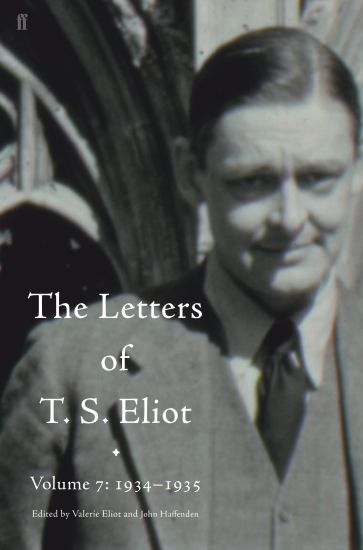
Letters of T. S. Eliot Volume 7: 1934–1935, The
T. S. Eliot's career as a successful stage dramatist gathers pace throughout the fascinating letters of this volume. Following his early experimentation with the dark comedy Sweeney Agonistes (1932), Eliot is invited to write the words of an ambitious scenario sketched out by the producer-director E. Martin Browne (who was to direct all of Eliot's plays) for a grand pageant called The Rock (1934). The ensuing applause leads to a commission from the Bishop of Chichester to write a play for the Canterbury Festival, resulting in the quasi-liturgical masterpiece of dramatic writing, Murder in the Cathedral (1935). A huge commercial success, it remains in repertoire after eighty years.Even while absorbed in time-consuming theatre work, Eliot remains untiring in promoting the writers on Faber's ever broadening lists - George Barker, Marianne Moore and Louis MacNeice among them. In addition, Eliot works hard for the Christian Church he has espoused in recent years, serving on committees for the Church Union and the Church Literature Association, and creating at Faber & Faber a book list that embraces works on church history, theology and liturgy. Having separated from his wife Vivien in 1933, he is anxious to avoid running into her; but she refuses to comprehend that her husband has chosen to leave her and stalks him across literary society, leading to his place of work at the offices of Faber & Faber. The correspondence draws in detail upon Vivien's letters and diaries to provide a picture of her mental state and way of life - and to help the reader to appreciate her thoughts and feelings.