Kirjojen hintavertailu. Mukana 11 342 296 kirjaa ja 12 kauppaa.

Kirjahaku

Etsi kirjoja tekijän nimen, kirjan nimen tai ISBN:n perusteella.

3 kirjaa tekijältä T.P. Wiseman

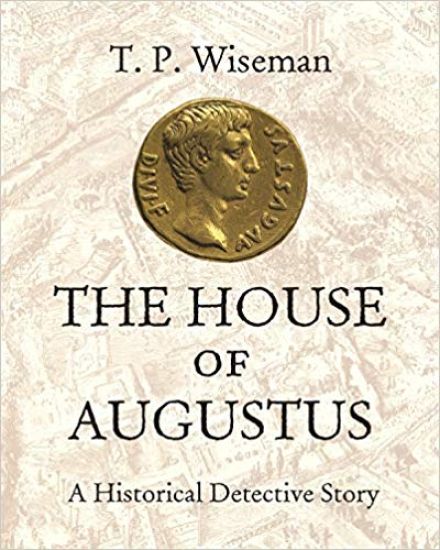
The House of Augustus

The House of Augustus

T.P. Wiseman

PRINCETON UNIVERSITY PRESS
2019
sidottu
A radical reexamination of the textual and archaeological evidence about Augustus and the PalatineCaesar Augustus (63 BC–AD 14), who is usually thought of as the first Roman emperor, lived on the Palatine Hill, the place from which the word “palace” originates. A startling reassessment of textual and archaeological evidence, The House of Augustus demonstrates that Augustus was never an emperor in any meaningful sense of the word, that he never had a palace, and that the so-called "Casa di Augusto" excavated on the Palatine was a lavish aristocratic house destroyed by the young Caesar in order to build the temple of Apollo. Exploring the Palatine from its first occupation to the present, T. P. Wiseman proposes a reexamination of the "Augustan Age," including much of its literature.Wiseman shows how the political and ideological background of Augustus' rise to power offers a radically different interpretation of the ancient evidence about the Augustan Palatine. Taking a long historical perspective in order to better understand the topography, Wiseman considers the legendary stories of Rome’s origins—in particular Romulus' foundation and inauguration of the city on the summit of the Palatine. He examines the new temple of Apollo and the piazza it overlooked, as well as the portico around it with its library used as a hall for Senate meetings, and he illustrates how Commander Caesar, who became Caesar Augustus, was the champion of the Roman people against an oppressive oligarchy corrupting the Republic.A decisive intervention in a critical debate among ancient historians and archaeologists, The House of Augustus recalibrates our views of a crucially important period and a revered public space.
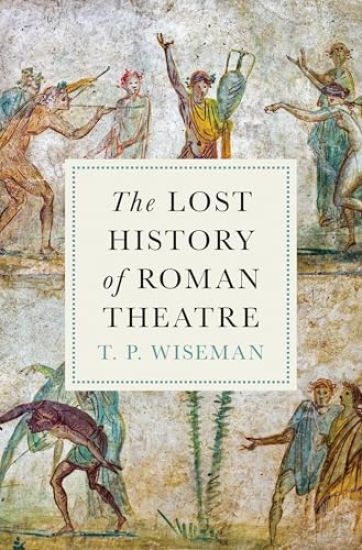
The Lost History of Roman Theatre

The Lost History of Roman Theatre

T.P. Wiseman

PRINCETON UNIVERSITY PRESS
2025
sidottu
Investigating the origins of theatre in archaic RomeTheatre was an integral part of Roman civic, religious and political life for nearly a thousand years, but our understanding of it is skewed by the haphazard survival of usable evidence. The widely accepted date for the beginning of Roman drama is 240 BC, but that is only the date of the first known dramatic works. Theatre as a public spectacle was created in Athens and in Greek Sicily at the end of the sixth century BC, when the culture of Rome, to judge by the archaeological evidence, was itself thoroughly Greek. There is therefore no need to imagine that the Romans knew nothing of drama until centuries after its inception. In The Lost History of Roman Theatre, the distinguished classics scholar T. P. Wiseman reexamines the often-obscured origins of Roman theatre.In a series of detailed investigations, Wiseman explores material ignored or inadequately treated in the modern literature, including previously overlooked information in Cicero’s letters, speeches and dialogues about what theatre meant to Romans of his era. He further shows that the various styles of drama presented on the Roman stage were listed by grammarians in late antiquity who were using well-informed histories of drama now lost, and brings to light a wide range of evidence, visual as well as textual, from all that thousand-year stretch of time, to offer a new sense of the range and richness of the Romans’ experience of theatre.
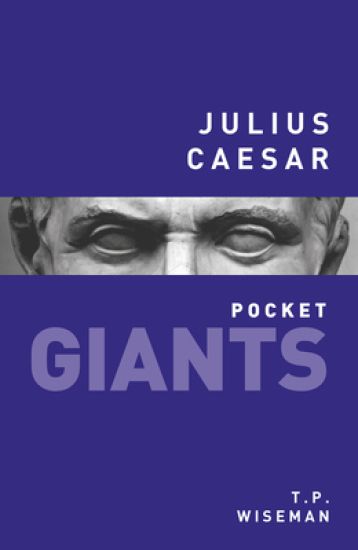
Julius Caesar: pocket GIANTS

Julius Caesar: pocket GIANTS

T.P. Wiseman

The History Press Ltd
2016
nidottu
Why is Caesar a giant? Because he effectively created the Roman Empire, and thus made possible the European civilization that grew out of it. As the People's champion against a corrupt and murderous oligarchy, he began transformation of the Roman republic into a quasi-monarchy and a military and fiscal system that for four centuries provided western Europe, north Africa and the Middle East with security, prosperity and relative peace. His conquest of Gaul and his successors' conquests of Germany, the Balkans and Britain created both the conditions for 'western culture' and many of the historic cities in which it has flourished.