Kirjojen hintavertailu. Mukana 12 083 983 kirjaa ja 12 kauppaa.

Kirjahaku

Etsi kirjoja tekijän nimen, kirjan nimen tai ISBN:n perusteella.

22 kirjaa tekijältä TCU Press

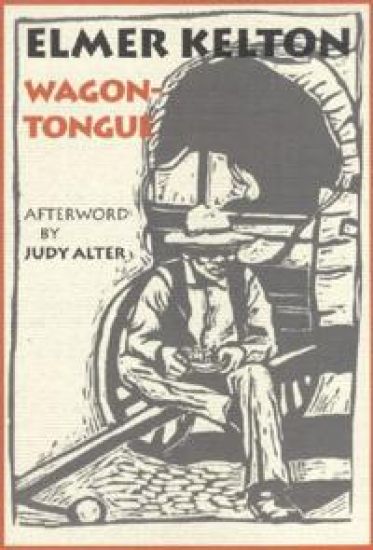
Wagontongue

Wagontongue

TCU Press

Texas Christian University Press,U.S.
1996
nidottu
As a slave, Isaac Jefford went to war and saved the life of his master, Major Lytton. As a free man, Isaac became one of the major's top cowhands, respected--but never totally accepted--by fellow cowboys: when they gathered around the fire to eat their dinner, Isaac took his food and sat on the wagontongue alone. When Pete Runyan, a bitter southerner, joins the crew, Isaac has to swallow his rage more than once. But then Pete and Isaac are assigned the task of getting cash--profits from the sale of the herd--safely to the Fort Worth bank before a foreclosure deadline. Time and three gunmen on their trail are against them, and their journey becomes a race to prove who is the best man. First published in 1972 by Bantam as a mass market paperback, Wagontongue is one of Elmer Kelton's classic novels, exploring racial relations on the West Texas plains in the low-key, wry, and compassionate voice that characterizes Kelton's novels. The novel grew from a short story, included in this volume.
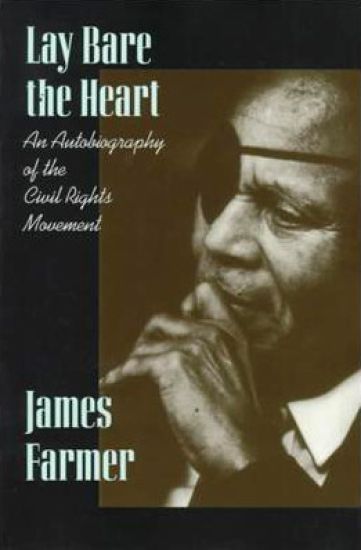
Lay Bare the Heart

Lay Bare the Heart

TCU Press

Texas Christian University Press,U.S.
1998
nidottu
Texas native James Farmer was one of the "Big Four" leaders of the civil rights movement, along with Martin Luther King, Jr., Roy Wilkins and Whitney Young. Farmer might be called the forgotten man of the movement, overshadowed by King, who was deeply influenced by Farmer's application of Ghandi's principles of nonviolent protest. Born in Marshall, Texas, in 1920, Farmer was the founding director of the Congress of Racial Equality in 1942. Under Farmer's direction, CORE set the pattern for the Civil Rights movement by organizing sit-ins and peaceful protests, beginning with a 1942 sit-in at a coffee shop in the University of Chicago area. In Lay Bare the Heart Farmer tells the story of the heroic civil rights struggle of the 1950s and 1960s. This moving and unsparing personal account captures both the inspiring strengths and human weaknesses of the movement.
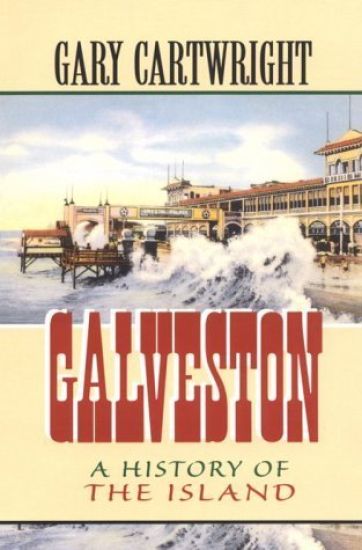
Galveston

Galveston

TCU Press

Texas Christian University Press,U.S.
1998
nidottu
This history of Galveston provides on overview of the city's past and provides readers, researchers, and tourists with information about today's historical points of interest.
The One-Eyed Man

The One-Eyed Man

TCU Press

Texas Christian University Press,U.S.
2001
nidottu
In the 1960s when the Supreme Court rules that African Americans must be admitted to the university in an unnamed Southern state, Governor Cullie Blanton is about to run for re-election. One of his opponents is "Bayonet Bill" Wooster, an ex-marine general who bases his campaign on fear of racial integration, fear of Communists, and fear of the federal government; he presents himself as the leader in a holy war against the incumbent infidel. The other candidate is Poppa Posey, a former governor who raises hound dogs, quotes Shakespeare, and hopes to use Wooster's money to split support for Blanton. Only Blanton understands that integration is inevitable and that his task must be to make the transition as painless and bloodless as possible. That he fails may be due in part to his freewheeling, power-driven personality. But Blanton is also defeated by inertia, tradition, and demagoguery. He is, as he once describes himself, someone "who just got in the way of goddamn history." Is the state Texas and the governor Lyndon B. Johnson? King denies it, arguing that there are equal parts of Huey Long, Herman Talmadge, and Alfalfa Bill Murray. But, as Erisman says in his foreword, "Blanton, in his wheeling and dealing, his crudities and profanity, his ruthlessness and his compassion, is a dead-on portrait of LBJ in full cry." The One-Eyed Man presents a hauntingly clear picture of the 1960s in the South--the national grief over the assassination of President John F. Kennedy, the racial turmoil, the human dilemma faced by North and South alike. And it poses haunting questions for the reader: what separates the demagogue from the leader? What injustices are acceptable in the name of a larger justice? Who determines the greatest good for the greatest number?
Literary Fort Worth

Literary Fort Worth

TCU Press

Texas Christian University Press,U.S.
2012
nidottu
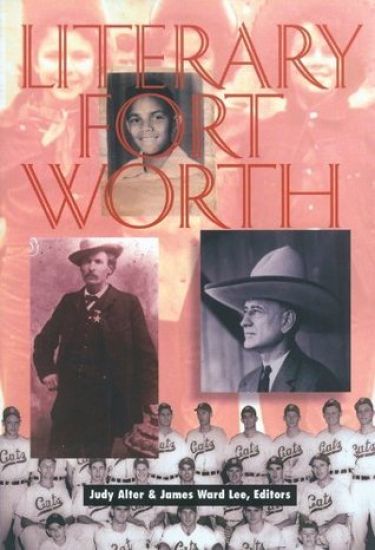
Aware that some may see the title of this volume as an oxymoron, James Ward Lee argues in his ""Argumentative Introduction"" that for more than a century Fort Worth writers have written well about a city too often dismissed as a semi-rural cow town. Writers have celebrated its world of cattle and oil, to be sure, but many have seen other sides of Fort Worth - the country club set, the literati, the artists and artisans, the musicians, the intellectuals, and the whole minority sub-culture that has given a cosmopolitan tone to the Queen City of the Prairies. Fort Worth is in many ways the most typical of Texas cities - proud of its slogan of ""Cowtown and Culture."" People mingle as easily at the new Bass Hall, with its world-class visiting entertainers and the Van Cliburn Piano Competition, as they do at the White Elephant Saloon or the Cowtown Coliseum. They visit a museum complex unrivalled anywhere in the world for a city Fort Worth's size, and they attend the Southwest Exposition and Livestock Show. Lee and Judy Alter, both Fort Worth residents and well-known writers themselves, found passages in novels, short stories, and poetry that caught the city's atmosphere and odd bits of its history. And they found that some of the best writing done about Cowtown is journalistic rather than what is usually considered literary. There are articles by current and former members of the staff of the Fort Worth Star-Telegram and one particularly poignant piece about the last day of the old Fort Worth Press. Literary Fort Worth is a literary smorgasbord, with something to appeal to almost any reader's taste. And literary? You bet!
Emily Austin of Texas 1795-1851

Emily Austin of Texas 1795-1851

TCU Press

Texas Christian University Press,U.S.
2009
sidottu
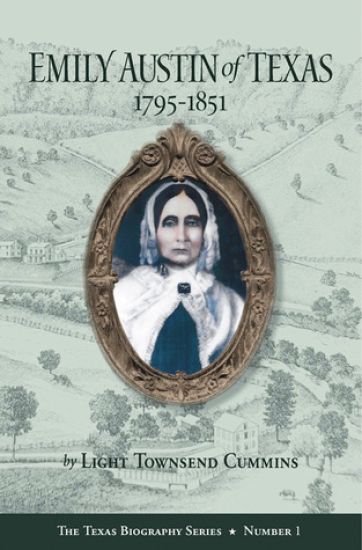
The Austin family left an indelible mark on Texas and the expanding American nation. In this insightful biography, Light Townsend Cummins turns the historical spotlight on Emily Austin, the daughter who followed the trails of the western frontier to Texas, where she saw the burgeoning young colony erupt in revolution, establish a proud republic, and usher in the period of antebellum statehood. Emily's journey was one of remarkable personal change as the rigors of frontier life shaped her into a uniquely self-reliant southern woman, one who fulfilled the role of the plantation mistress while taking a distinct hand in ambitious public ventures. Despite her ties to influential family members, including her brother Stephen F. Austin, Emily's determined spirit allowed her to live on her own terms. In all of her notable activities, Emily principally remained a devoted daughter, sister, wife, and mother who proudly clung to her Austin roots. Utilizing her family's written correspondence, Cummins provides insight into Emily's multifaceted personality and the relationships that sustained her through times of tribulation and triumph.
Alexander Campbell, Volume One

Alexander Campbell, Volume One

TCU Press

Texas Christian University Press,U.S.
2009
nidottu
A biography of Christian Church (Disciples of Christ) founder Alexander Campbell that deals with the leader's early manhood, from his schooling to his turning from the Calvinistic doctrine of his youth and his arrival in America.
Calvin Littlejohn

Calvin Littlejohn

TCU Press

Texas Christian University Press,U.S.
2009
sidottu
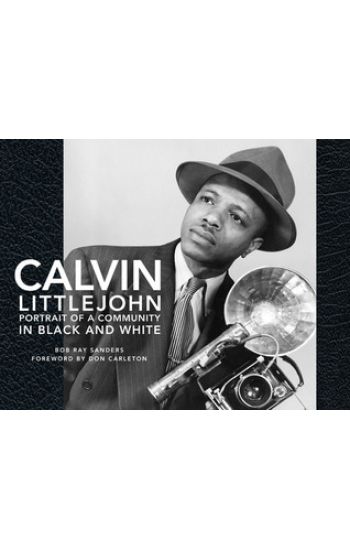
In 1934, the year Calvin Littlejohn came to Fort Worth, the city was a sleepy little burg. This was the Jim Crow era, when mainstream newspapers wouldn't publish pictures of black citizens and white photographers wouldn't take pictures in black schools. In Fort Worth, Littlejohn began what would become a life-long career of documenting the black community. And there would be nothing remotely related to the white culture's depictions of Amos 'n' Andy or black kids grinning over a slice of watermelon in Littlejohn's portrayal of his adopted home and the people he came to appreciate and love. Littlejohn's natural aptitude for drawing had been honed by correspondence courses in graphic design and a stint in a photo shop where he learned about the camera, lighting, and the use of shadows. When Littlejohn was assigned to be the official photographer at I. M. Terrell - the city's only black high school at the time - his professional career was launched. Unlike many segregated cities, where blacks lived only in one section, blacks in Cowtown lived in every quadrant of the city. There was a thriving black business district, with hotels, restaurants, a movie theater, a bank, and a major hospital, pharmacy, and nursing school. And of course, there were the schools and churches. All would eventually be seen through Littlejohn's lens. Although he never set out to be the documentarian of Fort Worth's black community, he did what he set out to do: to capture the best of a community, focusing on its good times. This book features more than 150 shots Littlejohn captured over the course of his career.
The Search for a Chili Queen

The Search for a Chili Queen

TCU Press

Texas Christian University Press,U.S.
2009
nidottu
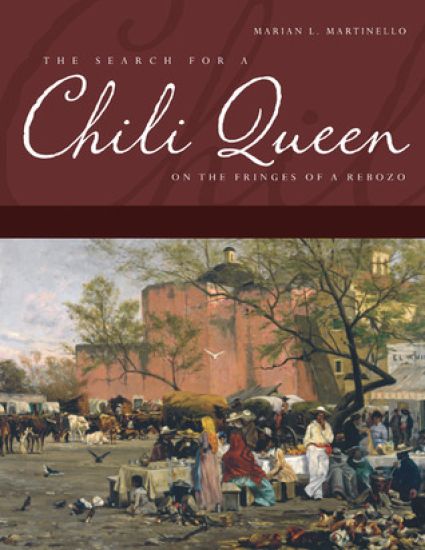
Blending careful research and creative storytelling, ""The Search for a Chili Queen"" explores the lantern-lit world of the young hostesses who staffed nightly chili stands and vied for loyal customers on the plazas of late nineteenth-century San Antonio. As a humanities detective, Marian L. Martinello chronicles her step-by-step investigation into the life and times of the chili queens, making frequent reference to the unique sources that guided her inquiry. The pages of the book are replete with nineteenth-century photographs and paintings, in addition to modern photos of artifacts in museum collections and even chiles from the author's local supermarket. All of this evidence leads to informed conclusions about the persona, trade, and surroundings of the chili queens on San Antonio's Military Plaza. Martinello subsequently brings life to her subject through an entertaining yet historically credible bit of creative reconstruction. She crafts the fictional character of Lupe Perez, a spunky teenage queen who endeavors to bolster business at her family's stand through hard work, a knack for entertaining customers, and the allure of a remarkable fringed rebozo. Following in the footsteps of Martinello's previous books, ""The Search for Emma's Story"" and ""The Search for Pedro's Story"", this search for a chili queen serves as an invaluable model of historical investigation for teachers and students, as well as an engaging read for anyone whose interest is piqued by Lupe's captivating historical counterparts.
Literary El Paso

Literary El Paso

TCU Press

Texas Christian University Press,U.S.
2009
sidottu
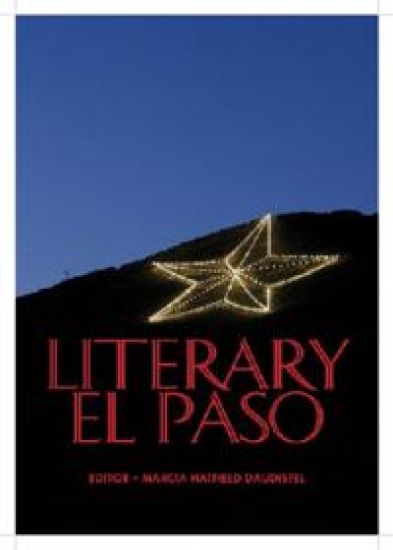
The latest addition to the successful literary cities series by Texas Christian University Press, ""Literary El Paso"" brings attention to the often overlooked extraordinary literary heritage of this city in far West Texas. El Paso is the largest metropolitan area along the U.S. - Mexico border and is geographically isolated from the rest of Texas. It is in this splendid isolation surrounded by mountains in the midst of the beautiful Chihuahuan Desert that many award-winning writers found their literary voices. Daudistel uses her years of publishing experience in El Paso to gather the works of past, present, and emerging writers of the Borderlands. Historical essays, fiction, journalism, and poetry portray the colorful history and vibrant present of this city on the border through the works of sixty-three writers. Once a backdrop to the Mexican Revolution, El Paso was also home to infamous outlaws. Historians C. L. Sonnichsen and Leon Metz write on the gunmen and lawmen of El Paso including John Wesley Hardin, Dallas Stoudenmire and Bass Outlaw. There are feature stories from award-winning journalists Ruben Salazar early in his newspaper career, Ramon Renteria with the last interview of poet Ricardo Sanchez, and Bryan Woolley on the 1966 University of Texas - El Paso Miners and lively South El Paso Street. Many groundbreaking Chicano writers began their work in El Paso, such as Jose Antonio Burciaga, Abelardo Delgado, Estela Portillo Trambley, and Arturo Islas. The works of Tom Lea, Amado Muro, Dagoberto Gilb, Rick DeMarinis, Pat LittleDog, the inimitable word sketches of Elroy Bode, and the poetry of Benjamin Alire Saenz, Pat Mora, and Bernice Love Wiggins, one of the first African American female poets published in Texas, explore the experience of life in El Paso. In addition, previously unpublished works from John Rechy, Ray Gonzalez and Robert Seltzer are included. For the first time in the series, ""Literary El Paso"" features bilingual selections to reflect the bi-cultural environment of the region and the state.
Higher Education Reconceived

Higher Education Reconceived

TCU Press

Texas Christian University Press,U.S.
2009
nidottu
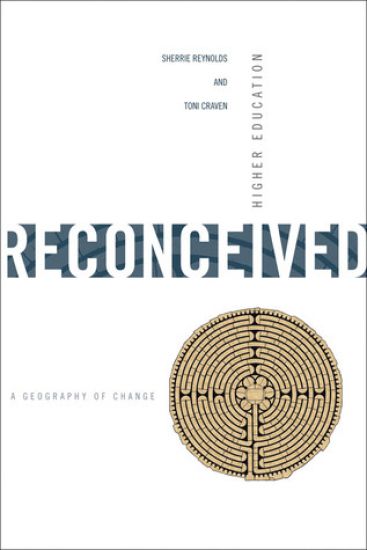
In ""Higher Education Reconceived: A Geography of Change"", authors Sherrie Reynolds and Toni Craven examine the process of change in higher education as they engage the reader in conversation about how we relate to ourselves and to one another. They draw on modern and post-modern elements of higher education as well as personal narratives to address personal change, emergent change, and changing ideas about learning, curriculum, and communities of learning. The traditional view in higher education is that teaching causes learning. However, these authors assess how, as our ideas of student learning, research, and disciplines have developed, our understanding of teaching has evolved as well. Throughout, the authors intimate a sense of the spiritual in the processes of teaching and learning. This holistic volume encourages meditation on the multidimensional journey of teaching and learning, sheds new light on current paradigms of education, and presents ways of living together in a pluralistic and globally connected world. Opening each chapter with a labyrinth illustration to depict the winding and porous nature of the topic, this book should find a place on every educator's bookshelf. As teacher-scholars together discover a new understanding of higher education fit for our times, they should never forget that - as Reynolds put it - 'Being a university professor is a sacred trust'.
Lone Star Lost

Lone Star Lost

TCU Press

Texas Christian University Press,U.S.
2009
nidottu
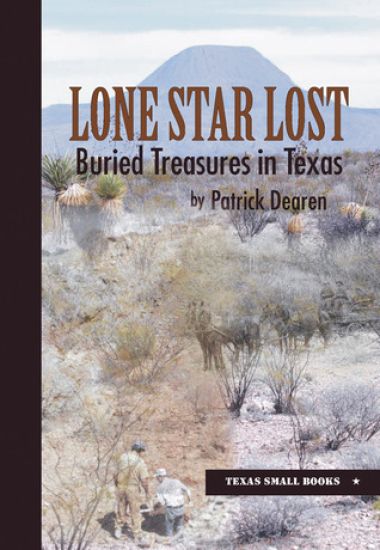
Patrick Dearen went in search of buried treasures, not gold or silver or jewels, but untapped tales worthy of J. Frank Dobie. And he found for ""Lone Star Lost"" ten such stories that spring from the bedrock, shared with the author by native sons and daughters who know that the real treasure is our Texas heritage. These stories grew from the land - the Texas soil that gives birth to history and sprinkles it with legend. From the piney woods on the east to the Chihuahuan Desert on the west, from the subtropical marshes on the south to the mountains on the north, Texas is alive with the kind of wonder that has sent men in quest of their own Cibolas for generations. Recognized by ""Southwestern Historical Quarterly"" as a 'worthy successor to J. Frank Dobie', Patrick Dearen has researched lost treasures of Texas for more than twenty-five years. His book ""Castle Gap and the Pecos Frontier"" broke new ground in the study of hidden bonanzas in the state's western reaches. The author of nine novels and eight nonfiction books, Dearen has been honored by Western Writers of America, West Texas Historical Association, and Permian Historical Association. He makes his home in Midland, Texas.
Comfort and Mirth

Comfort and Mirth

TCU Press

Texas Christian University Press,U.S.
2009
nidottu
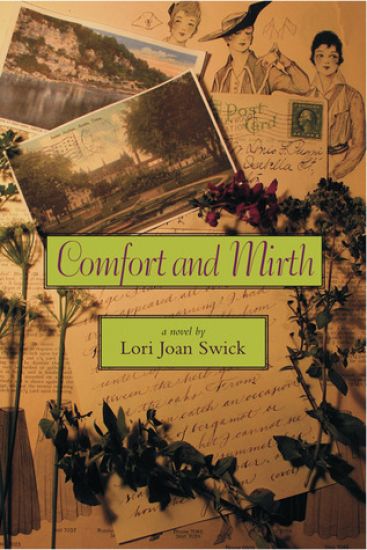
Comfort and Mirth offers a rare glimpse into the capital city of Texas during the early decades of the twentieth century and brings into play the formation of the Texas suffrage movement, Prohibition, the treatment of the mentally ill, and the first round of controversies over the Jim Crow laws. This novel traces a young woman's journey of self-discovery and the struggle for empowerment. Camille Abernathy leaves her home in Seattle to move to Austin with her worldly new husband who has accepted a position as professor of philosophy at the University of Texas. As she devotes herself to the tasks required to create a home of ease and elegance for her husband and her children, she is drawn into a whirling social circle of professors' wives and introduced to the world of urban opulence and hypocrisy. Through the letters she writes to her mother, Camille unravels the complexities of her new life by trusting in her natural instincts and relying on her greatest innate strengths--depth of philosophical and spiritual wisdom. Camille's story is told against the background of the growth of Austin from a frontier town to a cosmopolitan southwestern city including such events as the arrival of the first motorcars to the dusty streets, Congress Avenue, the opening of the Hancock Opera House, the formation of Elisabet Ney's sculpture museum in Hyde Park, and the construction, flooding, and reconstruction of the great dam to form the Texas Hill Country lake system.
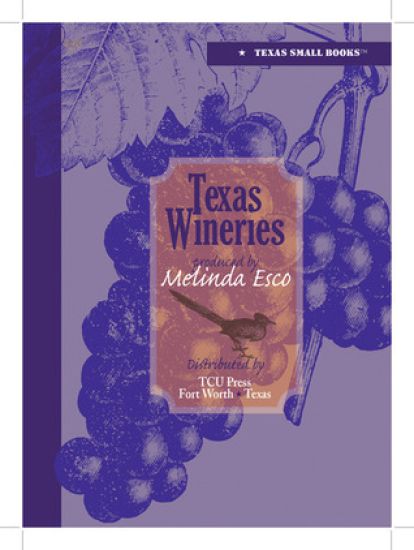
Texas Wineries

Texas Wineries

TCU Press

Texas Christian University Press,U.S.
2009
sidottu
Melinda Esco blended her love of Texas travel with an appreciation for wine and toured as many of the esteemed Texas wineries as possible. She discovered that, while some owners are native Texans and some are transplants, all share an infectious enthusiasm for their businesses. Texas wine-making is really agriculture-based tourism - a billion dollar industry - Texas big business at its best. Esco gives a brief history of Texas winemaking, talks about the process, the business, and explores some of her favorite wineries. There's even a glossary of terms: Legs? Nose? Tannic force? The result is a delightful look at the people and places that make Texas wine one more thing Texans can brag about.
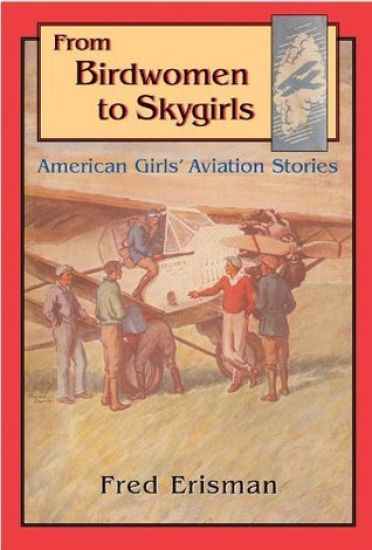
From Birdwomen to Skygirls

From Birdwomen to Skygirls

TCU Press

Texas Christian University Press,U.S.
2009
sidottu
Close on the heels of the American public's early enthusiasm over the airplane came aviation stories for the young. From 1910 until the early 1960s, they exalted flight and painted the airplane as the most modern and adventuresome of machines. Most of the books were directed at boys; however, a substantial number sought a girls' audience. Erisman's account of several aviation series and other aviation books for girls fills a gap in the history and criticism of American popular culture. It examines the stories of girls who took to the sky, of the sources where authors found their inspiration, and of the evolution of aviation as an enterprise open to all. From the heady days of early aviation through the glory days of commercial air travel, girls' aviation books trace American women's participation in the field. They also reflect changes in women's roles and status in American society as the sex sought greater equality with men. As aviation technology improved, the birdwomen of the pre-World War I era, capable and independent-minded, gave way to individualistic 1930s adventurers patterned on Amelia Earhart, Jacqueline Cochran, and other feminine notables of the air. Their stories lead directly into the coming of commercial air travel. Career stories paint the increasingly glamorous world of the 1940s and 1950s airline stewardess, the unspoken assumptions lying behind that profession, and the inexorable effects of technological and economic change. By recovering these largely forgotten books and the social debates surrounding women's flying, Erisman makes a substantial contribution to aviation history, women's history, and the study of juvenile literature. This first comprehensive study of a long-overlooked topic recalls aviation experiences long past and poses provocative questions about Americans' attitudes toward women and how those attitudes were conveyed to the young.
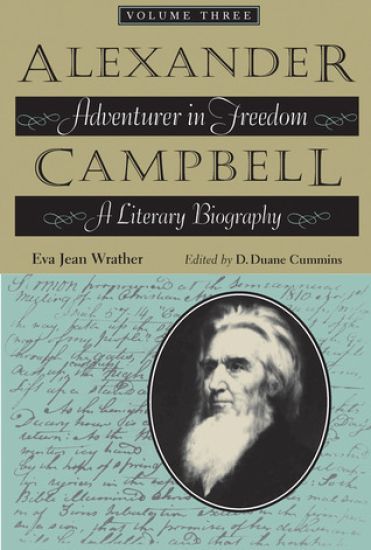
Alexander Campbell, Volume Three

Alexander Campbell, Volume Three

TCU Press

Texas Christian University Press,U.S.
2009
sidottu
Eva Jean Wrather (1908-2001) spent most of her adult lifetime writing a biography of Alexander Campbell, founder of the Christian Church (Disciples of Christ), the only Protestant denomination to spring from American soil. Shortly before Wrather's death, the manuscript totaled 800,000 words or 3,254 pages. Historian D. Duane Cummins worked with her until her death and then afterwards to craft a three-volume work comprising Campbell's lifetime of theological doctrine and literary writing. Volume three of this work bears Cummins' organization and structure, along with some of his own research, preserving as much as possible Wrather's inimitable writing style.
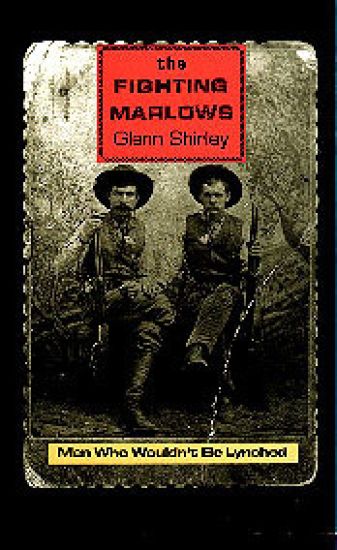
The Fighting Marlows

The Fighting Marlows

TCU Press

Texas Christian University Press,U.S.
2009
nidottu
Many people in northern Texas and southwestern Oklahoma still believe that the Marlow brothers - George, Charles, Alf, and Epp - were thieves and killers. In 1888 they were charged with rustling and murder, tried by public opinion, and betrayed by law officials responsible for their safety. After Alf and Epp were killed in a brutal ambush, Charles and George accomplished a grisly escape, only to be caught and sent to Dallas for trial where, for their own protection, they were deputized as marshals. Their story, as lurid and adventuresome as any western saga, documents late nineteenth-century law enforcement in the Southwest. The Marlows' fight for justice was dramatized in the movie, "The Sons of Katie Elder".
Paul Ruffin

Paul Ruffin

TCU Press

Texas Christian University Press,U.S.
2010
sidottu
The Texas Legislature recently named Paul Ruffin 2009 Poet Laureate of Texas. To those who read literary journals or mid-list popular books, Paul Ruffin is a well-known author and poet. Ruffin is prolific in his writing, having published over a thousand poems, short stories, novels, and nonfiction pieces with decades of unfailing artistry. In the fifth installment of the ""TCU Texas Poet Laureate Series"", editor Billy Bob Hill writes in his introduction that he has long admired Paul Ruffin's use of poetic devices. Ruffin uses alliteration and subtle textured sounds throughout his poetry, making them likeably conversational while full of crafted sound patterns. Ruffin also employs whimsical narratives, coining the word 'Necrofiligumbo' in 'When the Mummy Became a Mommy'. But. Hill explains, the true power of this book comes from its storytelling. With the new material, readers will encounter compelling, often drop-dead funny storytelling. The state of Texas has honored Texas Poets Laureate for seventy-five years, but much of their work has gone unpublished and unrecognized. In a significant step toward recognizing their achievements, TCU Press publishes a series of the work of the Poets Laureate, with a volume dedicated to each poet. The series began with the 2005 and 2006 laureates and continues through each bi-annual appointment. These beautiful volumes collect the finest work of each individual poet. While a single volume may stand alone as a valuable selection of a poet's work, the series as a whole will draw their different voices together into a singular poetic expression of Texas. The next book in the series will focus on the work of 2010 laureate, Karla K. Morton.
Play by Play

Play by Play

TCU Press

Texas Christian University Press,U.S.
2010
sidottu
In their unrelenting drive to create a thriving desert metropolis, leaders of the most populous city in the arid Southwest, Phoenix, Arizona, seemed oblivious to two essential elements that form a vibrant urban environment. The arts were noticeably absent and the city's urban core had dissipated into a vast and empty suburbia: a city lacking an urban heart. In 1980, a visionary - Dick Mallery, partner at the powerhouse law firm. Snell & Wilmer - emerged to take the first major step to shape Phoenix into a great city, not just a big one. A veritable civic drama, ""Play by Play"" illustrates the central role the arts hold when a city consciously reaches for distinction and demonstrates how cultural life can influence politics and business. This lively study traces ten years in the life of a city 1980-1990; a defining decade that saw Phoenix descend from boomtown to bust as the savings and loan crisis fractured its real estate market and the economy collapsed. These devastating events almost derailed the selfless efforts of a new group of urban leaders - led by Mallery, along with Gary Herberger, architect, businessman, and philanthropist - who devoted a significant portion of their lives, often in the face of overwhelming odds, to make a place for the arts in downtown Phoenix. This interpretive history - an inside look at the heart of this desert metropolis - is placed in regional and national context and in many ways defines the modern urban Southwest.
The Far Canyon

The Far Canyon

TCU Press

Texas Christian University Press,U.S.
2010
nidottu
The Far Canyon, the sequel to ""Slaughter"" was published in 1994 and won Elmer Kelton his sixth esteemed Spur Award from the Western Writers of America. By 2002 Kelton had not only earned his seventh Spur Award with Way of the Coyote, but had also won three Western Heritage Awards. The National Cowboy and Western Heritage Museum honored Kelton for ""The Time it Never Rained"" in 1974, ""The Good Old Boys"" in 1979, and ""The Man Who Rode Midnight"" in 1988. With such accomplishments, it is easy to understand why, in 1995, the Western Writers of America voted Elmer Kelton the greatest western writer of all time. In ""The Far Canyon"", Kelton masterfully unveils for his reader the finality of the buffalo's demise, the beginning of a time when cattle would replace the American bison on the southern plains and ultimately end the Plains Indian culture. The novel reveals the history of the period, not in a general grand swoop of the pen, but rather, up close and personal, so his readership can judge the impact of the period upon his characters. The novel's first chapter introduces Comanche warrior Crow Feather, whose situation is emblematic of a common recurring theme in all of Kelton's works...change. Protagonist Jeff Layne is faced with the very same dramatic problem, the devastating threat to one's self-concept inherent in change. Layne, the hide hunter from Slaughter is weary of killing and death. He decides to return to South Texas, determined to earn his living with the newest resource on the plains, cattle. And the cultures collide. Kelton eloquently reveals the impact of hide hunters on Plains Indian culture. Crow Feather realizes that no matter how many whites the Comanche kill, there will always be more 'coming back'. Crow Feather also understands that his life and the lives of his wives and children will never be easy again. Are Layne and Crow Feather of a character that will allow them to escape a predetermined fate by reaching that far canyon, or will they simply perish under the cultural dictate of their historical time?