Kirjojen hintavertailu. Mukana 11 342 296 kirjaa ja 12 kauppaa.

Kirjahaku

Etsi kirjoja tekijän nimen, kirjan nimen tai ISBN:n perusteella.

14 kirjaa tekijältä Tariq Ramadan

The Messenger

The Messenger

Tariq Ramadan

Penguin Books Ltd
2008
pokkari
In The Messenger: The Meanings of the Life of Muhammad, leading Muslim scholar Tariq Ramadan considers the ways in which the Prophet's actions, words and teachings can guide us in the modern world. The life of the Prophet Muhammad, to whom the Angel Gabriel revealed the verses of the Quran, has provided inspiration to Muslims for hundreds of years. Interspersed with spiritual and philosophical meditations, this profound and stimulating biography shows how Muhammad's message can be used to address some of today's most controversial issues - from the treatment of the poor and the role of women to the interpretation of jihad and relations with other religions. It offers Muslims a new understanding of Muhammad's life and introduces non-Muslims to the story of the Prophet and to the riches of Islam. 'Fascinating ... punctuated by spiritual reflections, it tells Muhammad's life from orphaned childhood to his death, with Islam dominant across Arabia' The Times 'Draws lesson that are crucial for Muslims and non-Muslims alike' Financial Times 'Communicates a sense of spiritual transcendence' Guardian 'Important, readable and intelligent ... an eloquent account of the religion's founder and his core teachings' Scotland on Sunday Tariq Ramadan is Professor of Contemporary Islamic Studies at the Faculty of Oriental Studies and St Antony's College (University of Oxford). He is the Director of the Centre for Islamic Legislation and Ethics (Doha) He is the author of The Quest for Meaning and The Messenger, and has been described as one of the 'most important innovators for the twenty-first century' by Time magazine.
The Quest for Meaning

The Quest for Meaning

Tariq Ramadan

Penguin Books Ltd
2012
pokkari
In The Quest for Meaning: Developing a Philosophy of Pluralism, Tariq Ramadan embarks on a journey to uncover the profound truths that bind us together. In a world so full of different beliefs and viewpoints, how can we find peace in our shared humanity? Acclaimed thinker and philosopher Tariq Ramadan explores universal ideas such as love, respect, truth and tolerance, and examines questions such as how can men and women relate to each other? What is the true nature of equality? What does 'civilization' really mean? In doing so, he opens our minds to a new view of humanity. Whether we are Christian or Buddhist, Jewish or Muslim, secularist or believer, he reveals that all traditions of thought spring from the same place, and guides us to see past what divides us and discover the beauty of what we have in common. This book has resonance for all of us, showing why, eventually, all different spiritual paths lead to the human heart. 'A prophetic, passionate and insightful book' Karen Armstrong, Financial Times
Islam

Islam

Tariq Ramadan

Pelican
2017
nidottu
The essential introduction to Islam by a leading expertHardly a day goes by without mention of Islam. And yet, for most people, and in much of the world, Islam remains a little-known religion. Whether the issue is violence, terrorism, women's rights or slavery, Muslims are today expected to provide answers and to justify what Islam is - or is not. But little opportunity exists, either in the media or in society as a whole, to describe Islam: precisely the question this short and extremely accessible book sets out to answer. In simple, direct language it will introduce readers to Islam, to its spirituality, its principles, its rituals, its diversity and its evolution.
Introduction to Islam

Introduction to Islam

Tariq Ramadan

Oxford University Press
2017
nidottu
From one of the most prominent intellectuals in the Muslim world comes a timely new introduction to one of the world's most practiced-and most misunderstood-religions. In frank, unapologetic language, Tariq Ramadan walks readers through Islam and its principles, rituals, diversity, and evolution. Ramadan, known for his efforts to reform and change the understanding of Islam in the West, avoids ideology and idealism, instead attempting to depict the true meaning of Islam for readers who have no previous experience with the religion. The book is therefore focused on defining the basic principles of Islam and offering an overview of the faith's history: from its beginnings in prophetic mission, to the Sunni-Shi'a schism, to the formation of distinct schools of law, theology, philosophy, and mysticism. Perhaps the most misinterpreted aspect of Islam, shariah, literally translated as "the way that leads to a source of water," receives an entire chapter of attention. Ramadan explains the ways in which shariah has been reduced by fundamentalism to a mere criminal code and expands upon its place in the larger Islamic worldview. He then confronts some of the most pressing issues facing Muslims today, including gender equality, religious diversity, and violence. Both sensitive and accessible, Introduction to Islam is a much-needed guide to understanding the role of Islam in the modern world.
Western Muslims and the Future of Islam

Western Muslims and the Future of Islam

Tariq Ramadan

Oxford University Press Inc
2005
nidottu
In a Western world suddenly acutely interested in Islam, one question has been repeatedly heard above the din: where are the Muslim reformers? With this ambitious volume, Tariq Ramadan firmly establishes himself as one of Europe's leading thinkers and one of Islam's most innovative and important voices. As the number of Muslims living in the West grows, the question of what it means to be a Western Muslim becomes increasingly important to the futures of both Islam and the West. While the media are focused on radical Islam, Ramadan claims, a silent revolution is sweeping Islamic communities in the West, as Muslims actively seek ways to live in harmony with their faith within a Western context. French, English, German, and American Muslims--women as well as men--are reshaping their religion into one that is faithful to the principles of Islam, dressed in European and American cultures, and definitively rooted in Western societies. Ramadan's goal is to create an independent Western Islam, anchored not in the traditions of Islamic countries but in the cultural reality of the West. He begins by offering a fresh reading of Islamic sources, interpreting them for a Western context and demonstrating how a new understanding of universal Islamic principles can open the door to integration into Western societies. He then shows how these principles can be put to practical use. Ramadan contends that Muslims can-indeed must-be faithful to their principles while participating fully in the civic life of Western secular societies. Grounded in scholarship and bold in its aims, Western Muslims and the Future of Islam offers a striking vision of a new Muslim Identity, one which rejects once and for all the idea that Islam must be defined in opposition to the West.
In the Footsteps of the Prophet: Lessons from the Life of Muhammad
Named by Time magazine as one of the 100 most important innovators of the century, Tariq Ramadan is a leading Muslim scholar, with a large following especially among young European and American Muslims. Now, in his first book written for a wide audience, he offers a marvelous biography of the Prophet Muhammad, one that highlights the spiritual and ethical teachings of one of the most influential figures in human history. In the Footsteps of the Prophet is a fresh and perceptive look at Muhammad, capturing a life that was often eventful, gripping, and highly charged. Ramadan provides both an intimate portrait of a man who was shy, kind, but determined, as well as a dramatic chronicle of a leader who launched a great religion and inspired a vast empire. More important, Ramadan presents the main events of the Prophet's life in a way that highlights his spiritual and ethical teachings. The book underscores the significance of the Prophet's example for some of today's most controversial issues, such as the treatment of the poor, the role of women, Islamic criminal punishments, war, racism, and relations with other religions. Selecting those facts and stories from which we can draw a profound and vivid spiritual picture, the author asks how can the Prophet's life remain -- or become again -- an example, a model, and an inspiration? And how can Muslims move from formalism -- a fixation on ritual -- toward a committed spiritual and social presence? In this thoughtful and engaging biography, Ramadan offers Muslims a new understanding of Muhammad's life and he introduces non-Muslims not just to the story of the Prophet, but to the spiritual and ethical riches of Islam.
Radical Reform

Radical Reform

Tariq Ramadan

Oxford University Press Inc
2009
sidottu
Tariq Ramadan has emerged as one of the foremost voices of reformist Islam in the West, notable for urging his fellow Muslims to participate fully in the civil life of the Western societies in which they live. In this new book, he tackles head-on the main roadblock to such participation--namely, the rulings of Islamic jurists that make Islam seem incompatible with modern, scientifically and technologically advanced, democratic societies. Ramadan argues that it is crucial to find solutions that will enable Western Muslims to remain faithful to Islamic ethics while fully living within their societies and their time. He notes that Muslim scholars often refer to the notion of ijtihad (critical and renewed reading of the foundational texts) as the only way for Muslims to take up these modern challenges. But Ramadan argues that, in practice, such readings have reached the limits of their ability to serve the faithful in the West as well as the East. In this book, he sets forward a radical new concept of ijtihad, which puts context--including the knowledge derived from the hard and human sciences, cultures and their geographic and historical contingencies--on an equal footing with the scriptures as a source of Islamic law. This global and comprehensive approach, he says, seems to be the only way to go beyond the current limits and face up to the crisis in contemporary Islamic thought: Muslims need a contemporary global and applied ethics. Ramadan's radical proposal and the conclusions to which it leads him are bound to provoke discussion and controversy. Muslims and non-Muslims alike will have to contend with Ramadan's new idea of the very basis of Islam in the modern world.
In the Footsteps of the Prophet: Lessons from the Life of Muhammad
Named by Time magazine as one of the 100 most important innovators of the century, Tariq Ramadan is a leading Muslim scholar, with a large following especially among young European and American Muslims. Now, in his first book written for a wide audience, he offers a marvelous biography of the Prophet Muhammad, one that highlights the spiritual and ethical teachings of one of the most influential figures in human history. In the Footsteps of the Prophet is a fresh and perceptive look at Muhammad, capturing a life that was often eventful, gripping, and highly charged. Ramadan provides both an intimate portrait of a man who was shy, kind, but determined, as well as a dramatic chronicle of a leader who launched a great religion and inspired a vast empire. More important, Ramadan presents the main events of the Prophet's life in a way that highlights his spiritual and ethical teachings. The book underscores the significance of the Prophet's example for some of today's most controversial issues, such as the treatment of the poor, the role of women, Islamic criminal punishments, war, racism, and relations with other religions. Selecting those facts and stories from which we can draw a profound and vivid spiritual picture, the author asks how can the Prophet's life remain -- or become again -- an example, a model, and an inspiration? And how can Muslims move from formalism -- a fixation on ritual -- toward a committed spiritual and social presence? In this thoughtful and engaging biography, Ramadan offers Muslims a new understanding of Muhammad's life and he introduces non-Muslims not just to the story of the Prophet, but to the spiritual and ethical riches of Islam.
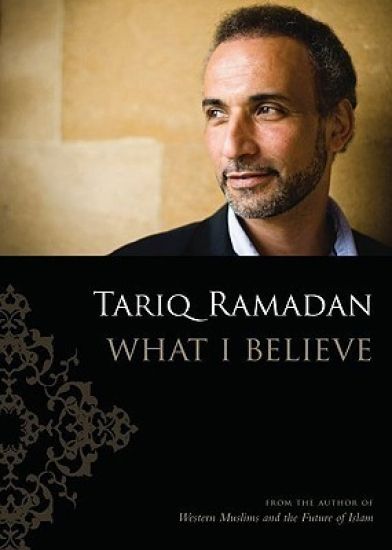
What I Believe

What I Believe

Tariq Ramadan

Oxford University Press Inc
2009
sidottu
Tariq Ramadan is very much a public figure, named one of Time magazine's most important innovators of the twenty-first century. He is among the leading Islamic thinkers in the West, with a large following around the world. But he has also been a lightning rod for controversy. Indeed, in 2004, Ramadan was prevented from entering the U.S. by the Bush administration and despite two appeals, supported by organizations like the American Academy of Religion and the ACLU, he is still barred from the country at this time. In What I Believe, Ramadan attempts to set the record straight, laying out the basic ideas he stands for in clear and accessible prose. He describes the book as a work of clarification, directed at ordinary citizens, politicians, journalist and others who are curious (or skeptical) about his positions. Aware that that he is dealing with emotional issues, Ramadan tries to get past the barriers of prejudice and misunderstanding to speak directly, from the heart, to his Muslim and non-Muslim readers alike. In particular, he calls on Western Muslims to escape the mental, social, cultural, and religious ghettos they have created for themselves and become full partners in the democratic societies in which they live. At the same time, he calls for the rest of us to recognize our Muslim neighbors as citizens with rights and responsibilities the same as ours. His vision is of a future in which a shared and confident pluralism becomes a reality at last.
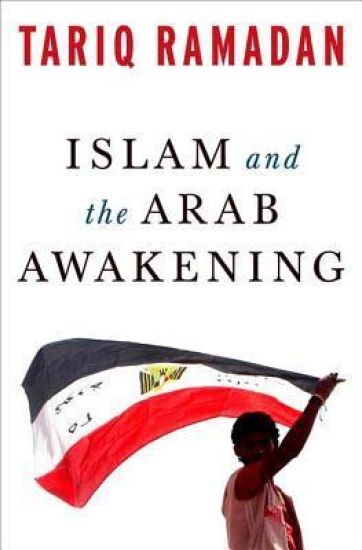
Islam and the Arab Awakening

Islam and the Arab Awakening

Tariq Ramadan

Oxford University Press
2012
sidottu
One of the most important developments in the modern history of the Middle East, the so-called Arab Spring began in Tunisia in December 2010, bringing down dictators, sparking a civil war in Libya, and igniting a bloody uprising in Syria. Its long-term repercussions in Egypt and elsewhere remain unclear. Now one of the world's leading Islamic thinkers examines and explains it, in this searching, provocative, and necessary book. Time Magazine named Tariq Ramadan one of the most important innovators of the twenty-first century. A Muslim intellectual and prolific author, he has won global renown for his reflections on Islam and the contemporary challenges in both the Muslim majority societies and the West. In Islam and the Arab Awakening, he explores the uprisings, offering rare insight into their origin, significance, and possible futures. As early as 2003, he writes, there had been talk of democratization in the Middle East and North Africa. The U.S. government and private organizations set up networks and provided training for young leaders, especially in the use of the Internet and social media, and the West abandoned its unconditional support of authoritarian governments. But the West did not create the uprisings. Indeed, one lesson Ramadan presents is that these mass movements and their consequences cannot be totally controlled. Something irreversible has taken place: dictators have been overthrown without weapons. But, he writes, democratic processes are only beginning to emerge, and unanswered questions remain. What role will religion play? How should Islamic principles and goals be rethought? Can a sterile, polarizing debate between Islamism and secularism be avoided? Avoiding both naive confidence and conspiratorial paranoia, Ramadan voices a tentative optimism. If a true civil society can be established, he argues, this moment's fragile hope will live.
To Be a European Muslim

To Be a European Muslim

Tariq Ramadan

Islamic Foundation
2015
pokkari
To Be a European Muslim addresses some of the fundamental issues born of the several million strong Muslim presence in Europe in our times. Based on a thorough study of Islamic sources, it seeks to answer basic questions about European Muslims' social, political, cultural, and legal integration. Tariq Ramadan is recognized worldwide for his original scholarship. He is a professor of Islamic studies at the University of Oxford and was named by Time magazine as one of the one hundred innovators of the twenty-first century.
Islam, the West and the Challenges of Modernity

Islam, the West and the Challenges of Modernity

Tariq Ramadan

Islamic Foundation
2009
pokkari
Tariq Ramadan attempts to demonstrate, using sources which draw upon Islamic thought and civilization, that Muslims can respond to contemporary challenges of modernity without betraying their identity. The book argues that Muslims, nurished by their own points of reference, can approach the modern epoch by adopting a specific social, political, and economic model that is linked to ethical values, a sense of finalities and spirituality. Rather than a modernism that tends to impose Westernization, it is a modernity that admits to the pluralism of civilizations, religions, and cultures.Table of Contents:ForewordIntroductionHistory of a ConceptThe Lessons of HistoryPart 1: At the shores of Transcendence: between God and ManPart 2: The Horizons of Islam: Between Man and the CommunityPart 3: Values and Finalities: The Cultural Dimension of the Civilizational Face to FaceConclusionAppendixIndexTariq Ramadan is a professor of Islamic Studies at the University of Oxford and a visiting professor in Identity and Citizenship at Erasmus University. He was named by TIME Magazine as one of the one hundred innovators of the twenty-first century
Att vara europeisk muslim

Att vara europeisk muslim

Tariq Ramadan

Alhambra Förlag AB
2004
sidottu
"Att vara europeisk muslim" är det första och mest ambitiösa försöket att göra en komprimerad analys av hur islam på ett meningsfullt sätt kan ingå i den europeiska verkligheten. På en grundval av ingående studier av islamiska källor försöker författaren besvara några av de viktigaste frågeställningarna som berör miljoner europeiska muslimers sociala, politiska, religiösa och kulturella integration. Boken visar att det är möjligt att leva som praktiserande muslim och samtidigt vara en aktiv medborgare i samhället i de pluralistiska europeiska länderna. Tariq Ramadan, som undervisar i filosofi vid universitetet i Genève och i islamiska studier vid universitetet i Fribourg, föreslår hur europeiska muslimer bäst förhåller sig till de särskilda krav de ställs inför, såsom dialogen, samarbetet och samexistensen med de icke-muslimska befolkningar som utgör majoriteten överallt i de europeiska länderna.
On Super–Diversity

On Super–Diversity

Tariq Ramadan

Sternberg Press
2011
nidottu
One of the greatest challenges for art and culture, sounded by intellectuals and also by funding bodies, is to represent diversity. But what precisely does this term mean and why does it so often placate rather than produce what it names? Professor Steven Vertovec, Director of the Max-Planck-Institute for the Study of Religious and Ethnic Diversity (G ttingen, Germany) puts forward the notion of "super-diversity," noting "the need to re-evaluate conceptions and policy measures surrounding diversity by way of moving beyond an ethno-focal understanding and adopting a multidimensional approach." Developing this idea further, while aiming to question and complicate the focus on immigration in the current debate, the prolific and provocative scholar and activist Tariq Ramadan weighs in on the subject. In the resulting essay, translated into Dutch and Arabic, Professor Ramadan sets out an argument that foregrounds universalism as a necessary, if devalued, horizon and offers a critique of the uses and limits of dialogue and discourse within the day-to-day practice of super-diversity. On Super-Diversity constitutes the second book of the Reflections series, co-published with Witte de With. Each edition, consisting of a specially commissioned essay, engages a leading thinker in reconsidering one key question that defines contemporary culture.