Kirjojen hintavertailu. Mukana 11 244 527 kirjaa ja 12 kauppaa.

Kirjahaku

Etsi kirjoja tekijän nimen, kirjan nimen tai ISBN:n perusteella.

7 kirjaa tekijältä Ted G. Lewis

Network Science

Network Science

Ted G. Lewis

John Wiley Sons Inc
2009
sidottu
A comprehensive look at the emerging science of networks Network science helps you design faster, more resilient communication networks; revise infrastructure systems such as electrical power grids, telecommunications networks, and airline routes; model market dynamics; understand synchronization in biological systems; and analyze social interactions among people. This is the first book to take a comprehensive look at this emerging science. It examines the various kinds of networks (regular, random, small-world, influence, scale-free, and social) and applies network processes and behaviors to emergence, epidemics, synchrony, and risk. The book's uniqueness lies in its integration of concepts across computer science, biology, physics, social network analysis, economics, and marketing. The book is divided into easy-to-understand topical chapters and the presentation is augmented with clear illustrations, problems and answers, examples, applications, tutorials, and a discussion of related Java software. Chapters cover: OriginsGraphsRegular NetworksRandom NetworksSmall-World NetworksScale-Free NetworksEmergenceEpidemicsSynchronyInfluence NetworksVulnerabilityNet GainBiology This book offers a new understanding and interpretation of the field of network science. It is an indispensable resource for researchers, professionals, and technicians in engineering, computing, and biology. It also serves as a valuable textbook for advanced undergraduate and graduate courses in related fields of study.
Microsoft Rising

Microsoft Rising

Ted G. Lewis

IEEE Computer Society Press,U.S.
2000
nidottu
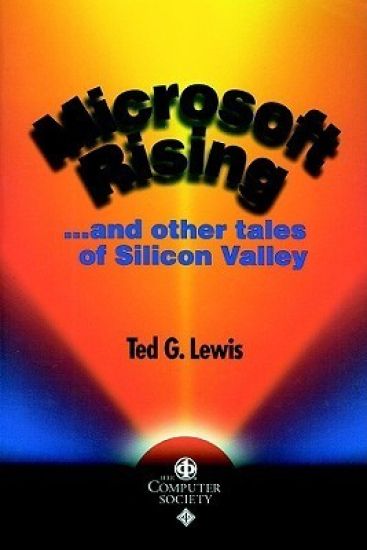
Ted Lewis delivers a first-hand account of the changing computer industry, a story of Microsoft and the Silicon Valley. Lewis maps the history of computing from 1990 to 2000, a tale of greed and emotion in the fastest growing, mainline industry of the world. In this compilation of columns from Computer, IEEE Internet Computing, and Scientific American, Lewis tries to predict and explain the chaos of Silicon Valley. This book reports the author's personal history through the early 1990's to the end of the decade. These stories often try to predict or explain the chaos of Silicon Valley. Lewis analyzes the high-technology industry and its constant change amid turmoil and upheaval. He also examines the art of software development and deals with innovation and the emergence of a techno-society. The book does not promise any answers, but rather concludes this short journey into the recent past with a number of provoking ideas about the future of hi-tech.
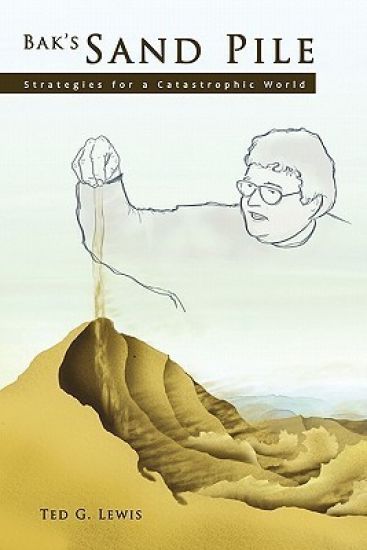
Bak's Sand Pile: Strategies for a Catastrophic World

Bak's Sand Pile: Strategies for a Catastrophic World

Ted G. Lewis

Agile Research and Technology, Inc
2011
nidottu
Did the terrorist attacks on the United States in 2001, the massive power blackout of 2003, Hurricane Katrina in 2005, and the Gulf oil spill of 2010 'just happen'-or were these shattering events foreseeable? Do such calamities in fact follow a predictable pattern? Can we plan for the unforeseen by thinking about the unthinkable? Ted Lewis explains the pattern of catastrophes and their underlying cause. In a provocative tour of a volatile world, he guides the reader through mega-fires, fragile power grids, mismanaged telecommunication systems, global terrorist movements, migrating viruses, volatile markets and Internet storms. Modern societies want to avert catastrophes, but the drive to make things faster, cheaper, and more efficient leads to self-organized criticality-the condition of systems on the verge of disaster. This is a double-edged sword. Everything from biological evolution to political revolution is driven by some collapse, calamity or crisis. To avoid annihilation but allow for progress, we must change the ways in which we understand the patterns and manage systems. Bak's Sand Pile explains how.
Critical Infrastructure Protection in Homeland Security
Covers critical infrastructure protection, providing a rigorous treatment of risk, resilience, complex adaptive systems, and sector dependence Wide in scope, this classroom-tested book is the only one to emphasize a scientific approach to protecting the key infrastructures components of a nation. It analyzes the complex network of entities that make up a nation's infrastructure, and identifies vulnerabilities and risks in various sectors by combining network science, complexity theory, risk analysis, and modeling and simulation. This approach reduces the complex problem of protecting water supplies, energy pipelines, telecommunication stations, power grid, and Internet and Web networks to a much simpler problem of protecting a few critical nodes. The new third edition of Critical Infrastructure Protection in Homeland Security: Defending a Networked Nation incorporates a broader selection of ideas and sectors than the previous book. Divided into three sections, the first part looks at the historical origins of homeland security and critical infrastructure, and emphasizes current policy. The second examines theory and foundations, highlighting risk and resilience in the context of complexity theory, network science, and the prevailing theories of catastrophe. The last part covers the individual sectors, including communications, internet, cyber threats, information technology, social networks, SCADA, water and water treatment, energy, and more. Covers theories of catastrophes, details of how sectors work, and how to deal with the problem of critical infrastructure protection’s enormity and complexityPlaces great emphasis on computer security and whole-community responseIncludes PowerPoint slides for use by lecturers, as well as an instructor's guide with answers to exercisesOffers five robust appendices that augment the non-mathematical chapters with more rigorous explanations and mathematics Critical Infrastructure Protection in Homeland Security, Third Edition is an important book for upper-division undergraduates and first-year graduate students in political science, history, public administration, and computer technology. It will also be of great interest to professional security experts and policymakers.
Critical Infrastructure Resilience and Sustainability Reader
Critical Infrastructure Resilience and Sustainability Reader Identify and protect critical infrastructure from a wide variety of threats In Critical Infrastructure Resilience and Sustainability Reader, Ted G. Lewis delivers a clear and compelling discussion of what infrastructure requires protection, how to protect it, and the consequences of failure. Through the book, you’ll examine the intersection of cybersecurity, climate change, and sustainability as you reconsider and reexamine the resilience of your infrastructure systems. The author walks you through how to conduct accurate risk assessments, make sound investment decisions, and justify your actions to senior executives. You’ll learn how to protect water supplies, energy pipelines, telecommunication stations, power grids, and a wide variety of computer networks, without getting into the weeds of highly technical mathematical models. Critical Infrastructure Resilience and Sustainability Reader also includes: A thorough introduction to the daunting challenges facing infrastructure and the professionals tasked with protecting itComprehensive explorations of the proliferation of cyber threats, terrorism in the global West, climate change, and financial market volatilityPractical discussions of a variety of infrastructure sectors, including how they work, how they’re regulated, and the threats they faceClear graphics, narrative guides, and a conversational style that makes the material easily accessible to non-technical readers Perfect for infrastructure security professionals and security engineering firms, Critical Infrastructure Resilience and Sustainability Reader will also benefit corporate security managers and directors, government actors and regulators, and policing agencies, emergency services, and first responders.
Book of Extremes

Book of Extremes

Ted G. Lewis

Copernicus
2014
nidottu
What makes the 21st century different from the 20th century? This century is the century of extremes -- political, economic, social, and global black-swan events happening with increasing frequency and severity. Book of Extremes is a tour of the current reality as seen through the lens of complexity theory – the only theory capable of explaining why the Arab Spring happened and why it will happen again; why social networks in the virtual world behave like flashmobs in the physical world; why financial bubbles blow up in our faces and will grow and burst again; why the rich get richer and will continue to get richer regardless of governmental policies; why the future of economic wealth and national power lies in comparative advantage and global trade; why natural disasters will continue to get bigger and happen more frequently; and why the Internet – invented by the US -- is headed for a global monopoly controlled by a non-US corporation. It is also about the extreme innovations and heroic innovators yet to be discovered and recognized over the next 100 years.Complexity theory combines the predictable with the unpredictable. It assumes a nonlinear world of long-tailed distributions instead of the classical linear world of normal distributions. In the complex 21st century, almost nothing is linear or normal. Instead, the world is highly connected, conditional, nonlinear, fractal, and punctuated. Life in the 21st century is a long-tailed random walk – Levy walks -- through extreme events of unprecedented impact. It is an exciting time to be alive.