Kirjojen hintavertailu. Mukana 11 342 296 kirjaa ja 12 kauppaa.

Kirjahaku

Etsi kirjoja tekijän nimen, kirjan nimen tai ISBN:n perusteella.

4 kirjaa tekijältä Ted H. Miller

Mortal Gods

Mortal Gods

Ted H. Miller

Pennsylvania State University Press
2011
sidottu
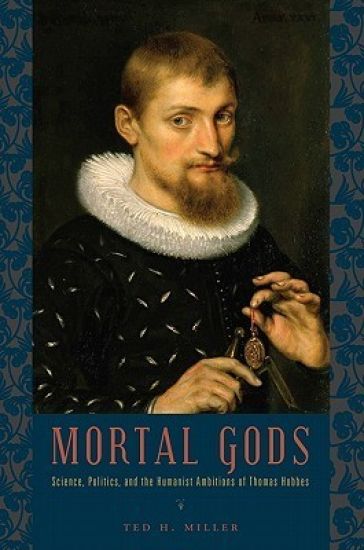
According to the commonly accepted view, Thomas Hobbes began his intellectual career as a humanist, but his discovery, in midlife, of the wonders of geometry initiated a critical transition from humanism to the scientific study of politics. In Mortal Gods, Ted Miller radically revises this view, arguing that Hobbes never ceased to be a humanist. While previous scholars have made the case for Hobbes as humanist by looking to his use of rhetoric, Miller rejects the humanism/mathematics dichotomy altogether and shows us the humanist face of Hobbes’s affinity for mathematical learning and practice. He thus reconnects Hobbes with the humanists who admired and cultivated mathematical learning—and with the material fruits of Great Britain’s mathematical practitioners. The result is a fundamental recasting of Hobbes’s project, a recontextualization of his thought within early modern humanist pedagogy and the court culture of the Stuart regimes. Mortal Gods stands as a new challenge to contemporary political theory and its settled narratives concerning politics, rationality, and violence.
Mortal Gods

Mortal Gods

Ted H. Miller

Pennsylvania State University Press
2015
pokkari
According to the commonly accepted view, Thomas Hobbes began his intellectual career as a humanist, but his discovery, in midlife, of the wonders of geometry initiated a critical transition from humanism to the scientific study of politics. In Mortal Gods, Ted Miller radically revises this view, arguing that Hobbes never ceased to be a humanist. While previous scholars have made the case for Hobbes as humanist by looking to his use of rhetoric, Miller rejects the humanism/mathematics dichotomy altogether and shows us the humanist face of Hobbes’s affinity for mathematical learning and practice. He thus reconnects Hobbes with the humanists who admired and cultivated mathematical learning—and with the material fruits of Great Britain’s mathematical practitioners. The result is a fundamental recasting of Hobbes’s project, a recontextualization of his thought within early modern humanist pedagogy and the court culture of the Stuart regimes. Mortal Gods stands as a new challenge to contemporary political theory and its settled narratives concerning politics, rationality, and violence.
Friendly Sovereignty

Friendly Sovereignty

Ted H. Miller

Pennsylvania State University Press
2022
sidottu
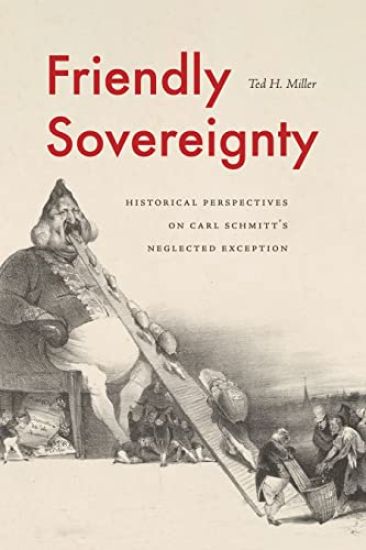
Over the last one hundred years, the term “sovereignty” has often been associated with the capacity of leaders to declare emergencies and to unleash harmful, extralegal force against those deemed enemies. Friendly Sovereignty explores the blind spots of this influential perspective.Ted H. Miller challenges the view of sovereignty propounded by Carl Schmitt, the Weimar and Nazi–period jurist and political theorist whose theory undergirds this understanding of sovereignty. Claiming a return to concepts of sovereignty forgotten by his liberal contemporaries, Schmitt was preoccupied with the legal exceptions required, he said, to rescue polities in crisis. Much is missing from what Schmitt harvests from the past. His framework systematically overlooks another extralegal power, one that often caused consternation, even among absolutists like Thomas Hobbes. Sovereigns also made exceptions for friends, allies, and dependents. Friendly Sovereignty plumbs the history of political thought about sovereignty to illustrate this other side of the sovereign’s exception-making power. At the core of this extensive study are three thinkers, each of whom stakes out a distinct position on the merits and demerits of a “friendly sovereign”: the nineteenth-century historian Jules Michelet, the seventeenth-century political philosopher Thomas Hobbes, and Seneca, the ancient Stoic and teacher of Nero.Analytically rigorous and thorough in its intellectual history, Friendly Sovereignty presents a more comprehensive understanding of sovereignty than the one typically taught today. It will be particularly useful to scholars and students of political theory and philosophy.
Friendly Sovereignty

Friendly Sovereignty

Ted H. Miller

Pennsylvania State University Press
2024
pokkari
Over the last one hundred years, the term “sovereignty” has often been associated with the capacity of leaders to declare emergencies and to unleash harmful, extralegal force against those deemed enemies. Friendly Sovereignty explores the blind spots of this influential perspective.Ted H. Miller challenges the view of sovereignty propounded by Carl Schmitt, the Weimar and Nazi–period jurist and political theorist whose theory undergirds this understanding of sovereignty. Claiming a return to concepts of sovereignty forgotten by his liberal contemporaries, Schmitt was preoccupied with the legal exceptions required, he said, to rescue polities in crisis. Much is missing from what Schmitt harvests from the past. His framework systematically overlooks another extralegal power, one that often caused consternation, even among absolutists like Thomas Hobbes. Sovereigns also made exceptions for friends, allies, and dependents. Friendly Sovereignty plumbs the history of political thought about sovereignty to illustrate this other side of the sovereign’s exception-making power. At the core of this extensive study are three thinkers, each of whom stakes out a distinct position on the merits and demerits of a “friendly sovereign”: the nineteenth-century historian Jules Michelet, the seventeenth-century political philosopher Thomas Hobbes, and Seneca, the ancient Stoic and teacher of Nero.Analytically rigorous and thorough in its intellectual history, Friendly Sovereignty presents a more comprehensive understanding of sovereignty than the one typically taught today. It will be particularly useful to scholars and students of political theory and philosophy.