Kirjojen hintavertailu. Mukana 11 417 157 kirjaa ja 12 kauppaa.

Kirjahaku

Etsi kirjoja tekijän nimen, kirjan nimen tai ISBN:n perusteella.

13 kirjaa tekijältä Tendayi Sithole

Steve Biko

Steve Biko

Tendayi Sithole

Lexington Books
2016
sidottu
Moving away from the domain of commemorative, iconicity, monumentalization, and memorialization, Sithole uses Steve Biko's meditations as a discursive intervention to understand black subjectivity. The epistemological shift of this book is not to be bogged down by the cataloging of events, something that is popular in the literature of Steve Biko and Black Consciousness. Rather, a theoretical imagination and conceptual invention is engaged upon in order to situate Biko within the existential repertoire of blackness as a site of subjectivity and not the object of study. The theoretical imagination and conceptual invention fosters an interpretive approach and an ongoing critique that cannot reach any epistemic closure. This is what decolonial meditations are all about, opening up new vistas of thought and new modes of critique informed by epistemic breaks from “empirical absolutism” that reduce Biko to an epistemic catalogue. It is in Steve Biko: Decolonial Meditations of Black Consciousness that the black subject is engaged not only in the politics of criticism for its own sake, but philosophy of existence.
Steve Biko

Steve Biko

Tendayi Sithole

Lexington Books
2017
nidottu
Moving away from the domain of commemorative, iconicity, monumentalization, and memorialization, Sithole uses Steve Biko's meditations as a discursive intervention to understand black subjectivity. The epistemological shift of this book is not to be bogged down by the cataloging of events, something that is popular in the literature of Steve Biko and Black Consciousness. Rather, a theoretical imagination and conceptual invention is engaged upon in order to situate Biko within the existential repertoire of blackness as a site of subjectivity and not the object of study. The theoretical imagination and conceptual invention fosters an interpretive approach and an ongoing critique that cannot reach any epistemic closure. This is what decolonial meditations are all about, opening up new vistas of thought and new modes of critique informed by epistemic breaks from “empirical absolutism” that reduce Biko to an epistemic catalogue. It is in Steve Biko: Decolonial Meditations of Black Consciousness that the black subject is engaged not only in the politics of criticism for its own sake, but philosophy of existence.

The Black Register

The Black Register

Tendayi Sithole

Polity Press
2020
sidottu
How can thinkers grapple with the question of the human when they have been dehumanized? How can black thinkers confront and make sense of a world structured by antiblackness, a world that militates against the very existence of blacks? These are the questions that guide Tendayi Sithole’s brilliant analyses of the work of Sylvia Wynter, Aimé Césaire, Steve Biko, Assata Shakur, George Jackson, Mabogo P. More, and a critique of Giorgio Agamben. Through his careful interrogation of their writings Sithole shows how the black register represents a uniquely critical perspective from which to confront worlds that are systematically structured to dehumanize. The black register is the ways of thinking, knowing and doing that emerge from existential struggles against antiblackness and that dwell in the lived experience of being black in an antiblack world. The black register is the force of critique that comes from thinkers who are dehumanized, and who in turn question, define, and analyze the reality that they are in, in order to reframe it and unmask the forces that inform subjection. This book redefines the arc of critical black thought over the last seventy-five years and it will be an indispensable text for anyone concerned with the deep and enduring ways in which race structures our world and our thought.
The Black Register

The Black Register

Tendayi Sithole

Polity Press
2020
nidottu
How can thinkers grapple with the question of the human when they have been dehumanized? How can black thinkers confront and make sense of a world structured by antiblackness, a world that militates against the very existence of blacks? These are the questions that guide Tendayi Sithole’s brilliant analyses of the work of Sylvia Wynter, Aimé Césaire, Steve Biko, Assata Shakur, George Jackson, Mabogo P. More, and a critique of Giorgio Agamben. Through his careful interrogation of their writings Sithole shows how the black register represents a uniquely critical perspective from which to confront worlds that are systematically structured to dehumanize. The black register is the ways of thinking, knowing and doing that emerge from existential struggles against antiblackness and that dwell in the lived experience of being black in an antiblack world. The black register is the force of critique that comes from thinkers who are dehumanized, and who in turn question, define, and analyze the reality that they are in, in order to reframe it and unmask the forces that inform subjection. This book redefines the arc of critical black thought over the last seventy-five years and it will be an indispensable text for anyone concerned with the deep and enduring ways in which race structures our world and our thought.
Refiguring in Black

Refiguring in Black

Tendayi Sithole

JOHN WILEY AND SONS LTD
2023
sidottu
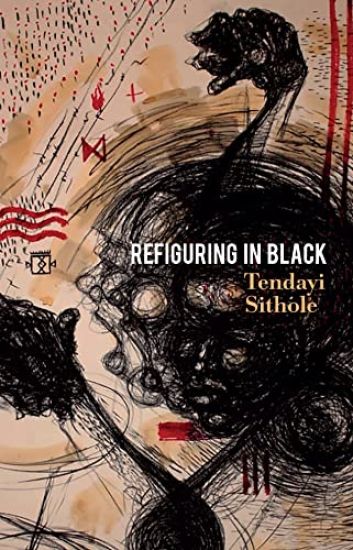
Refiguring in Black is a meditation on black life, and a meditation on the questions and concerns with which black life is confronted. It takes the form of a critical engagement with the thought of Frederick Douglass, Toni Morrison, Hortense Spillers, and Charles Mingus – key figures in the black radical tradition. Sithole does not reduce these thinkers to biographical subjects but examines them as figures of black thought in ways that are creative and generative. Erudite and passionate, this book is a statement of and testimony to refiguring as a form of critical practice by those who are engaged in a radical refusal, and thus part of the long arc of the black radical tradition. As a way of understanding the contemporary moment and unmasking antiblackness in all its forms and guises, Sithole’s work brings the annals of black thought into being in order to think differently and necessitate rupture, refusing to concede to the order of things and refusing to be complicit in the dehumanization that has marked the black condition.
Refiguring in Black

Refiguring in Black

Tendayi Sithole

JOHN WILEY AND SONS LTD
2023
nidottu
Refiguring in Black is a meditation on black life, and a meditation on the questions and concerns with which black life is confronted. It takes the form of a critical engagement with the thought of Frederick Douglass, Toni Morrison, Hortense Spillers, and Charles Mingus – key figures in the black radical tradition. Sithole does not reduce these thinkers to biographical subjects but examines them as figures of black thought in ways that are creative and generative. Erudite and passionate, this book is a statement of and testimony to refiguring as a form of critical practice by those who are engaged in a radical refusal, and thus part of the long arc of the black radical tradition. As a way of understanding the contemporary moment and unmasking antiblackness in all its forms and guises, Sithole’s work brings the annals of black thought into being in order to think differently and necessitate rupture, refusing to concede to the order of things and refusing to be complicit in the dehumanization that has marked the black condition.
Mabogo P. More

Mabogo P. More

Tendayi Sithole

BLOOMSBURY PUBLISHING PLC
2022
sidottu
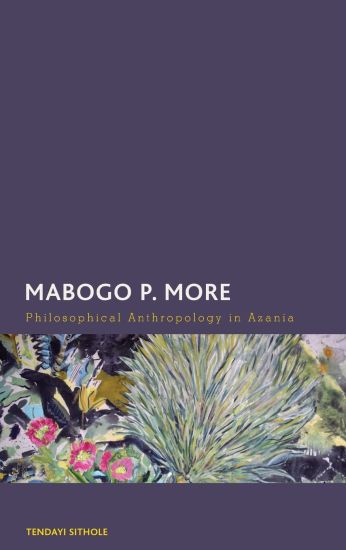
Mabogo P. More: Philosophical Anthropology is the first book to provide an extensive treatment of More’s Africana existential thought. This book locates him, as it is clear in his body of work, in the Azanian (Black and Indigenous) existential tradition. As a philosopher, he is engaged from the perspective of black radical thought. From this intervention, it is clear that his philosophical project originates and is expressed from the existential condition of being-black-in-an-antiblack-world. It is from the lived experience and the fact of being black that More is meditated upon and this book, which is the extension of his work, brings to the forth the ways of thinking, knowing, and doing that that illuminate his philosophical project.
Mabogo P. More

Mabogo P. More

Tendayi Sithole

ROWMAN LITTLEFIELD
2024
nidottu
Mabogo P. More: Philosophical Anthropology is the first book to provide an extensive treatment of More’s Africana existential thought. This book locates him, as it is clear in his body of work, in the Azanian (Black and Indigenous) existential tradition. As a philosopher, he is engaged from the perspective of black radical thought. From this intervention, it is clear that his philosophical project originates and is expressed from the existential condition of being-black-in-an-antiblack-world. It is from the lived experience and the fact of being black that More is meditated upon and this book, which is the extension of his work, brings to the forth the ways of thinking, knowing, and doing that that illuminate his philosophical project.
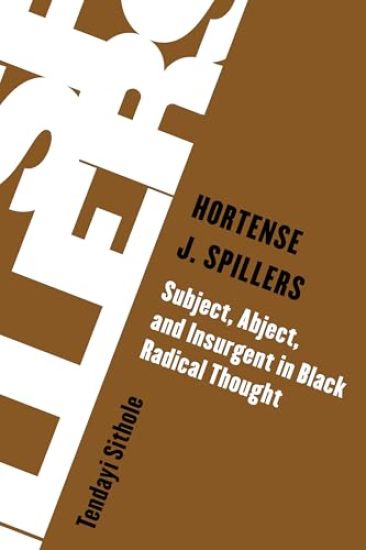
Hortense J. Spillers

Hortense J. Spillers

Tendayi Sithole

BLOOMSBURY PUBLISHING PLC
2024
sidottu
This book aims to show, in unique ways, in keeping with Spillers’s innovative thinking, how not to treat subject, abject, and insurgent in a typological fashion, or teleology, but to account for ways in which, in their distinctive forms, also related to one another as they confront and combat dehumanization.Hortense J. Spillers: Subject, Abject, and Insurgent Black Radical Thought bears witness to the poetics of black radical thought in this right moment when black thought insists on its demands to have the world fundamentally changed. Hortense J. Spillers bears witness to the poetics of black radical thought in this right moment when black thought insists on its demands to have the world fundamentally changed.
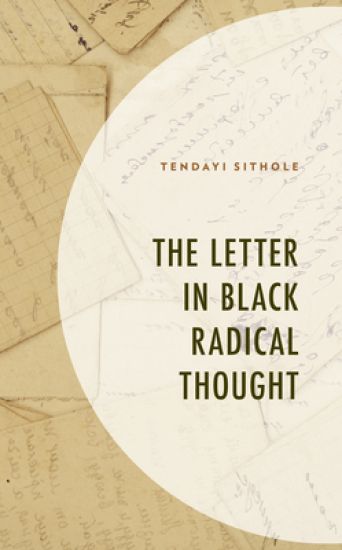
The Letter in Black Radical Thought

The Letter in Black Radical Thought

Tendayi Sithole

BLOOMSBURY PUBLISHING PLC
2023
sidottu
In The Letter in Black Radical Thought, Tendayi Sithole unmasks the logics of dehumanization in the terrain of black radical thought by looking at the letter as the site of examination and political intervention. Through his expansive demonstration and original argument, he analyzes the letters of Sylvia Wynter, Assata Shakur, George Jackson, Aìme Césaire, and Frantz Fanon. Through a close reading, and thus illuminating critical takes by these black radical thinkers, Sithole orchestrates a thematic approach, revealing the challenges to dehumanization which emerge in these letters. All the afore-mentioned figures are read anew through the typology of the letters they have penned. This typology consists of epistemic, fugitive, intramural, and resignation letters. The Letter in Black Radical Thought shows how these letters confront and combat dehumanization in novel ways.
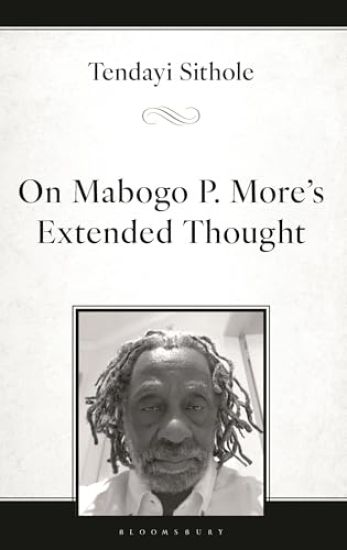
On Mabogo P. More's Extended Thought

On Mabogo P. More's Extended Thought

Tendayi Sithole

BLOOMSBURY ACADEMIC
2025
sidottu
Mabogo P. More's understanding of philosophical anthropology as the project that is concerned about the human question profoundly impacted how he accounted for the very idea of a black point of view. This book investigates how More's extended thought generatively engages in themes like the name, principle, antiblackness, blackness, and Azania. With a Black and decolonial intertextuality, it explores ways in which More viewed philosophy not as an abstraction, but as a concrete and material project, one he sought to turn toward calls for justice, for challenging the antiblackness that pervaded post-1994 South Africa, and for a liberated Azania. Demonstrating just how much the South African experience can contribute to the often North-American-centered field of Black studies, the book shows how a politics centered on Black social interests must navigate between the temptations of Marxism and liberalism in order to find its own way towards liberation. At the long arc of the human question, which is at the core of philosophical anthropology, More's extended thought makes a case for being-black-in-the-world as opposed to being-black-in-an-antiblack-world.
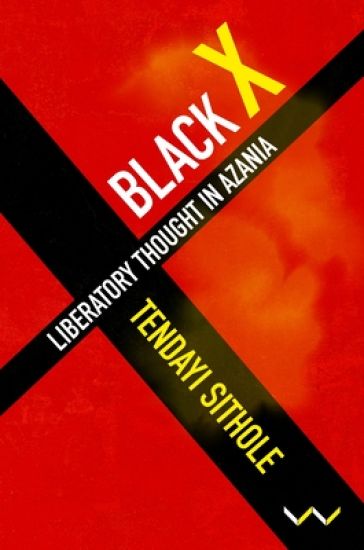
Black X

Black X

Tendayi Sithole

WITS UNIVERSITY PRESS
2024
pokkari
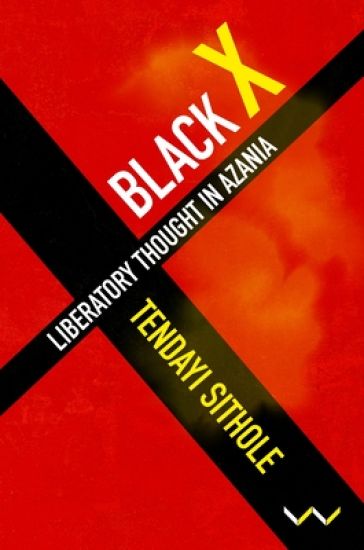
What does it mean to be Black in an anti-Black world? In Black X: Liberatory Thought in Azania, Tendayi Sithole offers a compelling example of how to engage South Africa differently. Set in the Black point of view as a site of critical reflection, he confronts the question of colonial conquest, social cohesion and justice. Since South Africa is a name given to the country by its conquerors, not by its indigenous inhabitants, for true liberation, a renaming needs to occur. The concept of Azania holds this emancipatory gesture. The post conquest, post 1994 liberal narratives mute the prevalence of racism while valorizing non-racialism and the transcendence of race. To indicate this silencing, the book deploys the concept of X, both as a signifier of repression and dehumanization of the Black subject, and as an empty signifier that holds the opportunity for radical and compassionate rehumanization. The book examines these strands of erasure and hope for the Black subject. Sithole scrutinizes the colonial contract, arguing that it is not a contract since there has never been an agreement between the indigenous people and the settler colonialists. This brings into focus the land question, specifically land dispossession and its existential connection to black life. The relevance of Black Consciousness to the Azanian existential tradition is based on Steve Biko's case that Marxism ignores Black ontological misery through its valorization of class and failure to include anti-Black racism in its analysis of power. Finally, Sithole analyses Mabogo P. More's philosophical meditations around what it means to be Black in an anti-Black world. In erasing the idea of South Africa and inscribing an open-ended naming of X, the book opens the way for something new to take its place that is imbued with greater humanity. This gesture opens up the potential to think about liberation in this country that is yet to rename and redefine itself.
Black X

Black X

Tendayi Sithole

WITS UNIVERSITY PRESS
2024
sidottu
What does it mean to be Black in an anti-Black world? In Black X: Liberatory Thought in Azania, Tendayi Sithole offers a compelling example of how to engage South Africa differently. Set in the Black point of view as a site of critical reflection, he confronts the question of colonial conquest, social cohesion and justice. Since South Africa is a name given to the country by its conquerors, not by its indigenous inhabitants, for true liberation, a renaming needs to occur. The concept of Azania holds this emancipatory gesture. The post conquest, post 1994 liberal narratives mute the prevalence of racism while valorizing non-racialism and the transcendence of race. To indicate this silencing, the book deploys the concept of X, both as a signifier of repression and dehumanization of the Black subject, and as an empty signifier that holds the opportunity for radical and compassionate rehumanization. The book examines these strands of erasure and hope for the Black subject. Sithole scrutinizes the colonial contract, arguing that it is not a contract since there has never been an agreement between the indigenous people and the settler colonialists. This brings into focus the land question, specifically land dispossession and its existential connection to black life. The relevance of Black Consciousness to the Azanian existential tradition is based on Steve Biko's case that Marxism ignores Black ontological misery through its valorization of class and failure to include anti-Black racism in its analysis of power. Finally, Sithole analyses Mabogo P. More's philosophical meditations around what it means to be Black in an anti-Black world. In erasing the idea of South Africa and inscribing an open-ended naming of X, the book opens the way for something new to take its place that is imbued with greater humanity. This gesture opens up the potential to think about liberation in this country that is yet to rename and redefine itself.