Kirjojen hintavertailu. Mukana 12 376 103 kirjaa ja 12 kauppaa.

Kirjahaku

Etsi kirjoja tekijän nimen, kirjan nimen tai ISBN:n perusteella.

5 kirjaa tekijältä Teodor Mladenov

Disability and Postsocialism

Disability and Postsocialism

Teodor Mladenov

Routledge
2019
nidottu
In the decades following the collapse of state socialism at the end of 1980s, disabled people in Central and Eastern Europe endured economic marginalisation, cultural devaluation and political disempowerment. Some of the mechanisms producing these injustices were inherited from state socialism, while others emerged with postsocialist neoliberalisation.State socialism promised social security guaranteed by the public, and postsocialist neoliberalisation promised independent living underpinned by the market. This book argues that both promises failed as far as disabled people were concerned, drawing on a wide range of scholarly reports and analyses, policy documents, legislation, and historical accounts, as well as on disability studies and social justice theory. Besides differences, the book also illuminates continuities between state socialism and postsocialist capitalism, providing on this basis a more general and historically grounded critique of contemporary neoliberalisation and its impact on individual and collective life.The book will appeal to anyone interested in disability studies and postsocialism, as well as social policy, social movements and critical theory. It will also be of interest to professionals involved in disability-related service provision, as well as to disability activists and policy makers.
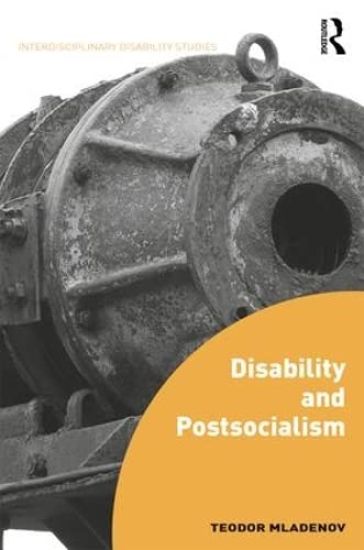
Disability and Postsocialism

Disability and Postsocialism

Teodor Mladenov

Routledge
2017
sidottu
In the decades following the collapse of state socialism at the end of 1980s, disabled people in Central and Eastern Europe endured economic marginalisation, cultural devaluation and political disempowerment. Some of the mechanisms producing these injustices were inherited from state socialism, while others emerged with postsocialist neoliberalisation.State socialism promised social security guaranteed by the public, and postsocialist neoliberalisation promised independent living underpinned by the market. This book argues that both promises failed as far as disabled people were concerned, drawing on a wide range of scholarly reports and analyses, policy documents, legislation, and historical accounts, as well as on disability studies and social justice theory. Besides differences, the book also illuminates continuities between state socialism and postsocialist capitalism, providing on this basis a more general and historically grounded critique of contemporary neoliberalisation and its impact on individual and collective life.The book will appeal to anyone interested in disability studies and postsocialism, as well as social policy, social movements and critical theory. It will also be of interest to professionals involved in disability-related service provision, as well as to disability activists and policy makers.
Critical Theory and Disability

Critical Theory and Disability

Teodor Mladenov

Bloomsbury Academic USA
2016
nidottu
Critical Theory and Disability explores social and ontological issues encountered by present-day disabled people, applying ideas from disability studies and phenomenology. It focuses on disabling contexts in order to highlight and criticize the ontological assumptions of contemporary society, particularly those related to the meaning of human being. In empirical terms, the book explores critically social practices that undermine disabled people's well being, drawing on cases from contemporary Bulgaria. It includes in-depth examination of key mechanisms such as disability assessment, personal assistance (direct payments) and disability-based discrimination. On this basis, wider sociological and ontological claims are made concerning the body, identity, otherness, and exclusion.
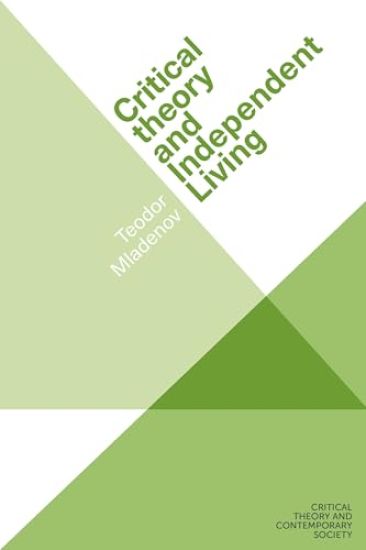
Critical Theory and Independent Living

Critical Theory and Independent Living

Teodor Mladenov

MANCHESTER UNIVERSITY PRESS
2024
sidottu
Critical theory and Independent Living explores intersections between contemporary critical theory and disabled people’s struggle for self-determination. The book highlights the affinities between the Independent Living movement and studies of epistemic injustice, biopower, and psychopower. It discusses in depth the activists’ critical engagement with welfare-state paternalism, neoliberal marketisation, and familialism. This helps develop a pioneering comparison between various welfare regimes grounded in Independent Living advocacy. The book draws on the activism of disabled people from the European Network on Independent Living (ENIL) by developing case studies of the ENIL’s campaigning for deinstitutionalisation and personal assistance. It is argued that this work helps rethink independence as a form of interdependence, and that this reframing is pivotal for critical theorising in the twenty-first century.
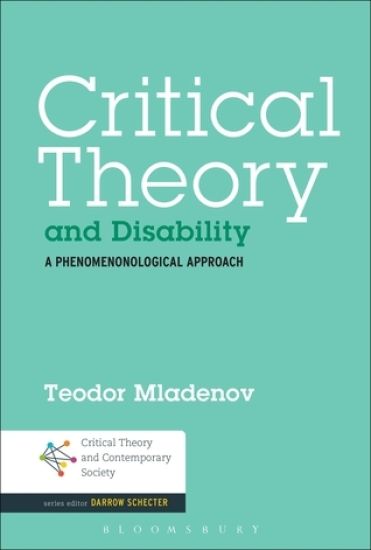
Critical Theory and Disability

Critical Theory and Disability

Teodor Mladenov

Bloomsbury Academic USA
2015
sidottu
Critical Theory and Disability explores social and ontological issues encountered by present-day disabled people, applying ideas from disability studies and phenomenology. It focuses on disabling contexts in order to highlight and criticize the ontological assumptions of contemporary society, particularly those related to the meaning of human being. In empirical terms, the book explores critically social practices that undermine disabled people's well being, drawing on cases from contemporary Bulgaria. It includes in-depth examination of key mechanisms such as disability assessment, personal assistance (direct payments) and disability-based discrimination. On this basis, wider sociological and ontological claims are made concerning the body, identity, otherness, and exclusion.