Electricity Services in Remote Rural Communities
Teodoro Sanchez
Practical Action Publishing
2005
nidottu
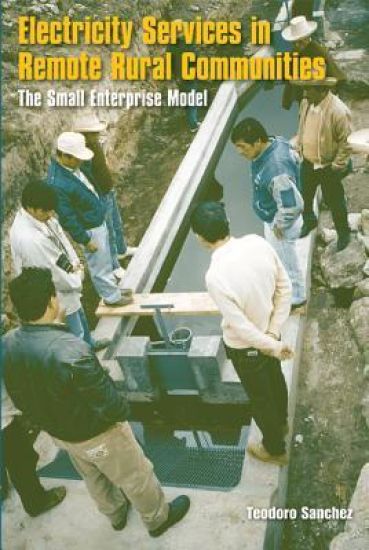
This book describes the design and use of a particular management model for electricity services in isolated rural communities. This model was designed with the clear objective of efficient financial and technical management, taking into account the social and economic environment and the committed participation of the community. The concept of private management is introduced, where a micro-enterprise is responsible for the running of the system and receives payment in exchange for the management of the service. A new tariff model for rural areas (the model of descending blocks) is used. Its application requires four important components: 1)The tariff scheme, the design of which is based on previous studies of socio-economic conditions and the development potential of electricity in the region. 2)The regulation of the use of electric energy, which highlights the responsibilities of the different actors and the activities that need to be performed for the system to function smoothly. 3) Contracts between the owner of the generating system and the service operator.4) Contract between the service operator and the users It is estimated that this model could be used successfully in other energy generating systems (diesel, solar, wind-powered) with small changes, especially to the tariff scheme.