Kirjojen hintavertailu. Mukana 12 016 292 kirjaa ja 12 kauppaa.

Kirjahaku

Etsi kirjoja tekijän nimen, kirjan nimen tai ISBN:n perusteella.

3 kirjaa tekijältä Terrence J. Finnegan

'A Delicate Affair' on the Western Front

'A Delicate Affair' on the Western Front

Terrence J. Finnegan

Spellmount Publishers Ltd
2014
sidottu
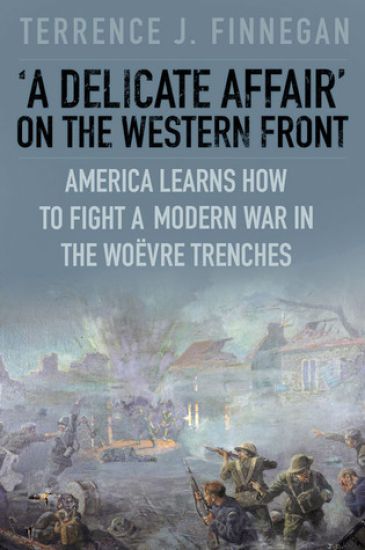
The American military was experienced in fighting guerilla war. It now had to come to terms with global responsibilities - and it was woefully unprepared for la grande guerre. Forgotten by most Americans in understanding their country's rise to military pre-eminence in the modern era is the debt owed to the tutorial of the French, whose knowledge was bought at a high price in the early days of the war, when catastrophic losses combined with the 'offence' of losing ground could lead to summary execution. The Americans went to the front line for the first time (in the Woevre region around the village of Seicheprey) with the same enthusiasm as their Allies had shown three years prior. It was in the spirit of a game, a great adventure. But the Germans saw them as novices; and they were determined to teach them this was no game. They proceeded to unleash the war's most ghastly weapons - gas, flamethrowers and high explosives - and called their first major raid, with gallows humour, Einladung, an invitation. The courage and tenacity of the individual American soldier at this time showed German commanders that they now faced a fresh enemy with purpose. Those virtues, however, were not complemented by teamwork and effectiveness in US high command. The 'delicate affair' at Seicheprey, as George Marshall would later describe it, was well known by every American soldier who fought in 1918 but with the passage of time faded away, until now. By returning to primary sources throughout, Colonel Finnegan tells the story of the United States entry into the war and at the same time uses this as as a jumping-off point to describe how all battles developed in the war, through firepower, intelligence (or lack of it) and minute-by-minute command decisions. He provides what is probably the most complete account of how the Germans planned an operation ever published (most of the data having been destroyed in the Potsdam raid of 1945). With an extraordinary collection of contemporary maps and direct testimony from the men of the "Fighting First" and "Yankee" Divisions, A Delicate Affair is a valuable addition to the historiography of the First World War.
Shooting the Front

Shooting the Front

Terrence J. Finnegan

The History Press Ltd
2011
sidottu
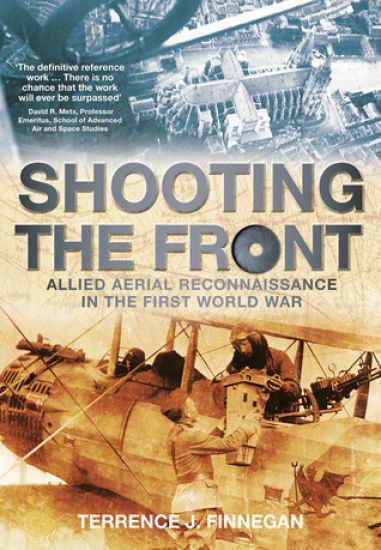
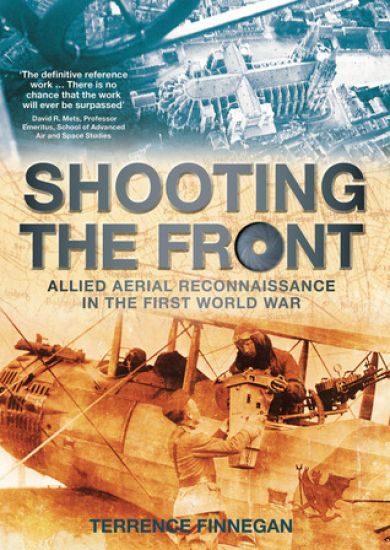
The First World War demanded revolutionary technology to break the vicious stalemate in which the armies of Europe found themselves, as soon as static, or trench warfare became established. One such technology was aerial reconnaissance and photography, which together with the growing intelligence use of phone tapping and radio intercepts, changed the nature of war forever. Colonel Terry J. Finnegan's Shooting the Front reviews the entire evolution of Allied aerial photography and photographic interpretation during the Great War, in a text packed with data and based upon meticulous research in archives worldwide. The photographs included are both informative and spectacular, charting perforce the early years of aviation itself. Shooting the Front shows not only how important aerial reconnaissance was to the war effort, but also how it became the foundation for modern-day exploitation of imagery and geospatial intelligence used to guide today's decision makers on global issues, and shaped intelligence work for generations to come.
Shooting the Front

Shooting the Front

Terrence J. Finnegan

Spellmount Publishers Ltd
2014
nidottu
The First World War demanded revolutionary technology to break the vicious stalemate in which the armies of Europe found themselves as soon as static warfare became established. In the critical world of military intelligence, aviation assumed a vital role through aerial reconnaissance in reinforcing successful decision-making. The demands of warfare not only spurred aviation's development, it led to technological advances in aerial photography, radio intercepts, acoustics and optics that became the foundation for intelligence throughout the twentieth century and to the present day. Colonel Terry Finnegan's Shooting the Front reviews the entire evolution of Allied aerial photography and photographic interpretation during the Great War, in a text packed with data and based upon meticulous research in archives worldwide. The photographs included are both informative and spectacular, charting perforce the early years of aviation itself. Shooting the Front shows not only how important aerial reconnaissance was to the war effort, but also how it became the foundation for modern-day exploitation of imagery and geospatial intelligence used to guide today's decision makers on global issues, and shaped intelligence work for generations to come.