Kirjojen hintavertailu. Mukana 12 016 292 kirjaa ja 12 kauppaa.

Kirjahaku

Etsi kirjoja tekijän nimen, kirjan nimen tai ISBN:n perusteella.

8 kirjaa tekijältä Terry Gourvish

Britain's Railway, 1997-2005

Britain's Railway, 1997-2005

Terry Gourvish

Oxford University Press
2008
sidottu
Britain's leading railway historian provides a critical examination of the Blair governments' involvement in the rail industry from 1997 as they attempted to deal with the UK's fragmented, privatized railways. The book focuses particularly on the work of the Strategic Rail Authority (SRA), and considers the role of individuals - John Prescott, Stephen Byers, Alistair Darling, Sir Alastair Morton, and Richard Bowker - and events - the Hatfield accident (2000), the demise of Railtrack (2001-2), and the funding crisis of 2003-4 - in the shaping of emerging policy. The book was commissioned by the SRA, and written with access to government files. Dr Gourvish argues that the establishment of the SRA as a Non-Departmental Public Board proved largely unsuccessful. It produced tensions with the industry's existing institutions - Railtrack/Network Rail, the operating companies and the economic regulator. There were some gains from the experiment, notably the rescue of the West Coast Main Line project. However, it remains to be seen whether by winding up the SRA and taking responsibility for strategy and funding back into its own hands the Department for Transport has resolved the problem of managing a fragmented industry. This important book is essential reading for those concerned with, and interested in, railway policy, both in the UK and elsewhere in the world.
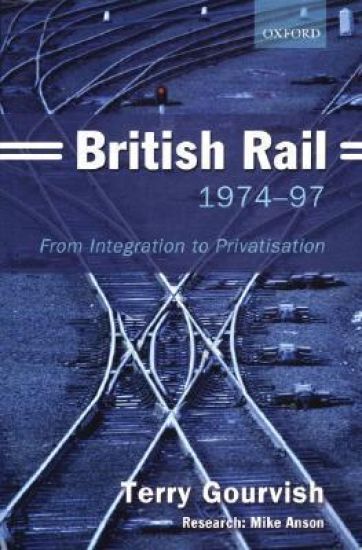
British Rail 1974-1997

British Rail 1974-1997

Terry Gourvish

Oxford University Press
2002
sidottu
Britain's privatized railways inspire considerable debate about organization, financing, and development. This volume provides an account of the progress made by British Rail prior to privatization, and an insight into its difficult role in the government's privatization planning from 1989.
British Rail 1974-1997

British Rail 1974-1997

Terry Gourvish

Oxford University Press
2004
nidottu
Britain's privatised railways continure to provoke debate about the organisation, financing, and development of the railway system. This important book, written by Britain's leading railway historian, provides an authoritative account of the progress made by British Rail prior to privatisation, and a unique insight into its difficult role in the government's privatisation planning from 1989. Based on free access to the British Railway Board's rich archives, the book provides a comprehensive analysis of the main themes: a process of continuous organisational change; the existence of a persistent government audit; perennial investment restraints; the directive to reduce operating costs and improve productivity; a concern with financial performance, technological change, service quality, and the management of industrial relations; and the Board's ambiguous position as the Conservative government pressed home its privatisation programme. The introduction of sector management from 1982 and the 'Organising for Quality' initiative of the early 1990s, the Serpell Report on railway finances of 1983, the sale of the subsidiary businesses, the large-scale investment in the Channel Tunnel, and the obsession with safety which followed the Clapham accident of 1988, are all examined in depth. In the conclusion, the author reviews the successes and failures of the public sector, rehearses the arguments for and against integration in the railway industry, and contrasts what many have termed 'the golden age' of the mid-late 1980s, when the British Rail-government relationship was arguably at its most effective, with what has happened since 1994.
The Official History of Britain and the Channel Tunnel
Commissioned by the Cabinet Office and using hitherto untapped British Government records, this book presents an in-depth analysis of the successful project of 1986-94. This is a vivid portrayal of the complexities of quadripartite decision-making (two countries, plus the public and private sectors), revealing new insights into the role of the British and French Governments in the process. This important book, written by Britain’s leading transport historian, will be essential reading for all those interested in PPPs, British and European economic history and international relations. The building of the Channel Tunnel has been one of Europe’s major projects and a testimony to British-French and public-private sector collaboration. However, Eurotunnel’s current financial crisis provides a sobering backcloth for an examination of the British Government’s long-term flirtation with the project, and, in particular, the earlier Tunnel project in the 1960s and early 1970s, which was abandoned by the British Government in 1975.
European Yearbook of Business History
First published in 1998, The European Yearbook of Business History publishes research and review articles in English on the history of private enterprises based in individual European countries as well as studies of transnational corporations. It also includes work on public and state corporations. Its scope is all of Europe, not merely the countries of the European Union, and its prime, but not exclusive, period of interest is the 19th and 20th centuries. The first issue includes reviews of the present state and future prospects of business history in most European countries, together with articles summarising current Japanese and American perspectives on the history of European industrial and commercial enterprises.
European Yearbook of Business History
First published in 1998, The European Yearbook of Business History publishes research and review articles in English on the history of private enterprises based in individual European countries as well as studies of transnational corporations. It also includes work on public and state corporations. Its scope is all of Europe, not merely the countries of the European Union, and its prime, but not exclusive, period of interest is the 19th and 20th centuries. The first issue includes reviews of the present state and future prospects of business history in most European countries, together with articles summarising current Japanese and American perspectives on the history of European industrial and commercial enterprises.
The Official History of Britain and the Channel Tunnel
Commissioned by the Cabinet Office and using hitherto untapped British Government records, this book presents an in-depth analysis of the successful project of 1986-94. This is a vivid portrayal of the complexities of quadripartite decision-making (two countries, plus the public and private sectors), revealing new insights into the role of the British and French Governments in the process. This important book, written by Britain’s leading transport historian, will be essential reading for all those interested in PPPs, British and European economic history and international relations. The building of the Channel Tunnel has been one of Europe’s major projects and a testimony to British-French and public-private sector collaboration. However, Eurotunnel’s current financial crisis provides a sobering backcloth for an examination of the British Government’s long-term flirtation with the project, and, in particular, the earlier Tunnel project in the 1960s and early 1970s, which was abandoned by the British Government in 1975.
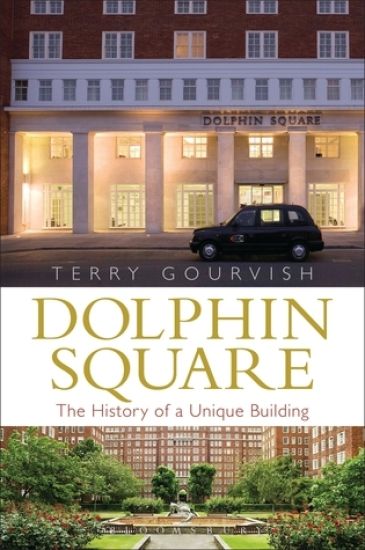
Dolphin Square

Dolphin Square

Terry Gourvish

Bloomsbury Information
2014
sidottu
Blending social history with pioneering architecture and business analysis, Dolphin Square provides a detailed history of the London landmark and its antecedents. Dolphin Square was and is no ordinary block of flats. Built on a massive scale to a high density in the mid-1930s, it was a pioneering example of concrete design, and when completed was the largest single residential building in Europe. The book begins with the antecedents of the seven-acre site, which was first occupied by the workshops of Thomas Cubitt, when he developed Pimlico and Belgravia. Conceived as a speculative housing project and later catering for MPs, peers and entertainers required to work in London, this book tells the story of the Dolphin Square project and also captures what it has been like to live in the square for figures including Ellen Wilkinson, Alistair Darling, William Hague, Mo Mowlam, Sir David Steel, Christine Keeler, Sid James, Barbara Windsor and Princess Anne.The book charts the square's changing ownership and eventual creation of the Dolphin Square Trust, which managed the flats on a non-profit-making basis for 40 years. Dolphin Square breaks new ground in providing a detailed examination of a major example of urban property speculation and management.