Kirjojen hintavertailu. Mukana 11 342 296 kirjaa ja 12 kauppaa.

Kirjahaku

Etsi kirjoja tekijän nimen, kirjan nimen tai ISBN:n perusteella.

5 kirjaa tekijältä Terry L. Price

Leadership Ethics

Leadership Ethics

Terry L. Price

Cambridge University Press
2008
pokkari
Are leaders morally special? Is there something ethically distinctive about the relationship between leaders and followers? Should leaders do whatever it takes to achieve group goals? Leadership Ethics uses moral theory, as well as empirical research in psychology, to evaluate the reasons everyday leaders give to justify breaking the rules. Written for people without a background in philosophy, it introduces readers to the moral theories that are relevant to leadership ethics: relativism, amoralism, egoism, virtue ethics, social contract theory, situation ethics, communitarianism, and cosmopolitan theories such as utilitarianism and transformational leadership. Unlike many introductory texts, the book does more than simply acquaint readers with different approaches to leadership ethics. It defends the Kantian view that everyday leaders are not justified in breaking the moral rules.
Leadership Ethics

Leadership Ethics

Terry L. Price

Cambridge University Press
2008
sidottu
Are leaders morally special? Is there something ethically distinctive about the relationship between leaders and followers? Should leaders do whatever it takes to achieve group goals? Leadership Ethics uses moral theory, as well as empirical research in psychology, to evaluate the reasons everyday leaders give to justify breaking the rules. Written for people without a background in philosophy, it introduces readers to the moral theories that are relevant to leadership ethics: relativism, amoralism, egoism, virtue ethics, social contract theory, situation ethics, communitarianism, and cosmopolitan theories such as utilitarianism and transformational leadership. Unlike many introductory texts, the book does more than simply acquaint readers with different approaches to leadership ethics. It defends the Kantian view that everyday leaders are not justified in breaking the moral rules.

Great Bridge and District Revisited

Great Bridge and District Revisited

Terry L. Price

Sutton Publishing Ltd
2002
nidottu
Were it not for a strategically important crossing over the River Tame, linking Tipton with West Bromwich over a thousand years ago, Great Bridge might not have grown into one of the most important centres of industry and commerce in the Black Country during the nineteenth and twentieth centuries. Its location on the main road between Birmingham and Dudley, and also at the junction of a highway from Tipton, was also a considerable factor in its success. Pictured in this book is a nostalgic account of life during the last century, touching on the occupations and pastimes of people from not only Great Bridge but also parts of the surrounding areas of Golds Hill, Greets Green, Horseley Heath, Swan Village and Toll End. The community spirit which existed and the changes that have occurred in these areas, in many cases within living memory, are shown here in a collection of over 300 photographs with informative captions compiled by local author Terry Price. In this, his second book dealing with Great Bridge, most of the photographic material has again originated from private collections and has therefore never previously been published.
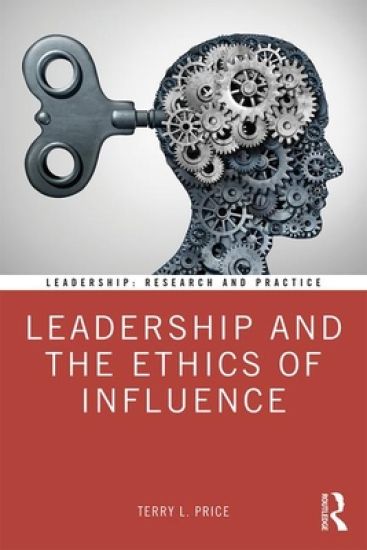
Leadership and the Ethics of Influence
How do leaders influence others? Although they sometimes appeal directly to good reasons, which we associate with rational persuasion, leaders also use guilt, pressure, flattery, bullying, and rewards and punishment—all to get the behaviors that they want. Even when leaders refrain from outright lying, they are nevertheless known to practice something approaching, perhaps reaching, the level of manipulation. Influence therefore presents a serious ethical problem across leadership contexts. Leadership and the Ethics of Influence argues that influence puts leaders at risk of using people. It is generally disrespectful of autonomy to figure out what makes people "tick" in an effort to "handle" them. In contrast with physical force, influence works through agency, not around it. Despite this feature of influence—and, to a large extent because of it—the everyday influence associated with leadership is often morally troublesome. What matters morally is not only whether agency is bypassed or overridden but also who is ultimately in control. This book uses philosophy and leadership studies to show how leaders across different contexts can be justified in getting followers to do things. Connecting moral theory to leadership theory, and especially to charismatic leadership, authentic leadership, transforming leadership, and ethical leadership, this book is essential reading for leadership scholars, students, and practitioners.
Leadership and the Ethics of Influence
How do leaders influence others? Although they sometimes appeal directly to good reasons, which we associate with rational persuasion, leaders also use guilt, pressure, flattery, bullying, and rewards and punishment—all to get the behaviors that they want. Even when leaders refrain from outright lying, they are nevertheless known to practice something approaching, perhaps reaching, the level of manipulation. Influence therefore presents a serious ethical problem across leadership contexts. Leadership and the Ethics of Influence argues that influence puts leaders at risk of using people. It is generally disrespectful of autonomy to figure out what makes people "tick" in an effort to "handle" them. In contrast with physical force, influence works through agency, not around it. Despite this feature of influence—and, to a large extent because of it—the everyday influence associated with leadership is often morally troublesome. What matters morally is not only whether agency is bypassed or overridden but also who is ultimately in control. This book uses philosophy and leadership studies to show how leaders across different contexts can be justified in getting followers to do things. Connecting moral theory to leadership theory, and especially to charismatic leadership, authentic leadership, transforming leadership, and ethical leadership, this book is essential reading for leadership scholars, students, and practitioners.