Kirjojen hintavertailu. Mukana 11 699 587 kirjaa ja 12 kauppaa.

Kirjahaku

Etsi kirjoja tekijän nimen, kirjan nimen tai ISBN:n perusteella.

10 kirjaa tekijältä Terry Mort

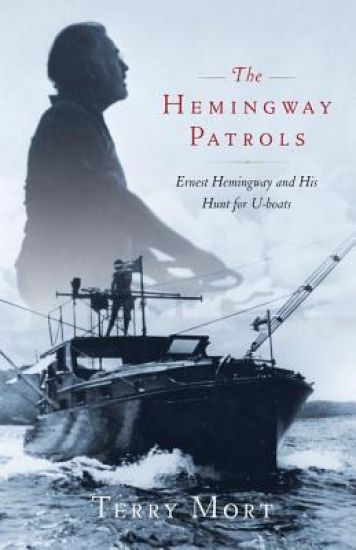
The Hemingway Patrols

The Hemingway Patrols

Terry Mort

Scribner
2011
pokkari
From the summer of 1942 until the end of 1943, Ernest Hemingway spent much of his time patrolling the Gulf Stream and the waters off Cuba’s north shore in his fishing boat, Pilar. He was looking for German submarines. These patrols were sanctioned and managed by the US Navy and were a small but useful part of anti-submarine warfare at a time when U boat attacks against merchant shipping in the Gulf and the Caribbean were taking horrific tolls. While almost no attention has been paid to these patrols, other than casual mention in biographies, they were a useful military contribution as well as a central event (to Hemingway) around which important historical, literary, and biographical themes revolve.
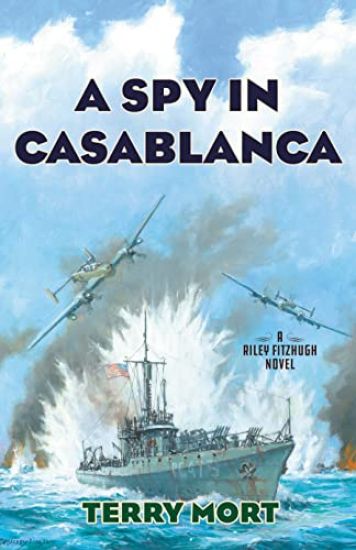
A Spy in Casablanca

A Spy in Casablanca

Terry Mort

GLOBE PEQUOT PRESS
2022
sidottu
Riley Fitzhugh is recruited by the OSS for temporary duty as a naval spy in Morocco. Riley’s assignment is to kidnap a French river pilot and extract him from Casablanca. Riley meets an old flame from his days in Hollywood and these two have some surprises waiting for them.
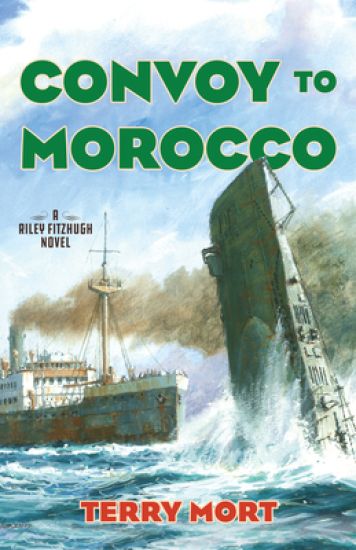
Convoy to Morocco

Convoy to Morocco

Terry Mort

GLOBE PEQUOT PRESS
2023
sidottu
Riley Fitzhugh is temporarily assigned as officer in charge of the naval guard on board the SS Carlota, a merchant ship assigned to deliver bombs and aviation fuel to the Sebou River during Operation Torch. The Atlantic crossing was supposed to be in convoy, but Carlota breaks down after surviving a U-boat attack and is forced to limp along alone. At the mouth of the Sebou River, Riley rejoins the anti-U-boat vessel Nameless, which has come down from her refit in Scotland to join the Torch attack. When the Nameless is tasked with delivering a company of Army Rangers to capture the French air force base, she and her crew must force their way through the boom guarding the mouth of the river and pass through the gunfire from the French fort on the hills above. Along the way, Riley runs into an old flame or two—one an enemy agent, the other a war correspondent from Cuba.
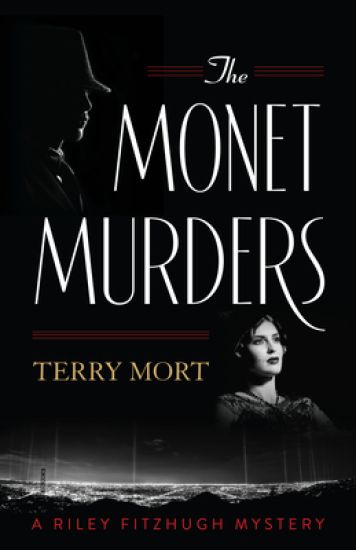
The Monet Murders

The Monet Murders

Terry Mort

Taylor Trade Publishing
2022
pokkari
Hollywood, 1934. Prohibition is finally over, but there is still plenty of crime for an ambitious young private eye to investigate. Though he has a slightly checkered past, Riley Fitzhugh is well connected in the film industry and is hired by a major producer--whose lovely girlfriend has disappeared. He also is hired to recover a stolen Monet, a crime that results in two murders initially, with more to come.Along the way Riley investigates the gambling ships anchored off L.A., gets involved with the girlfriend of the gangster running one of the ships, and disposes of the body of a would-be actor who assaults Riley's girlfriend. He also meets an elegant English art history professor from UCLA who helps Riley authenticate several paintings and determine which ones are forgeries. Riley lives at the Garden of Allah Hotel, the favorite watering place of screenwriters, and he meets and unknowingly assists many of them with their plots. Incidentally one of these gents, whose nom de plume is 'Hobey Baker, ' might actually be F. Scott Fitzgerald . . .Evoking the classic hardboiled style, The Monet Murders is a charmingly cosy murder mystery by a novelist whose books the Wall Street Journal called lucid, beautifully written and] a pleasure to read.
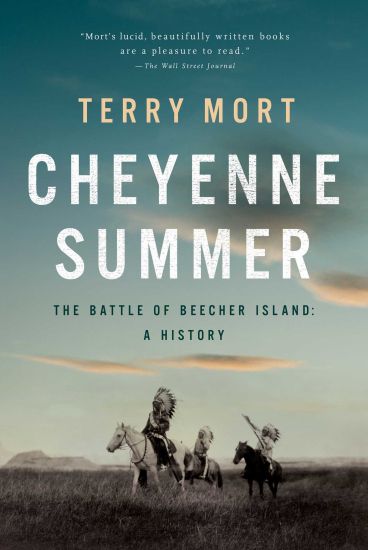
Cheyenne Summer: The Battle of Beecher Island: A History
Evoking the spirit--and danger--of the early American West, this is the story of the Battle of Beecher Island, pitting an outnumbered United States Army patrol against six hundred Native warriors, where heroism on both sides of the conflict captures the vital themes at play on the American frontier. In September 1868, the undermanned United States Army was struggling to address attacks by Cheyenne and Sioux warriors against the Kansas settlements, the stagecoach routes, and the transcontinental railroad. General Sheridan hired fifty frontiersmen and scouts to supplement his limited forces. He placed them under the command of Major George Forsyth and Lieutenant Frederick Beecher. Both men were army officers and Civil War veterans with outstanding records. Their orders were to find the Cheyenne raiders and, if practicable, to attack them. Their patrol left Fort Wallace, the westernmost post in Kansas, and headed northwest into Colorado. After a week or so of following various trails, they were at the limit of their supplies--for both men and horses. They camped along the narrow Arikaree Fork of the Republican River. In the early morning they were surprised and attacked by a force of Cheyenne and Sioux warriors. The scouts hurried to a small, sandy island in the shallow river and dug in. Eventually they were surrounded by as many as six hundred warriors, led for a time by the famous Cheyenne, Roman Nose. The fighting lasted four days. Half the scouts were killed or wounded. The Cheyenne lost nine warriors, including Roman Nose. Forsyth asked for volunteers to go for help. Two pairs of men set out at night for Fort Wallace--one hundred miles away. They were on foot and managed to slip through the Cheyenne lines. The rest of the scouts held out on the island for nine days. All their horses had been killed. Their food was gone and the meat from the horses was spoiled by the intense heat of the plains. The wounded were suffering from lack of medical supplies, and all were on the verge of starvation when they were rescued by elements of the Tenth Cavalry--the famous Buffalo Soldiers. Although the battle of Beecher Island was a small incident in the history of western conflict, the story brings together all of the important elements of the Western frontier--most notably the political and economic factors that led to the clash with the Natives and the cultural imperatives that motivated the Cheyenne, the white settlers, and the regular soldiers, both white and black. More fundamentally, it is a story of human heroism exhibited by warriors on both sides of the dramatic conflict.
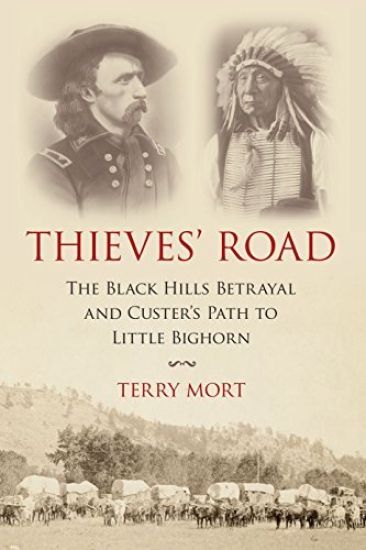
Thieves' Road

Thieves' Road

Terry Mort

Prometheus Books
2018
pokkari
Highlights a little-known expedition of General George Custer to the Black Hills of South Dakota, showing how it set the stage for later conflict with the Sioux and the Battle of Little Bighorn. This fascinating narrative history tells the story of General George Armstrong Custer's 1874 expedition into the Black Hills of South Dakota and reveals how it set the stage for the climactic Battle of the Little Bighorn two years later. What is the significance of this obscure foray into the Black Hills? The short answer, as the author explains, is that Custer found gold. This discovery in the context of the worst economic depression the country had yet experienced spurred a gold rush that brought hordes of white prospectors to the Sioux's sacred grounds. The result was the trampling of an 1868 treaty that had granted the Black Hills to the Sioux and their inevitable retaliation against the white invasion. The author brings the era of the Grant administration to life, with its "peace policy" of settling the Indians on reservations, corrupt federal Indian Bureau, Gilded Age excesses, the building of the western railroads, the white settlements that followed the tracks, the Crash of 1873, mining ventures, and the clash of white and Indian cultures with diametrically opposed values. The discovery of gold in the Black Hills was the beginning of the end of Sioux territorial independence. By the end of the book it is clear why the Sioux leader Fast Bear called the trail cut by Custer to the Black Hills "thieves' road."