Kirjojen hintavertailu. Mukana 11 699 587 kirjaa ja 12 kauppaa.

Kirjahaku

Etsi kirjoja tekijän nimen, kirjan nimen tai ISBN:n perusteella.

24 kirjaa tekijältä Terry Smith

Making the Modern

Making the Modern

Terry Smith

University of Chicago Press
1994
nidottu
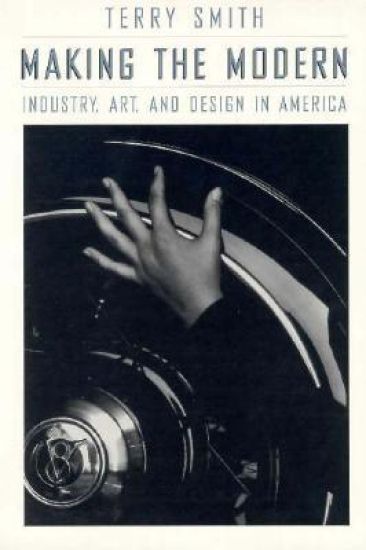
In this ambitious book, Terry Smith chronicles the modernist revolution in American art and design between the world wars—from its origins in the new industrial age of mass production, automation, and corporate culture to its powerful and transforming effects on the way Americans came to see themselves and their world. From Ford Motor's first assembly line in 1913 to the New York World's Fair of 1939, Smith traces the evolution of visual imagery in the first half of America's century of progress.
What Is Contemporary Art?

What Is Contemporary Art?

Terry Smith

University of Chicago Press
2009
nidottu
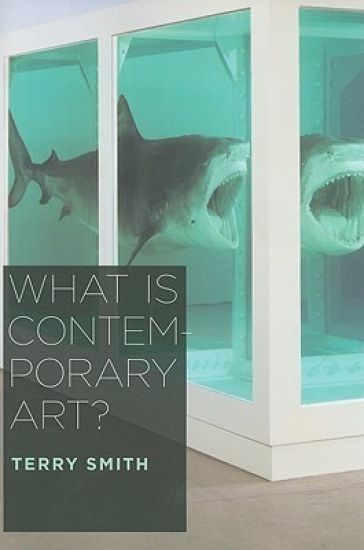
Who gets to say what counts as contemporary art? Artists, critics, curators, gallerists, auctioneers, collectors, or the public? Revealing how all of these groups have shaped today's multifaceted definition, Terry Smith brilliantly shows that a historical approach offers the best answer to the question: What Is Contemporary Art? Smith argues that the most recognizable kind is characterized by a return to mainstream modernism in the work of such artists as Richard Serra and Gerhard Richter, as well as the retro-sensationalism of figures like Damien Hirst and Takashi Murakami. At the same time, Smith reveals, post-colonial artists are engaged in a different kind of practice: one that builds on local concerns and tackles questions of identity, history, and globalization. A younger generation embodies yet a third approach to contemporaneity by investigating time, place, mediation, and ethics through small-scale, closely connective art making. Inviting readers into these diverse yet overlapping art worlds, Smith offers a behind-the-scenes introduction to the institutions, the personalities, the biennials, and of course the works that together are defining the contemporary. The resulting map of where art is now illuminates not only where it has been but also where it is going.
The Architecture of Aftermath

The Architecture of Aftermath

Terry Smith

University of Chicago Press
2006
sidottu
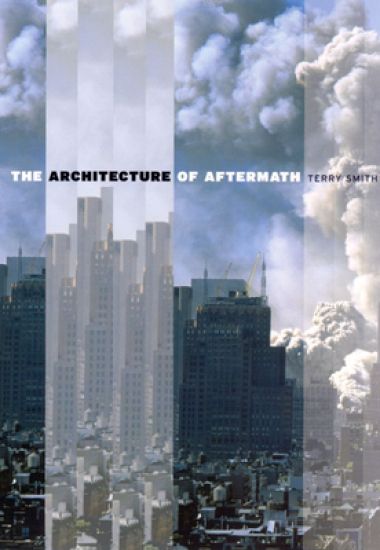
The September 11 terrorist attacks targeted, in Osama bin Laden's words, "America's icons of military and economic power." In "The Architecture of Aftermath", Terry Smith argues that it was no accident that these targets were buildings: architecture has long served as a symbol of proud, defiant power - and never more so than in the late twentieth century. But after September 11, Smith asserts, late modern architecture suddenly seemed an indulgence. With close readings of key buildings - including Jorn Utzon's Sydney Opera House, Minoru Yamasaki's World Trade Center, Frank Gehry's Guggenheim Museum Bilbao, and Richard Meier's Getty Center - Smith traces the growth of the spectacular architecture of modernity and then charts its aftermath in the conditions of contemporaneity. Indeed, Smith focuses on the very culture of aftermath itself, exploring how global politics, clashing cultures, and symbolic warfare have changed the way we experience destination architecture. Like other artists everywhere, architects are responding to the idea of aftermath by questioning the viability of their forms and the validity of their purposes. With his richly illustrated "The Architecture of Aftermath", Smith has done so as well.
The Architecture of Aftermath

The Architecture of Aftermath

Terry Smith

University of Chicago Press
2006
nidottu
The September 11 terrorist attacks targeted, in Osama bin Laden's words, "America's icons of military and economic power." In "The Architecture of Aftermath", Terry Smith argues that it was no accident that these targets were buildings: architecture has long served as a symbol of proud, defiant power - and never more so than in the late twentieth century. But after September 11, Smith asserts, late modern architecture suddenly seemed an indulgence. With close readings of key buildings - including Jorn Utzon's Sydney Opera House, Minoru Yamasaki's World Trade Center, Frank Gehry's Guggenheim Museum Bilbao, and Richard Meier's Getty Center - Smith traces the growth of the spectacular architecture of modernity and then charts its aftermath in the conditions of contemporaneity. Indeed, Smith focuses on the very culture of aftermath itself, exploring how global politics, clashing cultures, and symbolic warfare have changed the way we experience destination architecture. Like other artists everywhere, architects are responding to the idea of aftermath by questioning the viability of their forms and the validity of their purposes. With his richly illustrated "The Architecture of Aftermath", Smith has done so as well.
One and Five Ideas

One and Five Ideas

Terry Smith

Duke University Press
2017
sidottu
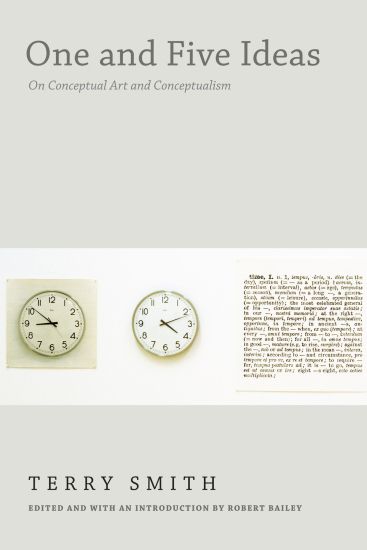
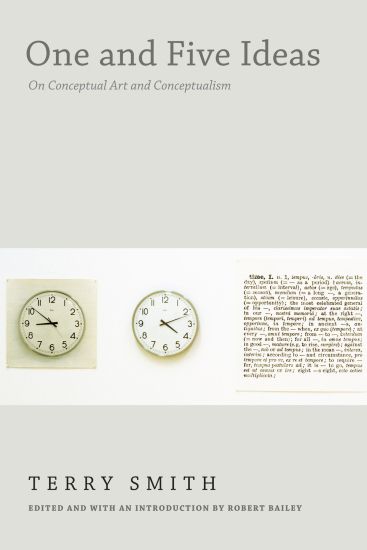
In One and Five Ideas eminent critic, historian, and former member of the Art & Language collective Terry Smith explores the artistic, philosophical, political, and geographical dimensions of Conceptual Art and conceptualism. These four essays and a conversation with Mary Kelly-published between 1974 and 2012-contain Smith's most essential work on Conceptual Art and his argument that conceptualism was key to the historical transition from modern to contemporary art. Nothing less than a distinctive theory of Conceptual and contemporary art, One and Five Ideas showcases the critical voice of one of the major art theorists of our time.
One and Five Ideas

One and Five Ideas

Terry Smith

Duke University Press
2017
pokkari
In One and Five Ideas eminent critic, historian, and former member of the Art & Language collective Terry Smith explores the artistic, philosophical, political, and geographical dimensions of Conceptual Art and conceptualism. These four essays and a conversation with Mary Kelly-published between 1974 and 2012-contain Smith's most essential work on Conceptual Art and his argument that conceptualism was key to the historical transition from modern to contemporary art. Nothing less than a distinctive theory of Conceptual and contemporary art, One and Five Ideas showcases the critical voice of one of the major art theorists of our time.
Investing for Growth

Investing for Growth

Terry Smith

Harriman House Publishing
2020
sidottu
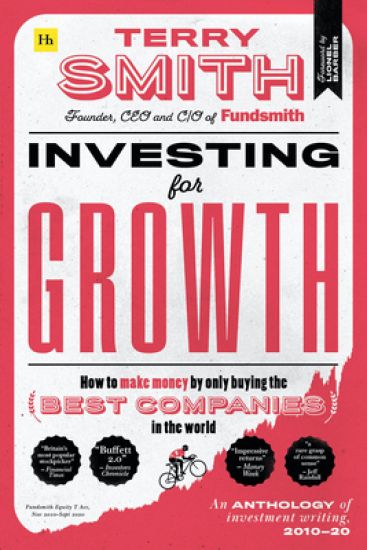
Buy good companies. Don't overpay. Do nothing.Some people love to make successful investing seem more complicated than it really is. In this anthology of essays and letters written between 2010–20, leading fund manager Terry Smith delights in debunking the many myths of investing – and making the case for simply buying the best companies in the world.These are businesses that generate serious amounts of cash and know what to do with it. The result is a powerful compounding of returns that is almost impossible to beat. Even better, they aren't going anywhere. Most have survived the Great Depression and two world wars.With his trademark razor-sharp wit, Smith not only reveals what these high-quality companies really look like and where to find them (as well as how to discover impostors), but also:- why you should avoid companies that abuse the English language- how most share buybacks actually destroy value- what investors can learn from the Tour de France- why ETFs are much riskier than most realise- how ESG investors often end up with investments that are far from green or ethical- his ten golden rules for investment- and much, much more.Backed up by the analytical rigour that made his name with the cult classic, Accounting for Growth (1992), the result is a hugely enjoyable and eye-opening tour through some of the most important topics in the world of investing – as well as a treasure trove of practical insights on how to make your money work for you.No investor's bookshelf is complete without it.
Whitelash

Whitelash

Terry Smith

Cambridge University Press
2020
sidottu
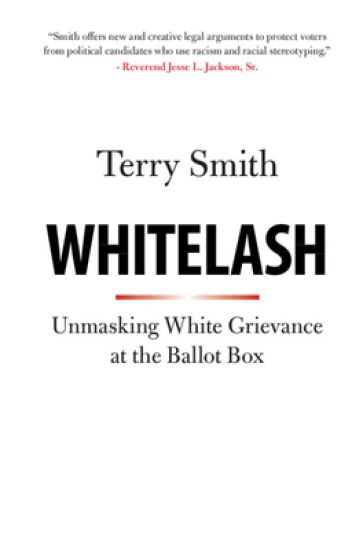
If postmortems of the 2016 US presidential election tell us anything, it's that many voters discriminate on the basis of race, which raises an important question: in a society that outlaws racial discrimination in employment, housing, and jury selections, should voters be permitted to racially discriminate in selecting a candidate for public office? In Whitelash, Terry Smith argues that such racialized decision-making is unlawful and that remedies exist to deter this reactionary behavior. Using evidence of race-based voting in the 2016 presidential election, Smith deploys legal analogies to demonstrate how courts can decipher when groups of voters have been impermissibly influenced by race, and impose appropriate remedies. This groundbreaking work should be read by anyone interested in how the legal system can re-direct American democracy away from the ongoing electoral scourge that many feared 2016 portended.
Whitelash

Whitelash

Terry Smith

Cambridge University Press
2020
pokkari
If postmortems of the 2016 US presidential election tell us anything, it's that many voters discriminate on the basis of race, which raises an important question: in a society that outlaws racial discrimination in employment, housing, and jury selections, should voters be permitted to racially discriminate in selecting a candidate for public office? In Whitelash, Terry Smith argues that such racialized decision-making is unlawful and that remedies exist to deter this reactionary behavior. Using evidence of race-based voting in the 2016 presidential election, Smith deploys legal analogies to demonstrate how courts can decipher when groups of voters have been impermissibly influenced by race, and impose appropriate remedies. This groundbreaking work should be read by anyone interested in how the legal system can re-direct American democracy away from the ongoing electoral scourge that many feared 2016 portended.
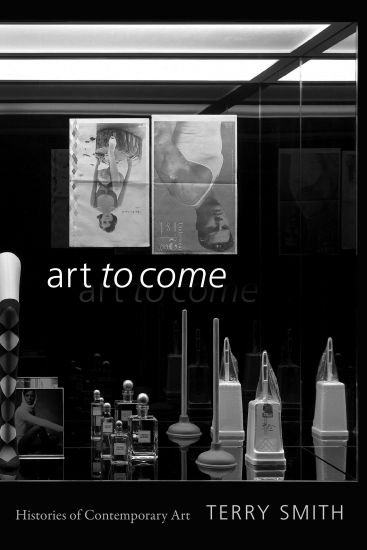
Art to Come

Art to Come

Terry Smith

Duke University Press
2019
sidottu
In Art to Come Terry Smith-who is widely recognized as one of the world's leading historians and theorists of contemporary art-traces the emergence of contemporary art and further develops his concept of contemporaneity. Smith shows that embracing contemporaneity as both a historical concept and a condition of the globalized world allows us to grasp how contemporary art exists in a fluid space of increasing interdependencies, multiple contemporaneous modernities, and persistent inequalities. Throughout these essays, Smith offers systematic proposals for writing contemporary art's histories while assessing how curators, critics, philosophers, artists, and art historians are currently doing so. Among other topics, Smith examines the intersection of architecture with other visual arts, Chinese art since the Cultural Revolution, how philosophers are theorizing concepts associated with the contemporary, Australian Indigenous art, and the current state of art history. Art to Come will be essential reading for artists, art students, curators, gallery workers, historians, critics, and theorists.
Art to Come

Art to Come

Terry Smith

Duke University Press
2019
pokkari
In Art to Come Terry Smith-who is widely recognized as one of the world's leading historians and theorists of contemporary art-traces the emergence of contemporary art and further develops his concept of contemporaneity. Smith shows that embracing contemporaneity as both a historical concept and a condition of the globalized world allows us to grasp how contemporary art exists in a fluid space of increasing interdependencies, multiple contemporaneous modernities, and persistent inequalities. Throughout these essays, Smith offers systematic proposals for writing contemporary art's histories while assessing how curators, critics, philosophers, artists, and art historians are currently doing so. Among other topics, Smith examines the intersection of architecture with other visual arts, Chinese art since the Cultural Revolution, how philosophers are theorizing concepts associated with the contemporary, Australian Indigenous art, and the current state of art history. Art to Come will be essential reading for artists, art students, curators, gallery workers, historians, critics, and theorists.
Code 4

Code 4

Terry Smith

Gunmetal Press LLC
2021
nidottu
You step into a doorway to see a man levelling a shotgun at your chest.You hold a dying child in your arms.You crawl into a mangled car to help someone trapped and bleeding.These are a small sampling of the kinds of things that police officers encounter. Not everyone is able to do the job that cops do, fewer still are willing. Those who do it with grace and dignity are special people.CODE 4 is an insider's view of the police profession, seen through the eyes of one of its veterans. Over a thirty-seven-year span Terry Smith worked as a uniformed officer, a long-haired undercover narcotics agent, an organized crime investigator, a SWAT commander, and a homicide detective. He and the men and women who worked with him looked down their gun barrels at murderers, armed robbers, rapists, burglars, and an assortment of other violent people. He began his career with the Bloomington, Minnesota, Police Department, then moved on to do thirty years with the Minnesota Bureau of Criminal Apprehension (BCA). During his last seventeen working years he ran a squad of homicide investigators for the BCA.Smith has written about things that happened while he was "protecting and serving." Some of them were dangerous, some gut-wrenchingly tragic, some humorous. He speaks with insight about the people he worked with "who could be kind or hard-edged as circumstance demanded," and the toll that policing took on their lives. He gives an inside look at several newsworthy cases he supervised including two sad abduction/homicides involving victims Julie Holmquist and Katie Poirier. Both investigations received extensive national coverage. Smith appeared in an episode of "The New Detectives" featuring the Poirier Casee on the Discovery Channel.In 2001 Smith received the Minnesota Police and Peace Officers Association honorable mention award as Minnesota Police Officer of the Year.CODE 4 will help you, the reader, feel the adrenaline, the excitement, and the occasional bursts of fear that are parts of the police job. It will help you understand why cops are willing to do what they do.*The words "Code 4," spoken into a police radio, mean that a dangerous situation has been handled, things are under control, and no additional help is needed.