Kirjojen hintavertailu. Mukana 11 342 296 kirjaa ja 12 kauppaa.

Kirjahaku

Etsi kirjoja tekijän nimen, kirjan nimen tai ISBN:n perusteella.

3 kirjaa tekijältä Thad Sitton

The Texas Sheriff

The Texas Sheriff

Thad Sitton

University of Oklahoma Press
2006
nidottu
The Texas Sheriff takes a fresh, colorful, and insightful look at Texas law enforcement during the decades before 1960. In the first half of the twentieth century, rural Texas was a strange, often violent, and complicated place. Nineteenth-century lifestyles persisted, blood relationships made a difference, and racial apartheid was still rigidly enforced.Citizens expected their county sheriff to uphold local customs as well as state laws. He had to help constituents with their personal problems, which often had little or nothing to do with law enforcement. The rural sheriff served as his county's ""Mr. Fixit,"" its resident ""good old boy,"" and the lord of an intricate rural society.Basing his interpretations on primary sources and extensive interviews, Thad Sitton explores the dual nature of Texas sheriffs, demonstrating their far-reaching power both to do good and to abuse the law.
Backwoodsmen

Backwoodsmen

Thad Sitton

University of Oklahoma Press
2008
nidottu
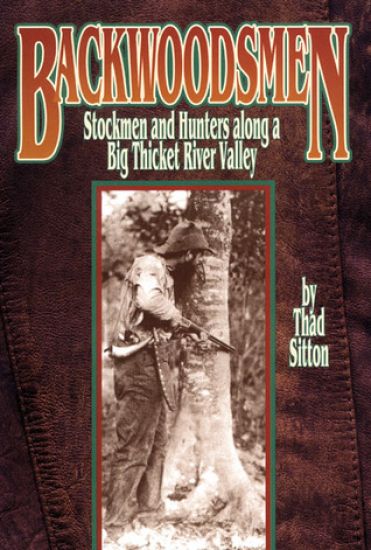
Backwoodsmen:Stockmen and Hunters along a BIg Thicket Valley presents a detailed social history of the back-country stockmen, hunters, and woodsmen of the Neches River in southeastern Texas. Labeled ""crackers,"" ""pineys,"" ""sandhillers,"" and ""nesters"" by townspeople across the upland South, southern backwoodsmen have often been dismissed by historians. One of the first works to challenge these stereotypes was Frank Owsley's Plain Folk of the Old South (1949). In Backwoodsmen, Thad Sitton follows Owsley's stockmen and small farmers into the twentieth century.As in parts of Appalachia, many elements of centuries-old herding and hunting lifeways survived in the Neches Valley into the 1960s. In what early settlers called the ""Big Thicket"" or ""Big Woods,"" everything outside fenced fields was, by long established custom, ""open range,"" a wooded commons in which hogs, cattle, and backwoodsmen were free to roam. And roam they did--not only stockmen, with their ""rooter hogs"" and ""woods cattle,"" but also tir cutters, grey-moss gatherers, hunters, trappers, fishermen, and moonshiners. Sitton details their daily activities, relying mainly on oral history interviews he conducted with dozens of Neches Valley woodsmen. Along the edge of river bottoms, at the end of county roads, the author found hist story, still alive in the memories of the people of the Neches River.
Gray Ghosts and Red Rangers

Gray Ghosts and Red Rangers

Thad Sitton

University of Texas Press
2010
nidottu
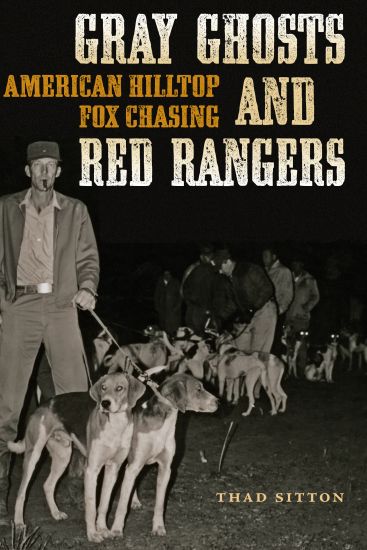
Around a campfire in the woods through long hours of night, men used to gather to listen to the music of hounds' voices as they chased an elusive and seemingly preternatural fox. To the highly trained ears of these backwoods hunters, the hounds told the story of the pursuit like operatic voices chanting a great epic. Although the hunt almost always ended in the escape of the fox-as the hunters hoped it would-the thrill of the chase made the men feel "that they [were] close to something lost and never to be found, just as one can feel something in a great poem or a dream."Gray Ghosts and Red Rangers offers a colorful account of this vanishing American folkway-back-country fox hunting known as "hilltopping," "moonlighting," "fox racing," or "one-gallus fox hunting." Practiced neither for blood sport nor to put food on the table, hilltopping was worlds removed from elite fox hunting where red- and black-coated horsemen thundered across green fields in daylight. Hilltopping was a nocturnal, even mystical pursuit, uniting men across social and racial lines as they gathered to listen to dogs chasing foxes over miles of ground until the sun rose. Engaged in by thousands of rural and small-town Americans from the 1860s to the 1980s, hilltopping encouraged a quasi-spiritual identification of man with animal that bound its devotees into a "brotherhood of blood and cause" and made them seem almost crazy to outsiders.