Kirjojen hintavertailu. Mukana 11 699 587 kirjaa ja 12 kauppaa.

Kirjahaku

Etsi kirjoja tekijän nimen, kirjan nimen tai ISBN:n perusteella.

3 kirjaa tekijältä Theodore H. Cohn

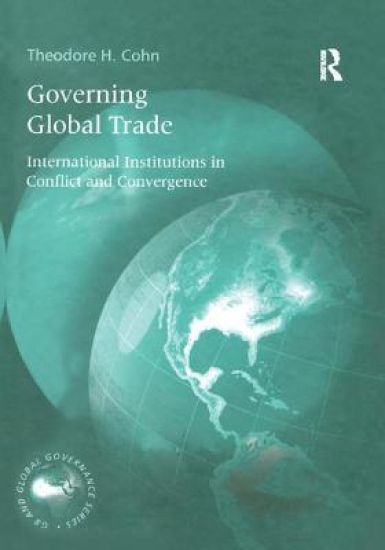
Governing Global Trade

Governing Global Trade

Theodore H. Cohn

Ashgate Publishing Limited
2002
sidottu
Cohn's topic of global trade is of enormous and proliferating interest. He provides a good background from 1945 to the present and on core contemporary themes such as civil society participation and the domesticisation of the trade agenda. Whilst there is a wealth of literature on policy-oriented aspects such as negotiating rounds, there are few that provide the careful, comprehensive historical overview that this work offers and none that do so with reference to international institutions such as the G7, Quad, OECD, and UNCTAD as well as the WTO in global trade governance. This seminal work has been awarded the British Columbia Political Science Association Weller Prize for 2003. Cohn's political science background will appeal directly to a university audience and a broader public policy market. It is also suitable for those interested in trade in the cognates of economics and law. This work's theoretical framework embraces and synthesises the major approaches in the field of international relations and will be appropriate for the dominant schools of realists and liberal institutionalists alike. It could therefore be apt for courses on international relations theory or international political economy taught in a theoretical mode. This book reinforces and broadens the focus of all previous works in The G8 and Global Governance series.
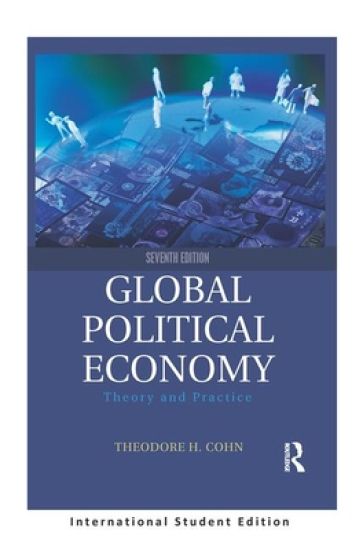
Global Political Economy

Global Political Economy

Theodore H. Cohn

Routledge
2017
nidottu
Praised for its authoritative coverage, Global Political Economy places the study of international political economy (IPE) in its broadest theoretical contextnow updated to cover the continuing global economic crisis and regional relationships and impacts. This text not only helps students understand the fundamentals of how the global economy works but also encourages them to use theory to more fully grasp the connections between key issue areas like trade and development. Written by a leading IPE scholar, this text equally emphasizes theory and practice to provide a framework for analyzing current events and long-term developments in the global economy. New to the Seventh Edition Focuses on the ongoing global economic crisis and the continuing European sovereign debt crisis, along with other regional economic issues, including their implications for relationships in the global economy.Offers fuller and updated discussions of critical perspectives like feminism and environmentalism, and includes new material differentiating among the terms neomercantilism, realism, mercantilism, and economic nationalism.Updated, author-written Test Bank is provided to professors as an e-Resource on the book’s Webpage.
Governing Global Trade

Governing Global Trade

Theodore H. Cohn

Routledge
2017
nidottu
Cohn's topic of global trade is of enormous and proliferating interest. He provides a good background from 1945 to the present and on core contemporary themes such as civil society participation and the domesticisation of the trade agenda. Whilst there is a wealth of literature on policy-oriented aspects such as negotiating rounds, there are few that provide the careful, comprehensive historical overview that this work offers and none that do so with reference to international institutions such as the G7, Quad, OECD, and UNCTAD as well as the WTO in global trade governance. This seminal work has been awarded the British Columbia Political Science Association Weller Prize for 2003. Cohn's political science background will appeal directly to a university audience and a broader public policy market. It is also suitable for those interested in trade in the cognates of economics and law. This work's theoretical framework embraces and synthesises the major approaches in the field of international relations and will be appropriate for the dominant schools of realists and liberal institutionalists alike. It could therefore be apt for courses on international relations theory or international political economy taught in a theoretical mode. This book reinforces and broadens the focus of all previous works in The G8 and Global Governance series.