Kirjojen hintavertailu. Mukana 11 244 527 kirjaa ja 12 kauppaa.

Kirjahaku

Etsi kirjoja tekijän nimen, kirjan nimen tai ISBN:n perusteella.

78 kirjaa tekijältä Theodore Martin

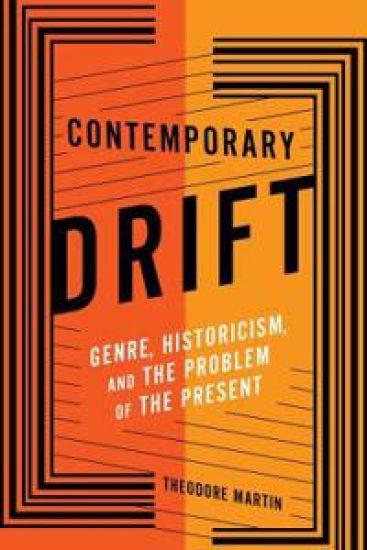
Contemporary Drift

Contemporary Drift

Theodore Martin

Columbia University Press
2017
sidottu
What does it mean to call something "contemporary"? More than simply denoting what's new, it speaks to how we come to know the present we're living in and how we develop a shared story about it. The story of trying to understand the present is an integral, yet often unnoticed, part of the literature and film of our moment. In Contemporary Drift, Theodore Martin argues that the contemporary is not just a historical period but also a conceptual problem, and he claims that contemporary genre fiction offers a much-needed resource for resolving that problem. Contemporary Drift combines a theoretical focus on the challenge of conceptualizing the present with a historical account of contemporary literature and film. Emphasizing both the difficulty and the necessity of historicizing the contemporary, the book explores how recent works of fiction depict life in an age of global capitalism, postindustrialism, and climate change. Through new histories of the novel of manners, film noir, the Western, detective fiction, and the postapocalyptic novel, Martin shows how the problem of the contemporary preoccupies a wide range of novelists and filmmakers, including Zadie Smith, Colson Whitehead, Vikram Chandra, China Mieville, Kelly Reichardt, and the Coen brothers. Martin argues that genre provides these artists with a formal strategy for understanding both the content and the concept of the contemporary. Genre writing, with its mix of old and new, brings to light the complicated process by which we make sense of our present and determine what belongs to our time.
Contemporary Drift

Contemporary Drift

Theodore Martin

Columbia University Press
2019
pokkari
What does it mean to call something “contemporary”? More than simply denoting what’s new, it speaks to how we come to know the present we’re living in and how we develop a shared story about it. The story of trying to understand the present is an integral, yet often unnoticed, part of the literature and film of our moment. In Contemporary Drift, Theodore Martin argues that the contemporary is not just a historical period but also a conceptual problem, and he claims that contemporary genre fiction offers a much-needed resource for resolving that problem.Contemporary Drift combines a theoretical focus on the challenge of conceptualizing the present with a historical account of contemporary literature and film. Emphasizing both the difficulty and the necessity of historicizing the contemporary, the book explores how recent works of fiction depict life in an age of global capitalism, postindustrialism, and climate change. Through new histories of the novel of manners, film noir, the Western, detective fiction, and the postapocalyptic novel, Martin shows how the problem of the contemporary preoccupies a wide range of novelists and filmmakers, including Zadie Smith, Colson Whitehead, Vikram Chandra, China Miéville, Kelly Reichardt, and the Coen brothers. Martin argues that genre provides these artists with a formal strategy for understanding both the content and the concept of the contemporary. Genre writing, with its mix of old and new, brings to light the complicated process by which we make sense of our present and determine what belongs to our time.
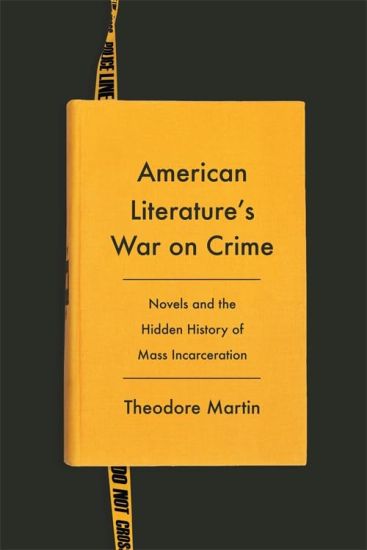
American Literature's War on Crime

American Literature's War on Crime

Theodore Martin

Columbia University Press
2026
sidottu
While the United States was building the world’s largest prison system, Americans were reading crime novels. What did it mean to read crime fiction in a “tough-on-crime” era? How were fictional stories about crime linked to cultural narratives about criminality, class, and race? What did novels have to do with the making of mass imprisonment in America? Theodore Martin offers a groundbreaking account of the ways that reading habits and crime politics intersected in the age of mass incarceration. He shows how the War on Crime was waged on the page, arguing that fiction made the policies and ideologies of crime control legible to diverse readerships. American Literature’s War on Crime analyzes dozens of novels—from best-sellers and prize winners to cult classics and forgotten mass-market paperbacks—by authors including Mary Higgins Clark, James Ellroy, Ralph Ellison, Donald Goines, Sue Grafton, Patricia Highsmith, Chester Himes, Stephen King, Walter Mosley, and Sister Souljah. Rewriting the history of one of the past century’s most popular genres, this ambitious book reveals how the rise of mass incarceration transformed American crime fiction—and how crime fiction became a key battleground in the War on Crime.
American Literature's War on Crime

American Literature's War on Crime

Theodore Martin

Columbia University Press
2026
pokkari
While the United States was building the world’s largest prison system, Americans were reading crime novels. What did it mean to read crime fiction in a “tough-on-crime” era? How were fictional stories about crime linked to cultural narratives about criminality, class, and race? What did novels have to do with the making of mass imprisonment in America? Theodore Martin offers a groundbreaking account of the ways that reading habits and crime politics intersected in the age of mass incarceration. He shows how the War on Crime was waged on the page, arguing that fiction made the policies and ideologies of crime control legible to diverse readerships. American Literature’s War on Crime analyzes dozens of novels—from best-sellers and prize winners to cult classics and forgotten mass-market paperbacks—by authors including Mary Higgins Clark, James Ellroy, Ralph Ellison, Donald Goines, Sue Grafton, Patricia Highsmith, Chester Himes, Stephen King, Walter Mosley, and Sister Souljah. Rewriting the history of one of the past century’s most popular genres, this ambitious book reveals how the rise of mass incarceration transformed American crime fiction—and how crime fiction became a key battleground in the War on Crime.