Kirjojen hintavertailu. Mukana 11 342 296 kirjaa ja 12 kauppaa.

Kirjahaku

Etsi kirjoja tekijän nimen, kirjan nimen tai ISBN:n perusteella.

12 kirjaa tekijältä Thomas A. Fudge

Jerome of Prague and the Foundations of the Hussite Movement

Jerome of Prague and the Foundations of the Hussite Movement

Thomas A. Fudge

Oxford University Press Inc
2016
sidottu
The life and work of Jerome of Prague has been overlooked outside Czech historiography, but it represents an important chapter in the understanding of late medieval European history. Thomas A. Fudge makes a case for the central importance of Jerome, peer of Jan Hus, by reconstructing his biography using the original Latin and Czech sources and drawing significantly upon German, French, English and Czech scholarship. The book traces the development of his life, paying special attention to the controversies he caused at the universities of Paris, Cologne, Heidelberg, Vienna, and Prague. Of particular note are the two heresy trials in which Jerome was a defendant (Vienna 1410 and Constance 1415/16). Fudge situates Jerome within the philosophical conflicts of the late fourteenth and early fifteenth centuries. He argues that Jerome is not only an important component in the intellectual history of the Middle Ages, and a leading personality in the church's war on heresy, but that he is also an essential influence on the development of the Hussite movement in Bohemia. As the Italian humanist Poggio Bracciolini remarked after hearing Jerome speak at the Council of Constance in 1416, "this was a man to remember." Jerome of Prague and the Foundations of the Hussite Movement brings to life a little known but indisputably significant figure of the late Middle Ages.
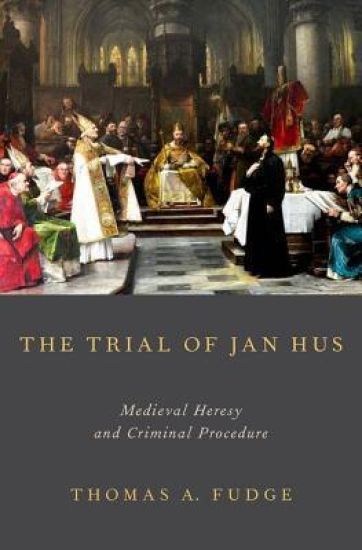
The Trial of Jan Hus

The Trial of Jan Hus

Thomas A. Fudge

Oxford University Press Inc
2013
sidottu
Six hundred years ago, the Czech priest Jan Hus (1371-1415) traveled out of Bohemia, never to return. After a five-year legal ordeal that took place in Prague, in the papal curia, and finally in southern Germany, the case of Jan Hus was heard by one of the largest and most magnificent church gatherings in medieval history: the Council of Constance. Hus was burned alive as a stubborn and disobedient heretic before a huge audience. His trial sparked intense reactions and opinions ranging from satisfaction to condemnations of judicial murder. Thomas A. Fudge offers the first English-language examination of the indictment, relevant canon law, and questions of procedural legality concerning Jan Hus and the Holy See. In the modern world, there is instinctive sympathy for a man burned alive for his convictions, and it is presumed that any court sanctioning such action must have been irregular. Was Hus guilty of heresy? Were his doctrinal convictions contrary to established ideas espoused by the Latin Church? Was his trial legal? Despite its historical significance and the strong reactions it provoked, the trial of Jan Hus has never before been the subject of a thorough legal analysis or assessed against prevailing canonical legislation and procedural law in the later Middle Ages. The Trial of Jan Hus shows how this popular and successful priest became a criminal suspect and a convicted felon, and why he was publicly executed, providing critical insight into what may be characterized as the most significant heresy trial of the Middle Ages.
Origins of the Hussite Uprising

Origins of the Hussite Uprising

Thomas A. Fudge

Routledge
2020
sidottu
The Hussite Chronicle is the most important single narrative source for the events of the early Hussite movement. The author is Laurence of Brezová (c.1370–c.1437), a member of the Czech lower nobility and a supporter of the Hussite creed. The movement arose as an initiative for religious and social reform in fifteenth-century Bohemia and was energized by the burning of the priest Jan Hus in 1415. Church and empire attempted to suppress the movement and raised five crusades against the dissenters. The chronicle offers to history and scholarship a nuanced understanding of what can be regarded as an essential component for a proper understanding of late medieval religion. It is also a considered account of aspects of the later crusades. This is the first English-language translation of the chronicle.
Heresy and Hussites in Late Medieval Europe
The followers of the martyred Bohemian priest Jan Hus (1371-1415) formed one of the greatest challenges to the medieval Latin Church. Branded as heretics, outlawed, then forced to fight for their faith as well as their lives, the Hussites occupy one of the most colorful and challenging chapters of European religious history. The essays reprinted in this book (along with one here first published in English and additional notes) explore the essence of the early Hussite movement by focusing on the nature and development of heresy both as accusation and identity. Heresy and Hussites in Late Medieval Europe first examines the definition of heresy, and its comparative nature across Europe. It investigates the unique practices of popular religion in local communities, while examining theology and its unavoidable conflicts. The repressive policy of crusade and the growth of martyrdom with its inevitable contribution to the formation of Hussite history is explored. The social application of religious ideas, its revolutionary outcomes, along with the intentional use of art in pedagogy and propaganda, situates the Czech heretics in the fifteenth century. An examination of leading personalities, together with the eventual and more formal church administration, rounds out the study of this remarkable era.
Origins of the Hussite Uprising

Origins of the Hussite Uprising

Thomas A. Fudge

TAYLOR FRANCIS LTD
2021
nidottu
The Hussite Chronicle is the most important single narrative source for the events of the early Hussite movement. The author is Laurence of Brezová (c.1370–c.1437), a member of the Czech lower nobility and a supporter of the Hussite creed. The movement arose as an initiative for religious and social reform in fifteenth-century Bohemia and was energized by the burning of the priest Jan Hus in 1415. Church and empire attempted to suppress the movement and raised five crusades against the dissenters. The chronicle offers to history and scholarship a nuanced understanding of what can be regarded as an essential component for a proper understanding of late medieval religion. It is also a considered account of aspects of the later crusades. This is the first English-language translation of the chronicle.
Heresy and Hussites in Late Medieval Europe
The followers of the martyred Bohemian priest Jan Hus (1371-1415) formed one of the greatest challenges to the medieval Latin Church. Branded as heretics, outlawed, then forced to fight for their faith as well as their lives, the Hussites occupy one of the most colorful and challenging chapters of European religious history. The essays reprinted in this book (along with one here first published in English and additional notes) explore the essence of the early Hussite movement by focusing on the nature and development of heresy both as accusation and identity. Heresy and Hussites in Late Medieval Europe first examines the definition of heresy, and its comparative nature across Europe. It investigates the unique practices of popular religion in local communities, while examining theology and its unavoidable conflicts. The repressive policy of crusade and the growth of martyrdom with its inevitable contribution to the formation of Hussite history is explored. The social application of religious ideas, its revolutionary outcomes, along with the intentional use of art in pedagogy and propaganda, situates the Czech heretics in the fifteenth century. An examination of leading personalities, together with the eventual and more formal church administration, rounds out the study of this remarkable era.
Jan Hus between Time and Eternity

Jan Hus between Time and Eternity

Thomas A. Fudge

Lexington Books
2015
sidottu
This study is a reconsideration of Jan Hus, a late medieval Bohemian priest who was burned at the stake six hundred years ago. His death sparked a social revolution. This book considers his role as a priest and reformer in Prague, his martyrdom in Germany, and his legacy. It attempts to provide an evaluation of Hus in the context of the medieval world, especially by engaging in alternative perspectives of his life and work. The core themes and arguments are revisionist. These include seeing Hus properly as a heretic, exploring Hus as a medieval man interested in more than preaching, religious practice, and reform. The book sets out to challenge traditional assumptions and seeks less to contribute to monument-building than to challenge the prevailing views about Hus and the interpretation of his life and thought. A conscious effort has been undertaken to explore the historical relevancy of Hus and to assess his contemporary significance. The book also places Hus into a comparative context with the Reformation of the sixteenth century.
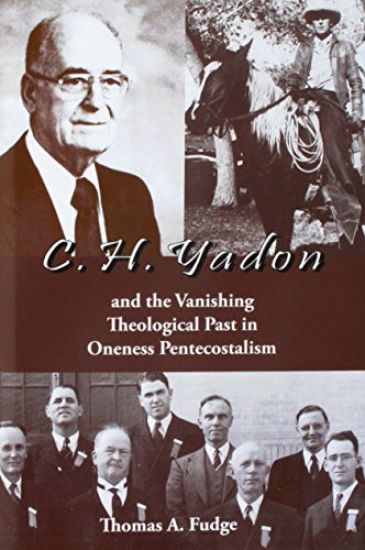
C.H. Yadon: And the Vanishing Theological Past in Oneness Pentecostalism
From the purple sage ranges of the American west to the pulpits of Oneness Pentecostal churches, the cowboy-turned preacher C. Haskell Yadon represents an important vestige of a vanishing past. This is the third part of a trilogy intentionally undertaken to preserve aspects of that disappearing past for posterity. This study reconstructs the life and career of C.H. Yadon and more importantly elaborates his theology and ideas about faith. Taciturn, reluctant to engender conflict and hobbled by his decided lack of formal education and theological training, Yadon nonetheless is a looming figure on the patchwork fabric in the largely unknown and ignored chapters of American religious history and thought. Drawing upon his numerous sermons, published work, unpublished papers, and the testimony of those who knew him best, Thomas A. Fudge has produced a major theological biography of an unusual man. Buttressed by 32 rich appendices mostly from the pen of Yadon and featuring 157 photographs illuminating aspects of his long life, this book challenges the revisionist history and sanitized theologizing which has characterized the religious movement Yadon devoted most of his life to. Those wishing to understand the development of both history and theology within Oneness Pentecostalism and who are interested in knowing about the vanishing past will want to become acquainted with the life and thought of C.H. Yadon.
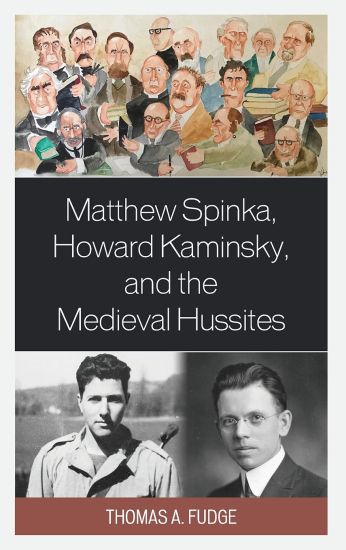
Matthew Spinka, Howard Kaminsky, and the Future of the Medieval Hussites
The Hussite movement in Bohemia is an essential component for understanding the general history of medieval Europe and the Hussite period is a critical event for the development of western civilization. Matthew Spinka and Howard Kaminsky stand at the forefront of scholarship introducing this subject to the Anglophone world. The author argues their role in the religious historiography of late medieval Europe is a precursor to global medievalism. Combining commitment to the Christian faith with firm opposition to the Soviet-mandated Marxist-Communist ideology that dominated twentieth-century Czechoslovakia, Spinka strove to present Jan Hus as a medieval figure driven by religious devotion. Motivated by Jewish atheism and a modified form of Marxist analysis, Kaminsky rescued the medieval Hussites from oblivion, and political agendas, and presented them to the English-reading world. The author explores biography, history, and historiography as an essential intellectual segue between late medieval Hussites and modern scholarship. The book takes into account salient biographical details, provides an evaluation of the work of both historians, elaborates their methods, assesses their interpretations, and analyzes their historiographical significance for the study of Hussite history. This book is also a valuable contribution to understanding the writing of history.
The Magnificent Ride

The Magnificent Ride

Thomas A. Fudge

Ashgate Publishing Limited
1998
sidottu
The Magnificent Ride examines the social and religious dimensions of the Hussite revolutionary movement in 15th-century Bohemia. It argues that ’the magnificent ride’ was, in fact, the first reformation, and not merely a precursor to the reformations of the 16th century. The religious revival which had begun in Prague in the later middle ages reached its zenith in the period between Jan Hus and the Council of Basel. This book reconstructs the Hussite myth and shows how that myth evolved into the historical phenomenon of heresy. Acts of heretical practice in Bohemia, condemnation of Jan Hus, defiance of ecclesiastical authority and attempts by the official church to deal with the dissenters are fascinating chapters in the history of late medieval Europe.