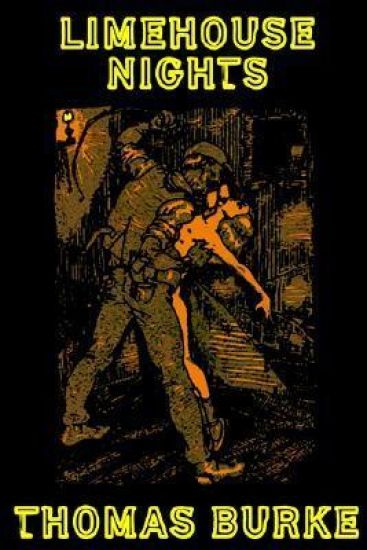
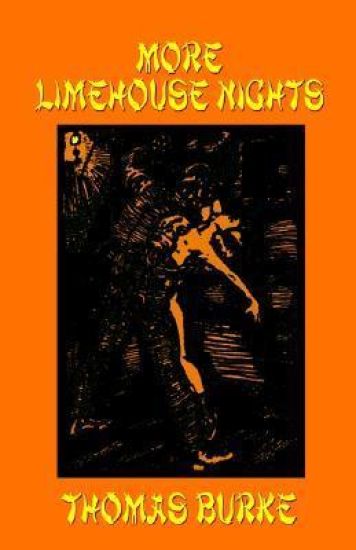
Thomas Burke (29 November 1886 - 22 September 1945) was a British author. He was born in Eltham, London (back then still part of Kent). His first successful publication was Limehouse Nights (1916), a collection of stories centred on life in the poverty-stricken Limehouse district of London. Many of Burke's books feature the Chinese character Quong Lee as narrator. "The Lamplit Hour", an incidental poem from Limehouse Nights, was set to music in the United States by Arthur Penn in 1919. That same year, American film director D. W. Griffith used another tale from the collection, "The Chink and the Child" as the basis of his screenplay for the movie Broken Blossoms. Griffith based his film Dream Street (1921) on Burke's "Gina of Chinatown" and "Song of the Lamp". Life: Thomas Burke was born Sydney Thomas Burke on 29 November 1886 in Clapham, a southern suburb of London that by the turn of the century had fallen out of favour with the middle-classes.Burke's father died when he was barely a few months old and he was eventually sent to live with his uncle in Poplar. At the age of ten he was removed to a home for middle class boys who were " r]espectably descended but without adequate means to their support." When Burke turned sixteen he started working as an office boy, a job that he deeply detested. In 1901, he published his first professional written work entitled "The Bellamy Diamonds" in the magazine Spare Moments.He also edited some anthologies of children's poetry that were published in 1910-1913. In 1915, Burke published Nights in Town: A London Autobiography, which featured his descriptions of working-class London nightlife including the essay, 'A Chinese Night, Limehouse' However, it was not until the publication of Limehouse Nights in 1916 that he obtained any substantial acclaim as an author. This collection of melodramatic short stories, set in a lower-class environment populated by Chinese immigrants, was published in three British periodicals, The English Review, Colour and The New Witness, and received marked attention from literary reviewers. Limehouse Nights helped to earn Burke a reputation as "the laureate of London's Chinatown".Burke's writing also influenced contemporary popular forms of entertainment, such as the nascent film industry. Indeed, D. W. Griffith used the short story "The Chink and the Child" from Limehouse Nights as the basis for his popular silent film Broken Blossoms (1919). Burke continued to develop his descriptions of London life throughout his later literary works. He gradually expanded his range with novels such as The Sun in Splendor, which was published in 1926. He also continued to publish essays on the London environment, including pieces such as "The Real East End" and "London in My Times". Burke died in the Homeopathic Hospital in Queens Square, Bloomsbury on 22 September 1945. His short story "The Hands of Ottermole" was later voted the best mystery of all time by critics in 1949........................
Thomas Burke (29 November 1886 - 22 September 1945) was a British author. He was born in Eltham, London (back then still part of Kent). His first successful publication was Limehouse Nights (1916), a collection of stories centred on life in the poverty-stricken Limehouse district of London. Many of Burke's books feature the Chinese character Quong Lee as narrator. "The Lamplit Hour", an incidental poem from Limehouse Nights, was set to music in the United States by Arthur Penn in 1919. That same year, American film director D. W. Griffith used another tale from the collection, "The Chink and the Child" as the basis of his screenplay for the movie Broken Blossoms. Griffith based his film Dream Street (1921) on Burke's "Gina of Chinatown" and "Song of the Lamp". Life: Thomas Burke was born Sydney Thomas Burke on 29 November 1886 in Clapham, a southern suburb of London that by the turn of the century had fallen out of favour with the middle-classes.Burke's father died when he was barely a few months old and he was eventually sent to live with his uncle in Poplar. At the age of ten he was removed to a home for middle class boys who were " r]espectably descended but without adequate means to their support." When Burke turned sixteen he started working as an office boy, a job that he deeply detested. In 1901, he published his first professional written work entitled "The Bellamy Diamonds" in the magazine Spare Moments.He also edited some anthologies of children's poetry that were published in 1910-1913. In 1915, Burke published Nights in Town: A London Autobiography, which featured his descriptions of working-class London nightlife including the essay, 'A Chinese Night, Limehouse' However, it was not until the publication of Limehouse Nights in 1916 that he obtained any substantial acclaim as an author. This collection of melodramatic short stories, set in a lower-class environment populated by Chinese immigrants, was published in three British periodicals, The English Review, Colour and The New Witness, and received marked attention from literary reviewers. Limehouse Nights helped to earn Burke a reputation as "the laureate of London's Chinatown".Burke's writing also influenced contemporary popular forms of entertainment, such as the nascent film industry. Indeed, D. W. Griffith used the short story "The Chink and the Child" from Limehouse Nights as the basis for his popular silent film Broken Blossoms (1919). Burke continued to develop his descriptions of London life throughout his later literary works. He gradually expanded his range with novels such as The Sun in Splendor, which was published in 1926. He also continued to publish essays on the London environment, including pieces such as "The Real East End" and "London in My Times". Burke died in the Homeopathic Hospital in Queens Square, Bloomsbury on 22 September 1945. His short story "The Hands of Ottermole" was later voted the best mystery of all time by critics in 1949.
"Song Book of Quong Lee of Limehouse" by Thomas Burke offers a glimpse into a unique corner of early 20th-century London. This collection of poems, imbued with the spirit of Chinese immigrants in the Limehouse district, provides a fascinating window into a specific cultural experience. Blending elements of poetry and humorous fiction, the book explores themes related to Chinese culture within the context of London life. The poems evoke a sense of place and time, offering readers a chance to reflect on the lives and experiences of those who navigated cultural differences in a bustling and ever-changing world. A historical text carefully prepared for print republication, this book provides a timeless reading experience, inviting contemplation and appreciation for diverse perspectives.This work has been selected by scholars as being culturally important, and is part of the knowledge base of civilization as we know it.This work is in the public domain in the United States of America, and possibly other nations. Within the United States, you may freely copy and distribute this work, as no entity (individual or corporate) has a copyright on the body of the work.Scholars believe, and we concur, that this work is important enough to be preserved, reproduced, and made generally available to the public. We appreciate your support of the preservation process, and thank you for being an important part of keeping this knowledge alive and relevant.