Kirjojen hintavertailu. Mukana 12 274 016 kirjaa ja 12 kauppaa.

Kirjahaku

Etsi kirjoja tekijän nimen, kirjan nimen tai ISBN:n perusteella.

4 kirjaa tekijältä Thomas D. Conlan

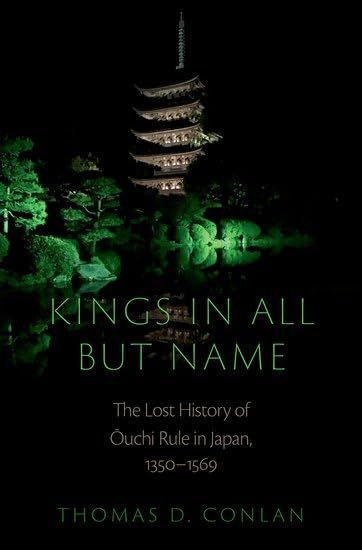
Kings in All but Name

Kings in All but Name

Thomas D. Conlan

OXFORD UNIVERSITY PRESS INC
2024
sidottu
In the sixteenth century, members of the Ouchi family were kings in all but name in much of Japan. Immensely wealthy, they controlled sea lanes stretching to Korea and China, as well as the Japanese city of Yamaguchi, which functioned as an important regional port with a growing population and a host of temples and shrines. The family was unique in claiming ethnic descent from Korean kings, and-remarkably for this time-such claims were recognized in both Korea and Japan. Their position, coupled with dominance over strategic ports and mines, allowed them to facilitate trade throughout East and Southeast Asia. They also played a key cultural role in disseminating Confucian texts, Buddhist sutras, ink paintings, and pottery, and in creating a distinctive, hybrid culture that fused Japanese, Korean, and Chinese beliefs, objects, and customs. Kings in All but Name illustrates how Japan was an ethnically diverse state from the fourteenth through the sixteenth centuries, closely bound by trading ties to Korea and China. It reveals new archaeological and textual evidence proving that East Asia had integrated trading networks long before the arrival of European explorers and includes an analysis of ores and slag that shows how mining techniques improved and propelled East Asian trade. The story of the Ouchi rulers argues for the existence of a segmented polity, with one center located in Kyoto, and the other in the Ouchi city of Yamaguchi. It also contradicts the belief that Japan collapsed into centuries of turmoil and rather proves that Japan was a stable and prosperous trading state where rituals, policies, politics, and economics were interwoven and diverse.
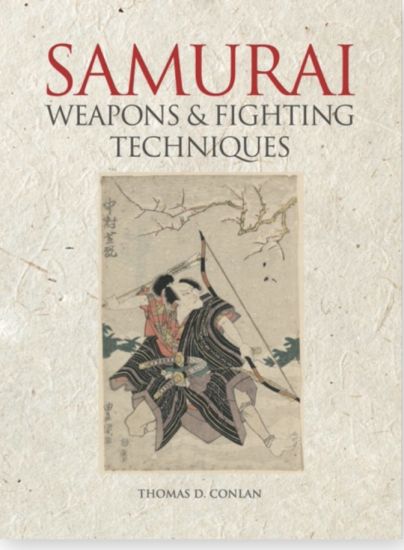
Samurai Weapons and Fighting Techniques

Samurai Weapons and Fighting Techniques

Thomas D. Conlan

AMBER BOOKS LTD
2022
sidottu
The Samurai warrior is one of the most famous types of soldier, with his intricate armour, longbow and distinctive katana sword, as well as his strict martial code. But samurai warfare and military culture is much misunderstood in the modern era. In Samurai Weapons & Fighting Techniques, Thomas D. Conlan traces the history and development of samurai warfare over seven centuries, beginning with the historic dominance of the mounted, bow-armed samurai, moving through the introduction of naginata-wielding ashigaru (skirmishers) and pike formations, and finishing with the revolutionary introduction of firearms and cannon. Conlan analyses the success of particular samurai dynasties, such as the Ashikaga, Uesugi and Tokugawa clans, and examines the role of many of the great battlefield commanders – such as Oda Nobunaga, Takeda Shingen and Tokugawa Ieyasu – at key battles like Kawanakajima (1561), Nagashino (1575) and the siege of Osaka (1615). The book is illustrated throughout with more than 300 detailed line drawings and colour photographs showing the weapons, equipment, techniques and tactics of the samurai. Types of armour – such as o-yoroi, haramaki and paper armour – and weapons – such as the tachi long sword, wakizashi short sword and yari (pike) – are depicted in detail. Expertly written, Samurai Weapons & Fighting Techniques is a highly illustrated, accessible introduction to samurai warfare for both the military enthusiast and general reader.
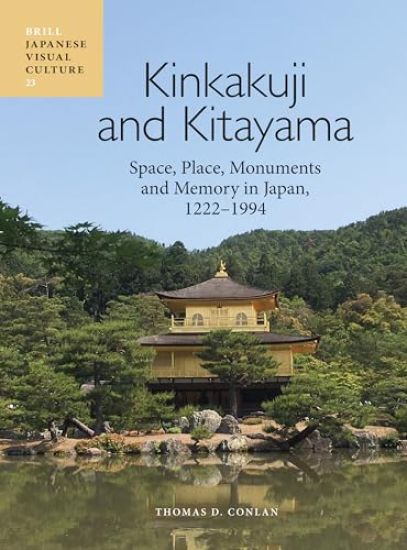
Kinkakuji and Kitayama: Space, Place, Monuments and Memory in Japan 1222-1994
This work adopts a typology of intentional monuments, historical monuments, ancient monuments, and timeless monuments to describe how Kinkakuji, the Golden Pavilion, was created, preserved, destroyed, and rebuilt. It reveals how Ashikaga Yoshimitsu Kinkakuji as a monument to glorify his rule. Later, Kinkakuji became a mortuary temple and historical monument, commemorating the Ashikaga, before becoming an ancient monument that was valued for being old. It then became a National Treasure of Japan. After it was destroyed in 1950, Kinkakuji was built as a timeless monument. In the process, Kinkakuji's reconstruction influenced how UNESCO authorities defined "original" monuments.