

Kirjahaku
Etsi kirjoja tekijän nimen, kirjan nimen tai ISBN:n perusteella.
39 kirjaa tekijältä Thomas Davis

Literary And Historical Essays By Thomas Davis (1883)
Thomas Davis
KESSINGER PUBLISHING, LLC
2008
sidottu

Thomas Davis Selections from his Prose and Poetry
Thomas Davis
Createspace Independent Publishing Platform
2018
nidottu
This collection of literature attempts to compile many of the classic works that have stood the test of time and offer them at a reduced, affordable price, in an attractive volume so that everyone can enjoy them.
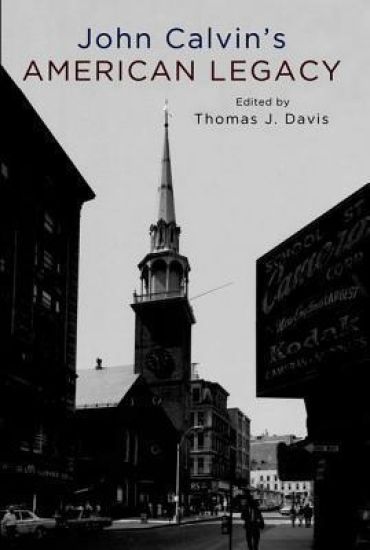
John Calvin's American Legacy explores the ways Calvin and the Calvinist tradition have influenced American life. Though there are books that trace the role Calvin and Calvinism have played in the national narrative, they tend to focus, as books, on particular topics and time periods. This work, divided into three sections, is the first to present studies that, taken together, represent the breadth of Calvinism's impact in the United States. In addition, each section moves chronologically, ranging from colonial times to the twenty-first century. After a brief introduction focused on the life of Calvin and some of the problems involved in how he is viewed and studied, the volume moves into the first section - "Calvin, Calvinism, and American Society " - which looks at the economics of the Colonial period, Calvin and the American identity, and the evidence for Calvin's influence on American democracy. The book's second section examines theology, addressing the relationship between Jonathan Edwards's church practice and Calvin's, the Calvinist theological tradition in the nineteenth century, how Calvin came to be understood in the historiography of Williston Walker and Perry Miller, and Calvin's influence on some of the theologies of the twentieth century. The third section, ¨John Calvin, Calvinism, and American Letters,¨ looks at Calvinism's influence on such writers as Samson Occom, Harriet Beecher Stowe, Max Weber, Mark Twain, and John Updike. Altogether, this volume demonstrates the wide-ranging impact of Calvin's thinking throughout American history and society.

John Calvin's American Legacy explores the ways Calvin and the Calvinist tradition have influenced American life. Though there are books that trace the role Calvin and Calvinism have played in the national narrative, they tend to focus, as books, on particular topics and time periods. This work, divided into three sections, is the first to present studies that, taken together, represent the breadth of Calvinism's impact in the United States. In addition, each section moves chronologically, ranging from colonial times to the twenty-first century. After a brief introduction focused on the life of Calvin and some of the problems involved in how he is viewed and studied, the volume moves into the first section - ¨Calvin, Calvinism, and American Society¨ - which looks at the economics of the Colonial period, Calvin and the American identity, and the evidence for Calvin's influence on American democracy. The book's second section examines theology, addressing the relationship between Jonathan Edwards's church practice and Calvin's, the Calvinist theological tradition in the nineteenth century, how Calvin came to be understood in the historiography of Williston Walker and Perry Miller, and Calvin's influence on some of the theologies of the twentieth century. The third section, ¨John Calvin, Calvinism, and American Letters,¨ looks at Calvinism's influence on such writers as Samson Occom, Harriet Beecher Stowe, Max Weber, Mark Twain, and John Updike. Altogether, this volume demonstrates the wide-ranging impact of Calvin's thinking throughout American history and society.
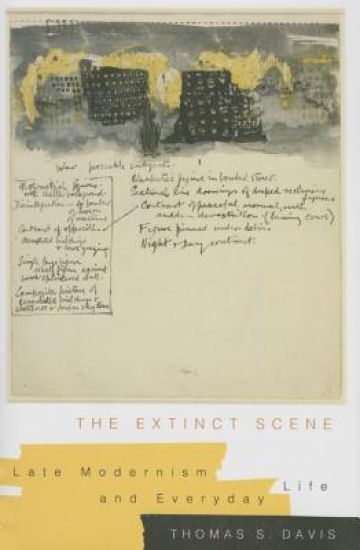
In 1935, the English writer Stephen Spender wrote that the historical pressures of his era should "turn the reader's and writer's attention outwards from himself to the world." Combining historical, formalist, and archival approaches, Thomas S. Davis examines late modernism's decisive turn toward everyday life, locating in the heightened scrutiny of details, textures, and experiences an intimate attempt to conceptualize geopolitical disorder. The Extinct Scene reads a range of mid-century texts, films, and phenomena that reflect the decline of the British Empire and seismic shifts in the global political order. Davis follows the rise of documentary film culture and the British Documentary Film Movement, especially the work of John Grierson, Humphrey Jennings, and Basil Wright. He then considers the influence of late modernist periodical culture on social attitudes and customs, and presents original analyses of novels by Virginia Woolf, Christopher Isherwood, and Colin MacInnes; the interwar travel narratives of W. H. Auden, Christopher Isherwood, and George Orwell; the wartime gothic fiction of Elizabeth Bowen; the poetry of H. D.; the sketches of Henry Moore; and the postimperial Anglophone Caribbean works of Vic Reid, Sam Selvon, and George Lamming. By considering this group of writers and artists, Davis recasts late modernism as an art of scale: by detailing the particulars of everyday life, these figures could better project large-scale geopolitical events and crises.
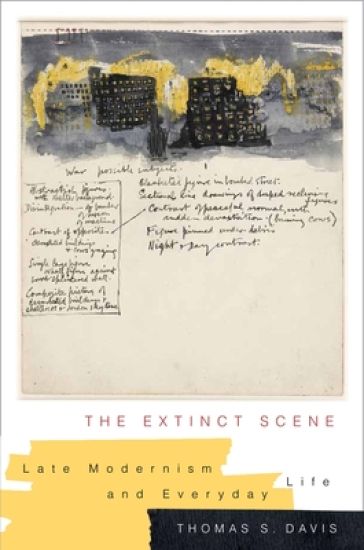
In 1935, the English writer Stephen Spender wrote that the historical pressures of his era should "turn the reader's and writer's attention outwards from himself to the world." Combining historical, formalist, and archival approaches, Thomas S. Davis examines late modernism's decisive turn toward everyday life, locating in the heightened scrutiny of details, textures, and experiences an intimate attempt to conceptualize geopolitical disorder.The Extinct Scene reads a range of mid-century texts, films, and phenomena that reflect the decline of the British Empire and seismic shifts in the global political order. Davis follows the rise of documentary film culture and the British Documentary Film Movement, especially the work of John Grierson, Humphrey Jennings, and Basil Wright. He then considers the influence of late modernist periodical culture on social attitudes and customs, and presents original analyses of novels by Virginia Woolf, Christopher Isherwood, and Colin MacInnes; the interwar travel narratives of W. H. Auden, Christopher Isherwood, and George Orwell; the wartime gothic fiction of Elizabeth Bowen; the poetry of H. D.; the sketches of Henry Moore; and the postimperial Anglophone Caribbean works of Vic Reid, Sam Selvon, and George Lamming. By considering this group of writers and artists, Davis recasts late modernism as an art of scale: by detailing the particulars of everyday life, these figures could better project large-scale geopolitical events and crises.

It's been 10 years since the unprovoked Arez attack on Lhasa Space Colony. The war between humanity and the Arez is in full swing with no end in sight. Countless heroes have been struck down by the alien hordes. The orbital cannon on the moon of Titan is the only thing keeping the Arez armada from penetrating further into Terran space.The courageous Captain Jake Takeda has been dispatched to Titan along with the rest of his elite Strike Team. Their mission is to defend the orbital cannon from the viscous Arez ground forces stationed on the exotic moon and to defeat their cruel leader. The dreaded general known only as The Crimson Death.

Are you pleasing God or pleasing man? One leads to an abundant Spirit-filled life, while the other leads to a lonely life without the direction of Jesus Christ. Pastor Thomas E. Davis, Jr., of Wheeler Chapel, Church in Courtland, Alabama, shows you how to live a life well pleasing to God so that He will never leave you alone.

Sustaining the Forest, the People, and the Spirit
Thomas Davis
State University of New York Press
2000
pokkari
Sustaining the Forest, the People, and the Spirit tells the story of the Menominee Indian Tribe and how they have sustained their 230,000 acre forest in ways that have enhanced, rather than degraded, the environment in the face of development pressures. Through a careful look at Menominee history, politics, institutions, economy, culture, spirituality, science, and technology, Thomas Davis provides insight into how this case study of sustainable environmental development can offer a rough road map for other communities to follow.



Mythos of the Door contains lyric and narrative poems that explore the underlying spirit of Door County, Wisconsin. Millions of visitors come to the Door every year because of its miles of shoreline, art galleries, indoor and outdoor live theaters, musicians and music venues, nightlife, sailing, fishing, golf, small shops, and bookstores. Once in the county they visit small villages and the city of Sturgeon Bay. What they do not always see beyond dolostone cliffs, the waters of Lake Michigan, Green Bay, Sturgeon Bay, or inland lakes, the forests, or the wonder of the state parks are the stories that go back to when American Indians, the first French fur traders, the sailors of sailing or steamships, or those that first planted the magnificent cherry orchards created a mythos woven into the natural beauty of a magic peninsula.metapA mythos is a myth or mythology, a traditional theme or plot structure, or a set of beliefs of assumptions. Poetry, at its very best, is an exploration. In this book, story poems are interwoven with lyric sonnets and a wide range of other forms of mostly traditional verse forms to explore the mythos of the door from the wild waters of Death's Door between Washington Island and Gill's Rock at the tip of the peninsula. In doing so, the book as whole looks past the surface of the stories and the characters of the Door and explores the meaning of what we all are, living inside our multitude of histories, as human beings.The stories told with meter and rhyme range from that of a Potawatomi woman confronting a wolf with pale, green eyes frightened away from here by a large black bear to the classic Christmas story when an immigrant man and his daughter try to cross a frozen Death's Door just before Christmas during a year when Lake Superior has frozen over and confronted by ominous cracks in the ice. Potawatomi and fur traders come into contact, sailors try to survive furious storms, and an old man at Christmas miraculously works his way out of a deep depression caused by his wife's death when he sees two ravens and snow geese during a winter storm. The sheer beauty of lyric poetry describing magic moments can be found too, as well the life of stone sculptures of women "Staring intently out of bronze, pewter, metallic blue, and silver/At the nothingness of everything." This is old fashioned poetry in an age where rhyme and meter has gone out of style, but it recalls the magic of poetry that has enchanted generations upon generations of readers from the time when Beowulf was first written down on a page into our contemporary world.

In the El Malpais wilderness of New Mexico, Juniper Window lives in a cave in a deep collapse that his father has built into a home. They live a strange existence where the witch of the El Malpais stands in large Ponderosa pine trees on nights of the full moon and haunts a stark landscape of lava flows, cinder cones, caldera sunk into the earth, lava tube caves, and sandstone bluffs.One night, after a depressing day at school, Juniper confronts the beautiful witch in her tree, and she chases him until he finally escapes down a lava tube that branches into other lava tubes deep in the earth. He finally reaches a great cavern with an underground river. There he sees "great lizards moving in darkness. Tongues flickered in and out of huge mouths with rows of razor-sharp teeth." When the largest of the lizards notices him, Juniper hears a voice in his head that tells him to follow to where a lava tube leads to the surface. Juniper is hesitant, but what other choice does he have? He could never follow the maze of tubes he'd scrambled down before he found the great cavern. When, poised above the cavern in front of the lava tube he has been led to, he speaks out loud to the great lizard, the lizard informs him that it not a lizard but a dragon.Thus starts an adventure that is partly a love story, partly a tale of madness in a world filled with the violence and problems confronting contemporary society, including drug use, and partly a story of healing, family, and redemption. Poetic prose sings as events sweep over the wild landscape of the El Malpais and Ramah, New Mexico and dragons and human hurtle toward a climax that promises enormous changes in a world that has no idea of what is about to happen. As the powerful adventure continues, the dragons discover their heritage as great dragons who have been driven to the cavern beneath El Malpais to avoid extinction, Lily, a Navajo girl that Juniper falls in love with, finds a way to heal her Grandfather of his alcoholism, and Juniper, his father, and his mother at last put the past behind them on a hill beside Four Windows Caves as the dark sky on a Christmas night is filled with the flight of dragons.

On the exotic alien world of Samael, Princess Adeola M'falme has finally healed from the wounds she suffered at the hands of the humans. But her soul has still not healed from the loss of her mother. She embarks on a journey to find herself and assert her independence from the royal family. Her quest leads her to a hermit who has created a mysterious martial art. When someone she loves is imprisoned for a crime they did not commit she will have to use what she has learned to save them in a trial by combat. New challenges and adversaries await Adeola as she is pulled into the political machinations and adventure.



This fascinating and research-led textbook gives students the facts and the tools they need to engage critically with the psychological dimension of the criminal justice system. Accessibly written and packed with the latest psychological research, Forensic Psychology: Fact and Fiction is an engaging and wide-ranging exploration of both foundational and contemporary issues. The book prepares students to weigh up evidence and arguments, and reach their own conclusions about the issues and questions that have led them to study forensic psychology.Forensic Psychology: Fact and Fiction gives students all they need to get to grips with debates about the link between mental fitness and criminal responsibility, the purposes and effectiveness of punishment, and the use of police force, and others. It places psychology at its heart, combining research with legal perspectives to give the full picture. Drawing on global research and examples, students are given insights into what differs and what remains the same across jurisdictions and borders. Real-life case studies illustrate forensic concepts, allowing students to see how psychology is applied to criminal behaviour and the response of society to it. This comprehensive introduction is ideal for undergraduate students taking a course in forensic psychology. Balancing clarity and rigor, the book takes the student on a journey from the fundamental concepts through to the application of psychology to forensic techniques.Accompanying online resources for this title can be found at bloomsburyonlineresources.com/davis-forensic-psychology. These resources are designed to support teaching and learning when using this textbook and are available at no extra cost.
Irish Nation: Development and Cultural History
Thomas Davis
Createspace Independent Publishing Platform
2016
nidottu