
Kirjahaku
Etsi kirjoja tekijän nimen, kirjan nimen tai ISBN:n perusteella.
9 kirjaa tekijältä Thomas Fahy

The Writing Dead features original interviews with the writers of today’s most frightening and fascinating shows. They include some of television’s biggest names—Carlton Cuse (Lost and Bates Motel), Bryan Fuller (Hannibal, Dead Like Me, Wonderfalls, and Pushing Daisies), David Greenwalt (Angel and Grimm), Gale Anne Hurd (The Walking Dead, The Terminator series,Aliens, and The Abyss), Jane Espenson (Buffy the Vampire Slayer and Battlestar Galactica), Brian McGreevy (Hemlock Grove), Alexander Woo (True Blood), James Wong (The X-Files, Millennium, American Horror Story, and Final Destination), Frank Spotnitz (The X-Files and Millennium), Richard Hatem (Supernatural, The Dead Zone, and The Mothman Prophecies), Scott Buck (Dexter), Anna Fricke (Being Human), and Jim Dunn (Haven).The Writing Dead features thought-provoking, never-before-published interviews with these top writers and gives the creators an opportunity to delve more deeply into the subject of television horror than anything found online. In addition to revealing behind-the-scene glimpses, these writers discuss favorite characters and storylines and talk about what they find most frightening. They offer insights into the writing process reflecting on the scary works that influenced their careers. And they reveal their own personal fascinations with the genre.The thirteen interviews in The Writing Dead also mirror the changing landscape of horror on TV—from the shows produced by major networks and cable channels to shows made exclusively for online streaming services such as Netflix and Amazon Studios. The Writing Dead will appeal to numerous fans of these shows, to horror fans, to aspiring writers and filmmakers, and to anyone who wants to learn more about why we like being scared.
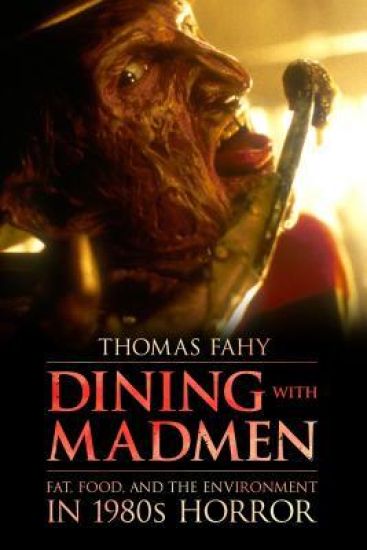
In Dining with Madmen: Fat, Food, and the Environment in 1980s Horror, author Thomas Fahy explores America's preoccupation with body weight, processed foods, and pollution through the lens of horror. Conspicuous consumption may have communicated success in the eighties, but only if it did not become visible on the body. American society had come to view fatness as a horrifying transformation—it exposed the potential harm of junk food, gave life to the promises of workout and diet culture, and represented the country's worst consumer impulses, inviting questions about the personal and environmental consequences of excess.While changing into a vampire or a zombie often represented widespread fears about addiction and overeating, it also played into concerns about pollution. Ozone depletion, acid rain, and toxic waste already demonstrated the irrevocable harm being done to the planet. The horror genre—from A Nightmare on Elm Street to American Psycho—responded by presenting this damage as an urgent problem, and, through the sudden violence of killers, vampires, and zombies, it depicted the consequences of inaction as terrifying.Whether through Hannibal Lecter's cannibalism, a vampire's thirst for blood in The Queen of the Damned and The Lost Boys, or an overwhelming number of zombies in George Romero's Day of the Dead, 1980s horror uses out-of-control hunger to capture deep-seated concerns about the physical and material consequences of unchecked consumption. Its presentation of American appetites resonated powerfully for audiences preoccupied with body size, food choices, and pollution. And its use of bodily change, alongside the bloodlust of killers and the desolate landscapes of apocalyptic fiction, demanded a recognition of the potentially horrifying impact of consumerism on nature, society, and the self.

In Dining with Madmen: Fat, Food, and the Environment in 1980s Horror, author Thomas Fahy explores America's preoccupation with body weight, processed foods, and pollution through the lens of horror. Conspicuous consumption may have communicated success in the eighties, but only if it did not become visible on the body. American society had come to view fatness as a horrifying transformation—it exposed the potential harm of junk food, gave life to the promises of workout and diet culture, and represented the country's worst consumer impulses, inviting questions about the personal and environmental consequences of excess.While changing into a vampire or a zombie often represented widespread fears about addiction and overeating, it also played into concerns about pollution. Ozone depletion, acid rain, and toxic waste already demonstrated the irrevocable harm being done to the planet. The horror genre—from A Nightmare on Elm Street to American Psycho—responded by presenting this damage as an urgent problem, and, through the sudden violence of killers, vampires, and zombies, it depicted the consequences of inaction as terrifying.Whether through Hannibal Lecter's cannibalism, a vampire's thirst for blood in The Queen of the Damned and The Lost Boys, or an overwhelming number of zombies in George Romero's Day of the Dead, 1980s horror uses out-of-control hunger to capture deep-seated concerns about the physical and material consequences of unchecked consumption. Its presentation of American appetites resonated powerfully for audiences preoccupied with body size, food choices, and pollution. And its use of bodily change, alongside the bloodlust of killers and the desolate landscapes of apocalyptic fiction, demanded a recognition of the potentially horrifying impact of consumerism on nature, society, and the self.

Truman Capote--along with his most famous works In Cold Blood and Breakfast at Tiffany's--continues to have a powerful hold over the American popular imagination. His glamorous lifestyle, which included hobnobbing with the rich and famous and frequenting the most elite nightclubs in Manhattan, makes him the subject of ongoing interest for public and academic audiences alike. In Understanding Truman Capote, Thomas Fahy provides a new direction for Capote studies that offers a way to reconsider the author's work. By reading Capote's work in its historical context, Fahy reveals the politics shaping his writing and refutes any notion of Capote as disconnected from the political. Instead this study positions him as a writer deeply engaged with the social anxieties of the 1940s and 1950s. Understanding Truman Capote also applies a highly interdisciplinary framework to the author's writing that includes discussions of McCarthyism, the Lavender Scare, automobile culture, juvenile delinquency, suburbia, Beat culture, the early civil rights movement, female sexuality as embodied by celebrities such as Marilyn Monroe, and atomic age anxieties. This new approach to Capote studies will be of interest in the fields of literature, history, film, suburban studies, sociology, gender/sexuality studies, African American literary studies, and American and cultural studies.Capote's writing captures the isolation, marginalization, and persecution of those who deviated from or failed to achieve white middle-class ideals and highlights the artificiality of mainstream idealizations about American culture. His work reveals the deleterious consequences of nostalgia, the insidious impact of suppression, the dangers of Cold War propaganda, and the importance of equal rights. Ultimately Capote's writing reflects a critical engagement with American culture that challenges us to rethink our understanding of the 1940s and 1950s.

The Writing Dead features original interviews with the writers of today's most frightening and fascinating shows. They include some of television's biggest names--Carlton Cuse (Lost and Bates Motel), Bryan Fuller (Hannibal, Dead Like Me, Wonderfalls, and Pushing Daisies), David Greenwalt (Angel and Grimm), Gale Anne Hurd (The Walking Dead, The Terminator series,Aliens, and The Abyss), Jane Espenson (Buffy the Vampire Slayer and Battlestar Galactica), Brian McGreevy (Hemlock Grove), Alexander Woo (True Blood), James Wong (The X-Files, Millennium, American Horror Story, and Final Destination), Frank Spotnitz (The X-Files and Millennium), Richard Hatem (Supernatural, The Dead Zone, and The Mothman Prophecies), Scott Buck (Dexter), Anna Fricke (Being Human), and Jim Dunn (Haven).The Writing Dead features thought-provoking, never-before-published interviews with these top writers and gives the creators an opportunity to delve more deeply into the subject of television horror than anything found online. In addition to revealing behind-the-scene glimpses, these writers discuss favorite characters and storylines and talk about what they find most frightening. They offer insights into the writing process reflecting on the scary works that influenced their careers. And they reveal their own personal fascinations with the genre.The thirteen interviews in The Writing Dead also mirror the changing landscape of horror on TV--from the shows produced by major networks and cable channels to shows made exclusively for online streaming services such as Netflix and Amazon Studios. The Writing Dead will appeal to numerous fans of these shows, to horror fans, to aspiring writers and filmmakers, and to anyone who wants to learn more about why we like being scared.

Truman Capote--along with his most famous works In Cold Blood and Breakfast at Tiffany's--continues to have a powerful hold over the American popular imagination. His glamorous lifestyle, which included hobnobbing with the rich and famous and frequenting the most elite nightclubs in Manhattan, makes him the subject of ongoing interest for public and academic audiences alike. In Understanding Truman Capote, Thomas Fahy provides a new direction for Capote studies that offers a way to reconsider the author's place in literary criticism, the canon, and the classroom.By reading Capote's work in its historical context, Fahy reveals the politics shaping his writing and refutes any notion of Capote as disconnected from the political. Instead this study positions him as a writer deeply engaged with the social anxieties of the 1940s and 1950s. Understanding Truman Capote also applies a highly interdisciplinary framework to the author's writing that includes discussions of McCarthyism, the Lavender Scare, automobile culture, juvenile delinquency, suburbia, Beat culture, the early civil rights movement, female sexuality as embodied by celebrities such as Marilyn Monroe, and atomic age anxieties. This new approach to Capote studies will be of interest in the fields of literature, history, film, suburban studies, sociology, gender/sexuality studies, African American literary studies, and American and cultural studies.Capote's writing captures the isolation, marginalization, and persecution of those who deviated from or failed to achieve white middle-class ideals and highlights the artificiality of mainstream idealizations about American culture. His work reveals the deleterious consequences of nostalgia, the insidious impact of suppression, the dangers of Cold War propaganda, and the importance of equal rights. Ultimately Capote's writing reflects a critical engagement with American culture that challenges us to rethink our understanding of the 1940s and 1950s.

Winner of the Pulitzer Prize in drama as well as Tony Awards for best play and best actor, Tracy Letts has emerged as one of the greatest playwrights of the twenty-first century.Understanding Tracy Letts, the first book dedicated to his writing, is an introduction to his plays and an invitation to engage more deeply with his work--both for its emotional power and cultural commentary.Experiencing a Tracy Letts play often feels akin to reading a Cormac McCarthy novel, watching a Cohen Brothers film, and seeing an episode of Breaking Bad at the same time. His characters can be ruthlessly cruel and funny, selfish and generous, delusional and incisive, and deceptive and painfully honest. They keep secrets. They harbor biases and misconceptions. And in their quest to find love and understanding, they often end up being the greatest impediments to their own happiness. As a writer, Letts can move seamlessly from the milieu of a Texas trailer park to the pulsating nightlife of London's countercultural scene, the stifling quiet of small-town Ohio to the racial tensions of urban Chicago. He thrives in the one-act format, in plays like Mary Page Marlow and The Minutes, as well as the epic scope of August: Osage County and Linda Vista. With a musician's sense of timing, Letts shifts between humor and heartache, silence and sound, and the mundane and the poetic. And he fearlessly tackles issues such as gender bias, racism, homophobia, and disability rights. Contemporary American life thus becomes a way to comment on the country's troubled history from Native American genocide to the civil rights movement. The personal narratives of his characters become gateways to the political.Understanding Tracy Letts celebrates the range of Letts's writing, in part, by applying different critical approaches to his works. Whether through the lens of disability studies, the conspiracy genre, food studies, the feminist politics of quilting, or masculinity studies, these readings help bring out the thematic richness and sociopolitical dimensions of Letts's work.

Winner of the Pulitzer Prize in drama as well as Tony Awards for best play and best actor, Tracy Letts has emerged as one of the greatest playwrights of the twenty-first century.Understanding Tracy Letts, the first book dedicated to his writing, is an introduction to his plays and an invitation to engage more deeply with his work--both for its emotional power and cultural commentary.Experiencing a Tracy Letts play often feels akin to reading a Cormac McCarthy novel, watching a Cohen Brothers film, and seeing an episode of Breaking Bad at the same time. His characters can be ruthlessly cruel and funny, selfish and generous, delusional and incisive, and deceptive and painfully honest. They keep secrets. They harbor biases and misconceptions. And in their quest to find love and understanding, they often end up being the greatest impediments to their own happiness. As a writer, Letts can move seamlessly from the milieu of a Texas trailer park to the pulsating nightlife of London's countercultural scene, the stifling quiet of small-town Ohio to the racial tensions of urban Chicago. He thrives in the one-act format, in plays like Mary Page Marlow and The Minutes, as well as the epic scope of August: Osage County and Linda Vista. With a musician's sense of timing, Letts shifts between humor and heartache, silence and sound, and the mundane and the poetic. And he fearlessly tackles issues such as gender bias, racism, homophobia, and disability rights. Contemporary American life thus becomes a way to comment on the country's troubled history from Native American genocide to the civil rights movement. The personal narratives of his characters become gateways to the political.Understanding Tracy Letts celebrates the range of Letts's writing, in part, by applying different critical approaches to his works. Whether through the lens of disability studies, the conspiracy genre, food studies, the feminist politics of quilting, or masculinity studies, these readings help bring out the thematic richness and sociopolitical dimensions of Letts's work.