Kirjojen hintavertailu. Mukana 11 605 337 kirjaa ja 12 kauppaa.

Kirjahaku

Etsi kirjoja tekijän nimen, kirjan nimen tai ISBN:n perusteella.

24 kirjaa tekijältä Thomas Fleming

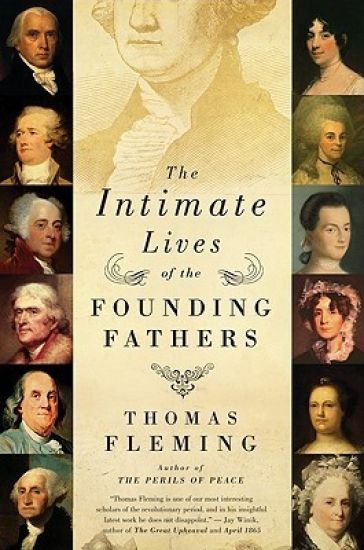
The Intimate Lives of the Founding Fathers

The Intimate Lives of the Founding Fathers

Thomas Fleming

HARPER PERENNIAL
2010
nidottu
In The Intimate Lives of the Founding Fathers from Smithsonian Books, historian Thomas Fleming, author of The Perils of Peace, offers a fresh look at the critical role of women in the lives of Washington, Franklin, Adams, Jefferson, Hamilton, and Madison. Fleming nimbly takes readers through a great deal of early American history, as our founding fathers struggle to reconcile the private and public-and often deal with a media every bit as gossip-seeking and inflammatory as ours today.
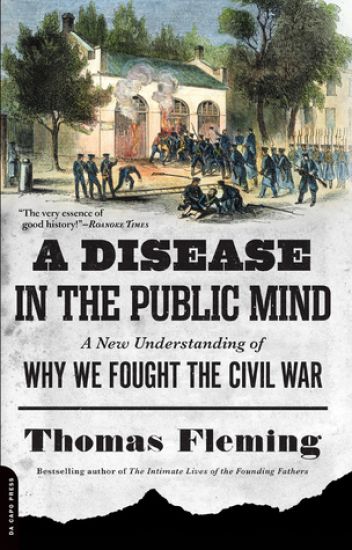
A Disease in the Public Mind

A Disease in the Public Mind

Thomas Fleming

Da Capo Press Inc
2014
pokkari
In this riveting, character-driven history, one of our most respected historians traces the diseases in the public mind- the distortions of reality- that destroyed George Washington's vision of a united America and inflicted the tragedy that still divide's the nation's soul.
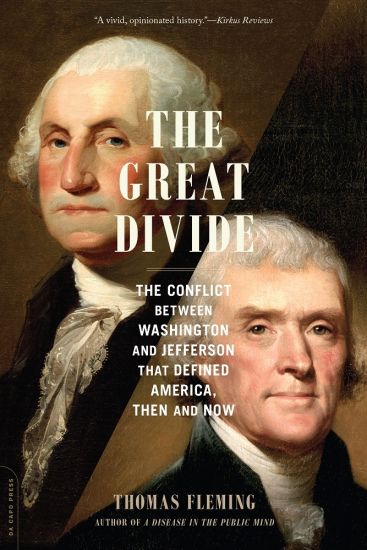
The Great Divide

The Great Divide

Thomas Fleming

Da Capo Press Inc
2016
pokkari
A conflict between George Washington and Thomas Jefferson? Most Americans are unaware of this historical reality. History tends to cast the early years of America in a glow of camaraderie, but there were many conflicts between the Founding Fathers- and none more important than the clash between Washington and Jefferson. In The Great Divide , acclaimed historian Thomas Fleming examines how the differing temperaments and leadership styles of Washington and Jefferson shaped two opposing views of the presidency and the nation, and how this rift profoundly influenced the next two centuries of America's history and resonates to the present day.
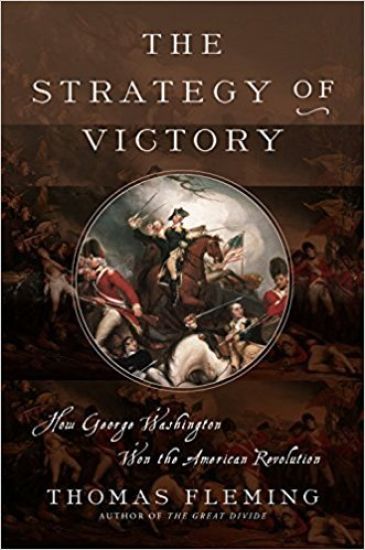
The Strategy of Victory

The Strategy of Victory

Thomas Fleming

Da Capo Press Inc
2017
sidottu
Led by the Continental Congress, the Americans almost lost their war for independence because their military thinking was badly muddled. The embryo nation narrowly escaped from the disastrous results of these misconceptions thanks to the levelheaded intelligence of one man: General George Washington.Following the flush of small victories in 1775, patriot leaders were convinced that the key to victory was the homegrown militia--local men defending their families and homes. Washington knew that having and maintaining an army of regular professional soldiers was the only way to win independence. He fought bitterly with the leaders in Congress over the creation of a regular army. In the end, he and his army prevailed.In Strategy of Victory, prolific historian Thomas Fleming examines the battles that created American independence, revealing how the strategy of a professional army, backed by a corps of citizen soldiers determined to fight for their freedom, worked on the battlefield, securing victory, independence and a lasting peace for the young nation.
New Jersey

New Jersey

Thomas Fleming

WW Norton Co
1984
nidottu
Ethnic diversity made New Jersey an early testing ground for the melting pot, as Yankees, Irish, Italians, and blacks strove for a chance at the good life. To many, that meant a job in the factories that made the state an industrial pioneer; to others, it meant life on the farms that made New Jersey truly the "Garden State."Mr. Fleming concludes that today New Jersey may be in the vanguard of a new American way of life, "the first metropolitan state with equally convenient access to cities and to countryside." He foresees an "equally-oriented New Jersey, honestly and efficiently governed," reminding the nation that divisiveness and acrimony can have more than one outcome. After all, New Jerseyites may have voted repeatedly for the "Boss of Bosses," Frank Hague, but they also once chose as their governor a Princeton professor named Woodrow Wilson.
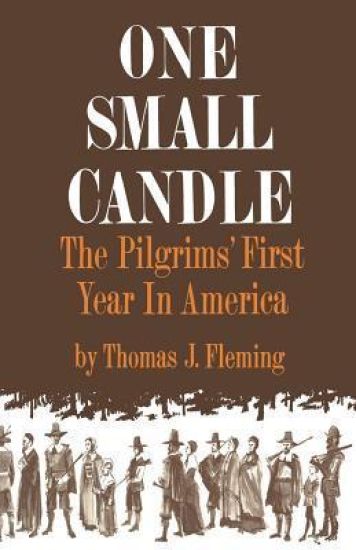
One Small Candle

One Small Candle

Thomas Fleming

WW Norton Co
2012
nidottu
But the story is by no means entirely grim and solemn. Young explorers get lost in the woods and climb trees to escape "roaring lions." There is a comic duel for the hand of a headstrong fifteen-year-old. We are present at a bizarre visit to the great Indian chief, Massasoit. With masterly skill, Mr. Fleming gives us life-size portraits of the Pilgrim leaders. The Pilgrims' unique achievements--the Mayflower Compact, their tolerance for other faiths, the strict separation of church and state--are discussed in the context of the first year's anxieties and crises. Special attention is given to the younger men who emerged in this first year as the real leaders of the colony--William Bradford and Miles Standish. And new insights are provided into the deep humanity and tolerance of the Pilgrims' spiritual shepherd, Elder William Brewster. On the first Thanksgiving, there is already in the Pilgrim mind a dawning consciousness that they are the forerunners of a great nation. It is implicit in William Bradford's words "As one small candle may light a thousand, so the light kindled here has shone unto many...."
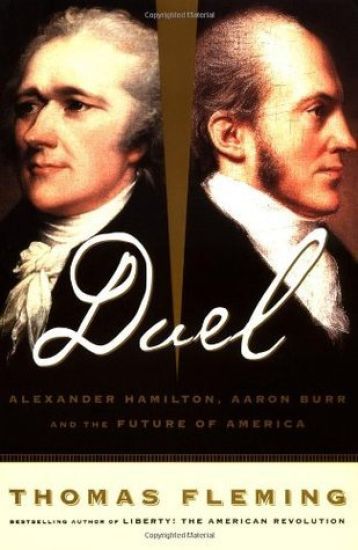
Duel

Duel

Thomas Fleming

Basic Books
2000
pokkari
All school children know the story of the fatal duel between Hamilton and Burr - but do they really? In this remarkable retelling, Thomas Fleming takes the reader into the post-revolutionary world of 1804, a chaotic and fragile time in the young country as well as a time of tremendous global instability.The success of the French Revolution and the proclamation of Napoleon as First Consul for Life had enormous impact on men like Hamilton and Burr, feeding their own political fantasies at a time of perceived Federal government weakness and corrosion. Their hunger for fame spawned antagonisms that wreaked havoc on themselves and their families and threatened to destabilize the fragile young American republic. From that poisonous brew came the tangle of regret and anger and ambition that drove the two to their murderous confrontation in Weehawken, New Jersey.Readers will find this is popular narrative history at its most authoritative, and authoritative history at its most readable.
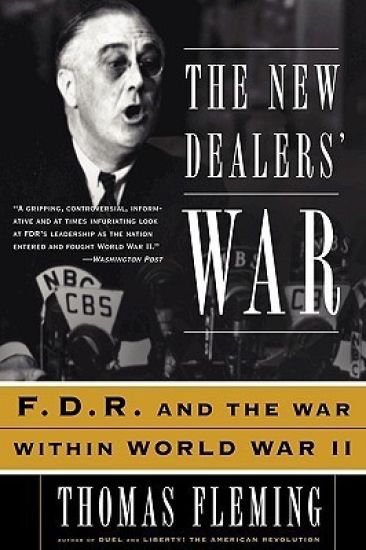
The New Dealers' War

The New Dealers' War

Thomas Fleming

Basic Books
2002
pokkari
Acclaimed historian Thomas Fleming brings to life a flawed and troubled FDR struggling to manage World War II. Starting with the leak to the press of Roosevelt's famous Rainbow Plan, then spiraling back to FDR's inept prewar diplomacy with Japan and his various attempts to lure Japan into an attack on the U.S. Fleet in the Pacific, Fleming takes the reader on a journey through the incredibly fractious struggles and debates that went on in Washington, the nation, and the world as the New Dealers strove to impose their will on the conduct of the War. In bold contrast to the familiar, idealized FDR of other biographies, Fleming's Roosevelt is a man in remorseless decline, battered by ideological forces and primitive hatreds that he could not handleand frequently failed to understandsome of them leading to unimaginable catastrophe. Among FDR's most dismaying policies, Fleming argues, is his insistence on "unconditional surrender" for Germany (a policy that perhaps prolonged the war by as much as two years, leaving millions more dead) and his often-uncritical embrace of and acquiescence to Stalin and the Soviets as an ally. The New Dealers' War is one of those rare books that force readers to rethink what they think they know about a pivotal event in the American past.
The Illusion Of Victory

The Illusion Of Victory

Thomas Fleming

Basic Books
2004
pokkari
In this sweeping historical canvas, Thomas Fleming undertakes nothing less than a drastic revision of our experience in World War I. He reveals how the British and French duped Wilson into thinking the war was as good as won, and there would be no need to send an army overseas. He describes a harried president making speech after speech proclaiming America's ideals while supporting espionage and sedition acts that sent critics to federal prisons. And he gives a harrowing account of how the Allies did their utmost to turn the American Expeditionary Force into cannon fodder on the Western Front.Thoroughly researched and dramatically told, The Illusion of Victory offers compelling testimony to the power of a president's visionary ideals-as well as a starkly cautionary tale about the dangers of applying them in a war-maddened world.
The First Stroke

The First Stroke

Thomas Fleming

University Press of the Pacific
2005
pokkari
CONTENTS Gunfire at Dawn A Struggle to Unite Brinkmanship in Massachusetts March to Lexington The Capture of Concord Challenge at the Bridge The Road to Inevitable Destruction "A New and More Terrific Scene" The Battle of Menotomy An Image of Free Men
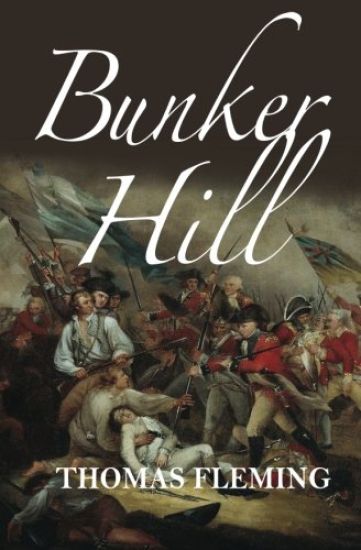
Bunker Hill

Bunker Hill

Thomas Fleming

Createspace Independent Publishing Platform
2016
nidottu
"Written with skill and suspense, it is an inspiring story that Americans can read with pride." - Chicago Tribune Here, from New York Times bestselling author Thomas Fleming, is the story of that June day in 1775 that made the American Revolution inevitable. Bunker Hill brings alive the stories of the men on both sides who fought on these steep slopes in the blazing heat of June and dispels the myths and distortions which have long clouded the battle. It shows how closely and tragically intertwined were the lives of these men who from this day would call themselves either British or American. The brother of General William Howe, the British commander, had died in Colonel Israel Putnam's arms near Fort Ticonderoga. Colonel William Prescott had fought beside General William Howe at the siege of Louisburg and had been offered a commission in the Royal Army for his valor. Now, only fifteen years after their joint victories as comrades in arms, Prescott and Putnam steadied their raw American troops with harsh advice to withhold their fire on the advancing British ranks until "you can see their buttons," or "the whites of their eyes." After the British forces came ashore, the battle opened with a deftly launched flanking movement by the British right. John Stark arrived with his New Hampshire men in time to predict the point at which Howe would first attack and to seal that gap with British dead - "I never saw sheep lie as thick in the fold." Howe did not pause to maneuver but assaulted the American fortifications along the whole front. The young farmers did not give way, and the British reeled back. "There was a moment," Howe, a veteran and victor of many battles against the French in Europe and North America, recalled later, "that I never felt before." But the British doggedly advanced again up the murderous hill in the ninety-degree heat. The forces that impelled these men to that terrible moment of battle and the courage of both sides are the powerful substance of Bunker Hill.
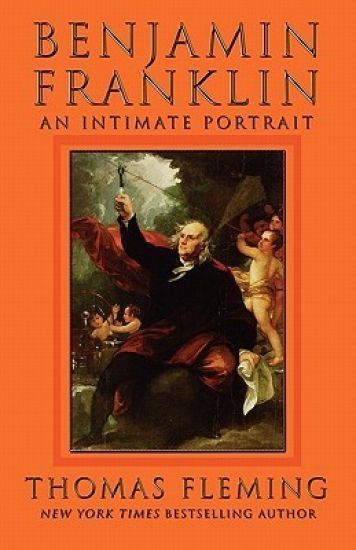
Benjamin Franklin

Benjamin Franklin

Thomas Fleming

Milk and Cookies Press
2005
nidottu
For many people, Benjamin Franklin remains a puzzling figure in American history. This book tells Franklin's absorbing life story. In lively and informal style, Thomas Fleming presents a well-rounded account of probably the most versatile and accomplished man of his time-his boyhood in Boston ...his career as a newspaperman and writer ...his scientific pursuits and inventions ...his years as statesman and diplomat ...through his still productive old age until his death at 84. In Benjamin Franklin, Fleming not only gives a perceptive portrait of an extraordinary man, but he provides a rare glimpse into the forces that shaped the birth of a new nation.
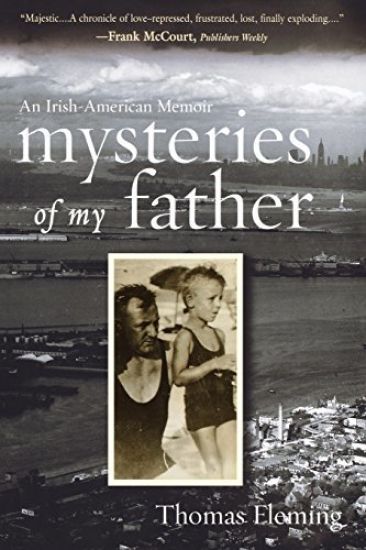
Mysteries of My Father

Mysteries of My Father

Thomas Fleming

Wiley
2005
pokkari
A son comes of age in a fiercely political world "Thomas Fleming gives us an unforgettable story about an immigrant family--his family--as it struggles to find a place in the American century. He shares with us the dreams and heartaches of his parents, and, in the end, he reminds us of the mysterious and forgiving power of love." --Terry Golway, author of The Irish in America "A truly moving story of a lifelong duel between father and son, Mysteries of My Father also vibrates with the great good humor that grows out of ward politics, and pulses with the heartfelt drama of a family just getting by. There were some bad times in the Fleming family story, but Tom Fleming prevails to the good times, and the best time is left to the reader. What a wonderful time I had reading this book." --Dennis Smith, author of the Report from Engine Co. 82 and Report from Ground Zero "A well-written, fascinating political history." --Margaret Truman, author of Murder at Union Station "With a historian's fidelity and a poet's empathy, Tom Fleming has created a textured study of three generations of Irish-Americans, whose clashing spiritual values inform their integration into New Jersey's social and political hierarchy. Mysteries of My Father is an American classic achieved by a master storyteller's talents for exploring the tensions and bonds between a father and his sons. Among the literary wonders of this brisk and moving memoir is the father's emergence as a seminal American character--brusque and pragmatic, yet capable of expected tenderness to his sons." --Sidney Offit, author of Memoir of the Bookie's Son "If you care about what it means to be an Irish-American, or about New Jersey political history, or about the relationships between fathers and sons, or about wonderful writing, run--don't walk--out to buy Tom Fleming's Mysteries of My Father." --Nick Acocella, publisher of Politifax