Kirjojen hintavertailu. Mukana 11 244 527 kirjaa ja 12 kauppaa.

Kirjahaku

Etsi kirjoja tekijän nimen, kirjan nimen tai ISBN:n perusteella.

12 kirjaa tekijältä Thomas Forrest Kelly

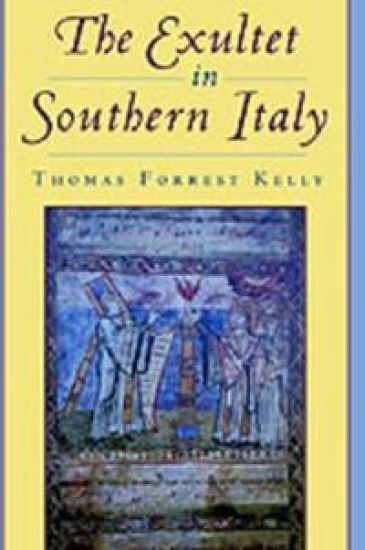
The Exultet in Southern Italy

The Exultet in Southern Italy

Thomas Forrest Kelly

Oxford University Press Inc
1997
sidottu
The Exultet rolls of southern Italy are parchment scrolls containing text and music for the blessing of the great Easter candle; they contain magnificent illustrations, often turned upside down with respect to the text so that they can be seen by observers. The Exultet in Southern Italy provides a broad perspective on this phenomenon that has long attracted the interest of those interested in medieval art, liturgy, and music. This book considers these documents in the cultural and liturgical context in which they were made, and provides a perspective on all aspects of this particularly southern Italian practice. While previous art-historical studies have concentrated on the illustrations in these rolls, Kelly's book also looks at the particular place of the Exultet in changing ceremonial practices, provides background on the texts and music used in southern Italy, and inquires into the manufacture and purpose of the Exultets—why they were made, who owned them, and how they were used.
Melisma

Melisma

Thomas Forrest Kelly

OXFORD UNIVERSITY PRESS INC
2025
sidottu
In the written record of music in the West, there are many examples of long melodies sung to a single vowel with no other text; but in almost all cases that vowel is part of a syllable in a word, which in turn is part of a longer text; that text is interrupted--or prolonged--by the extension of its vowel to a greater or lesser extent by that string of notes. "Melisma" is the word we use to describe this series of notes. Medieval thinkers such as St. Augustine, St. Jerome, and many others speak of the ineffable joy that cannot be expressed in words when music passes beyond the realm of words into that of pure praise. Most often the word describes those long florid passages that occur in medieval liturgical song--especially in solo chants, and especially in the music designed for the schola, the experienced singers. This book is about the melisma as a phenomenon, how it works, how melismas appear when they are written in chant, and how they function as part of a text and as part of a song. Many scholars have dealt with this body of music, but this is the first book to treat it as a self-standing subject. Using the evidence of medieval creative minds, Thomas Forrest Kelly uncovers how melismas were heard, analyzed, and performed by medieval singers. He presents a vast assemblage of information: past studies are reviewed and analysed, and many medieval manuscripts are brought to bear through facsimiles. The chief investigative tool is the various sets of contemplative words that medieval creators added to melismas: careful study reveals that the words, and their patterning, their grouping, their accentuation, often reflect the poet's understanding of the underlying melisma. If we attend carefully to the surviving manuscript evidence, Kelly posits, we can hear those wordless flights of music in something like their original form. Contributing to a deeper understanding of how medieval scribes wrote music and how medieval singers understood and sang it, these insights influence our understanding of music in the largest sense.
Early Music

Early Music

Thomas Forrest Kelly

Oxford University Press Inc
2011
nidottu
The music of the medieval, Renaissance, and baroque periods have been repeatedly discarded and rediscovered ever since they were new. An interest in music of the past has been characteristic of a part of the musical world since the early 19th century. The revival of Gregorian chant in the early 19th century; the "Cecilian movement" in later 19th-century Germany seeking to immortalize Palestrina's music as a sound-ideal; Mendelssohn's revival of Bach: these are some of the efforts made in the past to restore still earlier music. In recent years this interest has taken on particular meaning, representing two specific trends: first, a rediscovery of little-known underappreciated repertories, and second, an effort to recover lost performing styles, with the conviction that such music will come to life anew with the right performance. Much has been gained in the 20th century from the study and revival of instruments, playing techniques, and repertories. In this VSI, Thomas Forrest Kelly frames chapters on the forms, techniques, and repertories practices of the medieval, Renaissance, and baroque periods with discussion of why old music has been and should be revived, as well as a short history of early music revivals. ABOUT THE SERIES: The Very Short Introductions series from Oxford University Press contains hundreds of titles in almost every subject area. These pocket-sized books are the perfect way to get ahead in a new subject quickly. Our expert authors combine facts, analysis, perspective, new ideas, and enthusiasm to make interesting and challenging topics highly readable.
First Nights

First Nights

Thomas Forrest Kelly

Yale University Press
2001
pokkari
Selected by New York Times Book Review as a Best Book Since 2000 “With its abundant portfolios of documents and sensitively chosen illustrations, this is the kind of book that has us crying, ‘Oh, that we were there!’”—Jonathan Keates, New York Times Book Review This lively book takes us back to the first performances of five famous musical compositions: Monteverdi’s Orfeo in 1607, Handel’s Messiah in 1742, Beethoven’s Ninth Symphony in 1824, Berlioz’s Symphonie fantastique in 1830, and Stravinsky’s Sacre du printemps in 1913. Thomas Forrest Kelly sets the scene for each of these premieres, describing the cities in which they took place, the concert halls, audiences, conductors, and musicians, the sound of the music when it was first performed (often with instruments now extinct), and the popular and critical responses. He explores how performance styles and conditions have changed over the centuries and what music can reveal about the societies that produce it. Kelly tells us, for example, that Handel recruited musicians he didn’t know to perform Messiah in a newly built hall in Dublin; that Beethoven’s Ninth Symphony was performed with a mixture of professional and amateur musicians after only three rehearsals; and that Berlioz was still buying strings for the violas and mutes for the violins on the day his symphony was first played. Kelly’s narrative, which is enhanced by extracts from contemporary letters, press reports, account books, and other sources, as well as by a rich selection of illustrations, gives us a fresh appreciation of these five masterworks, encouraging us to sort out our own late twentieth-century expectations from what is inherent in the music.
First Nights at the Opera

First Nights at the Opera

Thomas Forrest Kelly

Yale University Press
2006
pokkari
A behind-the-scenes look at the premieres of five extraordinary operas What was it like at the opening night of Mozart’s Don Giovanni or Wagner’s Das Rheingold? This glittering introduction to the world of opera takes us behind the scenes during premiere performances of five extraordinary operas. "A rare and wonderful cultural history."—Philip Kennicott, Washington Post “An absorbing tangle of minutiae about performing circumstances, personalities, conventions, expectations, critical responses, gossip. . . . This book is readable. Addictively.”—Michael White, Opera Now “This thoroughly enjoyable and informative book will delight all opera lovers; highly recommended.”—Library Journal
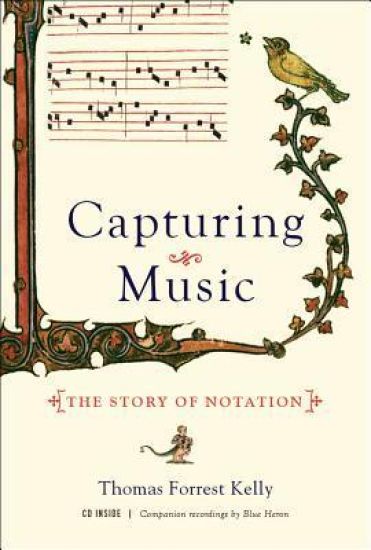
Capturing Music

Capturing Music

Thomas Forrest Kelly

WW Norton Co
2014
sidottu
In today’s digital landscape, we have the luxury of experiencing music anytime, anywhere. But before this instant accessibility and dizzying array of formats—before CDs, the eight-track tape, the radio, and the turntable—there was only one recording technology: music notation. It allowed singers and soloists to travel across great distances and perform their work with stunning fidelity, a feat that we now very much take for granted. Thomas Forrest Kelly transports us to the lively and complex world of monks and monasteries, of a dove singing holy chants into the ear of a saint, and of bustling activity in the Cathedral of Notre Dame—an era when the only way to share even the simplest song was to learn it by rote, church to church and person to person. With clarity and a sense of wonder, Kelly tells a story that spans five hundred years, leading us on a journey through medieval Europe and showing how we learned to keep track of rhythm, melody, and precise pitch with a degree of accuracy previously unimagined. Kelly reveals the technological advances that led us to the system of notation we use today, placing each step of its evolution in its cultural and intellectual context. Companion recordings by the renowned Blue Heron ensemble are paired with vibrant illuminated manuscripts, bringing the art to life and allowing readers to experience something of the marvel that medieval writers must have felt when they figured out how to capture music for all time.
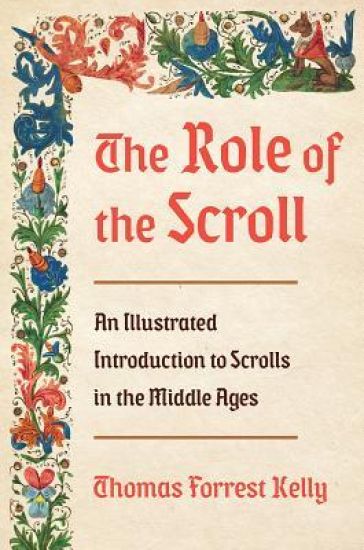
The Role of the Scroll

The Role of the Scroll

Thomas Forrest Kelly

WW Norton Co
2019
sidottu
The Role of the Scroll answers the question of why scrolls were made when it was possible to produce books. Scrolls were the standard form of book in Western antiquity but from the fourth century onward, the codex began to outnumber scrolls. And yet, people in the Middle Ages continued to make them. In these colourful pages, the reader will discover remarkable scrolls that range from showy court documents for empresses to tiny amulets for pregnant women, from pilgrimage maps to small, portable actors’ scrolls. An alchemical recipe for gold gives a glimpse into medieval life as a metalsmith and a lengthy list of gifts for Queen Elizabeth I enables the reader to observe a court party. Lively and accessible, The Role of the Scroll is essential reading—and viewing—for anyone interested in how people have kept record of life through the ages.
Music Then and Now

Music Then and Now

Thomas Forrest Kelly

WW Norton Co
2012
muu
Music Then and Now offers a vivid introduction to Western music by focusing on 28 works in-depth. Its “you are there” approach—demonstrated by each chapter’s rich historical and cultural context—engages students in the excitement of hearing the music as original audiences did when the music was first performed. Covering all historical periods and genres, the book gives students all the tools they need for close listening.
The Beneventan Chant

The Beneventan Chant

Thomas Forrest Kelly

Cambridge University Press
2008
pokkari
From the High Middle Ages the dominance of Gregorian chant has obscured the fact that musical practice in early medieval Europe was far richer than has hitherto been recognized. Despite its historical importance, the "Gregorian" is not the most consistent and probably not the oldest form of Christian chant. The recovery and study of regional musical dialects having a common ancestry in the Christian church and Western musical tradition are reshaping our view of the early history of Christian liturgical music. Thomas Kelly's major study of the Beneventan chant reinstates one of the oldest surviving bodies of Western music: the Latin church music of southern Italy as it existed before the spread of Gregorian chant. Dating from the seventh and eighth centuries it was largely forgotten after the Carolingian desire for political and liturgical uniformity imposed "Gregorian" chant throughout the realm. But a few later scribes, starting apparently in the tenth century, preserved a part of this regional heritage in writing. This book reassembles and describes the surviving repertory.
The Sources of Beneventan Chant

The Sources of Beneventan Chant

Thomas Forrest Kelly

Routledge
2019
nidottu
The area whose capital was the southern Lombard city of Benevento developed a culture identified with the characteristic form of writing known as the Beneventan script, which was used throughout the area and was brought to perfection at the abbey of Montecassino in the late eleventh century. This repertory, along with other now-vanished or suppressed local varieties of music, give a far richer picture of the variety of musical practice in early medieval Europe than was formerly available. Thomas Forrest Kelly has identified and collected the surviving sources of an important repertory of early medieval music; this is the so-called Beneventan Chant, used in southern Italy in the early middle ages, before the adoption there of the now-universal music known as Gregorian chant. Because it was deliberately suppressed in the course of the eleventh century, this music survives mostly in fragments and palimpsests, and the fascinating process of restoring the repertory piece by piece is told in the studies in this book. A companion volume to this collection also by Professor Kelly details the practice of Medieval music.
The Practice of Medieval Music

The Practice of Medieval Music

Thomas Forrest Kelly

Ashgate Publishing Limited
2010
sidottu
How music functioned in the middle ages, what it meant to its hearers, and how it was performed: these are the subjects of this fascinating volume. The studies collected here introduce the reader to the practical detail and complex intricacies of the performance of medieval music in the liturgy, bringing into clear focus a number of matters that were long obscure. (A second volume by Professor Kelly,The Sources of Beneventan Chant, Ashgate 2011, complements this volume). Two detailed studies of aspects of musical practices of the Eternal City bring new historical perspectives to the understanding of the growth of the Roman liturgy, while the second and third groups of articles bring the reader close to the actual sound of medieval musicians. Writings on the art of the prosula, a hitherto understudied musico-poetic phenomenon, give practical information about Gregorian chant that can be acquired in no other way. Likewise, the study of variants in the music of the Exultet for Holy Saturday provides a window onto a creative and improvisational practice that is often difficult to discern from surviving written sources. A final study, of the composers of chant in the middle ages, gives us a view of how musicians and others thought of themselves in a time that often valued anonymity.
The Sources of Beneventan Chant

The Sources of Beneventan Chant

Thomas Forrest Kelly

Ashgate Publishing Limited
2011
sidottu
The area whose capital was the southern Lombard city of Benevento developed a culture identified with the characteristic form of writing known as the Beneventan script, which was used throughout the area and was brought to perfection at the abbey of Montecassino in the late eleventh century. This repertory, along with other now-vanished or suppressed local varieties of music, give a far richer picture of the variety of musical practice in early medieval Europe than was formerly available. Thomas Forrest Kelly has identified and collected the surviving sources of an important repertory of early medieval music; this is the so-called Beneventan Chant, used in southern Italy in the early middle ages, before the adoption there of the now-universal music known as Gregorian chant. Because it was deliberately suppressed in the course of the eleventh century, this music survives mostly in fragments and palimpsests, and the fascinating process of restoring the repertory piece by piece is told in the studies in this book. A companion volume to this collection also by Professor Kelly details the practice of Medieval music.