Kirjojen hintavertailu. Mukana 12 390 323 kirjaa ja 12 kauppaa.

Kirjahaku

Etsi kirjoja tekijän nimen, kirjan nimen tai ISBN:n perusteella.

17 kirjaa tekijältä Thomas H. Lee

HBR's 10 Must Reads on Leadership for Healthcare (with bonus article by Thomas H. Lee, MD, and Toby Cosgrove, MD)

HBR's 10 Must Reads on Leadership for Healthcare (with bonus article by Thomas H. Lee, MD, and Toby Cosgrove, MD)

Harvard Business Review; Thomas H. Lee; Daniel Goleman; Peter F. Drucker; John P. Kotter

Harvard Business Review Press
2018
pokkari
Help your team excel.Go from being a good practitioner to being an extraordinary leader of healthcare professionals.If you read nothing else on leadership, read these articles. We've combed through hundreds of Harvard Business Review articles and selected the most important ones for healthcare leaders to help you and your team excel, maximize performance, and live into your mission.Leading experts, such as Thomas H. Lee, Daniel Goleman, Peter F. Drucker, John P. Kotter, and Amy C. Edmondson, provide the insights and advice you need to:Understand the difference between managers and leadersMotivate others to excelCreate successful cross-functional teams on the flyMaintain your identity and values as a clinician as you move into an organizational leadership roleHave an impact not only on your organization but on the surrounding systemWork in complex environments where authority is diffuseLead effectively in times of rapid changeThis collection of articles includes "What Makes a Leader?," by Daniel Goleman; "What Makes an Effective Executive," by Peter F. Drucker; "What Leaders Really Do," by John P. Kotter; "Level 5 Leadership: The Triumph of Humility and Fierce Resolve," by Jim Collins; "The Work of Leadership," by Ronald A. Heifetz and Donald L. Laurie; "Teamwork on the Fly," by Amy C. Edmondson; "Who Has the D? How Clear Decision Roles Enhance Organizational Performance," by Paul Rogers and Marcia Blenko; "In Praise of the Incomplete Leader," by Deborah Ancona, Thomas W. Malone, Wanda J. Orlikowski, and Peter M. Senge; "Using the Balanced Scorecard as a Strategic Management System," by Robert S. Kaplan and David P. Norton; "Health Care's Service Fanatics," by James I. Merlino and Ananth Raman; and "Engaging Doctors in the Health Care Revolution," by Thomas H. Lee and Toby Cosgrove.

HBR's 10 Must Reads on Leadership for Healthcare (with bonus article by Thomas H. Lee, MD, and Toby Cosgrove, MD)

HBR's 10 Must Reads on Leadership for Healthcare (with bonus article by Thomas H. Lee, MD, and Toby Cosgrove, MD)

Harvard Business Review; Thomas H. Lee; Daniel Goleman; Peter F. Drucker; John P. Kotter

Harvard Business Review Press
2018
sidottu
Help your team excel.Go from being a good practitioner to being an extraordinary leader of healthcare professionals.If you read nothing else on leadership, read these articles. We've combed through hundreds of Harvard Business Review articles and selected the most important ones for healthcare leaders to help you and your team excel, maximize performance, and live into your mission.Leading experts, such as Thomas H. Lee, Daniel Goleman, Peter F. Drucker, John P. Kotter, and Amy C. Edmondson, provide the insights and advice you need to:Understand the difference between managers and leadersMotivate others to excelCreate successful cross-functional teams on the flyMaintain your identity and values as a clinician as you move into an organizational leadership roleHave an impact not only on your organization but on the surrounding systemWork in complex environments where authority is diffuseLead effectively in times of rapid changeThis collection of articles includes "What Makes a Leader?," by Daniel Goleman; "What Makes an Effective Executive," by Peter F. Drucker; "What Leaders Really Do," by John P. Kotter; "Level 5 Leadership: The Triumph of Humility and Fierce Resolve," by Jim Collins; "The Work of Leadership," by Ronald A. Heifetz and Donald L. Laurie; "Teamwork on the Fly," by Amy C. Edmondson; "Who Has the D? How Clear Decision Roles Enhance Organizational Performance," by Paul Rogers and Marcia Blenko; "In Praise of the Incomplete Leader," by Deborah Ancona, Thomas W. Malone, Wanda J. Orlikowski, and Peter M. Senge; "Using the Balanced Scorecard as a Strategic Management System," by Robert S. Kaplan and David P. Norton; "Health Care's Service Fanatics," by James I. Merlino and Ananth Raman; and "Engaging Doctors in the Health Care Revolution," by Thomas H. Lee and Toby Cosgrove.
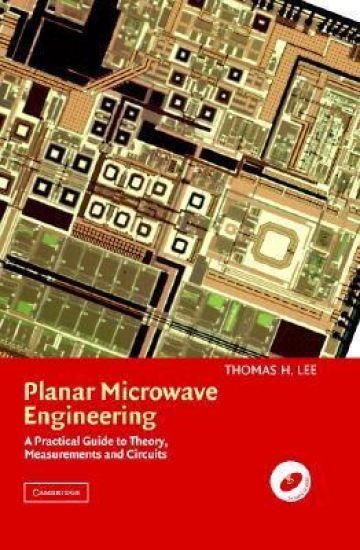
Planar Microwave Engineering

Planar Microwave Engineering

Thomas H. Lee

Cambridge University Press
2004
sidottu
Modern wireless communications hardware is underpinned by RF and microwave design techniques. This insightful book contains a wealth of circuit layouts, design tips, and practical measurement techniques for building and testing practical gigahertz systems. The book covers everything you need to know to design, build, and test a high-frequency circuit. Microstrip components are discussed, including tricks for extracting good performance from cheap materials. Connectors and cables are also described, as are discrete passive components, antennas, low-noise amplifiers, oscillators, and frequency synthesizers. Practical measurement techniques are presented in detail, including the use of network analyzers, sampling oscilloscopes, spectrum analyzers, and noise figure meters. Throughout the focus is practical, and many worked examples and design projects are included. There is also a CD-ROM that contains a variety of design and analysis programs. The book is packed with indispensable information for students taking courses on RF or microwave circuits and for practising engineers.
Eugene Braunwald and the Rise of Modern Medicine

Eugene Braunwald and the Rise of Modern Medicine

Thomas H. Lee

Harvard University Press
2013
sidottu
Since the 1950s, the death rate from heart attacks has plunged from 35 percent to about 5 percent—and fatalistic attitudes toward this disease and many others have faded into history. Much of the improved survival and change in attitudes can be traced to the work of Eugene Braunwald, MD. In the 1960s, he proved that myocardial infarction was not a “bolt from the blue” but a dynamic process that plays out over hours and thus could be altered by treatment. By redirecting cardiology from passive, risk-averse observation to active intervention, he helped transform not just his own field but the culture of American medicine.Braunwald’s personal story demonstrates how the forces of history affected the generation of researchers responsible for so many medical advances in the second half of the twentieth century. In 1938 Nazi occupiers forced his family to flee Vienna for Brooklyn. Because of Jewish quotas in medical schools, he was the last person admitted to his class, but went on to graduate number one. When the Doctor Draft threatened to interrupt his medical training during the Korean War, he joined the National Institutes of Health instead of the Navy, and there he began the research that made him the most influential cardiologist of his time.In Eugene Braunwald and the Rise of Modern Medicine, Thomas H. Lee offers insights that only authoritative firsthand interviews can provide, to bring us closer to this iconic figure in modern medicine.
Social Capital in Healthcare

Social Capital in Healthcare

Thomas H. Lee

JOHN WILEY SONS INC
2025
sidottu
Harness the power of social capital to improve the efficacy and efficiency of healthcare organizations Written by Thomas Lee, Chief Medical Officer at Press Ganey, Social Capital in Healthcare describes a new and powerful framework for improving healthcare, arguing that managers should approach the work of building trust, teamwork, and high reliability with the same intensity and discipline as CFOs use when managing the finances of their organizations. Lee's powerful framework integrates management priorities such as safety, quality, patient experience, and workforce resilience/burnout/loyalty, demonstrating through data that these “silos” are in fact intertwined, and the work of improving them is best taken on with a single focus: improving social capital. In this book, readers will learn about: Key social capital themes in healthcare, including trust, respect, connectedness, and teamworkThe necessity of social capital in healthcare due to changes in medicine, patients, and societyBuilding social capital through transitivity, reciprocity, bridging connections, and driving the right valuesSocial capital initiatives at institutions such as the Mayo Clinic, Houston Methodist, and Vanderbilt University Medical Center Drawing upon deeply respected work from sociology, psychology, and business strategy, Social Capital in Healthcare earns a well-deserved spot on the bookshelves of all forward-thinking healthcare executives, managers, and consultants.
A Quiet Revolution

A Quiet Revolution

Thomas H. Lee

Trafford Publishing
2011
pokkari
On the thirtieth anniversary of the fall of Saigon, five Vietnam veterans gather for a reunion. While reminiscing about the dangerous final days of the nation's longest and most costly war, the five agree on one point. Once again, the nation has plunged into an unwarranted conflict in the Middle East-and for the same greedy reasons. Now, the veterans just need to figure out a way to stop it. Still bitter over the needless human casualties and loss of wealth in Southeast Asia, the five former covert operatives rename themselves the "phantom patriots" and begin formulating a strategy to eradicate government corruption and punish the wealthy oil executives responsible for causing it. As they embark on a quiet revolution to prevent the nation from certain demise, the five decide their enemies are political terrorists whose primary weapon is fear. The phantom patriots have but one goal-to take down the prominent corruptors and send a message to others that their days of unrestrained wealth and control are numbered. But the phantom patriots are about to discover that more than one powerful person wants them dead.In this contemporary thriller, only time will tell whether good intentions will triumph over evil plans.
Integrated Management Systems

Integrated Management Systems

Thomas H. Lee; Shoji Shiba; Robert Chapman Wood

John Wiley Sons Inc
1999
sidottu
Based on a profoundly important six-year study by the Center for the Quality of Management (CQM), "Integrated Management Systems" shows how successful organizations accomplish something unbelievably powerful: Creating their own particular ways of executing the scientific method. The authors worked with the cooperation of some of America's largest companies - Teradyne, Hewlett-Packard, Eastman Chemical, Ritz-Carlton -- and of non-profit organizations including top hospitals and the U.S. Navy. They were surprised to find how radically successful systems differed from one organization to the next. Yet the core of each was universal: Each organization had designed a system that gathered data about the organization's particular problems, developed theories, tested the theories, and finally documented and shared the results throughout the organization. Each successful organization's methods were unique much as the methods of each successful discipline within the sciences are unique. But less successful organizations had nothing comparable. And the processes through which the leaders in these organizations had gotten them on the right path had a great deal in common.
The Design of Low Noise Oscillators

The Design of Low Noise Oscillators

Ali Hajimiri; Thomas H. Lee

Springer
1999
sidottu
It is hardly a revelation to note that wireless and mobile communications have grown tremendously during the last few years. This growth has placed stringent requi- ments on channel spacing and, by implication, on the phase noise of oscillators. C- pounding the challenge has been a recent drive toward implementations of transceivers in CMOS, whose inferior 1/f noise performance has usually been thought to disqualify it from use in all but the lowest-performance oscillators. Low noise oscillators are also highly desired in the digital world, of course. The c- tinued drive toward higher clock frequencies translates into a demand for ev- decreasing jitter. Clearly, there is a need for a deep understanding of the fundamental mechanisms g- erning the process by which device, substrate, and supply noise turn into jitter and phase noise. Existing models generally offer only qualitative insights, however, and it has not always been clear why they are not quantitatively correct.
The Design and Implementation of Low-Power CMOS Radio Receivers
It is hardly a profound observation to note that we remain in the midst of a wireless revolution. In 1998 alone, over 150 million cell phones were sold worldwide, representing an astonishing 50% increase over the previous year. Maintaining such a remarkable growth rate requires constant innovation to decrease cost while increasing performance and functionality. Traditionally, wireless products have depended on a mixture of semicond- tor technologies, spanning GaAs, bipolar and BiCMOS, just to name a few. A question that has been hotly debated is whether CMOS could ever be suitable for RF applications. However, given the acknowledged inferiority of CMOS transistors relative to those in other candidate technologies, it has been argued by many that “CMOS RF” is an oxymoron, an endeavor best left cloistered in the ivory towers of academia. In rebuttal, there are several compelling reasons to consider CMOS for wi- less applications. Aside from the exponential device and density improvements delivered regularly by Moore’s law, only CMOS offers a technology path for integrating RF and digital elements, potentially leading to exceptionally c- pact and low-cost devices. To enable this achievement, several thorny issues need to be resolved. Among these are the problem of poor passive com- nents, broadband noise in MOSFETs, and phase noise in oscillators made with CMOS. Beyond the component level, there is also the important question of whether there are different architectural choices that one would make if CMOS were used, given the different constraints.
The Design of Low Noise Oscillators

The Design of Low Noise Oscillators

Ali Hajimiri; Thomas H. Lee

Springer-Verlag New York Inc.
2013
nidottu
It is hardly a revelation to note that wireless and mobile communications have grown tremendously during the last few years. This growth has placed stringent requi- ments on channel spacing and, by implication, on the phase noise of oscillators. C- pounding the challenge has been a recent drive toward implementations of transceivers in CMOS, whose inferior 1/f noise performance has usually been thought to disqualify it from use in all but the lowest-performance oscillators. Low noise oscillators are also highly desired in the digital world, of course. The c- tinued drive toward higher clock frequencies translates into a demand for ev- decreasing jitter. Clearly, there is a need for a deep understanding of the fundamental mechanisms g- erning the process by which device, substrate, and supply noise turn into jitter and phase noise. Existing models generally offer only qualitative insights, however, and it has not always been clear why they are not quantitatively correct.
The Design and Implementation of Low-Power CMOS Radio Receivers

The Design and Implementation of Low-Power CMOS Radio Receivers

Derek Shaeffer; Thomas H. Lee

Springer-Verlag New York Inc.
2013
nidottu
It is hardly a profound observation to note that we remain in the midst of a wireless revolution. In 1998 alone, over 150 million cell phones were sold worldwide, representing an astonishing 50% increase over the previous year. Maintaining such a remarkable growth rate requires constant innovation to decrease cost while increasing performance and functionality. Traditionally, wireless products have depended on a mixture of semicond- tor technologies, spanning GaAs, bipolar and BiCMOS, just to name a few. A question that has been hotly debated is whether CMOS could ever be suitable for RF applications. However, given the acknowledged inferiority of CMOS transistors relative to those in other candidate technologies, it has been argued by many that “CMOS RF” is an oxymoron, an endeavor best left cloistered in the ivory towers of academia. In rebuttal, there are several compelling reasons to consider CMOS for wi- less applications. Aside from the exponential device and density improvements delivered regularly by Moore’s law, only CMOS offers a technology path for integrating RF and digital elements, potentially leading to exceptionally c- pact and low-cost devices. To enable this achievement, several thorny issues need to be resolved. Among these are the problem of poor passive com- nents, broadband noise in MOSFETs, and phase noise in oscillators made with CMOS. Beyond the component level, there is also the important question of whether there are different architectural choices that one would make if CMOS were used, given the different constraints.
Hbr's 10 Must Reads for Healthcare Leaders Collection

Hbr's 10 Must Reads for Healthcare Leaders Collection

Harvard Business Review; Thomas H. Lee; Daniel Goleman

Harvard Business Review Press
2019
nidottu
The one collection every healthcare leader needs.The landscape of today's healthcare industry is constantly changing, and it's your job to lead your team to success. This collection from Harvard Business Review offers the ideas and strategies to help get you there. HBR's 10 Must Reads for Healthcare Leaders Collection includes the popular books HBR's 10 Must Reads on Leadership for Healthcare, HBR's 10 Must Reads on Strategy for Healthcare, HBR's 10 Must Reads on Innovation, and HBR's 10 Must Reads on Change Management. This unique compilation offers insights from world-class experts on making the leap from being a good practitioner to being a great leader, leading effectively through times of rapid change, and achieving the best healthcare outcomes at the lowest cost. The collection includes forty articles selected by HBR's editors from renowned thought leaders including Michael Porter, Peter Drucker, John Kotter, Rosabeth Moss Kanter, Jim Collins, W. Chan Kim, and Renee Mauborgne, plus the bonus article "Engaging Doctors in the Health Care Revolution," by Thomas H. Lee, MD, and Toby Cosgrove, MD. HBR's 10 Must Reads for Healthcare Leaders Collection is an invaluable resource for any doctor or hospital administrator looking to grow as a leader and to having a positive impact on colleagues and patients alike.HBR's 10 Must Reads series is the definitive collection of ideas and best practices for leaders at every level. These books offer essential reading selected from the pages of Harvard Business Review on topics critical to the success of every manager. Each book is packed with advice and inspiration from leading experts such as Clayton Christensen, Peter Drucker, Rosabeth Moss Kanter, John Kotter, Michael Porter, Daniel Goleman, Theodore Levitt, and Rita Gunther McGrath.
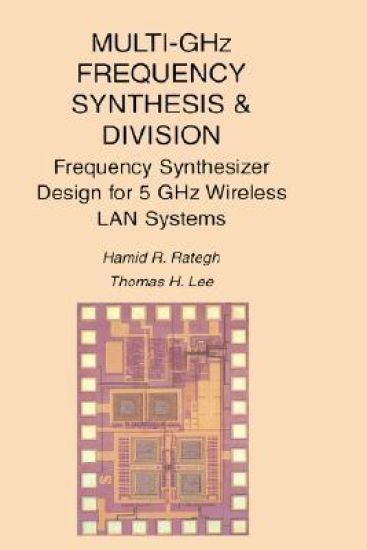
Multi-GHz Frequency Synthesis & Division

Multi-GHz Frequency Synthesis & Division

Hamid R. Rategh; Thomas H. Lee

Springer
2001
sidottu
In the past 10 years extensive effort has been dedicated to commercial wireless local area network (WLAN) systems. Despite all these efforts, however, none of the existing systems has been successful, mainly due to their low data rates. The increasing demand for WLAN systems that can support data rates in excess of 20 Mb/s enticed the FCC to create an unlicensed national information infrastructure (U–NII) band at 5 GHz. This frequency band provides 300 MHz of spectrum in two segments: a 200 MHz(5.15–5.35 GHz) and a 100 MHz (5.725–5.825 GHz) frequency band. This newly released spectrum, and the fast trend of CMOS scaling, provide an opportunity to design WLAN systems with high data rate and low cost. One of the existing standards at 5 GHz is the European high performance radio LAN (HIPERLAN) standard that supports data rates as high as 20 Mb/s. One of the main building blocks of each wireless system is the f- quency synthesizer. Phase–locked loops (PLLs) are universally used to design radio frequency synthesizers. Reducing the power consumption of the frequency dividers of a PLL has always been a challenge. In this book, we introduce an alternative solution for conventional flipflop based xiv MULTI–GHZ FREQUENCY SYNTHESIS & DIVISION frequency dividers. An injection–locked frequency divider (ILFD) takes advantage of the narrowband nature of the wireless systems and employs resonators to trade off bandwidth for power.
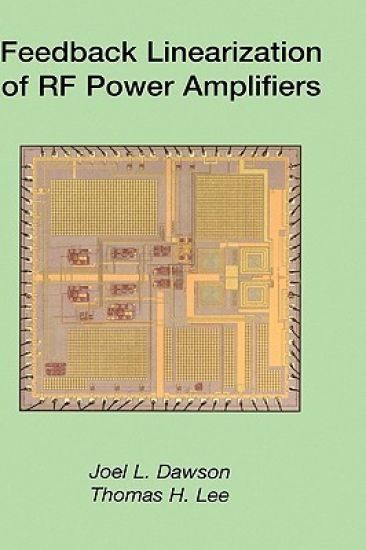
Feedback Linearization of RF Power Amplifiers

Feedback Linearization of RF Power Amplifiers

J.L. Dawson; Thomas H. Lee

Springer-Verlag New York Inc.
2004
sidottu
Improving the performance of the power amplifier is the most pressing problem facing designers of modern radio-frequency (RF) transceivers. Linearity and power efficiency of the transmit path are of utmost importance, and the power amplifier has proven to be the bottleneck for both. High linearity enables transmission at the highest data rates for a given channel bandwidth, and power efficiency prolongs battery lifetime in portable units and reduces heat dissipation in high-power transmitters. Cartesian feedback is a power amplifier linearization technique that acts to soften the tradeoff between power efficiency and linearity in power amplifiers. Despite its compelling, fundamental advantages, the technique has not enjoyed widespread acceptance because of certain implementation difficulties. Feedback Linearization of RF Power Amplifiers introduces new techniques for overcoming the challenges faced by the designer of a Cartesian feedback system. The theory of the new techniques are described and analyzed in detail. The book culminates with the results of the first known fully integrated Cartesian feedback power amplifier system, whose design was enabled by the techniques described. Feedback Linearization of RF Power Amplifiers is a valuable reference work for engineers in the telecommunications industry, industry researchers, academic researchers.
Multi-GHz Frequency Synthesis & Division

Multi-GHz Frequency Synthesis & Division

Hamid R. Rategh; Thomas H. Lee

Springer-Verlag New York Inc.
2013
nidottu
In the past 10 years extensive effort has been dedicated to commercial wireless local area network (WLAN) systems. Despite all these efforts, however, none of the existing systems has been successful, mainly due to their low data rates. The increasing demand for WLAN systems that can support data rates in excess of 20 Mb/s enticed the FCC to create an unlicensed national information infrastructure (U–NII) band at 5 GHz. This frequency band provides 300 MHz of spectrum in two segments: a 200 MHz(5.15–5.35 GHz) and a 100 MHz (5.725–5.825 GHz) frequency band. This newly released spectrum, and the fast trend of CMOS scaling, provide an opportunity to design WLAN systems with high data rate and low cost. One of the existing standards at 5 GHz is the European high performance radio LAN (HIPERLAN) standard that supports data rates as high as 20 Mb/s. One of the main building blocks of each wireless system is the f- quency synthesizer. Phase–locked loops (PLLs) are universally used to design radio frequency synthesizers. Reducing the power consumption of the frequency dividers of a PLL has always been a challenge. In this book, we introduce an alternative solution for conventional flipflop based xiv MULTI–GHZ FREQUENCY SYNTHESIS & DIVISION frequency dividers. An injection–locked frequency divider (ILFD) takes advantage of the narrowband nature of the wireless systems and employs resonators to trade off bandwidth for power.
Feedback Linearization of RF Power Amplifiers

Feedback Linearization of RF Power Amplifiers

J.L. Dawson; Thomas H. Lee

Springer-Verlag New York Inc.
2013
nidottu
Improving the performance of the power amplifier is the most pressing problem facing designers of modern radio-frequency (RF) transceivers. Linearity and power efficiency of the transmit path are of utmost importance, and the power amplifier has proven to be the bottleneck for both. High linearity enables transmission at the highest data rates for a given channel bandwidth, and power efficiency prolongs battery lifetime in portable units and reduces heat dissipation in high-power transmitters. Cartesian feedback is a power amplifier linearization technique that acts to soften the tradeoff between power efficiency and linearity in power amplifiers. Despite its compelling, fundamental advantages, the technique has not enjoyed widespread acceptance because of certain implementation difficulties. Feedback Linearization of RF Power Amplifiers introduces new techniques for overcoming the challenges faced by the designer of a Cartesian feedback system. The theory of the new techniques are described and analyzed in detail. The book culminates with the results of the first known fully integrated Cartesian feedback power amplifier system, whose design was enabled by the techniques described. Feedback Linearization of RF Power Amplifiers is a valuable reference work for engineers in the telecommunications industry, industry researchers, academic researchers.