Kirjojen hintavertailu. Mukana 11 699 587 kirjaa ja 12 kauppaa.

Kirjahaku

Etsi kirjoja tekijän nimen, kirjan nimen tai ISBN:n perusteella.

27 kirjaa tekijältä Thomas Harrison

A Funeral Sermon Occasioned by the Death of Mrs. Isabella Ewer, Late Wife of Mr. John Ewer, of Willesdon, Middlesex. Preach'd in Little Wild-Street, February 16, 1723. By Thomas Harrison
The 18th century was a wealth of knowledge, exploration and rapidly growing technology and expanding record-keeping made possible by advances in the printing press. In its determination to preserve the century of revolution, Gale initiated a revolution of its own: digitization of epic proportions to preserve these invaluable works in the largest archive of its kind. Now for the first time these high-quality digital copies of original 18th century manuscripts are available in print, making them highly accessible to libraries, undergraduate students, and independent scholars.The Age of Enlightenment profoundly enriched religious and philosophical understanding and continues to influence present-day thinking. Works collected here include masterpieces by David Hume, Immanuel Kant, and Jean-Jacques Rousseau, as well as religious sermons and moral debates on the issues of the day, such as the slave trade. The Age of Reason saw conflict between Protestantism and Catholicism transformed into one between faith and logic -- a debate that continues in the twenty-first century.++++The below data was compiled from various identification fields in the bibliographic record of this title. This data is provided as an additional tool in helping to insure edition identification: ++++Harvard University Houghton LibraryN001313London: printed for Aaron Ward, 1724. 23, 1]p.; 8
Divinity and History

Divinity and History

Thomas Harrison

Clarendon Press
2000
sidottu
Critics of Herodotus have generally shown an unease in the face of the religious passages of the Histories, a sense that he 'lets himself down' by delving into matters irrelevant to the proper purpose of history. They have tended consequently to latch on to isolated instances of scepticism in an attempt to vindicate Herodotus from imagined charges of obscurantism. Historians of Greek religion, on the other hand, by their concentration on ritual as the central feature of Greek religious experience, have often neglected the value of literary sources as evidence of religious belief; indeed the term belief has become something of a dirty word. In this book, the first full-length study of the subject in English, Dr Harrison not only places Herodotus' religious beliefs at the centre of his conception of history, but - by seeing instances of scepticism and of belief in relation to one another, and by the use of analogy from anthropological literature - also redresses the recent emphasis on the centrality of ritual.
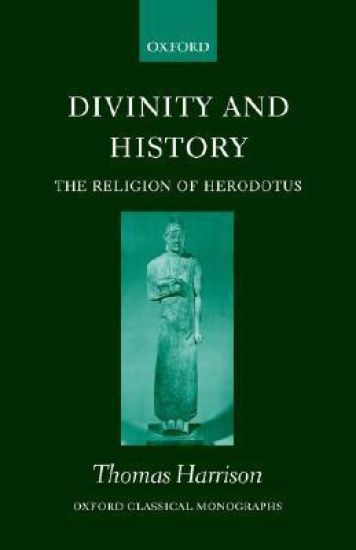
Divinity and History

Divinity and History

Thomas Harrison

Oxford University Press
2002
nidottu
This work places Herodotus' religious beliefs at the centre of his conception of history, but by seeing instances of scepticism and of belief in relation to one another redresses the recent emphasis on the centrality of ritual, and presents Greek religion as a means for the explanation of events.
Of Bridges

Of Bridges

Thomas Harrison

University of Chicago Press
2021
sidottu
Offers a philosophical history of bridges—both literal bridges and their symbolic counterparts—and the acts of cultural connection they embody. “Always,” wrote Philip Larkin, “it is by bridges that we live.” Bridges represent our aspirations to connect, to soar across divides. And it is the unfinished business of these aspirations that makes bridges such stirring sights, especially when they are marvels of ingenuity. A rich compendium of myths, superstitions, and literary and ideological figurations, Of Bridges organizes a poetic and philosophical history of bridges into nine thematic clusters. Leaping in lucid prose between distant times and places, Thomas Harrison questions why bridges are built and where they lead. He probes links forged by religion between life’s transience and eternity as well as the consolidating ties of music, illustrated by the case of the blues. He investigates bridges in poetry, as flash points in war, and the megabridges of our globalized world. He illuminates real and symbolic crossings facing migrants each day and the affective connections that make persons and societies cohere. In readings of literature, film, philosophy, and art, Harrison engages in a profound reflection on how bridges form and transform cultural communities. Of Bridges is a mesmerizing, vertiginous tale of bridges both visible and invisible, both lived and imagined.
Of Bridges

Of Bridges

Thomas Harrison

THE UNIVERSITY OF CHICAGO PRESS
2023
nidottu
Offers a philosophical history of bridges—both literal bridges and their symbolic counterparts—and the acts of cultural connection they embody. “Always,” wrote Philip Larkin, “it is by bridges that we live.” Bridges represent our aspirations to connect, to soar across divides. And it is the unfinished business of these aspirations that makes bridges such stirring sights, especially when they are marvels of ingenuity. A rich compendium of myths, superstitions, and literary and ideological figurations, Of Bridges organizes a poetic and philosophical history of bridges into nine thematic clusters. Leaping in lucid prose between distant times and places, Thomas Harrison questions why bridges are built and where they lead. He probes links forged by religion between life’s transience and eternity as well as the consolidating ties of music, illustrated by the case of the blues. He investigates bridges in poetry, as flash points in war, and the megabridges of our globalized world. He illuminates real and symbolic crossings facing migrants each day and the affective connections that make persons and societies cohere. In readings of literature, film, philosophy, and art, Harrison engages in a profound reflection on how bridges form and transform cultural communities. Of Bridges is a mesmerizing, vertiginous tale of bridges both visible and invisible, both lived and imagined.
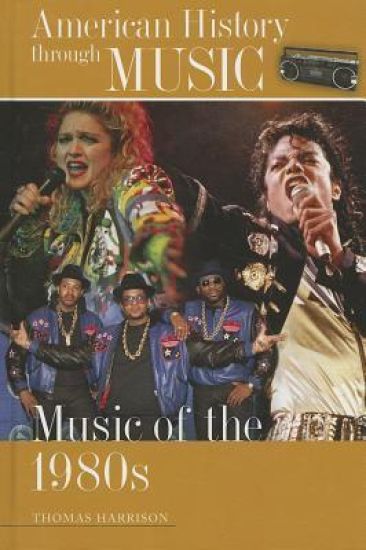
Music of the 1980s

Music of the 1980s

Thomas Harrison

Greenwood Press
2011
sidottu
Beyond coverage of mainstream 80s music, such as "hair band" hard rock, pop, new wave, and rap, this compilation of essential musical artists also covers genres like classical, jazz, outlaw country, and music theater.Popular music in the United States during the 1980s is well known for imports from abroad, such as A-ha, Def Leppard, Falco, and Men at Work, as well as homegrown American rock acts such as Guns 'N Roses, Huey Lewis and the News, Bon Jovi, and Poison. But there were many other types of genres of music that never received airplay on the radio or MTV that also experienced significant evolutions or growth in that decade.Music of the 1980s examines the key artists in specific genres of popular music: pop, hard rock/heavy metal, rock, and country. No other reference book for students has previously explored the surprisingly diverse categories of hard rock and heavy metal music with such detail and depth. Additionally, a chapter focuses on the prominent artists and composers of less-mainstream genres for specialized audiences, including music theater, jazz, and classical music.
Music of the 1990s

Music of the 1990s

Thomas Harrison

Greenwood Press
2011
sidottu
Red Hot Chili Peppers, Goo Goo Dolls, Nirvana, Green Day, Mariah Carey, Notorious B.I.G., Billy Ray Cyrus, Backstreet Boys… the list goes on. Meet all the 1990s' essential musical artists in one insightful volume.During the 1990s, musical genres became more commercialized than ever—and that was just one of the many changes that characterized the decade. Music of the 1990s offers a detailed and wide-ranging view of the important music of the '90s, identifying the artists and the important compositions—popular, classical, and jazz—that helped shape the period. The book focuses on key artists in specific genres in popular music, including pop, hard rock/heavy metal, rock, and country. Specialized genres are examined as well, in a chapter that discusses prominent artists and composers in musical theater, jazz, popular Christian music, and classical music.Among other topics, the book looks at the growth of urban-based rap and other popular music in the context of the rise of music television. Hard rock and heavy metal are also examined within the music video idiom. New trends in mainstream rock and country music are explored as well.
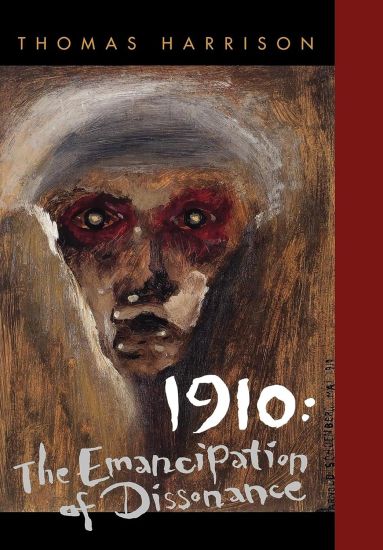
1910

1910

Thomas Harrison

University of California Press
1996
sidottu
The year 1910 marks an astonishing, and largely unrecognized, juncture in Western history. In this perceptive interdisciplinary analysis, Thomas Harrison addresses the extraordinary intellectual achievement of the time. Focusing on the cultural climate of Middle Europe and paying particular attention to the life and work of Carlo Michelstaedter, he deftly portrays the reciprocal implications of different discourses - philosophy, literature, sociology, music, and painting. His beautifully balanced and deeply informed study provides a new, wider, and more ambitious definition of expressionism and shows the significance of this movement in shaping the artistic and intellectual mood of the age. "1910" probes the recurrent themes and obsessions in the work of intellectuals as diverse as Egon Schiele, Georg Trakl, Vasily Kandinsky, Georg Lukacs, Georg Simmel, Dino Campana, and Arnold Schoenberg. Together with Michelstaedter, who committed suicide in 1910 at the age of 23, these thinkers shared the essential concerns of expressionism: a sense of irresolvable conflict in human existence, the philosophical status of death, and a quest for the nature of human subjectivity. Expressionism, Harrison argues provocatively, was a last, desperate attempt by the intelligentsia to defend some of the most venerable assumptions of European culture. This ideological desperation, he claims, was more than a spiritual prelude to World War I: it was an unheeded, prophetic critique.
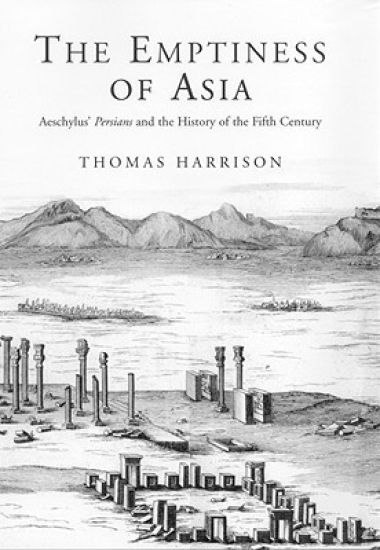
The Emptiness of Asia

The Emptiness of Asia

Thomas Harrison

Bristol Classical Press
2000
sidottu
Aeschylus' "Persians" is not only the first surviving Greek drama, it is also the ony tragedy to take for its subject historical rather than mythical events: the repulse of the army of Xerxes at Salamis in 480 BC. It has frequently been mined for information on the tactics of Salamis or the Greeks' knowledge of Persian names or institutions, but it also has a broader value, one that has often been realised. What does it tell us about Greek representations of Persia, or of the Athenians' self-image? What can we glean from it of the politics of early fifth-century Athens, or of the Athenians' conception of their empire? How, if at all, can such questions be approached without doing violence to the "Persians" as a drama? What are the implications of the play for the nature of tragedy? This book provides aims to provide both a more satisfactory reading of the "Persians" and a richer picture of fifth-century history - the history both of events and of ideology.
Writing Ancient Persia

Writing Ancient Persia

Thomas Harrison

Bristol Classical Press
2011
nidottu
The history of the Achaemenid Persian empire has been largely rewritten in the last thirty years by an international group of scholars, inspired partly by new sources of information, but also by a concerted attempt to look at Ancient Persia in its own terms, rather than through the lens of neighbouring societies, and to excise the pejorative bias of the Greek sources. This essay is a critique of this new Achaemenid historiography, concentrating on the difficulties of using Greek sources for the writing of Persian history. It argues that the excising of Greek bias should be seen to be, if possible at all, a much more complex procedure. It then examines two themes in more detail: the representation of the Kings and Queens (in Greek sources and in recent histories of Persia), and the accounts given of the Persian Wars and the conquests of Alexander. It concludes with an analysis of past versions of Persian history, suggesting that there is a much greater degree of continuity between earlier accounts of Persia (often derided as narrowly Hellenocentric or orientalist) and those of the new Achaemenid historiography.
Greeks And Barbarians

Greeks And Barbarians

Thomas Harrison

Edinburgh University Press
2001
sidottu
How did the Greeks view foreign peoples? This book considers what the Greeks thought of foreigners and their religions, cultures and politics, and what these beliefs and opinions reveal about the Greeks. The Greeks were occasionally intrigued by the customs and religions of the many different peoples with whom they came into contact; more often they were disdainful or dismissive, tending to regard non-Greeks as at best inferior, and at worst as candidates for conquest and enslavement. Facing up to this less attractive aspect of the classical tradition is vital, Thomas Harrison argues, to seeing both what the ancient world was really like and the full nature of its legacy in the modern. In this book he brings together outstanding European and American scholarship to show the difference and complexity of Greek representations of foreign peoples -- or barbarians, as the Greeks called them -- and how these representations changed over time. The book looks first at the main sources: the Histories of Herodotus, Greek tragedy, and Athenian art. Part II examines how the Greeks distinguished themselves from barbarians through myth, language and religion. Part III considers Greek representations of two different barbarian peoples -- the allegedly decadent and effeminate Persians, and the Egyptians, proverbial for their religious wisdom. In part IV three chapters trace the development of the Greek--barbarian antithesis in later history: in nineteenth-century scholarship, in Byzantine and modern Greece, and in western intellectual history. Of the twelve chapters six are published in English for the first time. The editor has provided an extensive general introduction, as well as introductions to the parts. The book contains two maps, a guide to further reading and an intellectual chronology. All passages of ancient languages are translated, and difficult terms are explained.
Greeks And Barbarians

Greeks And Barbarians

Thomas Harrison

Edinburgh University Press
2001
nidottu
How did the Greeks view foreign peoples? This book considers what the Greeks thought of foreigners and their religions, cultures and politics, and what these beliefs and opinions reveal about the Greeks. The Greeks were occasionally intrigued by the customs and religions of the many different peoples with whom they came into contact; more often they were disdainful or dismissive, tending to regard non-Greeks as at best inferior, and at worst as candidates for conquest and enslavement. Facing up to this less attractive aspect of the classical tradition is vital, Thomas Harrison argues, to seeing both what the ancient world was really like and the full nature of its legacy in the modern. In this book he brings together outstanding European and American scholarship to show the difference and complexity of Greek representations of foreign peoples -- or barbarians, as the Greeks called them -- and how these representations changed over time. The book looks first at the main sources: the Histories of Herodotus, Greek tragedy, and Athenian art. Part II examines how the Greeks distinguished themselves from barbarians through myth, language and religion. Part III considers Greek representations of two different barbarian peoples -- the allegedly decadent and effeminate Persians, and the Egyptians, proverbial for their religious wisdom. In part IV three chapters trace the development of the Greek--barbarian antithesis in later history: in nineteenth-century scholarship, in Byzantine and modern Greece, and in western intellectual history. Of the twelve chapters six are published in English for the first time. The editor has provided an extensive general introduction, as well as introductions to the parts. The book contains two maps, a guide to further reading and an intellectual chronology. All passages of ancient languages are translated, and difficult terms are explained.