Kirjojen hintavertailu. Mukana 11 342 296 kirjaa ja 12 kauppaa.

Kirjahaku

Etsi kirjoja tekijän nimen, kirjan nimen tai ISBN:n perusteella.

15 kirjaa tekijältä Thomas L. Pangle

Aristotle's Teaching in the "Politics"

Aristotle's Teaching in the "Politics"

Thomas L. Pangle

University of Chicago Press
2013
sidottu
With "Aristotle's Teaching in the "Politics"", Thomas L. Pangle offers a masterly new interpretation of this classic philosophical work. It is widely believed that the Politics originated as a written record of a series of lectures given by Aristotle, and scholars have relied on that fact to explain seeming inconsistencies and instances of discontinuity throughout the text. Breaking from this tradition, Pangle makes the work's origin his starting point, reconceiving the Politics as the pedagogical tool of a master teacher. With the Politics, Pangle argues, Aristotle seeks to lead his students down a deliberately difficult path of critical thinking about civic republican life. He adopts a Socratic approach, encouraging his students - and readers - to become active participants in a dialogue. Seen from this perspective, features of the work that have perplexed previous commentators become perfectly comprehensible as artful devices of a didactic approach. Ultimately, Pangle's close and careful analysis shows that to understand the Politics, one must first appreciate how Aristotle's rhetorical strategy is inextricably entwined with the subject of his work.
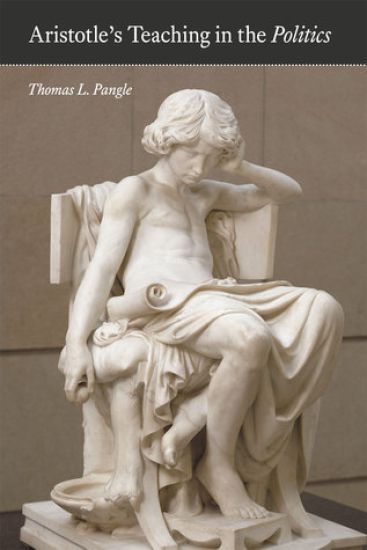
Aristotle's Teaching in the "Politics"

Aristotle's Teaching in the "Politics"

Thomas L. Pangle

University of Chicago Press
2014
nidottu
With Aristotle's Teaching in the "Politics," Thomas L. Pangle offers a masterly new interpretation of this classic philosophical work. It is widely believed that the Politics originated as a written record of a series of lectures given by Aristotle, and scholars have relied on that fact to explain seeming inconsistencies and instances of discontinuity throughout the text. Breaking from this tradition, Pangle makes the work's origin his starting point, reconceiving the Politics as the pedagogical tool of a master teacher. With the Politics, Pangle argues, Aristotle seeks to lead his students down a deliberately difficult path of critical thinking about civic republican life. He adopts a Socratic approach, encouraging his students - and readers - to become active participants in a dialogue. Seen from this perspective, features of the work that have perplexed previous commentators become perfectly comprehensible as artful devices of a didactic approach.
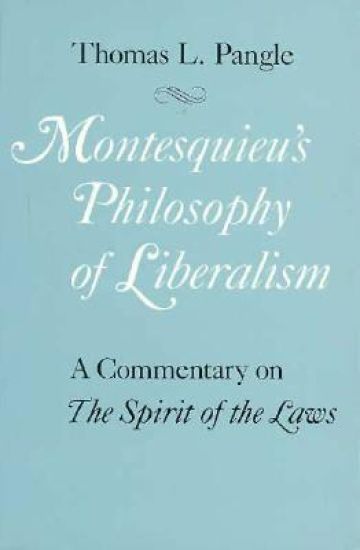
Montesquieu's Philosophy of Liberalism

Montesquieu's Philosophy of Liberalism

Thomas L. Pangle

University of Chicago Press
1989
nidottu
This first comprehensive commentary on The Spirit of the Laws uncovers and explicates the plan of Montesquieu's famous but baffling treatise. Pangle brings to light Montesquieu's rethinking of the philosophical groundwork of liberalism, showing how The Spirit of the Laws enlarges and enriches the liberal conception of natural right by means of a new appeal to History as the source of basic norms.
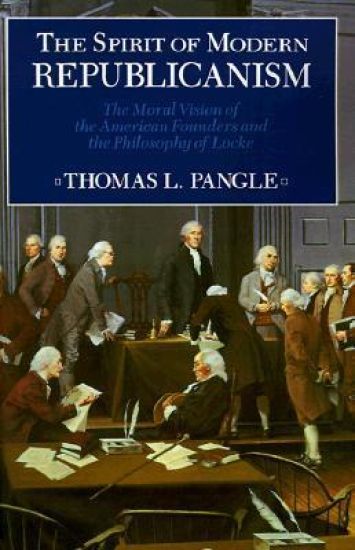
The Spirit of Modern Republicanism

The Spirit of Modern Republicanism

Thomas L. Pangle

University of Chicago Press
1990
nidottu
The Spirit of Modern Republicanism sets forth a radical reinterpretation of the foundations on which the American regime was constructed. Thomas L. Pangle argues that the Founders had a dramatically new vision of civic virtue, religious faith, and intellectual life, rooted in an unprecedented commitment to private and economic liberties. It is in the thought of John Locke that Pangle finds the fullest elaboration of the principles supporting the Founders' moral vision. "A work of extraordinary ambition, written with great intensity. . . . [Pangle offers] a trenchant analysis of Locke's writings, designed to demonstrate their remarkable originality and to clarify by doing so as much as the objective predicament as the conscious intentions of the Founding Fathers themselves."—John Dunn, Times Higher Education Supplement "A forcefully argued study of the Founding Fathers' debt to Locke. . . . What distinguishes Pangle's study from the dozens of books which have challenged or elaborated upon the republican revision is the sharpness with which he exposes the errors of the revisionists while at the same time leaving something of substantive value for the reader to consider."—Joyce Appleby, Canadian Journal of History "Breathtaking in its daring and novelty. . . . Pangle's book is tense and tenacious, a stunning meditation on America's political culture."—John Patrick Diggins, Transactions of the C. S. Peirce Society
The Theological Basis of Liberal Modernity in Montesquieu's "Spirit of the Laws"
"The Spirit of the Laws" - Montesquieu's huge, complex, and enormously influential work - is considered one of the central texts of the Enlightenment, laying the foundation for the liberally democratic political regimes that were to embody its values. In his penetrating analysis, Thomas L. Pangle brilliantly argues that the inherently theological project of Enlightenment liberalism is made more clearly - and more consequentially - in "Spirit" than in any other work. In a probing and careful reading, Pangle shows how Montesquieu believed that rationalism, through the influence of liberal institutions and the spread of commercial culture, would secularize human affairs. At the same time, Pangle uncovers Montesquieu's views about the origins of humanity's religious impulse and his confidence that political and economic security would make people less likely to sacrifice worldly well-being for otherworldly hopes. With the interest in the theological aspects of political theory and practice showing no signs of diminishing, this book is a timely and insightful contribution to one of the key achievements of Enlightenment thought.
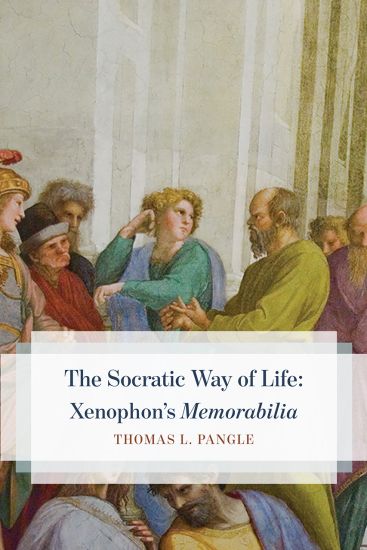
The Socratic Way of Life

The Socratic Way of Life

Thomas L. Pangle

University of Chicago Press
2020
nidottu
The Socratic Way of Life is the first English-language book-length study of the philosopher Xenophon’s masterwork. In it, Thomas L. Pangle shows that Xenophon depicts more authentically than does Plato the true teachings and way of life of the citizen philosopher Socrates, founder of political philosophy. In the first part of the book, Pangle analyzes Xenophon’s defense of Socrates against the two charges of injustice upon which he was convicted by democratic Athens: impiety and corruption of the youth. In the second part, Pangle analyzes Xenophon’s account of how Socrates’s life as a whole was just, in the sense of helping through his teaching a wide range of people. Socrates taught by never ceasing to raise, and to progress in answering, the fundamental and enduring civic questions: what is pious and impious, noble and ignoble, just and unjust, genuine statesmanship and genuine citizenship. Inspired by Hegel’s and Nietzsche’s assessments of Xenophon as the true voice of Socrates, The Socratic Way of Life establishes the Memorabilia as the groundwork of all subsequent political philosophy.
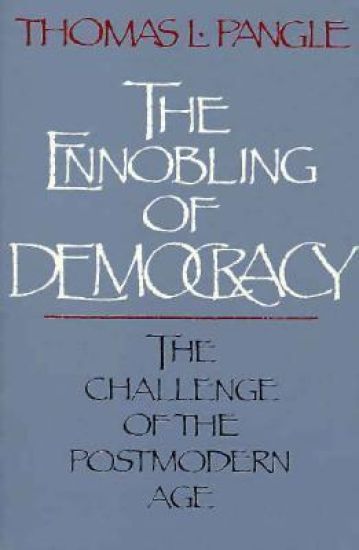
The Ennobling of Democracy

The Ennobling of Democracy

Thomas L. Pangle

Johns Hopkins University Press
1993
pokkari
With the end of the Cold War, says Thomas L. Pangle, liberal democracy was deprived of its traditional enemy, and forced to re-examine its internal structure and fundamental aims. One result has been the moral-relativist "postmodernism" of mainstream Western intellectuals. Focusing on Lyotard, Vattimo, and Rorty, The Ennobling of Democracy offers a searching critique of postmodernism and its implications for political life and thought. Pangle carefully examines the political dimensions of postmodernist teachings, including the rejection of the natural-rights doctrines of the Enlightenment, the discounting of public purposefulness, and the disenchantment with claims of civic virtue and reason. He argues that a serious challenge has been posed to postmodernism by the emerging democracies of Eastern Europe, which have directly experienced heroic political leadership, maintained a prominent place for religion, and preserved a belief in the virtues and duties of citizenship. They consequently make demands on Western thought that postmodernism has been unable to meet. Drawing on the classical republican ideal, Pangle opens the door to a bold new synthesis in political philosophy. He argues that by reappropriating classical civic rationalism-and especially classical philosophy of education-a framework may be established to integrate the most significant findings of modern rationalism into a conception of humanity that encompasses, in an unprecedented way, the entire scope of the human condition.
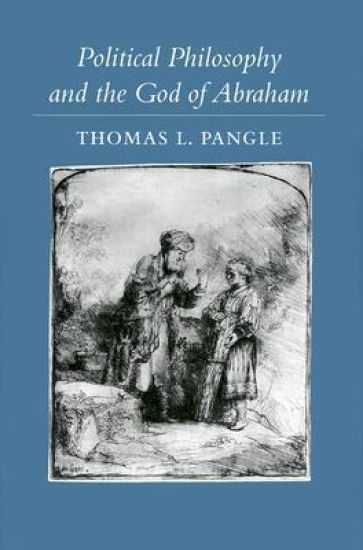
Political Philosophy and the God of Abraham

Political Philosophy and the God of Abraham

Thomas L. Pangle

Johns Hopkins University Press
2003
sidottu
In this book noted scholar Thomas L. Pangle brings back a lost and crucial dimension of political theory: the mutually illuminating encounter between skeptically rationalist political philosophy and faith-based political theology guided ultimately by the authority of the Bible. Focusing on the chapters of Genesis in which the foundation of the Bible is laid, Pangle provides an interpretive reading illuminated by the questions and concerns of the Socratic tradition and its medieval heirs in the Christian, Jewish, and Islamic worlds. He brings into contrast the rival interpretive framework set by the biblical criticism of the modern rationalists Hobbes and Spinoza, along with their heirs from Locke to Hegel. The full meaning of these diverse philosophic responses to the Bible is clarified through a dialogue with hermeneutic discussions by leading political theologians in the Judaic, Muslim, and Christian traditions, from Josephus and Augustine to our day. Profound and subtle in its argument, this book will be of interest not only to students and scholars of politics, philosophy, and religion but also to thoughtful readers in every walk of life who seek to deepen their understanding of the perplexing relationship between religious faith and philosophic reason.
Leo Strauss

Leo Strauss

Thomas L. Pangle

Johns Hopkins University Press
2006
sidottu
Leo Strauss's controversial writings have long exercised a profound subterranean cultural influence. Now their impact is emerging into broad daylight, where they have been met with a flurry of poorly informed, often wildly speculative, and sometimes rather paranoid pronouncements. This book, written as a corrective, is the first accurate, non-polemical, comprehensive guide to Strauss's mature political philosophy and its intellectual influence. Thomas L. Pangle opens a pathway into Strauss's major works with one question: How does Strauss's philosophic thinking contribute to our democracy's civic renewal and to our culture's deepening, critical self-understanding? This book includes a synoptic critical survey of writings from scholars who have extended Strauss's influence into the more practical, sub-philosophic fields of social and political science and commentary. Pangle shows how these analysts have in effect imported Straussian impulses into a "new" kind of political and social science.
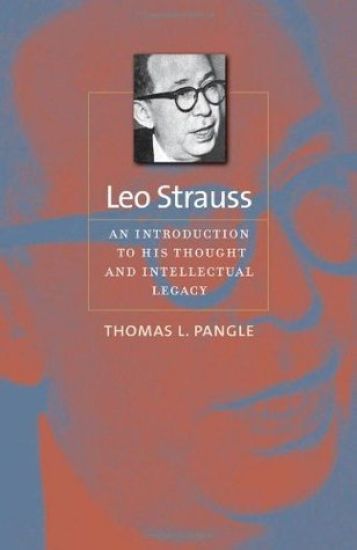
Leo Strauss

Leo Strauss

Thomas L. Pangle

Johns Hopkins University Press
2006
pokkari
Leo Strauss's controversial writings have long exercised a profound subterranean cultural influence. Now their impact is emerging into broad daylight, where they have been met with a flurry of poorly informed, often wildly speculative, and sometimes rather paranoid pronouncements. This book, written as a corrective, is the first accurate, non-polemical, comprehensive guide to Strauss's mature political philosophy and its intellectual influence. Thomas L. Pangle opens a pathway into Strauss's major works with one question: How does Strauss's philosophic thinking contribute to our democracy's civic renewal and to our culture's deepening, critical self-understanding? This book includes a synoptic critical survey of writings from scholars who have extended Strauss's influence into the more practical, sub-philosophic fields of social and political science and commentary. Pangle shows how these analysts have in effect imported Straussian impulses into a "new" kind of political and social science.
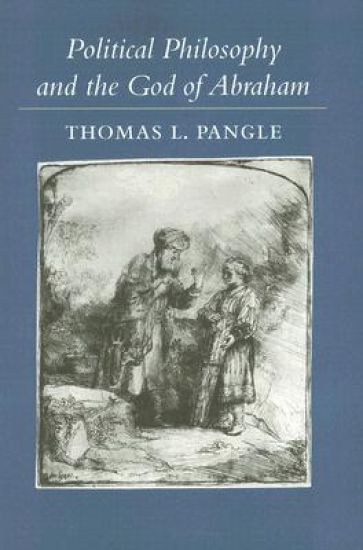
Political Philosophy and the God of Abraham

Political Philosophy and the God of Abraham

Thomas L. Pangle

Johns Hopkins University Press
2007
pokkari
In this book noted scholar Thomas L. Pangle brings back a lost and crucial dimension of political theory: the mutually illuminating encounter between skeptically rationalist political philosophy and faith-based political theology guided ultimately by the authority of the Bible. Focusing on the chapters of Genesis in which the foundation of the Bible is laid, Pangle provides an interpretive reading illuminated by the questions and concerns of the Socratic tradition and its medieval heirs in the Christian, Jewish, and Islamic worlds. He brings into contrast the rival interpretive framework set by the biblical criticism of the modern rationalists Hobbes and Spinoza, along with their heirs from Locke to Hegel. The full meaning of these diverse philosophic responses to the Bible is clarified through a dialogue with hermeneutic discussions by leading political theologians in the Judaic, Muslim, and Christian traditions, from Josephus and Augustine to our day. Profound and subtle in its argument, this book will be of interest not only to students and scholars of politics, philosophy, and religion but also to thoughtful readers in every walk of life who seek to deepen their understanding of the perplexing relationship between religious faith and philosophic reason.
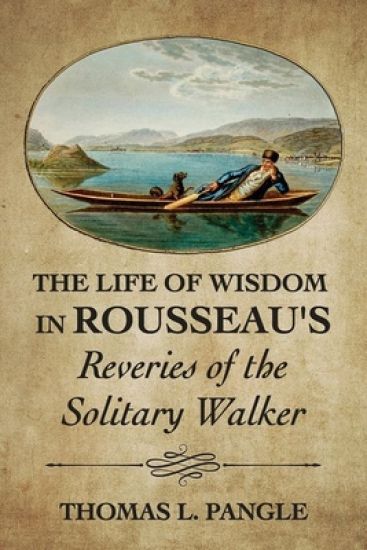
The Life of Wisdom in Rousseau's "Reveries of the Solitary Walker"
The Life of Wisdom in Rousseau's "Reveries of the Solitary Walker" is the first complete exegesis and interpretation of Rousseau's final and culminating work, showing its full philosophic and moral teaching. The Reveries has been celebrated as a work of literature that is an acknowledged acme of French prose writing. Thomas L. Pangle argues that this aesthetic appreciation necessitates an in-depth interpretation of the writing's complex and multileveled intended teaching about the normatively best way of life—and how essential this is for a work that was initially bewildering. Rousseau stands out among modern political philosophers in that he restored, to political philosophy, what Socrates and his students (from Plato and Xenophon through Aristotle and the Stoics and Cicero) had made central—and that the previous modern, Enlightenment philosophers had eclipsed: the study of the life and soul of the exemplary, independent sage, as possessor of "human wisdom." Rousseau made this again the supreme theme and source of norms for political philosophy and for humanity's moral as well as civic existence. In his analysis of The Reveries, Pangle uncovers Rousseau's most profound exploration and articulation of his own life, personality, soul, and thought as "the man of nature enlightened by reason." He describes, in Rousseau's final work, the fullest embodiment of the experiential wisdom from which flows and to which points Rousseau's political and moral philosophy, his theology, and his musical and literary art.
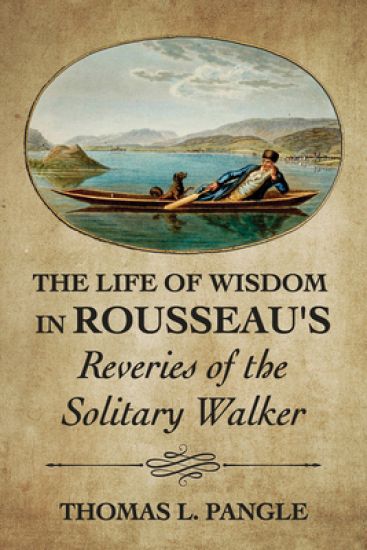
The Life of Wisdom in Rousseau's "Reveries of the Solitary Walker"
The Life of Wisdom in Rousseau's "Reveries of the Solitary Walker" is the first complete exegesis and interpretation of Rousseau's final and culminating work, showing its full philosophic and moral teaching. The Reveries has been celebrated as a work of literature that is an acknowledged acme of French prose writing. Thomas L. Pangle argues that this aesthetic appreciation necessitates an in-depth interpretation of the writing's complex and multileveled intended teaching about the normatively best way of life—and how essential this is for a work that was initially bewildering. Rousseau stands out among modern political philosophers in that he restored, to political philosophy, what Socrates and his students (from Plato and Xenophon through Aristotle and the Stoics and Cicero) had made central—and that the previous modern, Enlightenment philosophers had eclipsed: the study of the life and soul of the exemplary, independent sage, as possessor of "human wisdom." Rousseau made this again the supreme theme and source of norms for political philosophy and for humanity's moral as well as civic existence. In his analysis of The Reveries, Pangle uncovers Rousseau's most profound exploration and articulation of his own life, personality, soul, and thought as "the man of nature enlightened by reason." He describes, in Rousseau's final work, the fullest embodiment of the experiential wisdom from which flows and to which points Rousseau's political and moral philosophy, his theology, and his musical and literary art.
Hegel's Lectures on the Philosophy of World History

Hegel's Lectures on the Philosophy of World History

Thomas L. Pangle

CORNELL UNIVERSITY PRESS
2026
sidottu
Hegel's Lectures on the Philosophy of World History brings together the works of Georg W. F. Hegel (1770–1831), one of the greatest philosophers of history, who, prior to his death, did not execute a treatise setting forth his philosophy of world history. All that remains are fragmented and truncated manuscript materials and meticulous student transcripts from his lectures on the philosophy of world history, which are assembled in this book to present what Hegel might call the "essential phases" or "moments" in his philosophy of world history as an articulated, unfolding, organic whole. Drawing from historical-critical editions, Thomas L. Pangle has compiled a range of passages that provide the fullest and clearest expression of Hegel's teachings on the philosophy of history as divine reason expressing itself dynamically in the whole of existence. Hegel's Lectures on the Philosophy of World History provides lucid, vivid, and concrete access to Hegel's political philosophy, as the most ambitious and thorough attempt to demonstrate that world history overall, starting with ancient China and India, exhibits God's providence for humanity as a truly rational divine plan.
Hegel's Lectures on the Philosophy of World History

Hegel's Lectures on the Philosophy of World History

Thomas L. Pangle

CORNELL UNIVERSITY PRESS
2026
pokkari
Hegel's Lectures on the Philosophy of World History brings together the works of Georg W. F. Hegel (1770–1831), one of the greatest philosophers of history, who, prior to his death, did not execute a treatise setting forth his philosophy of world history. All that remains are fragmented and truncated manuscript materials and meticulous student transcripts from his lectures on the philosophy of world history, which are assembled in this book to present what Hegel might call the "essential phases" or "moments" in his philosophy of world history as an articulated, unfolding, organic whole. Drawing from historical-critical editions, Thomas L. Pangle has compiled a range of passages that provide the fullest and clearest expression of Hegel's teachings on the philosophy of history as divine reason expressing itself dynamically in the whole of existence. Hegel's Lectures on the Philosophy of World History provides lucid, vivid, and concrete access to Hegel's political philosophy, as the most ambitious and thorough attempt to demonstrate that world history overall, starting with ancient China and India, exhibits God's providence for humanity as a truly rational divine plan.