Kirjojen hintavertailu. Mukana 11 699 587 kirjaa ja 12 kauppaa.

Kirjahaku

Etsi kirjoja tekijän nimen, kirjan nimen tai ISBN:n perusteella.

7 kirjaa tekijältä Thomas Leslie

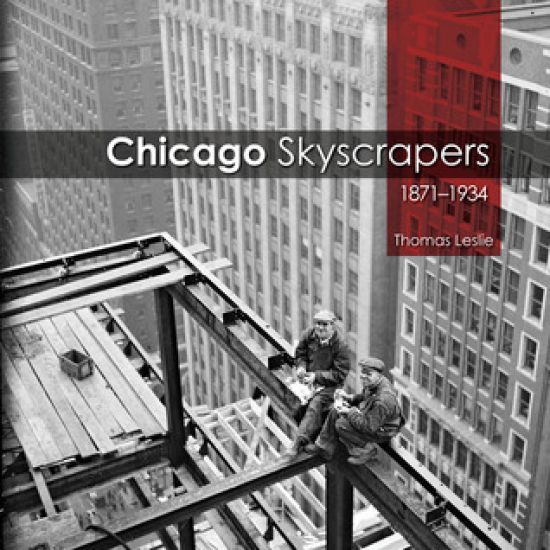
Chicago Skyscrapers, 1871-1934

Chicago Skyscrapers, 1871-1934

Thomas Leslie

University of Illinois Press
2013
sidottu
A detailed tour, inside and out, of Chicago's distinctive towers from an earlier age For more than a century, Chicago's skyline has included some of the world's most distinctive and inspiring buildings. This history of the Windy City's skyscrapers begins in the key period of reconstruction after the Great Fire of 1871 and concludes in 1934 with the onset of the Great Depression, which brought architectural progress to a standstill. During this time, such iconic landmarks as the Chicago Tribune Tower, the Wrigley Building, the Marshall Field and Company Building, the Chicago Stock Exchange, the Palmolive Building, the Masonic Temple, the City Opera, Merchandise Mart, and many others rose to impressive new heights, thanks to innovations in building methods and materials. Solid, earthbound edifices of iron, brick, and stone made way for towers of steel and plate glass, imparting a striking new look to Chicago's growing urban landscape. Thomas Leslie reveals the daily struggles, technical breakthroughs, and negotiations that produced these magnificent buildings. He also considers how the city's infamous political climate contributed to its architecture, as building and zoning codes were often disputed by shifting networks of rivals, labor unions, professional organizations, and municipal bodies. Featuring more than a hundred photographs and illustrations of the city's physically impressive and beautifully diverse architecture, Chicago Skyscrapers, 1871–1934 highlights an exceptionally dynamic, energetic period of architectural progress in Chicago.
Beauty's Rigor

Beauty's Rigor

Thomas Leslie

University of Illinois Press
2017
sidottu
Born in Sondrio, Italy, in 1891, Pier Luigi Nervi was a pioneer in the engineering and architecture of reinforced concrete. His buildings showed how the use of reinforced concrete expanded the possibilities of form and structure. His methods, meanwhile, ingrained his structures with patterns that came directly out of his economical, manual construction processes. The results were buildings that matched awe-inspiring spans with surprisingly human scale. Beauty's Rigor offers a comprehensive overview of Nervi's long career. Drawing on the Nervi archives and a wealth of photographs and architectural drawings, Thomas Leslie explores celebrated buildings like Palazetto dello Sport built for the 1960 Rome Olympics, St. Mary's Cathedral in San Francisco, and the UNESCO headquarters in Paris. He also sheds new light on unbuilt projects such as the Pavilion of Italian Civilization for the Universal Exposition of Rome E42. What emerges is the first complete account of Nervi's contributions to modern architecture and his essential role in a revolution that realized concrete's potential to match grace with strength.
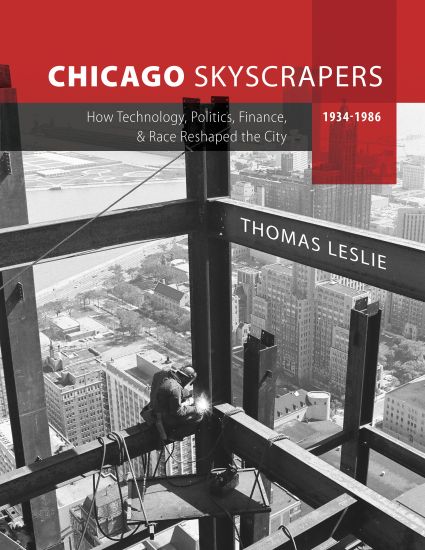
Chicago Skyscrapers, 1934-1986

Chicago Skyscrapers, 1934-1986

Thomas Leslie

UNIVERSITY OF ILLINOIS PRESS
2023
sidottu
Winner of The Pattis Family Foundation Chicago Book Award, by The Pattis Family Foundation and the Newberry Library From skyline-defining icons to wonders of the world, the second period of the Chicago skyscraper transformed the way Chicagoans lived and worked. Thomas Leslie’s comprehensive look at the modern skyscraper era views the skyscraper idea, and the buildings themselves, within the broad expanse of city history. As construction emerged from the Great Depression, structural, mechanical, and cladding innovations evolved while continuing to influence designs. But the truly radical changes concerned the motivations that drove construction. While profit remained key in the Loop, developers elsewhere in Chicago worked with a Daley political regime that saw tall buildings as tools for a wholesale recasting of the city’s appearance, demography, and economy. Focusing on both the wider cityscape and specific buildings, Leslie reveals skyscrapers to be the physical results of negotiations between motivating and mechanical causes. Illustrated with more than 140 photographs, Chicago Skyscrapers, 1934–1986 tells the fascinating stories of the people, ideas, negotiations, decision-making, compromises, and strategies that changed the history of architecture and one of its showcase cities.
Chicago Skyscrapers, 1871-1934

Chicago Skyscrapers, 1871-1934

Thomas Leslie

UNIVERSITY OF ILLINOIS PRESS
2024
nidottu
A detailed tour, inside and out, of Chicago's distinctive towers from an earlier age For more than a century, Chicago's skyline has included some of the world's most distinctive and inspiring buildings. This history of the Windy City's skyscrapers begins in the key period of reconstruction after the Great Fire of 1871 and concludes in 1934 with the onset of the Great Depression, which brought architectural progress to a standstill. During this time, such iconic landmarks as the Chicago Tribune Tower, the Wrigley Building, the Marshall Field and Company Building, the Chicago Stock Exchange, the Palmolive Building, the Masonic Temple, the City Opera, Merchandise Mart, and many others rose to impressive new heights, thanks to innovations in building methods and materials. Solid, earthbound edifices of iron, brick, and stone made way for towers of steel and plate glass, imparting a striking new look to Chicago's growing urban landscape. Thomas Leslie reveals the daily struggles, technical breakthroughs, and negotiations that produced these magnificent buildings. He also considers how the city's infamous political climate contributed to its architecture, as building and zoning codes were often disputed by shifting networks of rivals, labor unions, professional organizations, and municipal bodies. Featuring more than a hundred photographs and illustrations of the city's physically impressive and beautifully diverse architecture, Chicago Skyscrapers, 1871–1934 highlights an exceptionally dynamic, energetic period of architectural progress in Chicago.