Theology at the Void explores the intersection of three central questions: What is human being? What is language? What is theology? Drawing on the writings of five major intellectuals from various religious and academic traditions, Thomas Kelly seeks to answer these questions by tracing the emergence of a problem that arises when various modes of thought disagree on the relationship between experience, language, and theological inquiry. Kelly begins the discussion with an analysis of Friedrich Schleiermacher's understanding of human experience, language, and theology to articulate the Christian faith. Twentieth-century thinkers Wayne Proudfoot and George Lindbeck are introduced early in the text as critics of Schleiermacher's approach, which, they maintain, is dependent upon a culturally limited theological anthropology. Kelly argues that contrary to Schleiermacher's "turn to the subject" theological methodology, postmodern thinkers assign no priority to experience but rather assert that languages and cultural systems construct experience. As one solution to the tension between these two camps, Kelly proposes two alternative approaches: George Steiner and Karl Rahner. In his book Real Presences, renowned literary critic George Steiner suggests a possibility for moving beyond the more radical anthropological elements of the postmodern critique. Karl Rahner offers a theological alternative that is sensitive both to the postmodern critique as well as to the nature of Catholic theology. Kelly demonstrates how both of these great thinkers provide a viable resolution to a major problem facing systematic theology. In the end, Kelly finds Rahner's resolution most persuasive. Theology at the Void is an engaging assessment of the problem of whether one can formulate a theology using human experience as its fundamental principle.
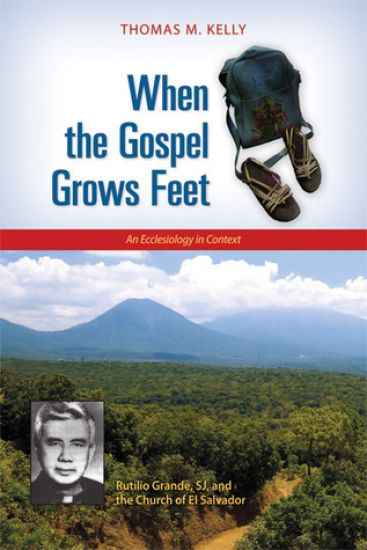
The Salvadoran priest Rutilio Grande, SJ, was killed in a hall of bullets on March 12, 1977, along with two passengers in the car he drove. The impact of this killing transformed his friend and archbishop, Oscar Romero, as well as the church in Latin America and throughout the world.How could powerful forces within the overwhelmingly Catholic country of El Salvador execute a Roman Catholic priest and two innocent people in broad daylight in front of witnesses? Why would this same government go to the extreme of murdering thousands of lay Catholic ministers, dozens of priests, and even the nation's archbishop? Why would the government, and the oligarchy that supported it, believe it necessary to repress the church in such a brutal manner?Thomas Kelly finds answers to these questions by exploring the church's identity and mission during the colonial period (1500 - 1820) and the transformative impact of Vatican II (1962 - 65) on the Latin American bishops. He considers Grande's life, formation, ministry, and death and his impact on Archbishop Romero. Finally, Kelly explains what Grande and the church of El Salvador can teach North American Catholics today.
In the city of Seattle, Washington, RODNEY and MAGGIE SMYTHE receive a message on RODNEY's telephone answering machine from MAGGIE's son DANNY by a former marriage, saying "Hey, mom, tell Rod I am coming home, see ya' soon.". DANNY and RODNEY, step-son and step-father, have had a strained relationship since RODNEY and MAGGIE were married. The message sends RODNEY and MAGGIE into hours of arguments, wild goose chases, unanswered questions and dead end situations. They call airlines and Amtrak to find him and his family on their passenger lists. Unable to find them they decide to drive to the Amtrak Station to meet a train they think may be the one they are on, only to come up empty handed. While they are off on this wild goose chase, DANNY, ANGELIQUE and DANNY JUNIOR arrive at RODNEY and MAGGIE's home, park their car in the garage and fall into bed exhausted. Hours later RODNEY and MAGGIE return home exhausted and saddened having not found them at the train station. On his way to bed RODNEY stumbles over the luggage left by DANNY in the hallway. They hear a baby crying and decide to bring the "hungry" DANNY JUNIOR into the study for a visit. Minutes later ANGELIQUE screams from the bedroom.
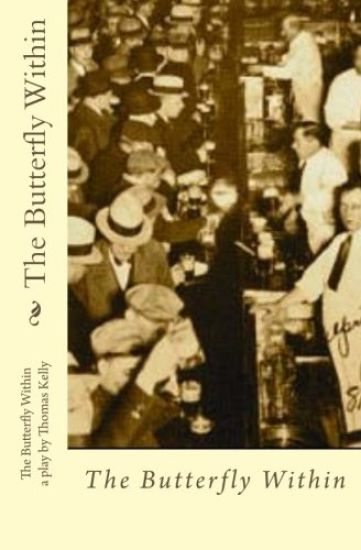
Visitors to the Lower East Side of New York, now called Soho, see very fashionable homes, art galleries, museums and boutiques. The tenements are still there. It used to be a smelly, dirty place teeming with immigrants from every country of the world. Some people were desperate and depraved, creating misery for others. It was very difficult to survive there. There were happy families and good times, but jobs were difficult to find and money was scarce. It was the lowest rung on the ladder climbing to the streets paved with gold. The Lower East Side is where the immigrants first lived after surviving Ellis Island. In the heat of August, 1928, not knowing what their future might be in these brick lined filthy canyons filled with noisy cars, trucks, and loud unruly people, Moishe Glickstein and his wife Ilana, walked from the ferry dock to the tenement between Ludlow Street and Essex Street. Moishe carried a satchel and son, Fyvush, and Ilana carried a satchel and daughter, Rebecca. In 1966 Fyvush moved his family from his father's tenement and the inventory from his bookstore to Forest Hills, Long Island, New York. After the death of his beloved wife, Zelda, Fyvush, returned to the playground of his youth: the rooftop of his once rundown tenement. There he finds, among the many changes in his old neighborhood, Mitzi, an eighteen-year-old Korean college student with red hair, sunglasses, hooked up to a cd player, painting sunsets, and demanding that he leave her 'playground'. They eventually grow to tolerate and enjoy each other's company and Fyvush shares stories of his rooftop experiences. They soon discover that they have a great deal in common: each has something to hide. Fyvush despondent over his wife's suicide, also contemplates suicide and Mitzi's apparent rejection of all things Korean, but finds inner peace secretly dancing traditional Korean mask dances. While on the streets below, she struggles to find her place in American society.
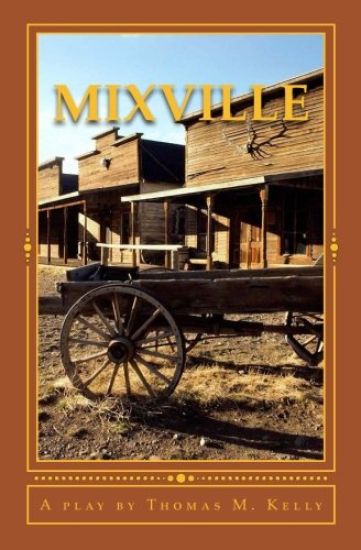
The Fabulous Tom Mix: Thomas Edwin Mix (born Thomas Hezikiah Mix; January 6, 1880 ? October 12, 1940) was an American film actor and the star of many early Western movies. He made a reported 336 films between 1910 and 1935, all but nine of which were silent features. He was Hollywood's first Western megastar and is noted as having helped define the genre for all cowboy actors who followed. Tom Mix was "the King of Cowboys" when the influence of his screen persona was seen in his approach to portraying cowboys. He created the first Mixville. Such was the influence on the life of JUBAL McCabe. Are our old cowboy heroes really dead? Not according to Jubal "Tom Mix" McCabe. "Save yer pennies, kids. Yer in fer another adventure." This is a play about Jubal "Tom Mix" McCabe. Jubal is a happy-go-lucky, wanna-be cowboy movie star. As a youngster he was a "little Tom Mix", cleaning out a nest of imaginary outlaws in the family backyard in typical Tom Mix fashion. Those were the days of the popular dream: to grow up to be like Tom Mix. His every word intonation and body movements are out of the old western movies of the early 20th century. Jubal speaks in the dialect and jargon as seen in the onscreen inter-titles of the silents and heard by characters in the talkies. He has been building his own Mixville in his backyard in the southern California town of Victorville. Aiyanna Eskaminzim, a return visitor to Mixville is a Native American. Her Jicarilla Apache name, Aiyanna, means eternal blossom. Eskaminzim means big mouth. She has the patience of a saint and the psyche of a poet with a big mouth. She has come back to rebuild Jubal's "Injun village". We'll see 'bout that The time: about now.
A moment in the Life Adventures of Charlie and Jay: Reining Cat and Dog. "Christmas With Charlie and Jay" or "Wake up, Jay Its Christmas", a joyous sing along as a child is born into the family. Charlie and Jay are your typical house pets. Or are they? They can and do get into the same adventures and misadventures as the children in their audiences. Charlie, short for Prince Charlemagne de Coquille, a French Briard puppy, and Jay, short for Jaida de les Etoiles (Pronounced: Aye-twaa-lay), which is French for Jaida of the Stars, is a Persian Red Point cat. Charlie and Jay wake on the eve of Christmas. They become deeply embroiled in their breeding credentials as Jay teaches Charlie the art of singing Christmas carols. They continue singing, which disturbs and wakens Master and Mistress. Unknown to them Mistress is pregnant with their first child, and it is due momentarily. The play takes place in the living room of a middle-income family home in Yourtown, USA. Jay has been the queen of the house for seven years. Charlie is a newly acquired puppy. They have the run of the house.