Kirjojen hintavertailu. Mukana 12 365 553 kirjaa ja 12 kauppaa.

Kirjahaku

Etsi kirjoja tekijän nimen, kirjan nimen tai ISBN:n perusteella.

3 kirjaa tekijältä Thomas Max Safley

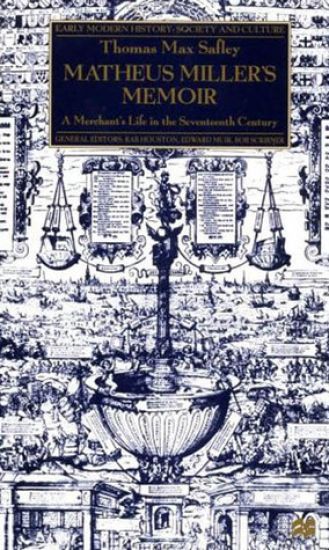
Matheus Miller’s Memoir

Matheus Miller’s Memoir

Thomas Max Safley

Palgrave Macmillan
2000
sidottu
This book reconstructs the worldview of a Lutheran merchant from the city of Augsburg in the seventeenth century. Miller's is a singular story. Though he lived through some of the great events of his age, he scarcely mentioned them. Though he was raised in the standard values of his age, he understood and applied them idiosyncratically. This is the story of one man's experience and perception based on his memoir and associated documents. Yet, despite its individual focus, the book explores universal institutions of early modern Europe: patriarchy, hierarchy, honor, community, and confession.
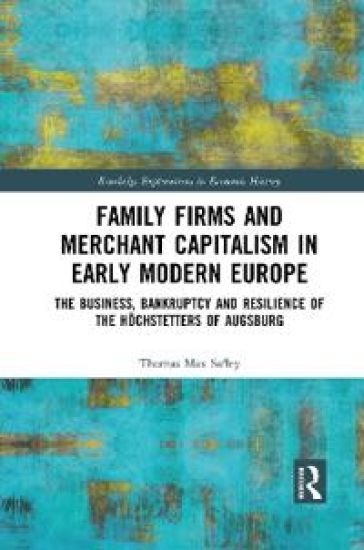
Family Firms and Merchant Capitalism in Early Modern Europe
This fascinating study follows the fortunes of the Höchstetter family, merchant-manufacturers and financiers of Augsburg, Germany, in the late-fifteenth and early-sixteenth centuries, and sheds light on the economic and social history of failure and resilience in early modern Europe. Carefully tracing the chronology of the family’s rise, fall and transformation, it moves from the micro- to the macro-level, making comparisons with other mercantile families of the time to draw conclusions and suggest insights into such issues as social mobility, capitalist organization, business techniques, market practices and economic institutions. The result is a microhistory that offers macro-conclusions about the lived experience of early capitalism and capitalistic practices.This book will be valuable reading for advanced students and researchers of economic, financial and business history, legal history and early modern European history.
Family Firms and Merchant Capitalism in Early Modern Europe
This fascinating study follows the fortunes of the Höchstetter family, merchant-manufacturers and financiers of Augsburg, Germany, in the late-fifteenth and early-sixteenth centuries, and sheds light on the economic and social history of failure and resilience in early modern Europe. Carefully tracing the chronology of the family’s rise, fall and transformation, it moves from the micro- to the macro-level, making comparisons with other mercantile families of the time to draw conclusions and suggest insights into such issues as social mobility, capitalist organization, business techniques, market practices and economic institutions. The result is a microhistory that offers macro-conclusions about the lived experience of early capitalism and capitalistic practices.This book will be valuable reading for advanced students and researchers of economic, financial and business history, legal history and early modern European history.