Kirjojen hintavertailu. Mukana 11 342 296 kirjaa ja 12 kauppaa.

Kirjahaku

Etsi kirjoja tekijän nimen, kirjan nimen tai ISBN:n perusteella.

69 kirjaa tekijältä Thomas Miller

Marketing Data Science

Marketing Data Science

Thomas Miller

Pearson FT Press
2015
sidottu
Now, a leader of Northwestern University's prestigious analytics program presents a fully-integrated treatment of both the business and academic elements of marketing applications in predictive analytics. Writing for both managers and students, Thomas W. Miller explains essential concepts, principles, and theory in the context of real-world applications. Building on Miller's pioneering program, Marketing Data Science thoroughly addresses segmentation, target marketing, brand and product positioning, new product development, choice modeling, recommender systems, pricing research, retail site selection, demand estimation, sales forecasting, customer retention, and lifetime value analysis. Starting where Miller's widely-praised Modeling Techniques in Predictive Analytics left off, he integrates crucial information and insights that were previously segregated in texts on web analytics, network science, information technology, and programming. Coverage includes: The role of analytics in delivering effective messages on the web Understanding the web by understanding its hidden structures Being recognized on the web – and watching your own competitors Visualizing networks and understanding communities within them Measuring sentiment and making recommendations Leveraging key data science methods: databases/data preparation, classical/Bayesian statistics, regression/classification, machine learning, and text analytics Six complete case studies address exceptionally relevant issues such as: separating legitimate email from spam; identifying legally-relevant information for lawsuit discovery; gleaning insights from anonymous web surfing data, and more. This text's extensive set of web and network problems draw on rich public-domain data sources; many are accompanied by solutions in Python and/or R. Marketing Data Science will be an invaluable resource for all students, faculty, and professional marketers who want to use business analytics to improve marketing performance.
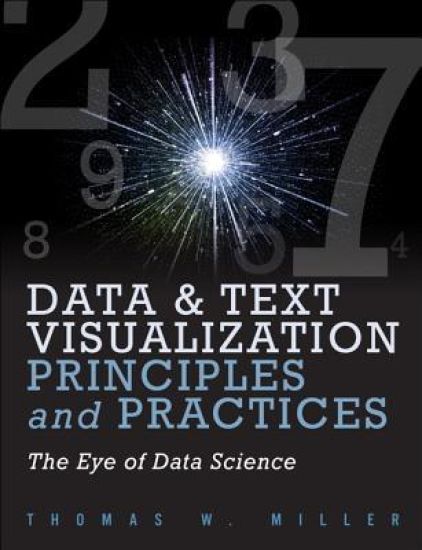
Data Visualization and Text Principles and Practices
Data visualization is increasingly central to predictive analytics and data science. The book focuses on all three application areas of data visualization: exploratory data analysis, model diagnostics, and presentation graphics. Built on the same structure and approach as other books in Thomas W. Miller's popular Modeling Techniques series, it has been carefully designed to serve multiple audiences: business managers, analysts, programmers, and students. Miller begins with core principles, revealing why some data visualizations effectively present information and others don't. He reviews the science of human perception and cognition, proven principles of graphic design, and the growing role of visualization throughout data science -- including examples such as the visualization of time, networks, and maps. Drawing on his pioneering experience teaching data visualization, Miller begins each chapter by stating a real business problem. He explains why the problem is important, describes a relevant dataset, and guides you through solving it with leading open-source tools such as R, Python, D3, and Gephi. (All R and Python code is set apart, so managers or analysts who aren't interested in programming can easily skip it.) Like other books in this series, Data Visualization Principles and Practices draws realistic examples from key application areas, including marketing, finance, sports analytics, web and network data science, text analytics, and social network analysis. Examples include cross-sectional data, time series, network, and spatial data. Readers will discover advanced methods for constructing static and interactive graphics, building web-browser-based presentations, and even creating "information art."
The Saxons in Britain

The Saxons in Britain

Thomas Miller

Distant Mirror
2020
pokkari
A history of Britain from prehistoric and Roman times, through the arrival of the Saxons, the development of the Octarchy, and up to the arrival of the Vikings and the reign of Aethelwulf, father of Alfred the Great. BEFORE THE SAXONSThe Dawn of HistoryThe Ancient BritonsThe DruidsLanding of Julius C sarCaractacus, Boadicea, and AgricolaDeparture of the RomansBritain after the Roman Period THE SAXON INVASIONThe Ancient SaxonsHengist, Horsa, Rowena, and VortigernElla, Cerdric, and King ArthurEstablishment of the Saxon OctarchyThe Conversion of EthelbertEdwin, King of the Deiri and BerniciaPenda, the Pagan Monarch of MerciaDecline of the Saxon OctarchyOffa the TerribleEgbert, King of All the Saxons APPENDICESAnglo-Saxon CultureReligionGovernment and LawsLiteratureArchitecture, Art, and ScienceCostume, Manners, Customs, and Everyday LifeThis is a new edition of part of the volume History of the Anglo-Saxons, originally published in 1850.
Formation of College English, The

Formation of College English, The

Thomas Miller

University of Pittsburgh Press
1997
nidottu
In the middle of the eighteenth century, English literature, composition, and rhetoric were introduced almost simultaneously into colleges throughout the British cultural provinces. Professorships of rhetoric and belles lettres were established just as print was reaching a growing reading public and efforts were being made to standardize educated taste and usage. The provinces saw English studies as a means to upward social mobility through cultural assimilation. In the educational centers of England, however, the introduction of English represented a literacy crisis brought on by provincial institutions that had failed to maintain classical texts and learned languages.Today, as rhetoric and composition have become reestablished in the humanities in American colleges, English studies are being broadly transformed by cultural studies, community literacies, and political controversies. Once again, English departments that are primarily departments of literature see these basic writing courses as a sign of a literacy crisis that is undermining the classics of literature. The Formation of College English reexamines the civic concerns of rhetoric and the politics that have shaped and continue to shape college English.
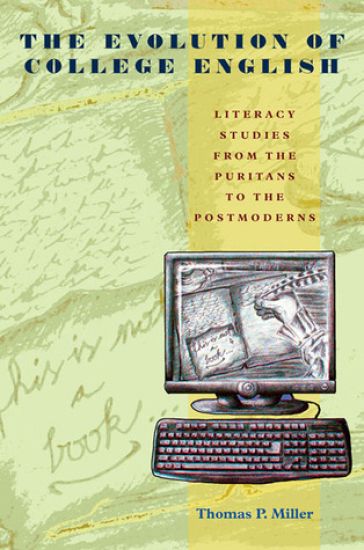
The Evolution of College English

The Evolution of College English

Thomas Miller

University of Pittsburgh Press
2011
nidottu
Thomas P. Miller defines college English studies as literacy studies and examines how it has evolved in tandem with broader developments in literacy and the literate. He maps out \u201cfour corners\u201d of English departments: literature, language studies, teacher education, and writing studies. Miller identifies their development with broader changes in the technologies and economies of literacy that have redefined what students write and read, which careers they enter, and how literature represents their experiences and aspirations.Miller locates the origins of college English studies in the colonial transition from a religious to an oratorical conception of literature. A belletristic model of literature emerged in the nineteenth century in response to the spread of the \u201cpenny\u201d press and state-mandated schooling. Since literary studies became a common school subject, professors of literature have distanced themselves from teachers of literacy. In the Progressive era, that distinction came to structure scholarly organizations such as the MLA, while NCTE was established to develop more broadly based teacher coalitions. In the twentieth century New Criticism came to provide the operating assumptions for the rise of English departments, until those assumptions became critically overloaded with the crash of majors and jobs that began in 1970s and continues today.For models that will help the discipline respond to such challenges, Miller looks to comprehensive departments of English that value studies of teaching, writing, and language as well as literature. According to Miller, departments in more broadly based institutions have the potential to redress the historical alienation of English departments from their institutional base in work with literacy. Such departments have a potentially quite expansive articulation apparatus. Many are engaged with writing at work in public life, with schools and public agencies, with access issues, and with media, ethnic, and cultural studies. With the privatization of higher education, such pragmatic engagements become vital to sustaining a civic vision of English studies and the humanities generally.