Kirjojen hintavertailu. Mukana 11 342 296 kirjaa ja 12 kauppaa.

Kirjahaku

Etsi kirjoja tekijän nimen, kirjan nimen tai ISBN:n perusteella.

3 kirjaa tekijältä Thomas Philipp

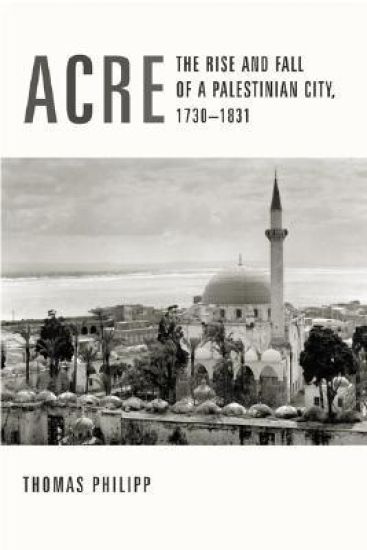
Acre

Acre

Thomas Philipp

Columbia University Press
2002
sidottu
Thomas Philipp's study of Acre combines the most extensive use to date of local Arabic sources with commercial records in Europe to shed light on a region and power center many identify as the beginning of modern Palestinian history. The third largest city in eighteenth-century Syria-after Aleppo and Damascus-Acre was the capital of a politically and economically unique region on the Mediterranean coast that included what is today northern Israel and southern Lebanon. In the eighteenth century, Acre grew dramatically from a small fishing village to a fortified city of some 25,000 inhabitants. Cash crops (first cotton, then grain) made Acre the center of trade and political power and linked it inextricably to the world economy. Acre was markedly different from other cities in the region: its urban society consisted almost exclusively of immigrants seeking their fortune. The rise and fall of Acre in the eighteenth and nineteenth centuries, Thomas Philipp argues, must be seen against the background of the decay of central power in the Ottoman empire. Destabilization of imperial authority allowed for the resurfacing of long-submerged traditional power centers and the integration of Arab regions into European and world economies. This larger imperial context proves the key to addressing many questions about the local history of Acre and its peripheries. How were the new sources of wealth and patterns of commerce that remade Acre reconciled with traditional forms of political power and social organization? Were these forms really traditional? Or did entirely new classes develop under the circumstances of an immigrant society and new commercial needs? And why did Acre, after such propitious beginnings as a center of export trade and political and military power strong enough to defy Napoleon, give way to the dazzling rise of Beirut in the nineteenth century? For centuries the object of the Crusader's fury and the trader's envy, Acre is here restored to its full significance at a crucial moment in Middle Eastern history.
Acre

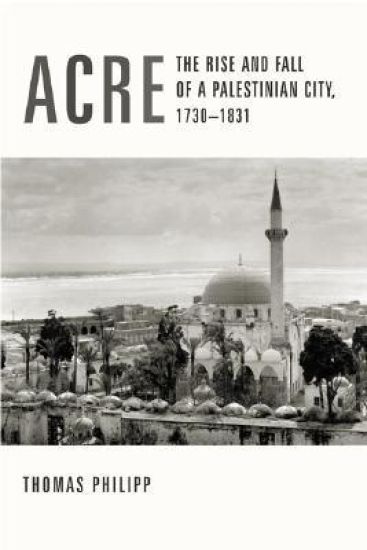
Acre

Thomas Philipp

Columbia University Press
2002
pokkari
Thomas Philipp's study of Acre combines the most extensive use to date of local Arabic sources with commercial records in Europe to shed light on a region and power center many identify as the beginning of modern Palestinian history. The third largest city in eighteenth-century Syria-after Aleppo and Damascus-Acre was the capital of a politically and economically unique region on the Mediterranean coast that included what is today northern Israel and southern Lebanon. In the eighteenth century, Acre grew dramatically from a small fishing village to a fortified city of some 25,000 inhabitants. Cash crops (first cotton, then grain) made Acre the center of trade and political power and linked it inextricably to the world economy. Acre was markedly different from other cities in the region: its urban society consisted almost exclusively of immigrants seeking their fortune. The rise and fall of Acre in the eighteenth and nineteenth centuries, Thomas Philipp argues, must be seen against the background of the decay of central power in the Ottoman empire. Destabilization of imperial authority allowed for the resurfacing of long-submerged traditional power centers and the integration of Arab regions into European and world economies. This larger imperial context proves the key to addressing many questions about the local history of Acre and its peripheries. How were the new sources of wealth and patterns of commerce that remade Acre reconciled with traditional forms of political power and social organization? Were these forms really traditional? Or did entirely new classes develop under the circumstances of an immigrant society and new commercial needs? And why did Acre, after such propitious beginnings as a center of export trade and political and military power strong enough to defy Napoleon, give way to the dazzling rise of Beirut in the nineteenth century? For centuries the object of the Crusader's fury and the trader's envy, Acre is here restored to its full significance at a crucial moment in Middle Eastern history.
Jurji Zaidan and the Foundations of Arab Nationalism

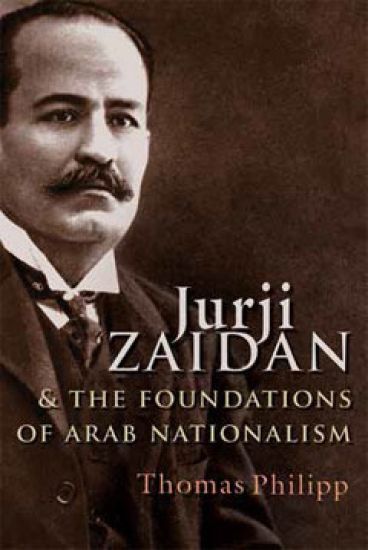
Jurji Zaidan and the Foundations of Arab Nationalism

Thomas Philipp

Syracuse University Press
2014
sidottu
The creation of a modern Arabic print language and the secular interpretation of Arab history were among the greatest achievements of the Nahda, the Arab cultural revival of the late nineteenth and early twentieth centuries. The language became an instrument as well as a symbol for the construction of national identity. In contrast to the traditional perception of Arab history as intrinsically part of Islamic history, the Nahda introduced a new vision of Arab history predating and outlasting Islamic civilization. Jurji Zaidan was one of the leading thinkers of the Arab Nahda. Through his historical novels, his widely read journal al-Hilal, which is still published today, and his scholarly works, he forged a new cultural Arab identity. In this book, Philipp shows how Zaidan popularized the idea of society that was based on science and reason, and invoked its accessibility to all who aspired to progress and modernity. In the first section, Philipp traces the arc of Zaidan’s career, placing his writings within the political and cultural contexts of the day and analysing his impact on the emerging Arab nationalist movement. The second part consists of a wide selection of Zaidan’s articles and book excerpts translated into English. These pieces cover such fields as religion and science, society and ethics, and nationalism. With the addition of a comprehensive bibliography, this volume will be recognized as the authoritative source on Zaidan, as well as an essential contribution to the study of Arabic cultural history.